For centuries, the ancient Persian religion of Zoroastrianism has often been portrayed as a rigid imperial faith tied closely to the rise and power of the great Persian empires. Fire temples, sacred rituals, and royal patronage shaped its image across history. Yet two remarkable archaeological discoveries—one from the rugged hills of northern Iraq and another from the windswept plains of the Caucasus—are now painting a far more complex picture of the ancient world.
Far from existing in isolation, Zoroastrian communities may have lived alongside Christians, followers of Greek cults, and practitioners of local fertility religions in a surprisingly peaceful and interconnected spiritual landscape.
In the Kurdistan region of Iraq, archaeologists recently uncovered the remains of a 1,500-year-old Christian church standing only yards away from a Persian stronghold associated with Zoroastrian worship. Meanwhile, in modern-day Georgia, researchers studying a 2,000-year-old palace sanctuary discovered evidence that Iranian gods, Greek deities, and local Georgian beliefs were all honored within the same monumental religious complex.
Together, the discoveries challenge long-standing assumptions about religion in the ancient Near East and reveal a forgotten world where cultures and faiths overlapped in unexpected ways.
A Church Hidden Beside a Persian Fortress


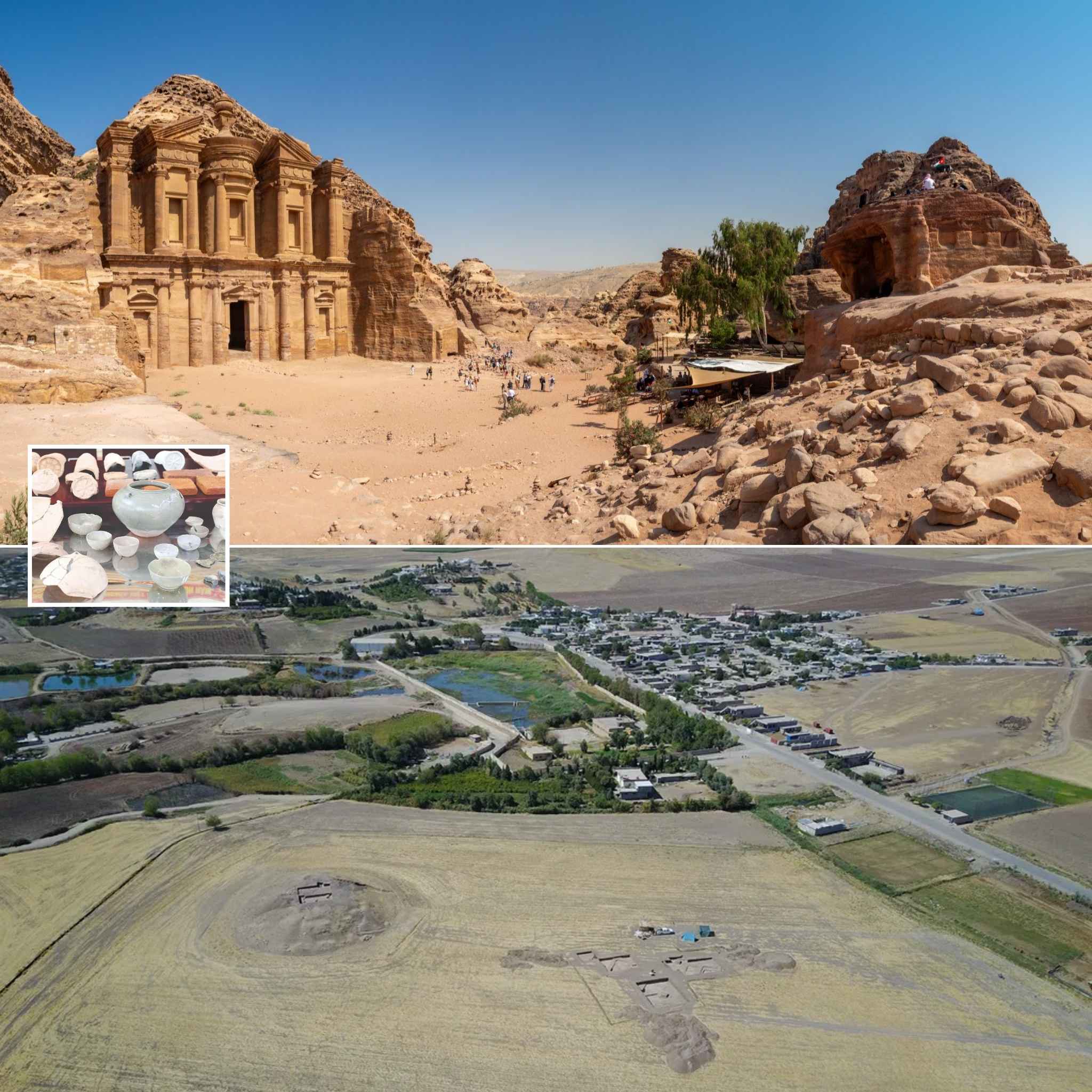
The first discovery emerged from the archaeological site of Gird-î Kazhaw in the Kurdistan region of northern Iraq. Researchers led by Alexander Tamm and Dirk Wicke were investigating ruins first uncovered in 2015 when they made a surprising realization.
Buried beneath layers of earth and stone were the remains of a Christian monastery dating to around A.D. 500.
The finding stunned researchers because no Christian structure had ever before been identified at the site.
Stone pillars, architectural fragments, and the remains of what appeared to be a church complex slowly emerged during excavations. Among the most important discoveries were fragments of a large ceramic jug decorated with an early Christian cross—a powerful symbol during a period when Christianity was rapidly expanding beyond the borders of the Roman Empire.
Yet what made the discovery truly extraordinary was not simply the existence of the church itself.
Only a short distance away stood the remains of a Sasanian Persian fortification, a place where Zoroastrian practices were likely performed under the authority of the Persian Empire.
The close proximity of the two religious centers strongly suggests that Christian monks and Zoroastrian worshippers coexisted peacefully in the same settlement during the fifth and sixth centuries.
For archaeologists, that coexistence offers rare physical evidence of religious tolerance during a time often remembered for imperial rivalry and conflict.
The Shadow of Rival Empires
The world of late antiquity was dominated by two colossal powers: the Roman Empire and the Sasanian Empire.
These superpowers competed constantly for territory, influence, and prestige across the Near East. Wars erupted repeatedly along their frontiers, especially in Mesopotamia and the Caucasus.
Religion became deeply entangled in these struggles.
By the fourth century, Christianity had become the official religion of the Roman Empire following the Edict of Thessalonica issued under Emperor Theodosius I in A.D. 380. Meanwhile, Zoroastrianism remained the dominant faith of the Persian world.
Given the political tensions between the empires, historians long assumed that Christians living under Persian rule often faced suspicion or persecution.
And indeed, periods of repression did occur. Certain Sasanian rulers targeted Christian communities during times of heightened conflict with Rome, fearing divided loyalties among Christian subjects. Followers of other religions, including the now-extinct faith of Manichaeism, also occasionally suffered persecution.
But the new findings from Iraq reveal a more nuanced reality.
Rather than existing in permanent hostility, some communities appear to have developed stable coexistence despite religious differences.
The monastery at Gird-î Kazhaw demonstrates that Christian communities were not only present deep inside Persian-controlled territory but may have flourished alongside Zoroastrian neighbors.
A Huge Archaeological Surprise
According to researchers, the discovery of the monastery was entirely unexpected.
The Kurdistan region has yielded extensive evidence of ancient settlements, fortifications, and Persian influence, yet Christian structures from this early period are relatively rare in the archaeological record there.
The buried church therefore represents a major breakthrough in understanding the spread of Christianity into northern Mesopotamia.
Researchers identified several structural elements consistent with monastic architecture, including carefully arranged stone foundations and central communal areas. The discovery of the cross-decorated jug fragments further confirmed the Christian identity of the site.
Crosses themselves became widespread Christian symbols only after Christianity gained legal recognition in the Roman Empire. Their presence at Gird-î Kazhaw demonstrates how Christian iconography had already spread far beyond imperial Roman borders by the fifth century.
At the same time, the nearby Persian fortification reveals the continued influence of Zoroastrian religious traditions in the region.
Rather than erasing one another, the two faiths appear to have occupied the same cultural landscape simultaneously.
The Sacred Fire of Zoroastrianism
To understand the significance of these discoveries, it is essential to understand the role Zoroastrianism once played across the ancient world.


Zoroastrianism is one of humanity’s oldest monotheistic religions. Founded by the prophet Zarathustra—known in Greek as Zoroaster—it likely emerged around 3,500 years ago in ancient Iran.
At the center of the faith stands Ahura Mazda, the “Wise Lord,” who represents truth, order, and goodness in a cosmic struggle against destructive forces.
Fire became the most recognizable symbol of the religion because it represented purity, divine wisdom, and the presence of Ahura Mazda. Sacred fires burned continuously within temples and ritual spaces.
Under the Achaemenid and later Sasanian empires, Zoroastrianism received strong royal support and became deeply tied to Persian state identity.
Yet despite its official status, the archaeological evidence increasingly suggests that the religion often coexisted with local traditions instead of completely suppressing them.
The Grand Sanctuary of Dedoplis Gora
Hundreds of miles north of Iraq, another remarkable discovery is reinforcing this emerging picture of religious diversity.
At the ancient site of Dedoplis Gora in modern-day Georgia, archaeologists uncovered evidence of a massive sanctuary complex dating back approximately 2,000 years.
The site once belonged to the independent Kingdom of Kartli, a regional power heavily influenced by Persian culture and politics.
Archaeologist David Gagoshidze analyzed three separate sanctuary rooms within the palace complex and found evidence for multiple overlapping religious traditions.
One sanctuary clearly reflected Zoroastrian practices. There, worshippers appear to have conducted daily sacrifices and prayers before an altar associated with Iranian religious customs.
Yet another sanctuary inside the same palace complex revealed something entirely different.
Greek statuettes discovered there indicate worship linked to the cult of Apollo, the Greek deity associated with the sun, prophecy, music, and healing.
And in a third ritual chamber, archaeologists uncovered signs of a syncretic religious tradition combining local Georgian beliefs with broader spiritual influences. Rituals there likely focused on fertility, agriculture, and seasonal harvests.
Rather than competing religions violently erasing one another, the sanctuary complex suggests a society where multiple traditions blended together inside the same elite environment.
A World of Blended Beliefs
The discoveries from Iraq and Georgia reveal something historians increasingly recognize about the ancient world: religious identity was often fluid rather than rigid.
Ancient peoples frequently adopted foreign gods, merged spiritual traditions, and integrated outside rituals into local customs.
In the Persian world especially, cultural exchange flourished across enormous territories stretching from Egypt to Central Asia.
Trade routes carried not only goods but also ideas, myths, philosophies, and religious practices. Greek influence spread eastward after the conquests of Alexander the Great, while Persian traditions influenced neighboring cultures for centuries.
The result was a complex spiritual mosaic.
At Dedoplis Gora, Iranian deities merged with local Georgian astral gods. Greek religious symbolism appeared alongside Persian rituals. In Iraq, Christian monks lived near Zoroastrian communities.
These discoveries challenge modern assumptions that ancient religions always existed in isolation or constant hostility.
Christianity Beyond Rome


The monastery in northern Iraq also sheds light on the extraordinary spread of Christianity during late antiquity.
Although Christianity originated within the Roman Empire, it rapidly expanded beyond imperial borders. Missionaries, merchants, travelers, and monastic communities carried the faith deep into Persia, Mesopotamia, and Central Asia.
By the fifth century, Christian communities existed throughout regions controlled by the Sasanian Empire.
The church at Gird-î Kazhaw fits within this broader movement. Similar structures have been discovered across northern Syria and Mesopotamia, revealing how deeply Christianity penetrated the eastern frontier.
Yet these eastern Christian communities often developed independently from Roman authority. Some even adopted theological traditions later declared heretical by the Roman Church.
The archaeological evidence suggests that religious life in these borderlands was extraordinarily diverse and adaptable.
The Decline of an Ancient Faith
Despite its long dominance, Zoroastrianism eventually entered a dramatic decline following the Islamic conquest of the Sasanian Empire during the seventh century.
As Islam spread across Persia, Zoroastrian communities gradually diminished. Many converted over generations, while others migrated to places such as India, where their descendants became known as Parsis.
Today only around 120,000 practicing Zoroastrians remain worldwide.
Yet the religion’s influence on world history remains immense.
Concepts associated with Zoroastrianism—including cosmic dualism, angels, demons, judgment after death, and the battle between good and evil—may have influenced later religious traditions including Judaism, Christianity, and Islam.
The new archaeological discoveries offer a reminder that Zoroastrianism was not simply an isolated imperial religion but part of a much broader and interconnected cultural world.
Rethinking Ancient Religious Conflict
Modern narratives often portray ancient history as a constant clash of civilizations and faiths. Yet archaeology increasingly reveals a more complicated reality.
People traded across borders, shared artistic styles, adopted foreign gods, and sometimes worshipped side by side even during periods of political rivalry.
The discoveries at Gird-î Kazhaw and Dedoplis Gora provide physical evidence of that coexistence.
A Christian monastery standing beside a Zoroastrian stronghold.
A palace sanctuary honoring Persian gods, Greek deities, and local fertility spirits within the same complex.
These are not signs of isolated civilizations sealed off from one another. They are signs of cultural interaction, adaptation, and coexistence.
The ancient world was not always divided into clean religious boundaries. In many places, identities overlapped in ways that modern societies often struggle to imagine.
Echoes from a Shared Past
The buried church in Iraq and the syncretic temple complex in Georgia together illuminate a forgotten chapter of ancient history—one where faiths crossed paths not only through conquest and persecution but also through daily coexistence.
Monks prayed within sight of Persian fortresses.
Local farmers honored fertility spirits while elites worshipped Apollo and Zoroastrian gods.
Ancient societies were more interconnected than many historical narratives suggest.
For archaeologists, these discoveries are more than isolated ruins. They are windows into a world where cultural exchange shaped spiritual life across empires and frontiers alike.
And in an age still marked by religious tensions, the findings carry a powerful reminder from antiquity itself:
Even rival civilizations sometimes found ways to live side by side.