Anesthetic Detected on Ming Dynasty Surgical Tools Reveals Ancient Chinese Medicine Was Far More Advanced Than Previously Thought
For centuries, stories of ancient Chinese surgery sounded almost mythical.
Historical texts described physicians who numbed pain with mysterious herbal compounds before performing delicate operations using iron blades and tweezers. Scholars debated whether such accounts were exaggerated legends or genuine evidence of advanced medical knowledge lost to time.
Now, a remarkable scientific discovery from eastern China may finally provide direct proof.
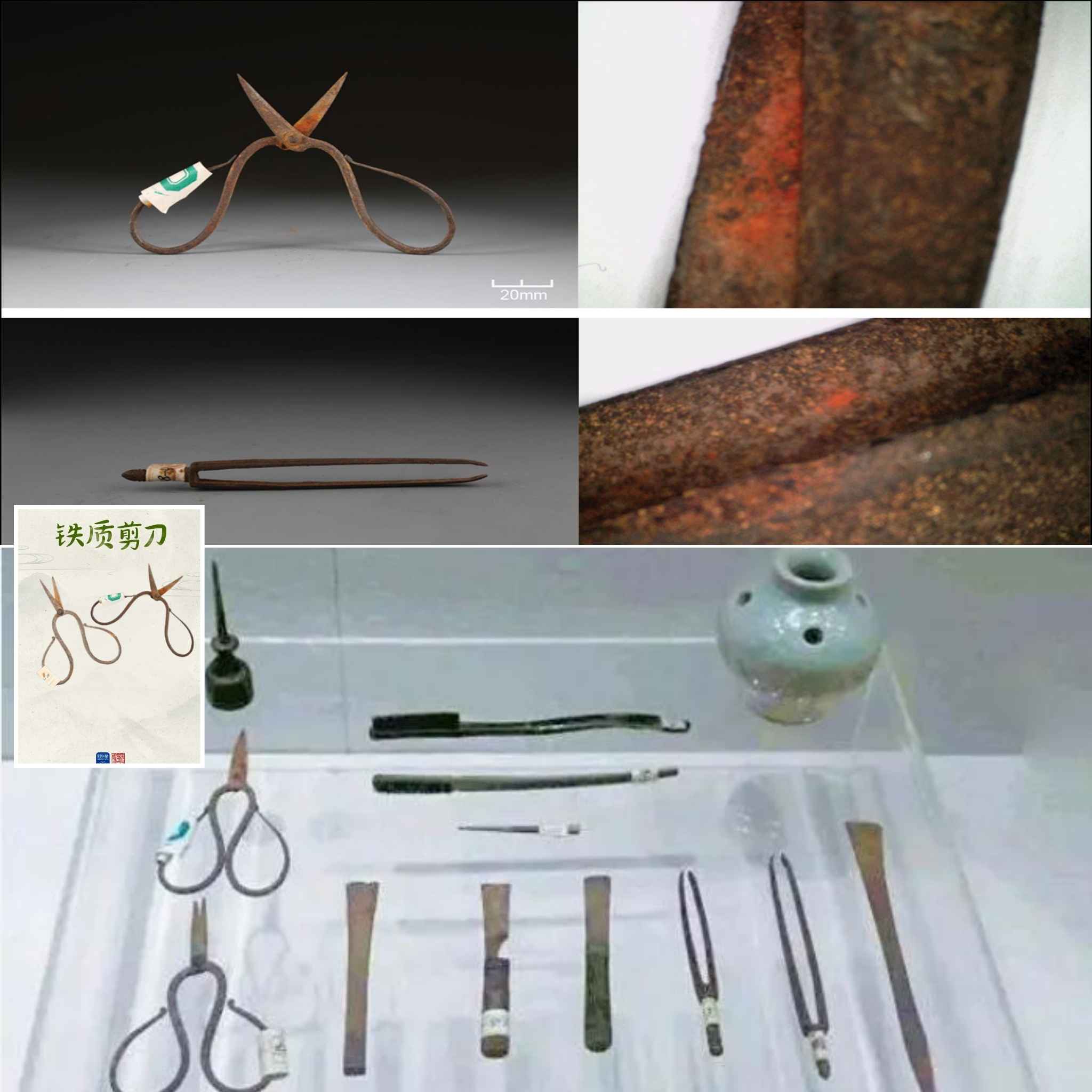
Researchers analyzing a pair of 600-year-old surgical instruments recovered from a Ming Dynasty tomb have identified chemical traces of a powerful anesthetic still lingering on the metal surfaces centuries later. The residue appears to contain aconitine — a highly toxic compound derived from the notorious wolfsbane plant, historically associated with both poison and medicine.
The finding represents the first direct chemical evidence ever discovered of anesthetic substances preserved on ancient surgical tools.
More importantly, it suggests that Ming Dynasty physicians possessed a sophisticated understanding of how to manipulate dangerous natural compounds safely during medical procedures.
The discovery offers an extraordinary glimpse into a forgotten world of medieval Chinese medicine, where surgeons balanced toxicity and healing with astonishing precision.
A Tomb in Jiangyin
The story begins in Jiangyin, a city in eastern China located roughly 90 miles northwest of modern Shanghai.
Decades ago, archaeologists excavating the tomb of Xia Quan uncovered a collection of iron medical instruments dating to the Ming Dynasty, which ruled China between 1368 and 1644. Among the objects were a pair of scissors and metal tweezers that appeared to have been used in surgical procedures.
At first glance, the tools seemed relatively ordinary.
But researchers recently decided to examine them more closely using modern analytical technology capable of detecting microscopic traces invisible to the naked eye.
Leading the investigation was archaeologist Congcang Zhao and his colleagues at Northwest University in China.
Their findings, published in the journal Antiquity, have now transformed these corroded instruments into one of the most important pieces of evidence ever discovered for ancient anesthesia.
Reading Molecules With Laser Light


The investigation began with X-ray fluorescence analysis, a non-destructive technique used to identify the elemental composition of ancient objects.
Researchers confirmed that both the scissors and tweezers were made primarily of iron.
But the most important clues came from tiny reddish particles preserved on the instruments’ surfaces.
Using a microscope, the scientists carefully removed three microscopic residue samples for further testing.
To analyze these particles, they employed micro-Raman spectroscopy, an advanced technique that directs laser light at a sample. When photons from the laser interact with molecules in the material, they scatter in distinctive patterns.
Those scattering patterns function almost like molecular fingerprints.
By studying them, scientists can determine the chemical composition of ancient residues with extraordinary precision.
The results stunned the researchers.
The residues contained evidence of aconitine — an alkaloid toxin associated with plants from the Aconitum genus.
The Deadly Plant Called Wolfsbane
Aconite plants are among the most poisonous plants known to humanity.
Often called wolfsbane, monkshood, or devil’s helmet because of their distinctive flowers, these plants grow naturally across Asia, Europe, and North America.
Even small doses can be lethal.
Aconitine attacks the nervous system and heart, potentially causing paralysis, cardiac arrest, and death.
Historically, the toxin was used in hunting poisons and assassinations. Ancient warriors reportedly coated arrows and blades with extracts from aconite plants.
Yet paradoxically, traditional physicians also used the same deadly substance medicinally.
In carefully controlled doses, aconite could numb pain and reduce inflammation.
Ancient Chinese medical texts describe elaborate preparation methods intended to reduce the plant’s toxicity while preserving its therapeutic properties.
The Ming Dynasty surgeons who used these surgical tools appear to have mastered exactly that balance.
Detoxifying Poison Into Medicine
According to historical medical records, Ming physicians processed aconite using acidic substances designed to neutralize some of its deadly properties.
These detoxification methods included ingredients such as mung beans, vinegar — and, remarkably, the urine of young boys.
While such practices sound shocking today, they reflected sophisticated empirical experimentation developed over centuries.
The acidic compounds altered the plant’s chemistry, reducing its toxicity enough for controlled medicinal use.
Researchers believe the anesthetic detected on the surgical tools was likely prepared as a topical liquid or paste applied directly to the skin before surgery.
The scissors and tweezers themselves were probably used for relatively minor procedures.
First, the physician would apply the numbing compound to the affected area. Then, using the tweezers to grip tissue and the scissors to trim or cut, the operation could proceed with reduced pain.
The anesthetic residue appears concentrated precisely on the functional portions of the instruments, strongly supporting the idea that the tools came into direct contact with the medicinal substance during treatment.
Ancient Chinese Surgery Was More Advanced Than Many Assume


The discovery challenges persistent misconceptions about medieval medicine.
For many years, histories of surgery often emphasized advances made in Europe during the Renaissance while underestimating parallel developments elsewhere in the world.
Yet Chinese physicians had been practicing sophisticated medical techniques for centuries.
Classical Chinese medical literature includes references to anesthesia dating back nearly 2,000 years.
One legendary physician, Hua Tuo, was said to have used an herbal anesthetic known as mafeisan during surgeries in the second century A.D.
Historians long debated whether such descriptions reflected reality or myth because no direct physical evidence survived.
The Jiangyin surgical tools may now provide the clearest material confirmation yet that ancient Chinese surgeons truly employed anesthetic substances in practice.
According to Congcang Zhao, Ming physicians demonstrated “a practical ability to balance drug potency with patient safety.”
That balance required deep observational knowledge of toxicology, dosage, and preparation methods.
A Fragile Medical Revolution
The discovery also highlights how much scientific knowledge may have been lost over time.
Ancient medicine often depended on oral traditions, handwritten manuscripts, and apprenticeship systems vulnerable to war, political upheaval, and cultural change.
Unlike modern pharmaceuticals produced under standardized industrial conditions, traditional compounds relied heavily on practitioner experience and precise preparation methods.
A slight mistake in processing aconite could kill a patient.
That Ming physicians nonetheless used such substances medically suggests remarkable confidence and expertise.
Researchers now suspect that many ancient medical traditions worldwide may have involved more chemically sophisticated practices than previously recognized.
The Strange Preservation of Chemical Memory
One of the most fascinating aspects of the discovery is the survival of chemical traces after six centuries.
How could microscopic residues remain detectable for so long?
The answer lies partly in corrosion.
Researchers believe the anesthetic was likely applied in liquid form during surgery. Tiny droplets or splashes probably remained on the metal surfaces after procedures.
Over time, these organic compounds reacted with iron oxidation, becoming trapped within corrosion layers that effectively sealed and preserved them.
The residue acted almost like a molecular time capsule.
Centuries later, laser spectroscopy allowed scientists to read that preserved chemical signature.
In a sense, the surgical tools still carried the ghostly fingerprints of Ming Dynasty medicine.
Surgery Before Modern Anesthesia


The findings also remind us how terrifying surgery once was.
Before the development of modern anesthesia in the 19th century, operations were agonizing ordeals. Patients often had to be physically restrained during amputations, tumor removals, or wound treatments.
Even minor procedures could become traumatic experiences.
That reality makes the Ming Dynasty discovery especially significant.
It demonstrates that physicians were actively experimenting with pain management centuries before ether and chloroform transformed Western surgery.
Although the ancient Chinese methods were far less precise than modern anesthetics, they represented an important attempt to reduce suffering medically.
The use of topical aconite suggests these physicians understood that surgery required more than mechanical skill alone.
It also required controlling pain.
Poison and Healing in Traditional Medicine
Throughout history, many powerful medicines emerged from dangerous substances.
Foxglove gave rise to heart medications.
Opium became the basis for painkillers.
Snake venom has inspired treatments for blood disorders.
Aconite belongs to that same complicated tradition where poison and medicine exist on a narrow spectrum separated only by dosage and preparation.
Traditional Chinese medicine viewed such substances not simply as toxins, but as powerful tools requiring careful balance.
The Ming Dynasty surgeons appear to have approached aconite with exactly that mindset.
Their challenge was not eliminating danger completely, but controlling it.
Rewriting the History of Anesthesia
The Jiangyin discovery may ultimately force historians to rethink the global history of anesthesia.
Modern narratives often portray anesthesia as a relatively recent Western breakthrough beginning in the 1840s with ether demonstrations in Boston.
But the Chinese evidence suggests much older traditions of chemical pain management existed elsewhere.
The Ming surgical tools provide physical confirmation that ancient physicians were not merely theorizing about anesthetics in texts.
They were using them in real procedures.
That distinction matters enormously.
Archaeology rarely preserves direct evidence of ancient medicines because organic compounds degrade rapidly. The survival of anesthetic residue on these instruments therefore represents an exceptionally rare scientific opportunity.
The Future of Molecular Archaeology
The study also demonstrates the growing power of modern archaeological science.
Techniques such as micro-Raman spectroscopy are allowing researchers to detect traces of ancient foods, medicines, perfumes, pigments, and biological materials once thought permanently lost.
Objects once viewed as simple artifacts now contain invisible chemical histories waiting to be decoded.
Future studies may reveal even more about ancient medical practices across civilizations.
Researchers hope to analyze additional surgical tools from archaeological collections to determine whether similar residues survive elsewhere.
If so, entirely new chapters in the history of medicine may emerge.
A Beam of Light Across Six Centuries
Perhaps the most remarkable aspect of the discovery is its intimacy.
Six hundred years ago, a Ming Dynasty physician used iron scissors and tweezers during a surgical procedure somewhere in eastern China. A medicinal liquid containing detoxified wolfsbane touched the instruments. Tiny traces remained trapped within corrosion for centuries.
Then modern scientists aimed laser light at those traces and read the chemical echoes of that forgotten operation.
In that moment, two worlds briefly touched:
A medieval healer balancing poison and pain…
And a modern laboratory decoding molecules with beams of light.
The result is more than an archaeological discovery.
It is evidence that long before modern hospitals and anesthesia machines existed, ancient physicians were already searching for ways to ease human suffering — and sometimes succeeding with astonishing sophistication.