The Romans and Vikings Left Few Genetic Traces in Britain — But the Anglo-Saxons Changed Everything
New DNA Research Is Rewriting the Story of Britain’s Ancient Invaders
For centuries, the story of Britain has often been told as a succession of invasions.
First came the Romans with their disciplined legions, roads, villas, and imperial power. Then the Anglo-Saxons arrived from northern Europe, reshaping the language and culture of the island forever. Later, Viking raiders stormed ashore in dragon-prowed ships, carving out kingdoms across northern England and leaving behind legends of conquest and bloodshed.
These invasions transformed Britain politically, culturally, and militarily.
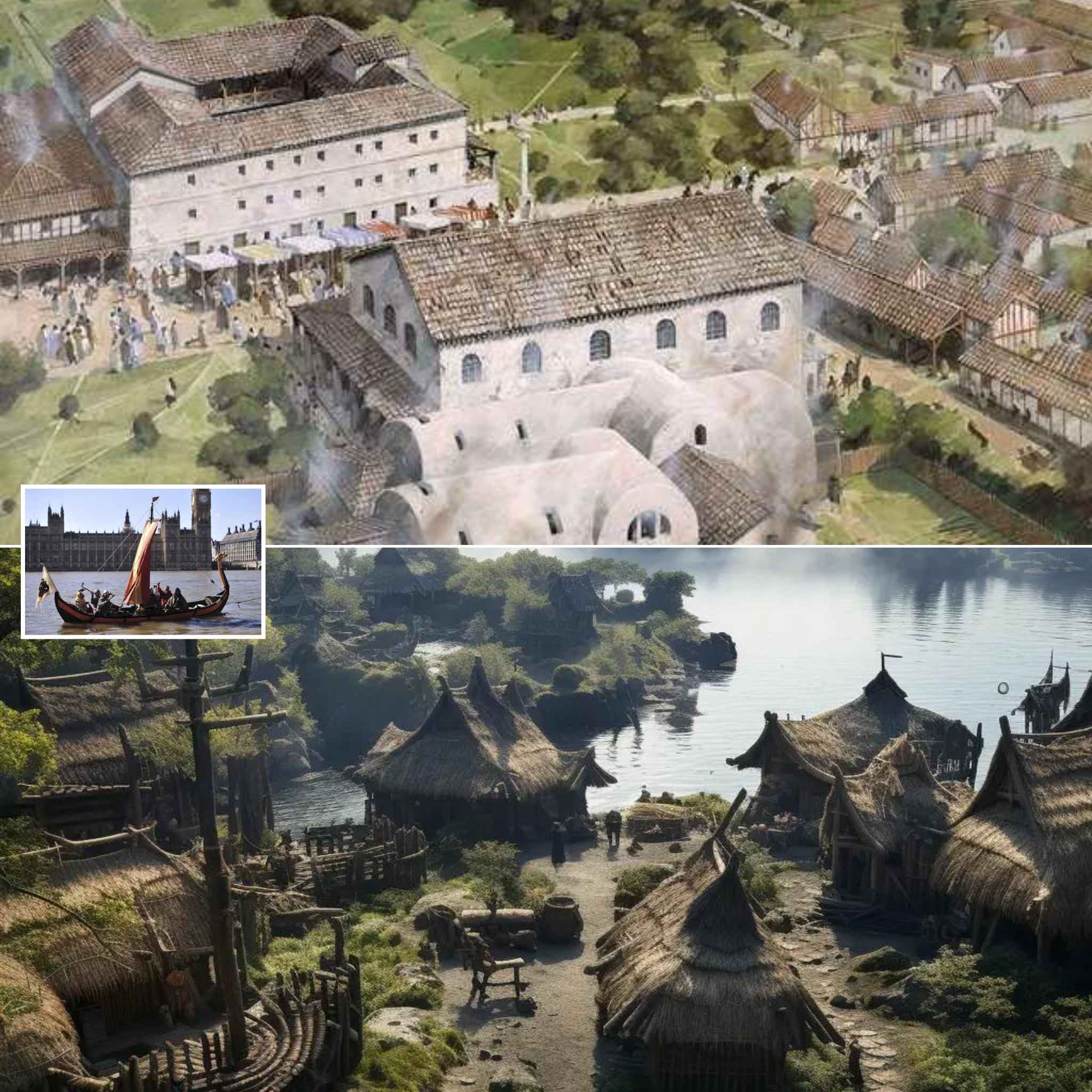
But according to new ancient-DNA research, some of these famous conquerors barely changed Britain genetically at all.
A sweeping genomic study analyzing the remains of more than 1,000 individuals buried across Britain between the Bronze Age and the medieval period suggests that neither the Romans nor the Vikings left a major genetic imprint on the population. Instead, the largest demographic transformation appears to have come from the Anglo-Saxons, whose arrival dramatically reshaped the genetic makeup of England after the collapse of Roman rule.
The findings challenge long-standing assumptions about conquest, migration, and identity in ancient Britain. They also reveal a deeper truth often hidden beneath tales of war and empire: cultural domination does not always mean demographic replacement.
Sometimes an empire conquers a land without replacing its people.
Reconstructing Britain’s Ancient DNA


The new research, published as a preprint on the bioRxiv server, examined the genomes of more than 1,000 individuals buried in Britain between roughly 2550 B.C. and A.D. 1150.
The remains span nearly 3,700 years of British history, from the Bronze Age through the Roman occupation, the Anglo-Saxon migration period, and the Viking Age.
By comparing genetic markers associated with populations from continental Europe and Scandinavia, researchers attempted to determine how much demographic change occurred during Britain’s famous periods of invasion and occupation.
The results were surprising.
During the Roman period, only about 20 percent of the genetic ancestry found in burials could be linked to people from outside Britain.
By contrast, during the Anglo-Saxon era, approximately 70 percent of the ancestry found in many individuals appeared linked to Germanic populations from northern Europe.
Meanwhile, Viking influence — despite centuries of raids and settlements — appeared genetically modest, accounting for only around 4 percent of the ancestry in individuals from Viking-era northern England.
The findings suggest that some of history’s most famous occupations may have transformed Britain culturally far more than biologically.
Rome Conquered Britain — But Not Its Population
The Roman Empire invaded Britain in A.D. 43 under Emperor Claudius.
Within decades, Roman armies controlled much of southern Britain, building roads, forts, bathhouses, temples, and cities across the province known as Britannia.
For nearly 400 years, Roman rule dominated Britain politically and economically.
Roman soldiers guarded frontiers.
Roman administrators governed cities.
Roman culture reshaped daily life.
Yet genetically, the occupation appears surprisingly limited.
The study suggests that while migrants from across the Roman Empire certainly settled in Britain, they did not replace or overwhelm the local population.
Instead, native Britons largely remained where they were.
They simply adopted Roman customs.
An Empire of Culture More Than Blood
This distinction is crucial.
The Roman Empire was not necessarily built through mass population replacement. Instead, Rome often relied on cultural assimilation.
Local elites adopted Roman lifestyles.
Communities embraced Roman architecture, language, religion, and administration.
People became Roman culturally without necessarily being Roman ethnically.
Archaeologist James Gerrard of Newcastle University explained that Roman settlers did not establish themselves in Britain in the same way later Germanic groups would.
The Romans created an imperial system layered atop existing communities.
The Anglo-Saxons, however, appear to have involved much larger-scale population movements.
Britain Before Rome
Long before the Romans arrived, Britain was home to Celtic-speaking peoples organized into tribal societies.
Archaeological evidence suggests these communities had complex social structures, trade networks, and religious traditions.
The DNA study uncovered fascinating evidence about these pre-Roman societies — especially regarding women.
Many pre-Roman burials appeared organized around matrilineal family structures.
Women often remained in their ancestral communities while men moved into their wives’ groups after marriage.
This suggests that women may have held unusually important social positions within some Celtic communities.
The Romanization of Burial Practices
Under Roman rule, these burial patterns changed dramatically.
Roman-era cemeteries showed little evidence of the matrilineal traditions seen in earlier burials.
Instead, the patterns appear more consistent with Roman patriarchal family structures.
This suggests that even though the Roman occupation had limited genetic impact, it profoundly influenced social organization and cultural practices.
Rome changed how people lived, buried their dead, structured families, and understood authority.
The Collapse of Roman Britain


By the early fifth century, the Roman Empire was collapsing under pressure from invasions and internal instability.
Around A.D. 410, Roman troops withdrew from Britain to defend territories closer to the imperial center.
Britain suddenly found itself politically fragmented and vulnerable.
Into this unstable landscape came new migrants from northern Europe.
The Anglo-Saxon Transformation
The arrival of the Anglo-Saxons marked one of the most significant turning points in British history.
Groups identified as Angles, Saxons, and Jutes crossed the North Sea from regions corresponding to modern Germany, Denmark, and the Netherlands.
Unlike the Roman occupation, which layered imperial administration atop local populations, the Anglo-Saxon migration appears to have involved much larger demographic change.
The genetic evidence is striking.
Up to 70 percent of the ancestry in many Anglo-Saxon-era burials derived from Germanic sources.
This suggests large-scale migration and extensive intermarriage.
The newcomers did not simply rule Britain.
They became Britain.
Language and Identity Changed Forever
The Anglo-Saxon migration fundamentally reshaped England.
The English language itself evolved from Old English, a Germanic language brought by Anglo-Saxon settlers.
Political systems changed.
Religious beliefs shifted.
Settlement patterns transformed.
Place names across England still preserve Anglo-Saxon roots today.
The DNA evidence supports what historians have long suspected: the Anglo-Saxon period was not merely an elite takeover but a profound demographic transformation.
Why Were the Anglo-Saxons Different?
Historians continue debating why Anglo-Saxon migration left such a stronger genetic impact than Roman occupation.
Several possibilities exist.
The Roman Empire may have relied more on military occupation and administrative control rather than large-scale settlement.
Anglo-Saxon migration, meanwhile, may have involved entire communities relocating — including families, farmers, and settlers.
Additionally, the collapse of Roman authority may have created demographic instability that allowed newcomers to establish themselves more completely.
Some scholars also suggest that social hierarchies may have favored Anglo-Saxon communities, increasing their demographic influence over generations.
The Viking Mystery
The study’s findings about Vikings are perhaps even more surprising.
For centuries, Viking raids and settlements have occupied a central place in British historical imagination.
Beginning in the late eighth century, Scandinavian raiders attacked monasteries, towns, and coastal settlements.
Eventually, Vikings established permanent settlements across large parts of northern and eastern England.
This region became known as the Danelaw.
Yet genetically, their influence appears remarkably limited.
The Danelaw Without Massive Replacement
Only about 4 percent of the ancestry found in Viking-era northern England burials appeared linked to Iron Age Scandinavian ancestry.
This suggests that although Viking culture strongly influenced northern England, the number of actual Scandinavian migrants may have been relatively small.
Instead, Viking political control and cultural influence likely spread through trade, alliances, military dominance, and elite power structures.
In other words, the Vikings may have ruled parts of England without dramatically replacing its population.
A Cultural Revolution Without Genetic Overhaul


This distinction between cultural influence and genetic replacement is increasingly important in archaeology.
Ancient societies were far more interconnected than once believed.
Ideas, languages, religions, and customs could spread rapidly without requiring massive population movements.
The Vikings left enormous cultural marks on Britain:
- Place names
- Legal traditions
- Trade networks
- Military innovations
- Linguistic influences
Yet genetically, they may have remained a relatively small minority.
Some Experts Urge Caution
Not all archaeologists are fully convinced by the study’s conclusions.
James Gerrard cautioned that the sample size for Roman-period burials remains relatively small compared to the enormous number of Roman-era burials excavated in Britain over decades.
Only around 200 individuals in the study came from the Roman period.
Additionally, many of the burials examined came from urban environments, where migration patterns may have differed significantly from rural areas.
This raises important questions about representativeness.
Ancient DNA studies are powerful tools, but they still rely heavily on which individuals are sampled.
The Limits of Ancient DNA
Ancient DNA research has revolutionized archaeology over the past decade.
Scientists can now trace migrations, ancestry, and intermarriage patterns that were invisible only years ago.
But genetics cannot tell the entire story.
Identity is more than biology.
A person living in Roman Britain may have considered themselves Roman regardless of ancestry.
Similarly, communities influenced by Viking culture may have adopted Scandinavian customs without possessing Scandinavian DNA.
Culture often moves faster than genes.
Britain as a Story of Mixture
The study ultimately reinforces a more nuanced view of Britain’s past.
Britain was never shaped by a single people.
Instead, it evolved through repeated waves of migration, adaptation, and cultural blending.
Romans transformed institutions and urban life.
Anglo-Saxons reshaped language and population structure.
Vikings altered trade, politics, and regional identity.
Each group contributed differently.
Some left strong genetic legacies.
Others left mainly cultural ones.
Ancient Britain Was More Complex Than Invasion Narratives
Traditional historical narratives often simplify ancient invasions into stories of conquest and replacement.
But the reality appears far more complicated.
Communities intermarried selectively.
Some newcomers integrated peacefully.
Others ruled without demographic dominance.
Many local populations persisted through centuries of political upheaval.
The DNA evidence reveals continuity alongside change.
A New Understanding of Empire
Perhaps the study’s most important lesson is that empires do not always spread through mass migration.
The Roman Empire changed Britain profoundly without replacing most of its population.
Roman roads, architecture, governance, religion, and social organization transformed the island.
Yet biologically, Britain remained largely British.
This challenges simplistic assumptions about conquest throughout human history.
The Ghosts Beneath Modern Britain
Today, the genetic echoes of ancient migrations still exist within modern populations.
But those echoes are uneven.
The Anglo-Saxon migration appears deeply embedded in English ancestry.
Roman influence survives more strongly in archaeology and infrastructure than in DNA.
Viking heritage persists heavily in language, law, and folklore even where genetic traces are faint.
Together, they form a layered human story written not only in bones and genes, but also in culture, memory, and identity.
The Story Is Still Unfolding
Ancient DNA research remains a rapidly evolving field.
As scientists analyze more burials across wider regions, the picture of Britain’s past will continue to sharpen.
Future studies may reveal hidden migration waves, regional differences, or entirely new patterns.
What already seems clear, however, is that Britain’s history cannot be reduced to simple invasion narratives.
Its people were shaped not only by conquerors and kings, but by centuries of adaptation, coexistence, and cultural exchange.
The Romans may have built Britain’s roads.
The Vikings may have terrorized its coasts.
But genetically, it was the Anglo-Saxons who transformed the island most profoundly — leaving behind traces still visible in Britain today.