6 August 2026
LOS ANGELES — Teri Garr, the beloved actress who stole scenes and hearts as the pigtailed assistant Inga in Mel Brooks' 1974 horror comedy classic "Young Frankenstein," left behind a final revelation before her death that rewrites what fans thought they knew about the film's most electric partnership. For decades, audiences marveled at the undeniable spark between Garr's sunny, spontaneous Inga and Gene Wilder's manic, brilliant Dr. Frederick Frankenstein. What most fans never figured out, Garr revealed in her final years, was just how deeply that chemistry extended beyond the screen — and how Wilder's personal feelings for her changed the trajectory of her entire career. The story begins in the early 1970s, when Garr was just one of countless young actresses struggling to break through in Hollywood through bit parts in Elvis Presley musicals and television guest spots. She had danced in the background of "Viva Las Vegas," played a secretary on "Star Trek," and taken small roles wherever she could find them. Casting directors saw her as a pretty face, another girl in a lineup of hopefuls. That all changed when comedy legend Gene Wilder caught sight of her. Wilder, who co-wrote "Young Frankenstein" with Mel Brooks, became so taken with Garr that he personally campaigned for the largely unknown actress to land the role of Inga. When Brooks questioned whether Garr could handle the part, asking pointedly, "But can she act?" Wilder waved off the concern without hesitation. Mel Brooks later revealed just how smitten Wilder was. The legendary director recalled that Wilder was absolutely crazy about Garr, and that single-minded devotion to the actress proved to be the turning point in her career. Wilder wasn't just interested in her talent — he was drawn to her, and that attraction fueled his determination to bring her into the production. Garr's audition itself became the stuff of Hollywood legend. The script didn't call for a German accent, but Garr walked into the room and made a bold choice that could have been genius or career suicide. She delivered her lines with a hilariously exaggerated Teutonic accent, turning up the charm and ridiculousness to maximum levels. Brooks initially wasn't sure how to react, but Wilder understood immediately. He saw the spark, the sly wit beneath the exaggerated vowels. Once cast, Garr transformed Inga from what could have been a one-dimensional comedic accessory into the emotional heartbeat of the film. She played the character not as a stereotypical dumb blonde but as an optimist, a dreamer, someone genuinely delighted by the madness unfolding around her. "She wasn't stupid," Garr once explained. "She was just happy, and that's powerful in comedy." The chemistry between Garr and Wilder became the stuff of cinematic legend. From their very first scenes together, something electric happened that couldn't be rehearsed or manufactured. Garr described the dynamic as pure, unfiltered chemistry — a mix of wit, warmth, and just the right amount of chaos. She once likened Wilder to "a balloon filled with too much helium," adding, "and I got to hold the string." Wilder brought a wild-eyed intensity to every scene, always teetering between genius and breakdown. Garr's grounded, intuitive energy balanced him perfectly. Together, they turned tension into timing and madness into magic. Theirs was a partnership reminiscent of Fred Astaire and Ginger Rogers, dancing through dialogue with each beat landing exactly where it should. The now-iconic "roll in the hay" scene was born from pure collaboration. What begins as a scenic wagon ride quickly descends into absurdity as Garr flops around the hay cart like a slapstick ballerina. That moment, which has become one of the most beloved comedic sequences in film history, was the product of riffing and instinct, created in the space Wilder and Garr built together through mutual trust and creative freedom. Wilder proved to be a generous scene partner who wanted everyone around him to shine. He encouraged Garr to improvise, to explore her character beyond what was written on the page. Their shared love of old Hollywood comedies — the fast-paced dialogue, the theatrical timing, the heightened yet human characters — gave their scenes together an almost vintage glow. Off camera, the professional respect between Garr and Wilder ran deep. Garr admired Wilder's creative discipline and his ability to swing from quiet contemplation to explosive comedy in a heartbeat. She called him one of the most sensitive, brilliant minds she had ever worked with. "He wasn't loud. He wasn't flashy. But you could feel how much he cared," she said in one interview. "He cared about the story, the cast, the crew — about getting it right, but never at the expense of joy." What fans never knew until Garr's final revelation was the depth of their personal connection. After filming on "Young Frankenstein" concluded, and as Wilder's divorce from his then-wife was being finalized, he began dating Garr. Their romance lasted only a few months, but the bond they forged endured for decades. Garr spoke about their brief relationship with characteristic warmth and candor. "Gene's the best," she said. "We dated for a while, and he was as nice of a guy in real life as he was on screen." Wilder confirmed that the two remained good friends after their split, proving that their connection never needed to be loud or flashy. It lived in the glances, the hesitation before a punchline, the effortless rhythm they shared.…
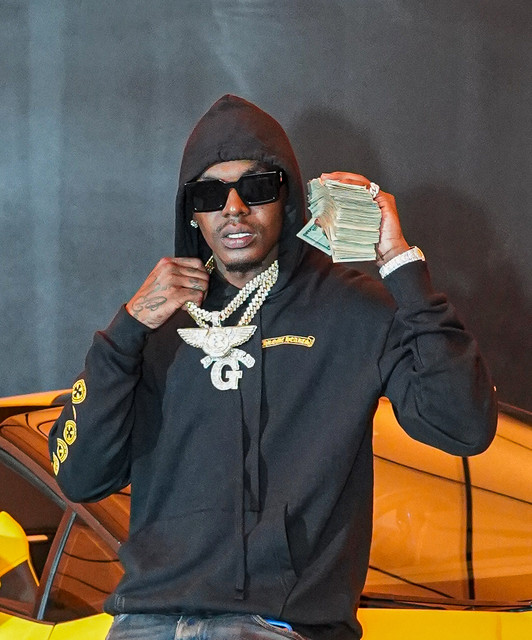
 Brooklyn, NY — Rapper Bentley Bugz has been charged in federal court with alleged sex trafficking and interstate prostitution involving a 16-year-old girl.
 Court documents indicate that authorities recovered digital content allegedly connected to the case, including photographs and videos. Prosecutors also claim Bentley Bugz used threats to maintain control over the alleged victim.