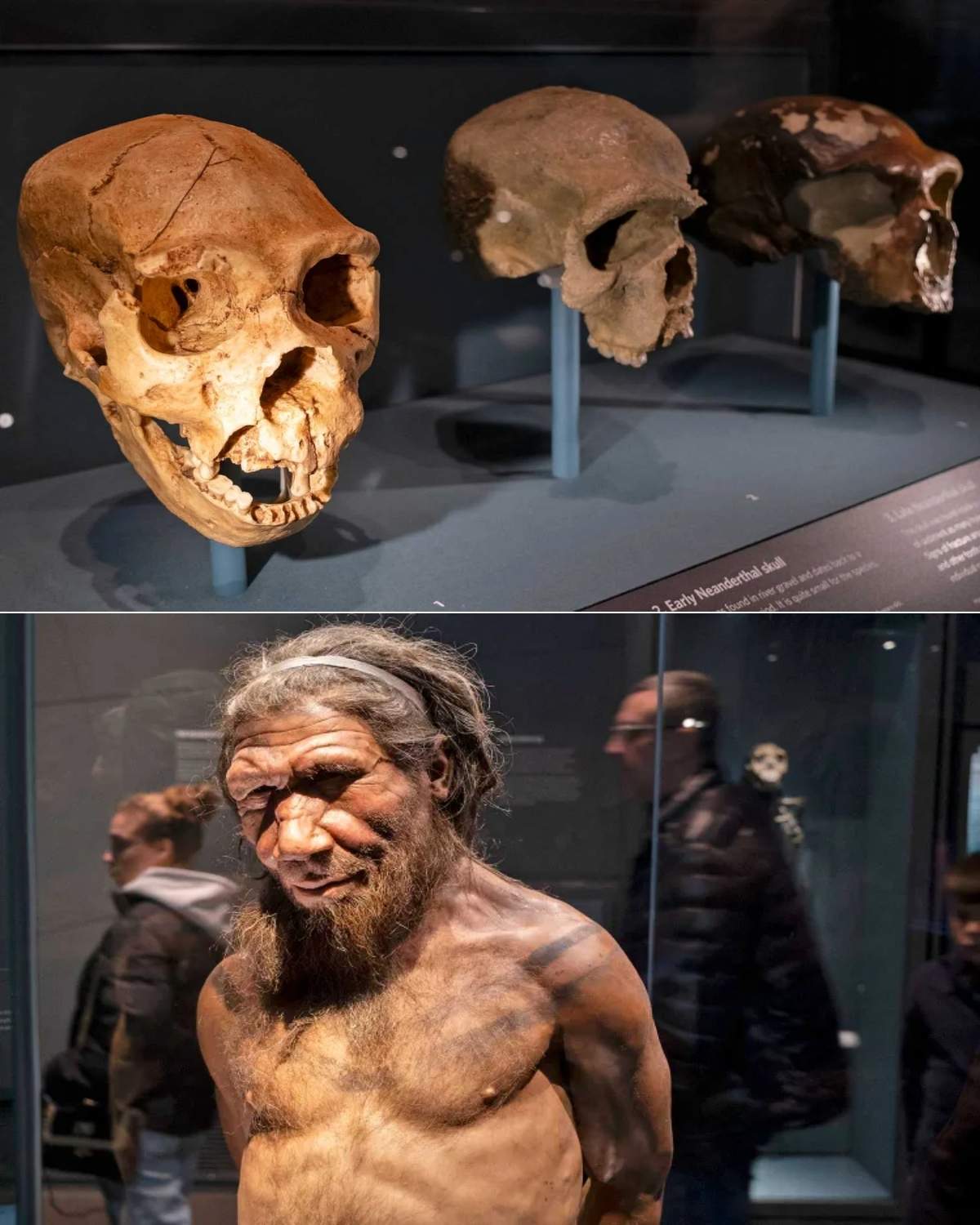
A new genetic study is shedding fresh light on one of the most fascinating chapters of human evolution: the interactions between early modern humans and Neanderthals. While scientists have long known that the two groups interbred tens of thousands of years ago, researchers now believe those encounters may not have been as random as once thought.
Published in the journal Science, the study suggests that when Neanderthals and early humans had children together, the vast majority of successful pairings appear to have involved Neanderthal males and human females. In contrast, unions between human males and Neanderthal females seem to have been far less common in the genetic record.
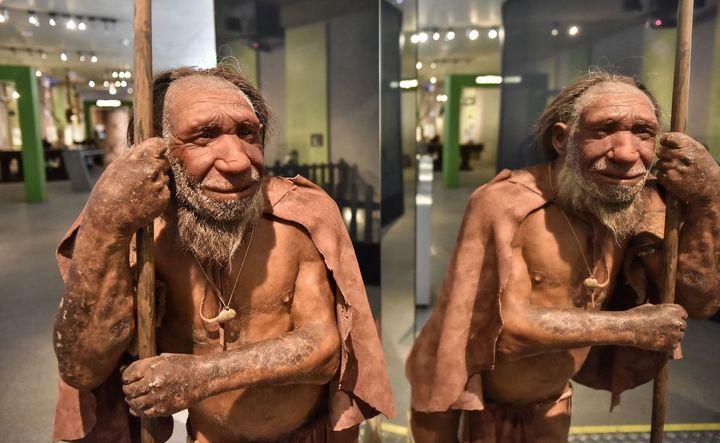
The finding offers a new perspective on the complex relationship between two closely related human species that shared parts of Eurasia for thousands of years.
For decades, genetic evidence has shown that modern humans carry traces of Neanderthal DNA. Today, many people of European and Asian ancestry possess small percentages of Neanderthal genetic material, a legacy of encounters that occurred after groups of modern humans migrated out of Africa roughly 45,000 to 49,000 years ago and entered regions already inhabited by Neanderthals.
What remained unclear, however, was whether these interactions occurred equally in both directions or followed a more specific pattern.
By examining genetic signatures left behind in modern populations, researchers found evidence suggesting a striking imbalance. The data indicate that successful offspring were more often born from Neanderthal fathers and human mothers than from the reverse combination.
This pattern raises intriguing questions about the nature of contact between the two groups.
The study’s authors suggest that the imbalance could reflect some form of “partner preference,” meaning the pairings may have occurred more frequently in one direction due to social behavior, migration dynamics, or the circumstances under which humans and Neanderthals encountered one another. Rather than random interactions between neighboring populations, the findings hint at a more structured relationship that scientists are only beginning to understand.
One possibility involves population movement. When modern humans expanded into Eurasia, they entered territories where Neanderthals had already lived for hundreds of thousands of years. Encounters may have occurred within social environments that favored certain types of relationships over others.
Another possibility involves differences in group organization, mating behavior, or social status between the two populations. While no direct evidence currently exists to confirm these scenarios, the new findings provide a framework for investigating how these ancient communities interacted.
Benjamin Peter, a population geneticist at the Max Planck Institute for Evolutionary Anthropology who was not involved in the research, described the study as one of the strongest efforts yet to address this longstanding question. According to Peter, the research represents a significant step forward in understanding the dynamics behind human-Neanderthal interbreeding.
The findings have also sparked discussion among paleoanthropologists about what these patterns might reveal regarding social relationships between the two groups.
Steven Churchill, a paleoanthropologist at Duke University who was not involved in the study, noted that if Neanderthal males frequently formed relationships with human females, such interactions could have influenced broader social dynamics. In theory, competition for mates may have contributed to tensions, rivalries, or unfriendly encounters between neighboring populations.
However, researchers emphasize that social preference is only one possible explanation.
Biology may have played an equally important role.

The authors point out that offspring born from human fathers and Neanderthal mothers may have experienced lower survival rates than children produced by Neanderthal fathers and human mothers. If those hybrid children were less likely to survive and pass on their genes, their genetic signatures would naturally become much rarer over time.
In that scenario, the imbalance seen in modern DNA would not necessarily reflect behavioral preferences but rather differences in reproductive success and survival.
This distinction is important because genetics can reveal patterns but not always the exact causes behind them. The DNA records the outcome of ancient interactions, but interpreting the social realities behind those outcomes remains challenging.
What makes the study particularly significant is that it moves the conversation beyond the simple question of whether Neanderthals and humans interbred. That fact is already well established. Instead, researchers are now investigating how those interactions occurred, who was involved, and what those relationships reveal about two human groups that once shared the same landscapes.
The results also reinforce a growing view among anthropologists that Neanderthals were not isolated evolutionary dead ends. They interacted with modern humans, exchanged genes, and became part of the broader story of human evolution. Every new genetic discovery helps fill in another piece of that story.
Although many questions remain unanswered, the study provides one of the clearest indications yet that the relationship between Neanderthals and early humans was shaped by more than simple proximity. Whether driven by social behavior, migration patterns, biological factors, or a combination of all three, these ancient encounters left a lasting imprint that can still be found in the DNA of millions of people living today.
More than 40,000 years after the last Neanderthals disappeared, their genetic legacy continues to help scientists uncover the hidden details of humanity’s distant past.