Ancient DNA Reveals Migration and Marriage Patterns in Pre-Inca Peru
For centuries, the deserts and river valleys of Peru’s Pacific coast have preserved the silent traces of civilizations that flourished long before the rise of the Inca Empire. Massive temples, elaborate burial grounds, and intricate irrigation systems testify to the achievements of these ancient societies. Yet despite decades of archaeological investigation, one fundamental question has remained difficult to answer: How mobile were the people who lived along the Andean coast before the Inca united the region?
A groundbreaking genetic study is now providing some of the clearest answers ever obtained. By combining ancient DNA analysis with archaeological evidence and historical records, researchers have uncovered a fascinating story of migration, family networks, and cultural identity that unfolded centuries before the Inca expanded their empire.
The findings reveal that pre-Inca communities were far more interconnected than previously believed. Coastal populations traveled remarkable distances, established new settlements, maintained distinctive cultural traditions, and developed complex marriage patterns that preserved their identity across generations.
The study not only transforms our understanding of ancient Peru but also demonstrates the extraordinary power of modern genetic science to reconstruct forgotten chapters of human history.
A Window Into Ancient Peru
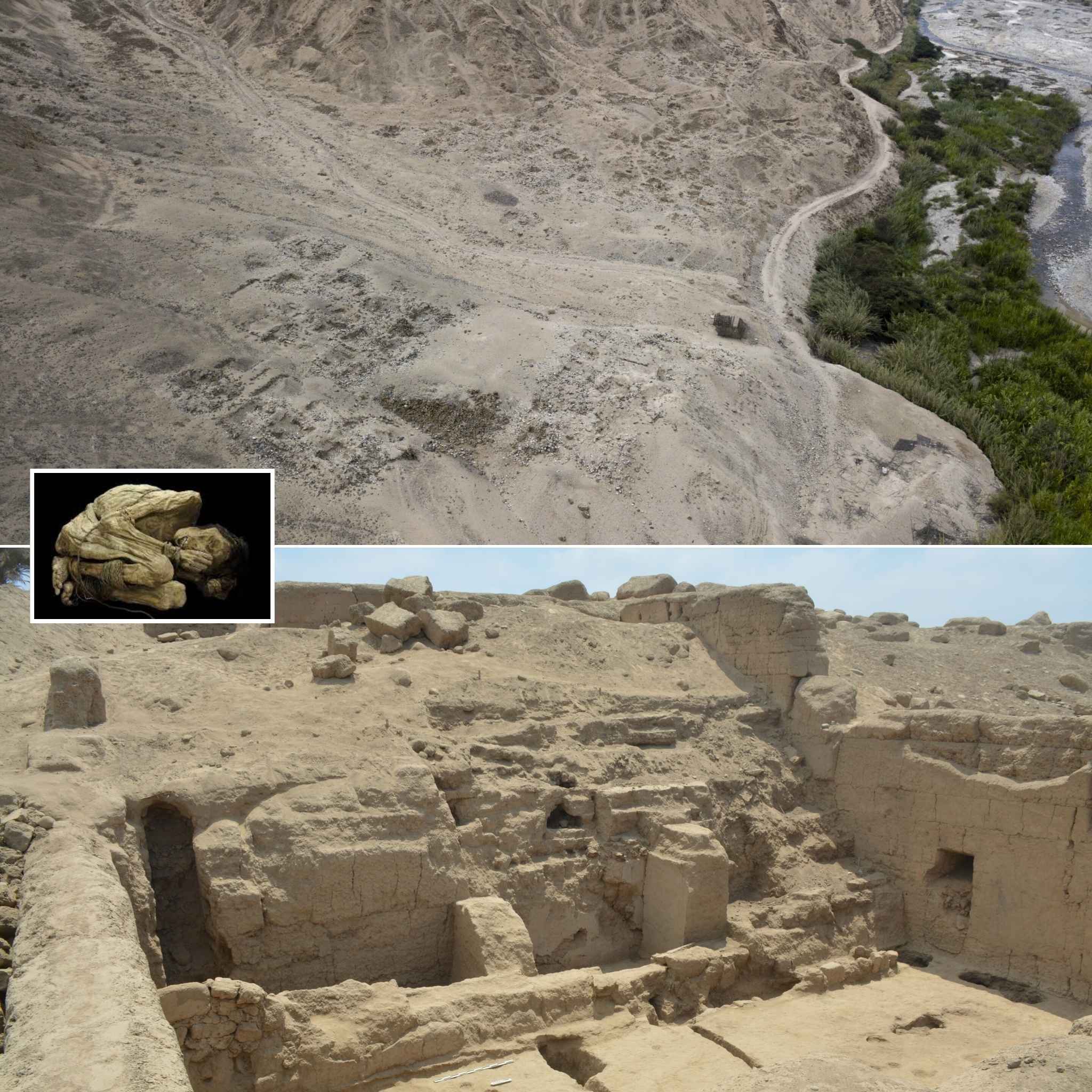
The research focused on the Chincha Valley, a fertile coastal region located in southern Peru. Today the valley appears relatively isolated, but during the centuries before European contact it was one of the most important centers along the Pacific coast.
The Chincha people became renowned merchants and sailors, establishing trade networks that stretched across vast distances. Their strategic location allowed them to connect communities from northern Peru to regions far south along the coast.
Archaeologists have long suspected that migration played an important role in shaping the valley’s population. However, direct evidence remained elusive.
Ancient DNA offered a solution.
By extracting genetic material from human remains recovered from burial sites throughout the region, researchers were able to reconstruct relationships between individuals and track patterns of ancestry over time.
The results revealed a surprisingly dynamic population history.
Following the Genetic Trail
The research team analyzed DNA from 21 individuals recovered from multiple archaeological sites in the Chincha Valley.
While the sample size may appear modest, the genetic information preserved within ancient bones can provide an astonishing amount of detail.
Scientists compared the genomes of these individuals with previously published ancient DNA datasets from across the Andes and coastal Peru. This allowed them to identify ancestral origins and reconstruct movements of people over centuries.
The findings indicated that many individuals buried in the Chincha Valley possessed ancestry linked to Peru’s northern coast.
Some of these ancestral connections extended more than 700 kilometers (435 miles).
Such distances are remarkable considering the absence of modern transportation.
The evidence suggests that groups migrated southward along the Pacific coast, eventually settling in the Chincha region and integrating into local communities.
Far from being isolated villages, pre-Inca societies were connected by networks of travel, exchange, and social interaction that stretched across much of the Andean coastline.

The Migrants Who Changed the Valley
According to the genetic evidence, migration into Chincha was not a brief or isolated event.
Instead, it appears to have been a long-term process involving multiple generations.
Migrants arrived from different coastal regions and gradually established themselves within the valley. Over time, they intermarried with neighboring populations while maintaining aspects of their own cultural identity.
This mixture created a genetically diverse society unlike anything previously documented in the region.
Researchers found evidence that ancestral lineages from northern, central, and southern Peru became intertwined over hundreds of years.
Yet despite this diversity, the migrant communities preserved certain traditions that distinguished them from their neighbors.
These customs became powerful markers of identity and belonging.
Shaping Identity Through Cranial Modification
One of the most striking cultural practices identified in the study was cranial modification.
This tradition involved carefully shaping an infant’s skull during early childhood using boards, bindings, or other devices.
Because the skull remains flexible during infancy, gradual pressure could permanently alter its shape.
The resulting head forms varied from region to region and often served as visible symbols of social or ethnic identity.
In Chincha, cranial modification became an important marker linking migrants to their ancestral origins.
Archaeologists have documented hundreds of modified skulls throughout the region, demonstrating that the practice remained widespread for centuries.
The distinctive head shapes immediately identified individuals as members of particular communities.
Much like clothing, language, or religious practices today, cranial modification communicated group membership and cultural heritage.
Red Pigment and the Language of Death
Another unique tradition involved the use of red pigment in funerary rituals.
After death, individuals were often painted with a distinctive red substance before burial.
This practice had deep symbolic significance.
Red pigments frequently represented concepts such as rebirth, transformation, ancestry, or spiritual protection in ancient societies throughout the Americas.
In Chincha, the application of red pigment appears closely associated with the migrant communities identified through DNA analysis.
The repeated appearance of this tradition across generations suggests a conscious effort to preserve cultural identity despite living among diverse neighboring populations.
These burial practices created a powerful connection between the living and the dead.
They also reinforced a shared sense of belonging that survived for centuries.

Family, Marriage, and Social Boundaries
Perhaps the most surprising discovery involved patterns of marriage and kinship.
DNA analysis revealed unusually high levels of endogamy within certain burial groups.
Endogamy refers to marriage within a specific community, family network, or social group.
The practice has been documented throughout human history and is often used to preserve cultural identity, property rights, political influence, or social status.
Several Chincha burial sites contained individuals who were closely related genetically.
Researchers identified extended family networks spanning multiple generations.
One burial complex appeared to contain members of a single large family group that consistently married within its own community.
This pattern suggests that maintaining group identity was a major priority.
Although migrants interacted peacefully with neighboring populations, they often preferred to marry within established social networks.
The result was a remarkable balance between cultural exchange and cultural preservation.
The Importance of the Ayllu
The genetic findings support long-standing theories regarding the importance of kin-based social organizations known as ayllus.
In Andean society, the ayllu functioned as an extended family community united by shared ancestry, territory, and resources.
Membership in an ayllu provided economic security, social identity, and political support.
Families worked together, shared land, and participated collectively in religious ceremonies.
The Chincha burials suggest that these kinship groups played a central role in organizing society long before the rise of the Inca Empire.
Individuals buried together were often biologically related, reinforcing the idea that family connections remained central to community life.
The DNA evidence provides some of the strongest support yet for the importance of ayllu structures in pre-Inca Peru.
Migration During Times of Change
One of the most intriguing aspects of the study is its timing.
The migration patterns identified by researchers coincide with major political and social transformations occurring along Peru’s coast between the 13th and 15th centuries.
This period witnessed the emergence of powerful regional states, expanding trade networks, and increasing competition for resources.
Such conditions often encourage population movement.
Communities may relocate in search of economic opportunities, political alliances, or environmental stability.
Although researchers cannot yet determine exactly why northern groups migrated southward into Chincha, the broader historical context suggests that major regional changes likely played a role.
Understanding these motivations remains one of the most important questions for future research.
Genetic Diversity Before the Inca
The study challenges older assumptions that pre-Inca societies were largely isolated and static.
Instead, the evidence points toward a highly dynamic world characterized by mobility and interaction.
People moved across vast distances.
Communities exchanged ideas and traditions.
Families maintained connections across multiple regions.
The genetic diversity uncovered in Chincha demonstrates that cultural and biological exchange was already well established before the Inca expanded their empire.
When the Inca eventually incorporated the coastal regions into their realm, they encountered populations that were already deeply connected through centuries of migration and interaction.
In many ways, the empire inherited and expanded networks that already existed.
Ancient DNA and the Future of Archaeology
The significance of this research extends far beyond Peru.
Ancient DNA has emerged as one of the most transformative tools in modern archaeology.
Only a few decades ago, questions about migration, ancestry, and family relationships often relied on indirect evidence such as artifacts, architecture, or written records.
Today, genetic analysis allows researchers to trace biological connections with extraordinary precision.
Entire population histories can be reconstructed from fragments of bone preserved for centuries.
The Chincha study demonstrates how genetics can reveal aspects of ancient life that would otherwise remain invisible.
Marriage practices, migration routes, family structures, and social boundaries all emerge from the DNA itself.
As technology continues to improve, similar studies are likely to revolutionize our understanding of ancient societies around the world.
Rewriting the Story of Coastal Peru
The ancient communities of Peru’s Pacific coast were not isolated villages waiting for the arrival of the Inca.
They were participants in a vibrant and interconnected world.
They traveled hundreds of kilometers along the coastline.
They established new settlements and forged alliances with neighboring groups.
They preserved distinctive cultural traditions through cranial modification, funerary rituals, and marriage practices.
They organized themselves around powerful kinship networks that shaped every aspect of daily life.
Most importantly, they created societies capable of maintaining both cultural identity and social flexibility across generations.
The DNA evidence from Chincha reveals a population that was simultaneously rooted and mobile, traditional and adaptive.
Long before the rise of imperial powers, these coastal communities were already building the complex social networks that would help define Andean civilization.
Through the remarkable preservation of ancient genetic material, their story is finally beginning to emerge from the shadows of history.