The Lost Queen of Pedralbes: DNA, Murder Mysteries, and the Secrets Hidden in Barcelona’s Medieval Tombs
For seven centuries, Queen Elisenda of Montcada rested in silence beneath the stone walls of the Royal Monastery of Santa Maria de Pedralbes in Barcelona. Generations of nuns walked past her magnificent tomb. Historians studied her life through manuscripts and royal records. Visitors admired the elegant Gothic architecture she helped create.
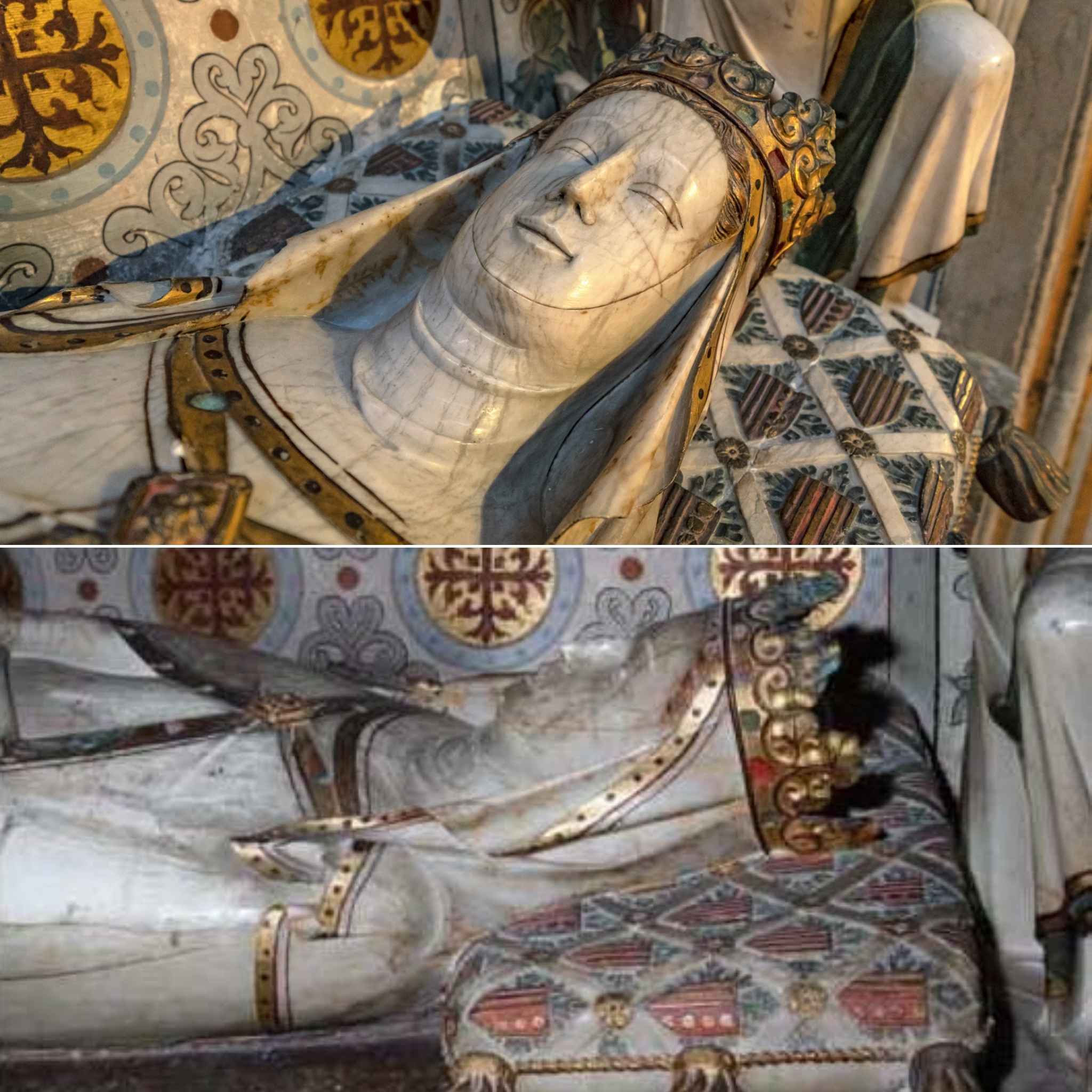
Yet beneath the marble and carved stone, a far more intimate story remained hidden.
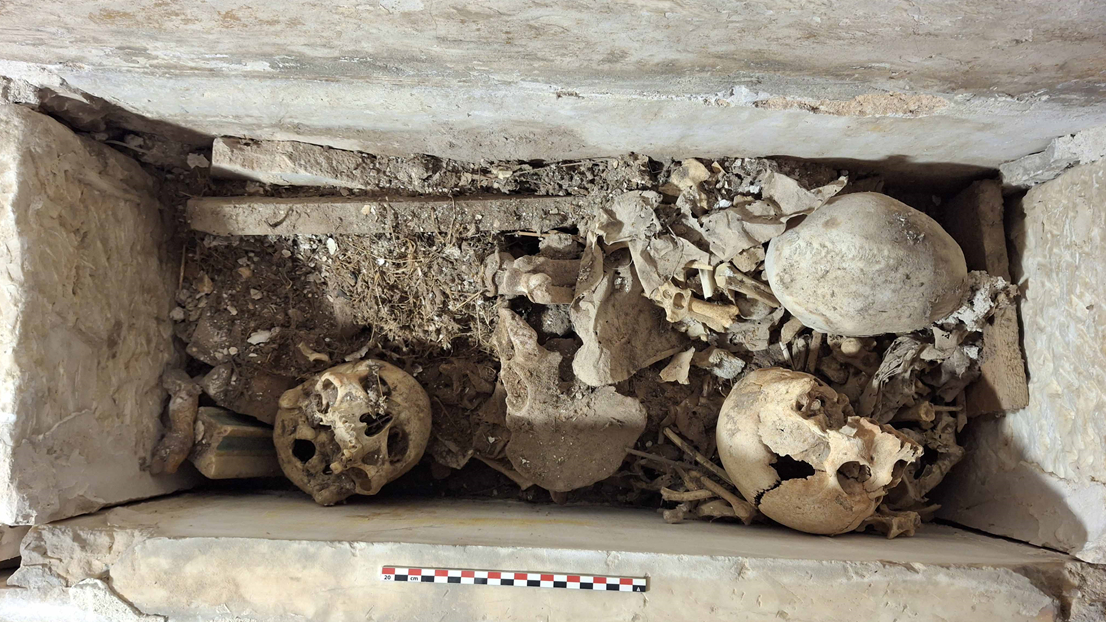
In 2026, as part of the celebrations marking the 700th anniversary of the monastery’s founding, archaeologists carefully opened a series of medieval tombs associated with the earliest years of the religious complex. What they discovered exceeded all expectations.
The project revealed not only the skeletal remains of one of medieval Europe’s most influential queens but also a collection of human stories frozen in time: elderly noblewomen who spent their final years within the monastery walls, mysterious men bearing fatal stab wounds, a pregnant woman who died before giving birth, and an abbess whose face carried evidence of a violent injury inflicted shortly before death.
Together, these discoveries are transforming historians’ understanding of medieval Catalonia and offering a rare glimpse into the lives, deaths, and memories of the people who shaped one of Europe’s most remarkable religious institutions.
A Queen Between Two Worlds
When Elisenda of Montcada married King James II of Aragon in 1322, she entered one of the most powerful royal courts in Europe.
The marriage itself attracted attention throughout the Mediterranean world. Elisenda was approximately thirty years old, while James II was fifty-five and already a widower three times over. Through this union, Elisenda instantly became stepmother to ten royal children and assumed a prominent role in one of the era’s most influential kingdoms.
James II ruled a vast territory that stretched across much of eastern Spain and included extensive Mediterranean possessions. His reign was marked by political expansion, commercial prosperity, and cultural development.
Yet Elisenda’s legacy would ultimately become inseparable from religion rather than politics.
As James approached the end of his life, the queen founded the Royal Monastery of Santa Maria de Pedralbes in 1326. The institution was entrusted to the Poor Clares, a contemplative order of nuns dedicated to prayer, simplicity, and spiritual devotion.
The monastery quickly became one of the most prestigious religious foundations in Catalonia.
When James died in 1327, Elisenda withdrew from royal life but did not entirely abandon the world of politics. Instead, she moved into a small palace built beside the monastery.
From there she spent nearly four decades overseeing the institution she had created while maintaining influence within Catalan society.
Her unique position allowed her to exist between two worlds: that of a queen and that of a penitent religious patron.
Opening the Tomb
For centuries, historians believed they understood Queen Elisenda’s story.
The written records were extensive. Her charitable works were well documented. Her relationship with the monastery was clear.
Yet archaeology offered an opportunity to go beyond the historical texts.
When researchers finally opened her tomb, they discovered something strikingly different from what many had expected.
Instead of a lavish royal burial filled with jewels and symbols of power, Elisenda’s remains rested within a modest wooden container positioned inside a larger funerary space.
The arrangement was carefully planned.
One side of the tomb faced the church, symbolizing her role as a queen and political figure. The other faced the cloister, representing her identity as a humble religious patron.
This architectural duality perfectly reflected the image Elisenda wished to leave behind.
Even in death, she remained suspended between sovereignty and spirituality.
The skeletal remains revealed a woman who had reached approximately seventy years of age, remarkably old by medieval standards.
Analysis of her bones showed evidence of osteoarthritis, a condition commonly associated with aging. These findings matched historical records almost perfectly.
But despite her simple monastic clothing, traces of luxury remained.
Researchers identified fragments of gold-embroidered silk within the tomb, suggesting that elements of royal status accompanied her burial.
They also discovered remains of rosemary and myrtle, aromatic plants frequently associated with medieval funerary rituals.
The combination of humility and prestige perfectly captured the contradictions of Elisenda’s remarkable life.
The Abbess With the Mysterious Wound
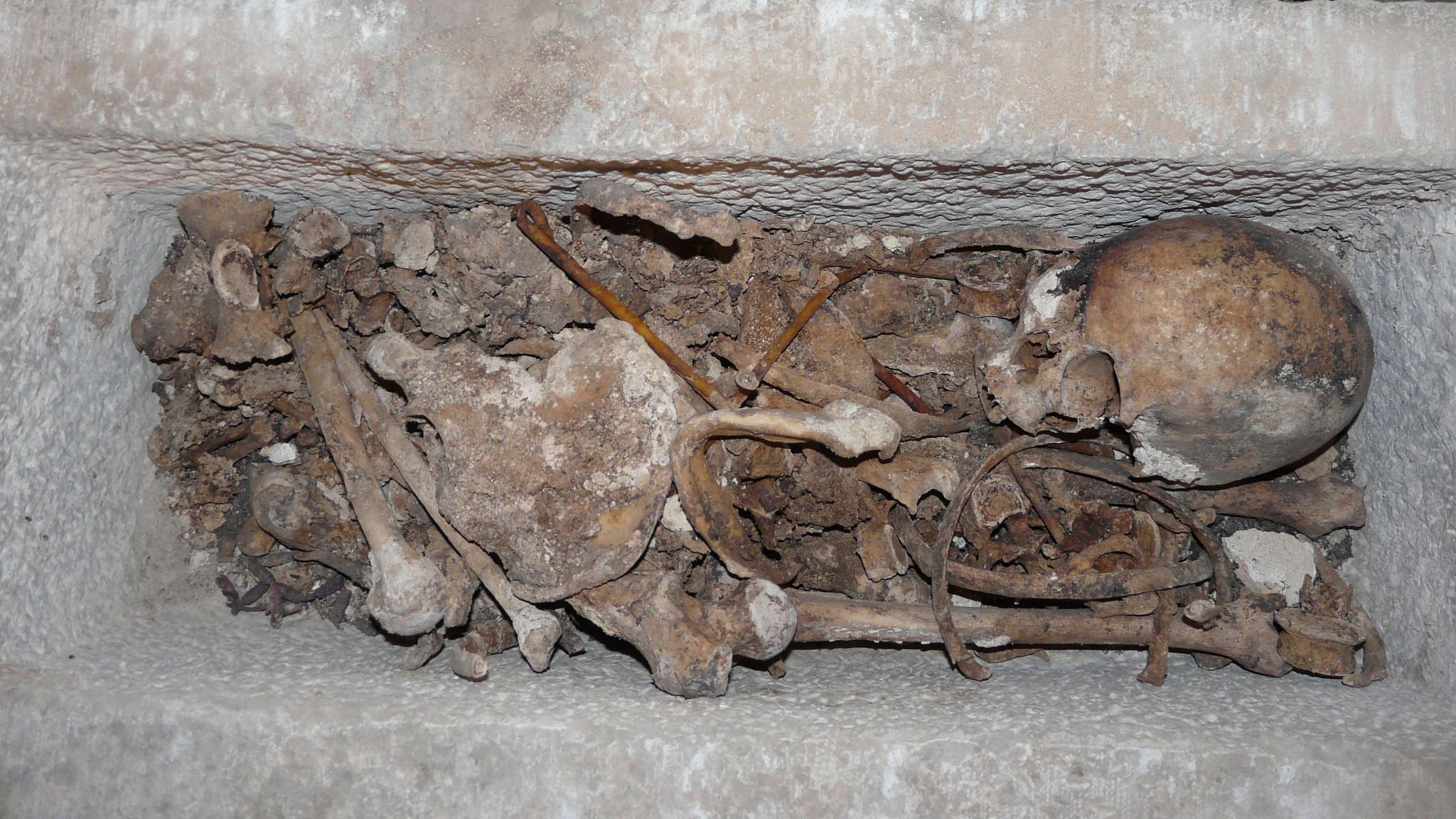
Nearby lay the tomb of Sobirana Olzet, the monastery’s first abbess.
Historical sources describe Olzet as one of the most important figures in the institution’s early years. She worked closely with Queen Elisenda and helped establish the spiritual and administrative foundations of the monastery.
When archaeologists examined her remains, they expected to find evidence of age-related illness and the physical stresses common among medieval religious women.
Instead, they discovered something unexpected.
A significant injury marked her facial bones.
Preliminary analysis suggests the wound may have been caused by a knife or another sharp instrument shortly before or at the time of her death.
Whether this injury resulted from violence, accident, or some other circumstance remains unknown.
For historians, the discovery raises a host of intriguing questions.
Was the monastery entirely peaceful during its earliest years?
Could political conflicts have reached even this sacred space?
Or does the injury represent an isolated and ultimately unrelated event?
Researchers continue to investigate.
At present, the mystery remains unsolved.
A Tomb That Wasn’t What It Seemed
One of the greatest surprises emerged from a tomb long believed to belong to Artau de Foces, a medieval knight associated with the monastery.
Archaeologists expected to find the remains of a prominent male nobleman.
Instead, they uncovered an entirely different story.
Inside rested five individuals.
Two adult women.
Three children.
No trace of the knight.
The discovery immediately challenged centuries of assumptions regarding the tomb’s identity.
Perhaps most remarkable was the preservation of one woman’s hair.
A long ponytail remained attached to her skull more than six hundred years after her death.
Such preservation is exceptionally rare and provides researchers with valuable opportunities for future DNA and isotopic analysis.
The hair may ultimately reveal information about diet, health, ancestry, and even geographic origins.
Sometimes the smallest details survive longest.
And sometimes they tell the most powerful stories.