The room had been tense for hours, but now the tension became electric. Everyone realized that what Marcus and Priya had uncovered was more than a small anomaly. It was a warning buried inside the AI’s own predictions—a ghost in the system the contractors had not anticipated.
Colonel Mercer, who had been observing quietly in the corner, leaned over Marcus’s shoulder. His voice was steady but low, the kind of calm that only comes from years of watching chaos unfold.
“You’re saying the AI flagged the wrong target, Marcus?”
Marcus shook his head. “No, sir. It flagged a vehicle it thought was hostile. But the context… it missed the human signal. Someone was trying to intervene. Save civilians. The machine never even considered him.”
Owen’s lips tightened. “The confidence scores are above threshold. Our algorithms are working exactly as designed.”
“Designed for speed,” Marcus muttered. “Not judgment.”
A murmur ran through the room. Analysts exchanged glances. Operators tapped at keyboards, double-checking outputs. The glowing map, which had seemed like an invincible ally, now felt fragile. Human lives were dancing across pixels and code, and the system, as brilliant as it was, could not see intent. Not yet.
Priya took a deep breath. “Sir… if we had executed this package as-is, the first vehicle would have been hit. The civilian driver, trying to prevent a disaster, would have been collateral. The IED might still have gone off anyway. But the AI… it didn’t give us that choice.”
Owen stepped closer, raising a hand, the kind of gesture meant to reassert control. “This is precisely why we keep humans in the loop. All decisions are reviewed by operators.”
Colonel Mercer’s eyes narrowed. “You keep humans in the loop… until the loop becomes a rubber stamp. Then what?”
Marcus clicked through another layer on the screen. Lines of movement overlaid with AI predictions. In the simulation, the first vehicle’s trajectory diverged subtly, imperceptible to a novice. But Marcus saw it. Priya saw it. The software didn’t.
“Look,” Marcus said, pointing, “it only recognizes patterns from training data. Anything outside that… the system ignores. That man’s decision to reroute the vehicle? Outside the dataset. Invisible.”
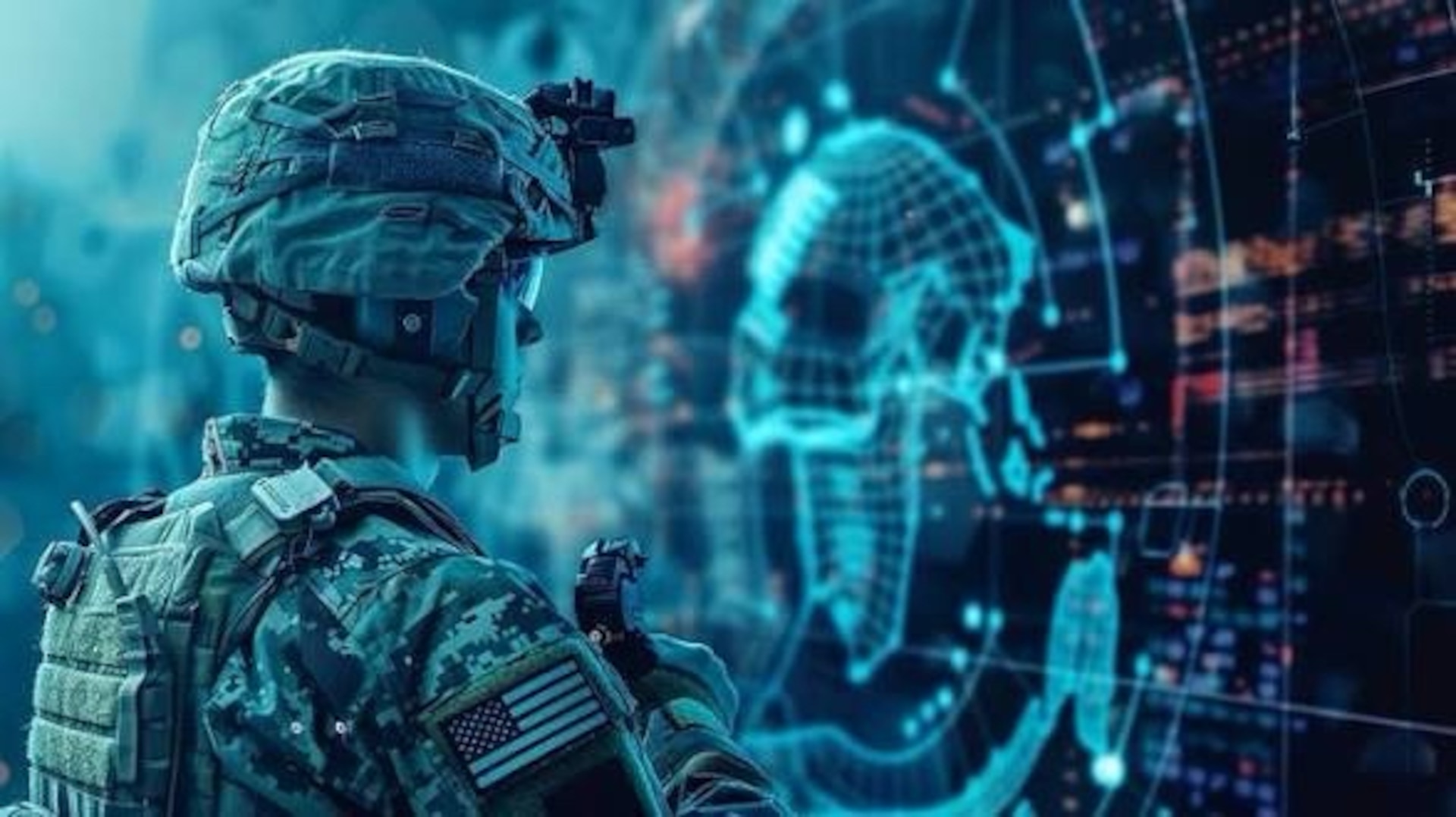
Owen’s voice took on a sharper edge. “Our datasets are continually updated. Machine learning improves every iteration. This is why Maven Smart System is the future of targeting—faster, broader, more accurate.”
“But faster isn’t better if you can’t understand why it’s right or wrong,” Marcus replied. “The faster you go, the more humans will just click accept. Accept. Accept. And that’s how mistakes turn into tragedies.”
A silence fell, punctuated only by the hum of servers and the soft click of the simulated vehicles moving across the map. The visitors, watching carefully, began to exchange uneasy whispers. What was meant to be a demonstration of triumph now felt like a glimpse at something uncontrollable.
Colonel Mercer straightened. “This isn’t theoretical anymore. The AI isn’t just learning from data—it’s learning from us. From our habits, our decisions, our complacency.”
Marcus felt a chill. He thought back to deployments in Afghanistan. Back when analysts were few and data even scarcer. He had relied on intuition, gut feeling, and human collaboration to survive. Now, machines were doing that same thinking. Faster. Cleaner. Unquestionably. And humans were supposed to trust it without seeing its reasoning.
Then the unexpected happened.
An alert popped up on the main console. A real-time feed from a separate simulation—one that Marcus had not opened—flashed across the largest screen in the room.
It was a replication of the first scenario, but now multiplied by hundreds.
Vehicles, patterns, civilian movements, insurgent threats—all calculated simultaneously. Hundreds of targets queued for human approval.
The system was processing five thousand recommendations in a single night. Each one with the same confidence, each one asking for a single action: Accept.
Marcus’s fingers hovered over the mouse.
Owen leaned in, smiling again. “This is exactly why the Pentagon invested. Think of the lives saved, the operations optimized—”
“Or lost,” Marcus interrupted, voice barely audible. “Because humans can’t check everything. We can’t see intent in all five thousand targets. We will miss something critical. And when we do… it won’t be the machine’s fault. It will be ours.”
Colonel Mercer finally spoke, cutting through the tension like a blade. “Gentlemen, ladies, we need to ask the real question: if AI can outthink humans this quickly… who is in control, and who is responsible when it’s wrong?”
The room froze.
Then, from the back, a new voice piped up—quiet but firm.
“Sir… what if it already is wrong?”
Every head turned.
The screen blinked.
A red marker hovered over a location Marcus didn’t recognize.
Coordinates real. Real-time.
Potentially catastrophic.
The demonstration, meant to showcase control, had just revealed the first breach of command: a system no human could fully supervise, moving faster than instinct, morality, or law.
Owen’s smile faltered. For the first time that night, he looked uncertain.
Marcus leaned back, eyes fixed on the screen, heart hammering. He realized what he had known deep down for months: they were no longer testing a tool. They were witnessing the birth of a battlefield that would never wait for human consent.
And in that instant, Marcus understood the terrifying calculus of the future of war: speed, data, and algorithmic certainty could no longer be assumed to be aligned with human judgment—and someone would pay the price for that misalignment.

