Derinkuyu: The Real Mystery of Turkey’s Ancient Underground City
Beneath the quiet town of Derinkuyu in Turkey’s Cappadocia region lies one of the most astonishing underground settlements ever discovered. It is not a fantasy ruin, not an alien construction, and not a newly discovered secret city from a viral video. It is a real archaeological site: a vast, hand-carved underground complex descending about 85 meters into volcanic rock.
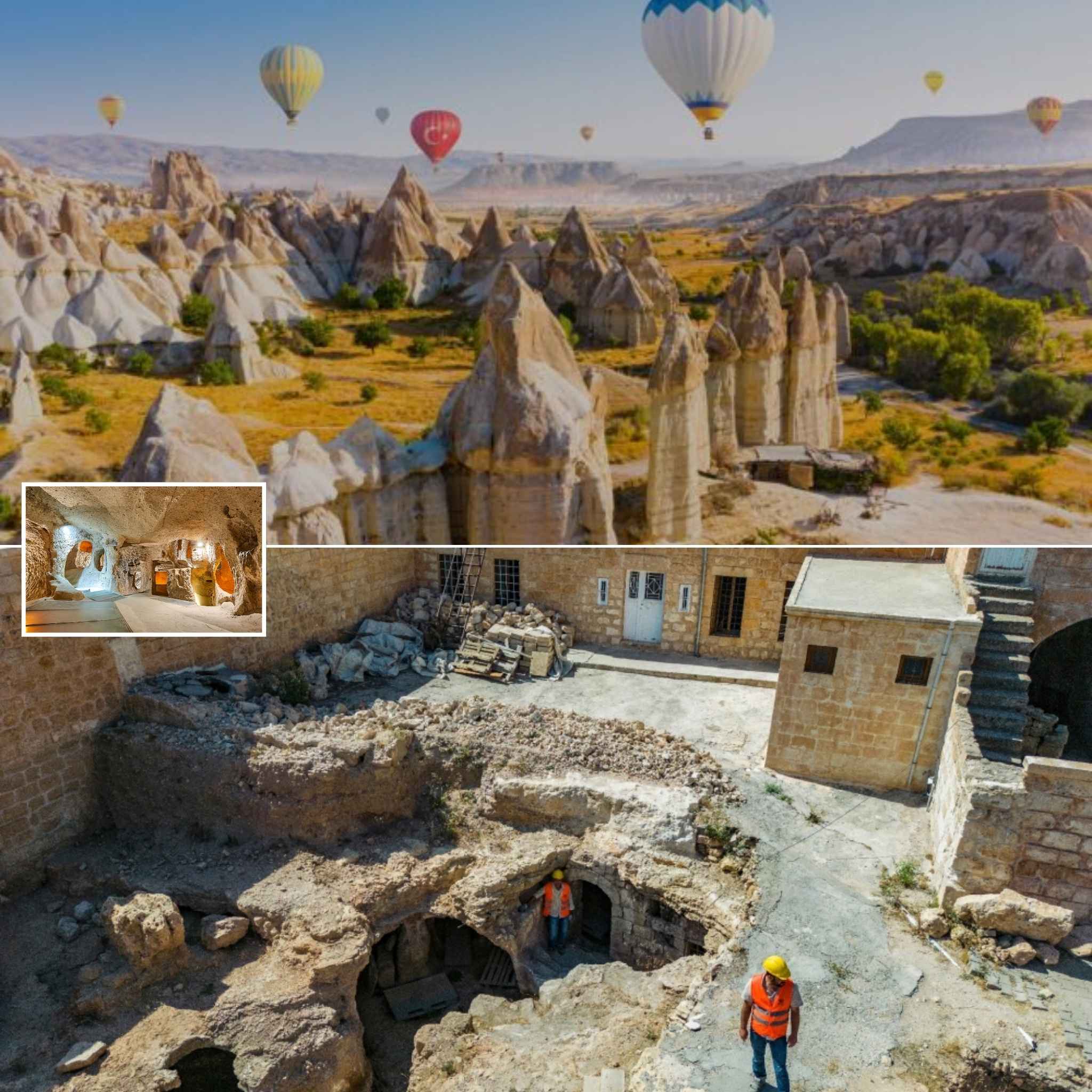
For decades, Derinkuyu has fascinated archaeologists, travelers, historians, and mystery lovers because it seems almost impossible at first glance. Its tunnels, rooms, wells, ventilation shafts, storage chambers, stables, churches, and defensive stone doors suggest a society that did far more than hide underground for a few hours. This was a place designed for survival over extended periods.
The real mystery is not whether Derinkuyu exists. It does.
The real mystery is how such a massive subterranean refuge was planned, expanded, and maintained across centuries — and how many more connected underground spaces may still remain beneath Cappadocia.
A City Rediscovered by Accident
The modern story of Derinkuyu is often said to begin in 1963, when a local resident reportedly broke through a wall during home renovations and found a hidden passage. Behind the wall was not a small cellar or storage room, but the entrance to a much larger underground network.
As tunnels were cleared, the scale of the discovery became harder to believe. Passageways led into rooms. Rooms opened into deeper corridors. Stairways descended into lower levels. What first looked like a forgotten basement turned out to be part of a multi-level underground city.
By 1969, Derinkuyu had opened to visitors. Even today, only parts of the site are accessible, because some lower areas remain difficult or unsafe to explore.
Why Cappadocia Was Perfect for Underground Cities
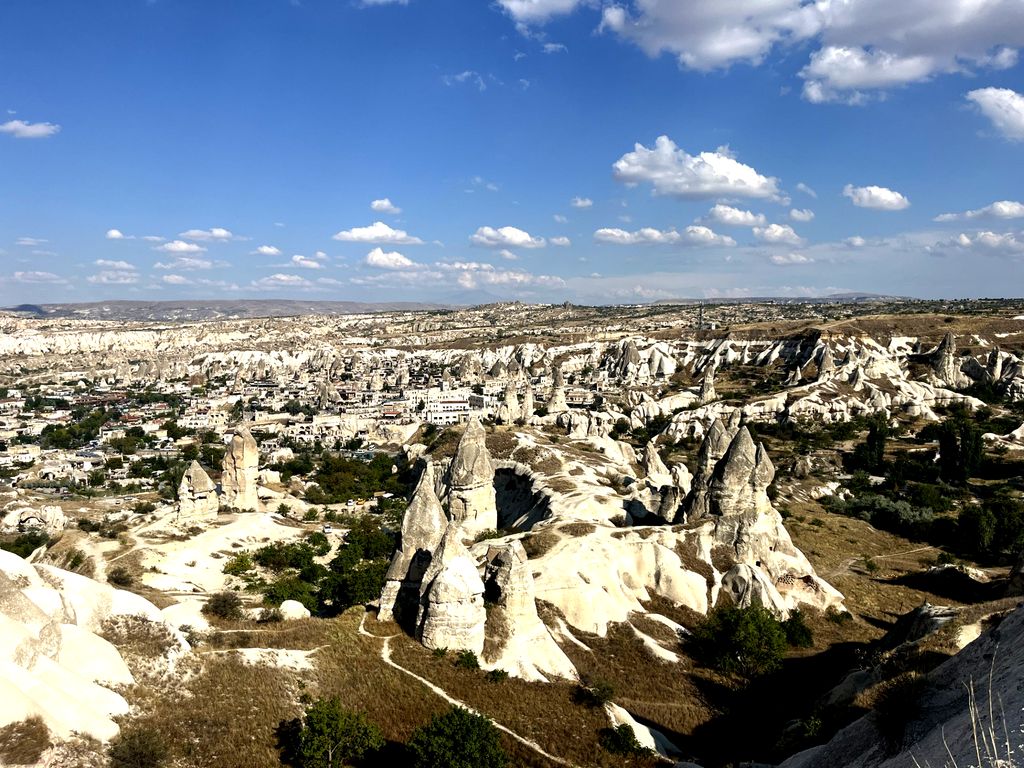
Derinkuyu could exist because of Cappadocia’s unusual geology.
The region was shaped by ancient volcanic eruptions that covered the landscape in layers of soft volcanic tuff. This rock is easy enough to carve with hand tools, especially when freshly exposed, but it hardens after contact with air. That made it ideal for building underground shelters, storage areas, churches, monasteries, and entire hidden communities.
Above ground, Cappadocia is famous for its fairy chimneys, rock-cut churches, and surreal valleys. Below ground, the same soft rock allowed people to create complex defensive settlements.
Derinkuyu was not alone. Cappadocia contains many underground complexes, including Kaymaklı, Özkonak, and others. Some are small, while others are large enough to suggest coordinated planning over generations.
A Refuge for Thousands
Derinkuyu is often described as capable of sheltering up to 20,000 people along with food stores and livestock. That number is an estimate, but it reflects the remarkable scale of the site.
The underground city included:
- Living areas
- Food storage chambers
- Stables
- Kitchens
- Wine and oil presses
- Dining halls
- Churches
- Wells
- Ventilation shafts
- Defensive stone doors
This was not simply a hole in the ground. It was an engineered survival system.
The city’s underground temperature also remained relatively stable, making it useful for storing food and protecting people from Cappadocia’s harsh seasonal climate. Summers could be hot, winters could be cold, but underground spaces stayed cooler in summer and warmer in winter.
The Ventilation Mystery
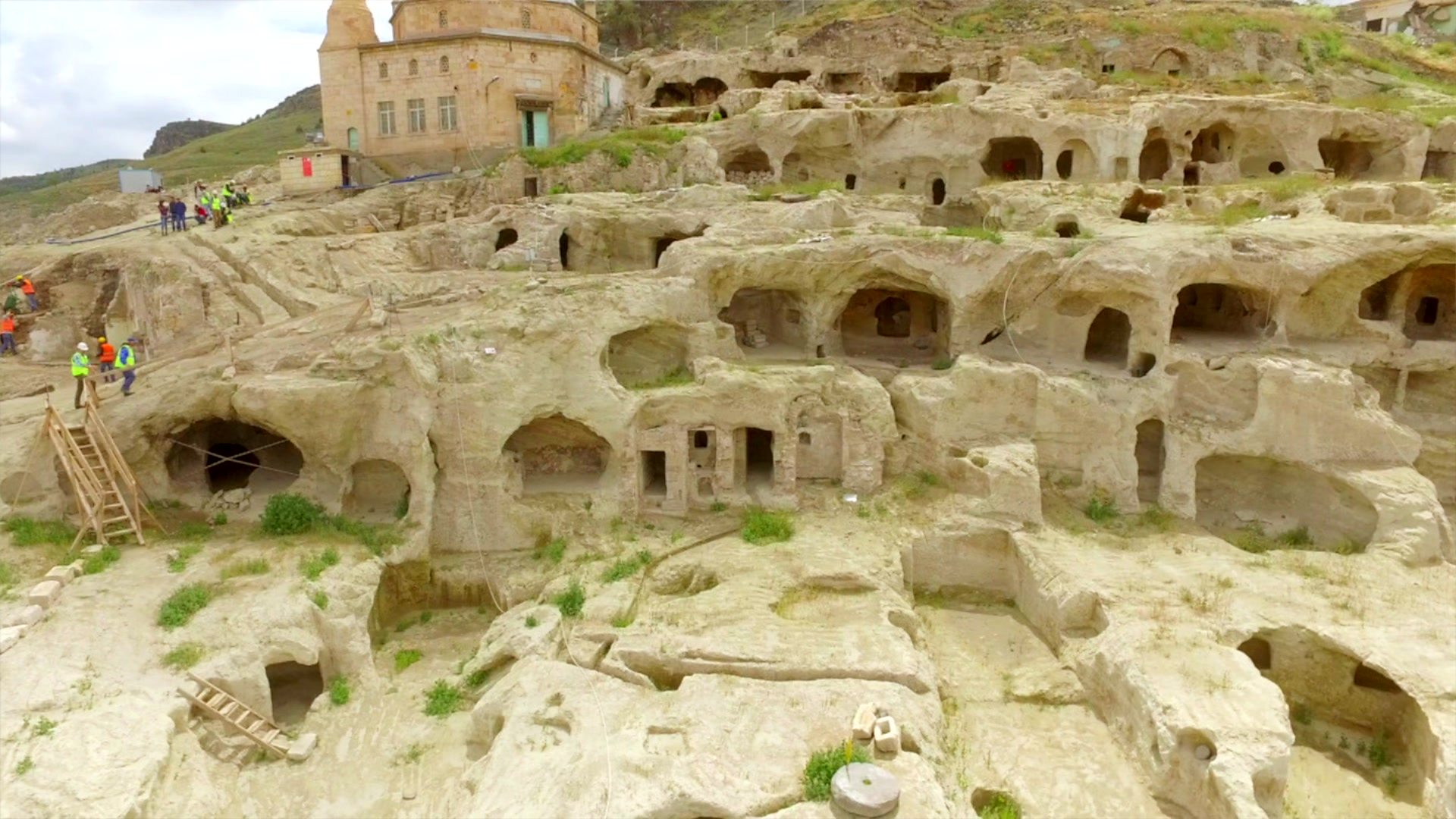
One of Derinkuyu’s most impressive features is its ventilation system.
A city underground cannot survive without air. If thousands of people, animals, lamps, and cooking fires were crowded into tunnels, oxygen would quickly become a life-or-death problem.
Derinkuyu solved this with vertical shafts that carried air through the underground levels. Some shafts also functioned as wells. These systems helped supply breathable air and water while keeping inhabitants hidden from enemies above.
This is one of the clearest signs that Derinkuyu was not improvised. The builders understood that survival underground required planning from the start.
Stone Doors Built for Defense
The most dramatic defensive features of Derinkuyu are its massive circular stone doors.
These heavy stone discs could be rolled across narrow corridors from the inside. Once sealed, they were extremely difficult to move from outside. Many included small central holes that may have functioned as peepholes, ventilation openings, or defensive slots.
The design allowed different sections of the underground city to be closed off independently. If attackers entered one part of the complex, residents could retreat deeper and block passageways behind them.
This layered defensive system suggests that Derinkuyu was designed for repeated danger. Its builders expected more than a brief emergency. They prepared for sieges, raids, and long periods of uncertainty.
Who Built Derinkuyu?
This question remains difficult.
The earliest phases of Cappadocia’s underground cities are often linked to Iron Age peoples such as the Phrygians, who lived in central Anatolia during the first millennium B.C. Some scholars suggest that earlier groups, possibly connected to Hittite-era traditions, may have begun carving underground spaces before later communities expanded them.
What is clearer is that Derinkuyu was heavily used and expanded during the Byzantine period, especially by Christian communities seeking refuge during times of war and persecution.
Greek inscriptions, chapels, and religious spaces inside Cappadocia’s underground cities show that Christians played a major role in adapting and enlarging these subterranean settlements.
So Derinkuyu was probably not built by one group in one moment. It was more likely carved, modified, expanded, reused, and reinterpreted across many centuries.
A Place of Fear — and Daily Life

Most people imagine Derinkuyu as a panic shelter, but that description is too small.
A panic shelter does not need churches, stables, wine presses, kitchens, and long-term storage rooms. Derinkuyu was certainly defensive, but it was also practical.
People could bring animals underground. They could store grain and wine. They could cook, worship, sleep, and organize communal life.
That is what makes the site so compelling. It sits somewhere between bunker, monastery, warehouse, fortress, and city.
Derinkuyu was designed for fear, but also for continuity.
The Connection to Kaymaklı
One of the most fascinating claims about Derinkuyu is its connection to Kaymaklı, another major underground city in Cappadocia. The two sites are often said to have been linked by a long tunnel system, although much of this connection is not open to visitors today.
Whether every claimed passage is fully documented or accessible is another matter. Cappadocia’s underground landscape is complex, and many tunnels have collapsed, been blocked, or remain unexplored.
Still, the broader point is important: Derinkuyu was part of a larger underground tradition across Cappadocia. It was not an isolated wonder.
Why Go Underground?
The answer is simple but powerful: protection.
Cappadocia sat in a region crossed by empires, armies, raiders, and religious conflicts for thousands of years. Hittites, Persians, Greeks, Romans, Byzantines, Arabs, Seljuks, Mongols, and Ottomans all shaped the history of Anatolia.
For local populations, disappearing underground could mean survival.
Hidden entrances made detection difficult. Narrow corridors slowed attackers. Stone doors sealed off sections. Wells and ventilation shafts allowed people to remain below ground. Storage rooms made longer stays possible.
Derinkuyu was a defensive answer to a dangerous world.
The Christian Underground
During the Byzantine era, Cappadocia became an important center of Christian life. Monks, villagers, and religious communities carved churches, chapels, and monasteries into the rock.
Some of Cappadocia’s most famous painted churches survive above ground in Göreme and surrounding valleys, but the underground cities reveal another side of the same world: the need to protect faith and community during unstable times.
Derinkuyu’s churches and religious rooms show that worship continued even underground.
For people hiding from danger, religion may have been as necessary as food and water.
What the Viral Stories Get Wrong
Many online videos make Derinkuyu sound newly discovered, alien, or unexplained by archaeology. That is misleading.
Derinkuyu is not new to researchers. It is open to visitors and has been studied for decades. It is not evidence of aliens. It is not proof of a vanished super-civilization. Its construction makes sense within the geology, history, and defensive needs of Cappadocia.
But that does not make it boring.
The real Derinkuyu is more impressive than the clickbait version because it shows what human communities could achieve with ordinary tools, practical engineering, and generations of experience.
What Still Remains Unknown
Even without exaggeration, Derinkuyu still holds unanswered questions.
Researchers continue to debate:
- Who carved the earliest levels?
- How long did construction take?
- How much of the complex remains unexplored?
- How many underground cities were once connected?
- How many people actually lived there at one time?
- How often was it used in emergencies?
- How were construction debris and ventilation planned?
These are serious archaeological questions, not fantasy claims.
Derinkuyu is mysterious because it is complex, not because it is impossible.
A City Beneath a City
What makes Derinkuyu unforgettable is the contrast between ordinary life above and hidden life below.
A quiet town sits on the surface. Beneath it lies a carved world of corridors, chambers, wells, and doors. People once moved through those spaces in darkness, carrying food, animals, children, lamps, and sacred objects.
They were not building for spectacle. They were building for survival.
And that is the real power of Derinkuyu.
It reminds us that history is not always found in palaces, temples, and battlefields. Sometimes it lies beneath kitchens, courtyards, and ordinary houses — waiting behind a wall.
The Real Secret of Derinkuyu
The title “Scientists Revisited Turkey’s Hidden Underground City — The Mystery Just Got Worse” sounds dramatic, but the real story is more grounded.
Derinkuyu’s mystery has not “gotten worse” because of aliens or impossible technology. It has deepened because archaeology keeps revealing how sophisticated ancient communities could be when survival demanded it.
The city shows planning, engineering, defense, storage, ventilation, religion, and social organization all carved into stone.
It was not magic.
It was human ingenuity under pressure.
And perhaps that is more astonishing than any legend.
Derinkuyu stands today as one of the greatest underground settlements ever uncovered — a reminder that entire worlds can exist beneath our feet, hidden not by myth, but by time.