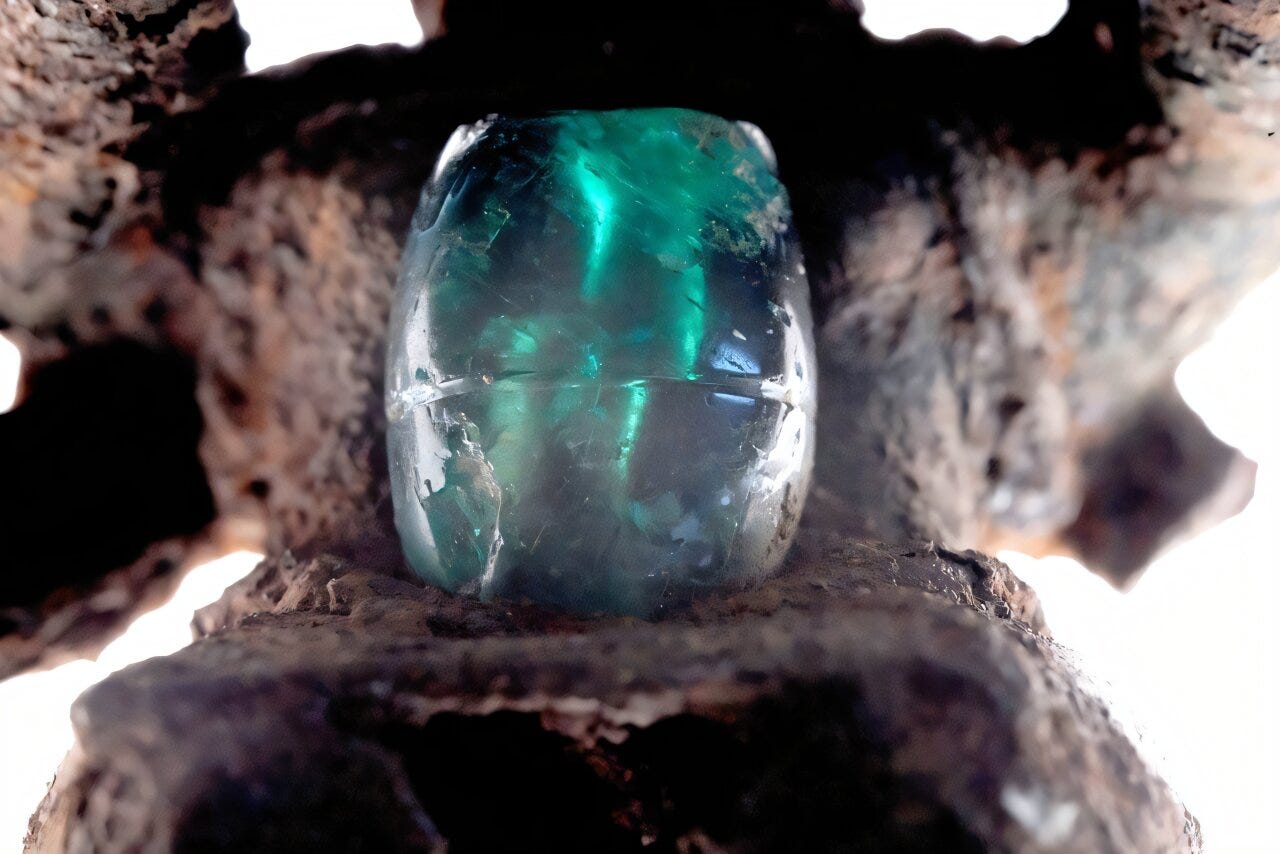
Colombian Emeralds Found in Ancient Panama Tombs Reveal a Vast Trade Network Across the Americas
More than 1,000 years ago, precious emeralds traveled hundreds of miles from Colombian mines to elite burials in Panama, uncovering a forgotten world of trade, power, and prestige.
For centuries, emeralds have been among the world’s most coveted gemstones.
Prized for their deep green color and extraordinary rarity, they have adorned the crowns of kings, decorated sacred objects, and fueled international trade networks stretching across continents.
Today, Colombia is famous for producing some of the finest emeralds on Earth. But long before European explorers arrived in the Americas, Indigenous peoples were already mining, trading, and valuing these precious stones.
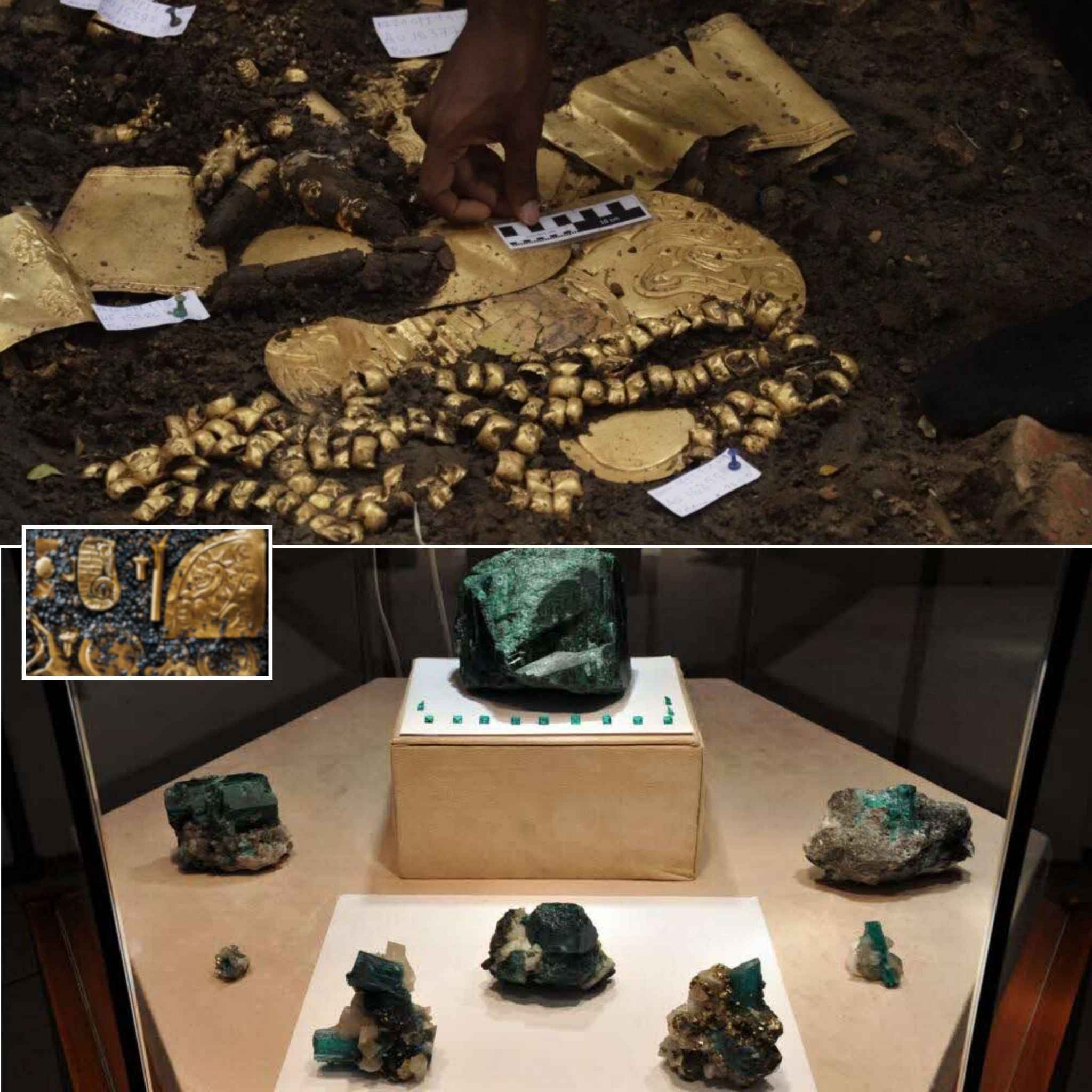
Now, a new scientific investigation has revealed that emeralds discovered in elite burials on Panama’s Pacific coast originated in Colombian mines more than 1,000 years ago.
The discovery provides remarkable evidence of long-distance trade connections linking ancient societies across hundreds of miles of forests, mountains, rivers, and coastlines.
It also sheds new light on the sophisticated exchange networks that flourished in the Americas centuries before European contact.
A Treasure Hidden in Ancient Tombs
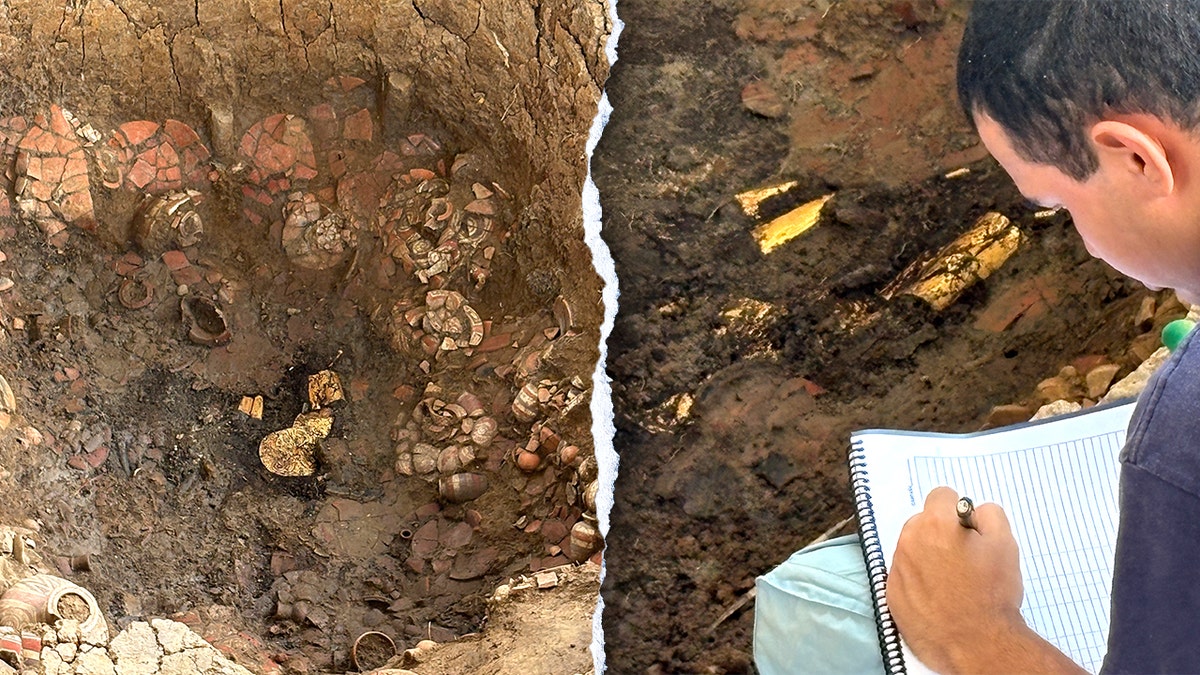
The emeralds were recovered from two of Panama’s most important archaeological sites: El Caño and Sitio Conte, located in the Gran Coclé region along the country’s Pacific coastline.
Both sites are famous for their richly furnished burials dating between approximately A.D. 800 and 1000.
Archaeologists have long recognized these cemeteries as belonging to powerful elite individuals who held significant authority within ancient Coclé society.
The tombs contain an extraordinary collection of artifacts, including:
- Elaborate gold ornaments
- Finely crafted jewelry
- Decorative ceramics
- Pyrite mirrors
- Fossilized megalodon teeth
- Exotic imported materials
Among these treasures were five mysterious green stones.
For years, researchers suspected they might be emeralds, but confirmation required sophisticated scientific analysis.
Only recently have scientists been able to determine their true origins.
Unlocking the Secrets of Ancient Gemstones
To identify the stones, researchers employed several advanced analytical techniques.
These included:
- X-ray fluorescence analysis
- Infrared spectroscopy
- Photoluminescence testing
Together, these methods allowed scientists to examine the stones’ chemical compositions without damaging the artifacts.
The results were striking.
All five stones proved to be genuine emeralds.
Even more significantly, their chemical signatures matched emeralds mined in Colombia.
Researchers compared the Panamanian stones with 22 emerald samples from known mining regions in Colombia and Ecuador.
The similarities were unmistakable.
The gemstones found in Panama most closely resembled emeralds originating from Colombia’s famous Western Emerald Belt and Eastern Emerald Belt, two regions that remain among the world’s premier emerald-producing areas today.
The finding provides direct evidence that the stones traveled roughly 435 miles (700 kilometers) before ultimately being placed inside elite Panamanian tombs.
A Journey Across Ancient America
The discovery immediately raises an intriguing question:
How did these emeralds travel hundreds of miles through ancient landscapes long before roads, wheeled transport, or European ships existed?
Researchers do not believe the stones were traded directly between Colombian miners and Coclé elites.
Instead, the evidence points toward a complex chain of exchanges involving multiple communities.
Carlos Mayo Torné of Fundación El Caño suggests that the gemstones likely moved gradually through interconnected trade networks linking coastal settlements and river communities.
Each community may have exchanged the stones for valuable goods before passing them onward.
Over time, the emeralds slowly made their way north.
This process resembles trade systems documented elsewhere in the ancient world.
Luxury goods often passed through many hands before reaching their final destination.
The people who buried the emeralds in Panama may never have visited Colombia themselves.
Likewise, the miners who extracted the gemstones may never have known where the stones eventually ended up.
Yet both communities became connected through a vast web of exchange.
The Ancient Trade Routes of the Americas
For much of modern history, people underestimated the sophistication of pre-Columbian trade networks.
Archaeological discoveries increasingly show that ancient American societies maintained extensive commercial and cultural connections.
Goods traveled enormous distances.
Marine shells from distant coasts appear deep inland.
Obsidian from volcanic regions has been found hundreds of miles away from its source.
Gold objects moved across multiple cultural regions.
Now emeralds can be added to that growing list.
The transportation of valuable gemstones over such long distances required organization, trust, and communication between numerous groups.
Trade routes likely followed:
- Major rivers
- Coastal waterways
- Established footpaths
- Mountain corridors
Each stop along the journey served as part of a broader economic network connecting diverse societies.
Rather than isolated communities, ancient American cultures increasingly appear as participants in interconnected systems stretching across vast regions.
Symbols of Power and Prestige
The emeralds were not simply decorative objects.
Their presence in elite burials suggests they carried significant social and symbolic value.
In many ancient societies, rare materials served as markers of status and authority.
Exotic goods demonstrated access to distant trade networks and valuable resources.
For powerful leaders, possessing such objects reinforced their prestige.
The emeralds discovered at El Caño and Sitio Conte were buried alongside gold ornaments and other luxury items.
This combination suggests they formed part of a broader display of wealth and influence.
To the Coclé elites, the stones may have represented much more than their beauty.
They may have symbolized:
- Political power
- Religious authority
- Social rank
- Connections to distant lands
- Sacred or ceremonial significance
Because emeralds were so rare, ownership alone would have distinguished an individual from ordinary members of society.
More Than Imported Treasures
One particularly fascinating aspect of the research involves evidence that some emeralds were modified after arriving in Panama.
Scientists found signs that certain stones had been cut, drilled, repaired, or reshaped by local artisans.
This discovery reveals that the emeralds were not simply treasured imports.
They became integrated into local artistic traditions.
Some stones arrived already finished.
Others appear to have been transformed by Coclé craftspeople who adapted them for local uses.
The repairs and alterations suggest the gemstones remained important for extended periods.
Rather than discarding damaged objects, people invested effort into restoring them.
This behavior indicates that the emeralds possessed exceptional value beyond their material worth.
According to Torné, these modifications demonstrate the strong symbolic significance the stones held within ancient Coclé society.
The Wealth of El Caño
The archaeological site of El Caño has become one of the most important sources of information about ancient Panama.
In recent years, excavations have uncovered spectacular tombs filled with extraordinary treasures.
Many belonged to high-ranking individuals often described as chiefs, rulers, or religious leaders.
Gold artifacts recovered from these burials include:
- Pectorals
- Armbands
- Bells
- Earrings
- Animal-themed ornaments
Some tombs contain dozens of gold objects arranged around the deceased.
The wealth represented in these burials suggests highly organized societies capable of mobilizing labor, controlling resources, and maintaining extensive trade relationships.
The discovery of imported emeralds adds another layer to this picture.
It confirms that Coclé elites participated in networks extending far beyond the boundaries of present-day Panama.
Colombia’s Legendary Emerald Mines
The source of the emeralds is equally significant.
Colombia has produced emeralds for thousands of years.
Long before Spanish conquistadors arrived, Indigenous communities mined the gemstone from deposits hidden within the Andes Mountains.
The country’s emerald belts remain among the world’s richest sources today.
Many modern Colombian emeralds are prized for their exceptional color and clarity.
The ancient stones discovered in Panama demonstrate that these mines were already being exploited more than a millennium ago.
This confirms that Colombian communities were participating in extensive exchange networks centuries before European colonization.
The emerald trade may have represented one of the most valuable luxury industries in pre-Columbian South America.
Reconstructing Forgotten Networks
One of the greatest challenges facing archaeologists is understanding exactly how trade routes operated.
Unlike modern commerce, ancient exchange networks left few written records.
Researchers must reconstruct them through artifacts, chemical analyses, and archaeological discoveries.
The emerald study represents a powerful example of this process.
By comparing chemical signatures, scientists can effectively trace an object’s birthplace.
This approach allows researchers to map ancient connections that would otherwise remain invisible.
Each imported artifact becomes evidence of human interaction.
Each gemstone reveals a story of movement, exchange, and communication.
As additional materials undergo similar analyses, archaeologists hope to build a clearer picture of how people, goods, and ideas moved throughout ancient America.
A More Connected Ancient World
The emeralds found in Panama tell a larger story than their size might suggest.
They reveal a world that was far more connected than many people imagine.
More than 1,000 years ago, before European ships crossed the Atlantic, Indigenous societies were already linked through sophisticated networks of trade and exchange.
Communities separated by mountains, rivers, forests, and coastlines interacted regularly.
Luxury goods moved across vast distances.
Artisans adapted imported materials into local traditions.
Powerful leaders displayed exotic treasures as symbols of authority.
Far from isolated, these societies participated in dynamic systems that connected large portions of the Americas.
The Search Continues
Researchers now hope to identify the routes used to transport the emeralds from Colombia to Panama.
Future investigations may uncover additional evidence from coastal settlements, river communities, and intermediary trading centers.
Each new discovery has the potential to illuminate another piece of this ancient puzzle.
For now, the emeralds remain remarkable witnesses to a forgotten world.
They survived more than a thousand years beneath the soil, buried alongside powerful individuals whose names have long been lost to history.
Yet through modern science, they are once again telling their story.
A story of trade, craftsmanship, prestige, and human connection stretching hundreds of miles across the ancient Americas.
And perhaps most importantly, they remind us that long before the arrival of Europeans, the peoples of the Americas had already built sophisticated networks capable of moving some of the world’s most precious treasures across an entire continent.