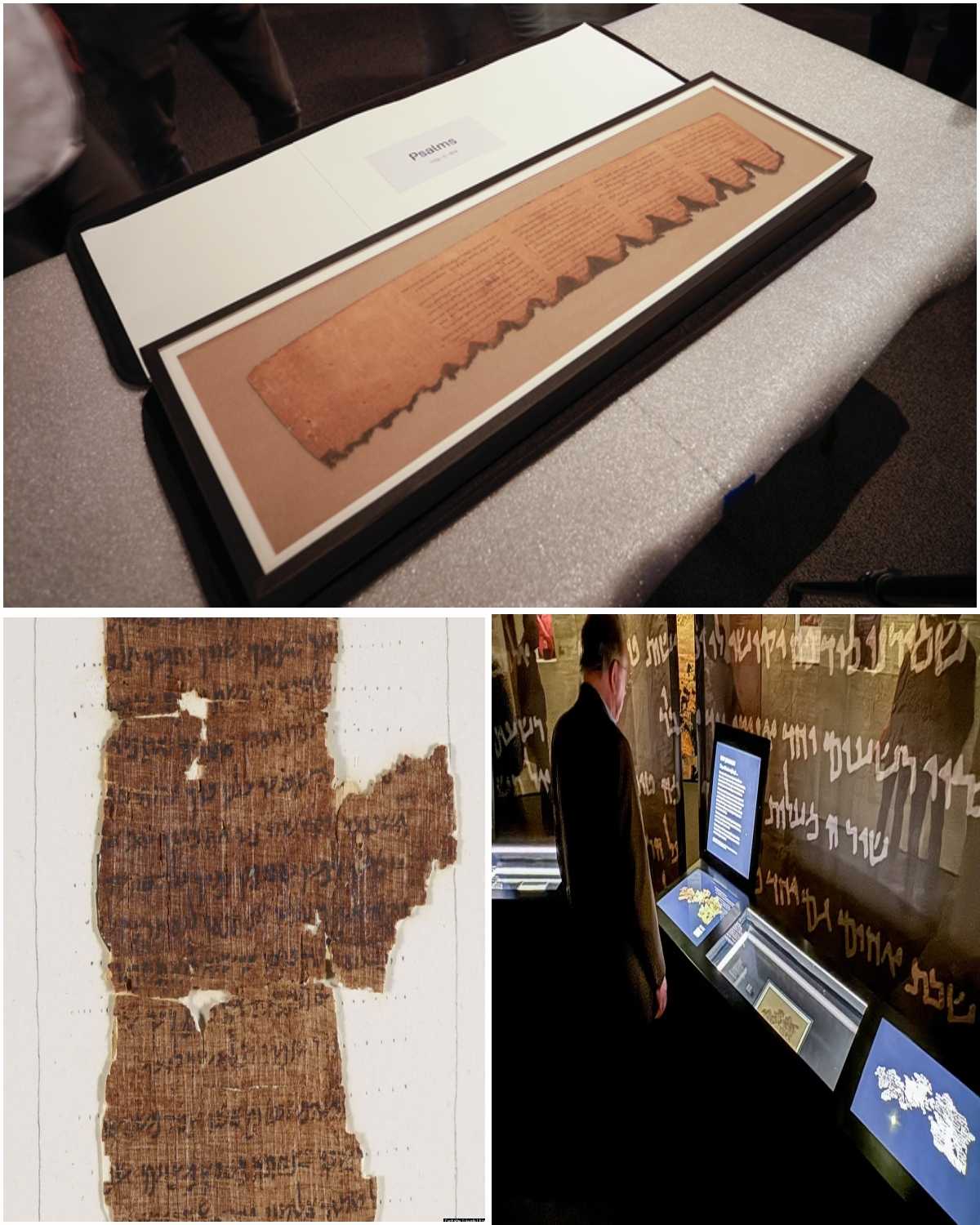
A remarkable collection of some of the world’s most important biblical artifacts is now on display in California, offering visitors a rare opportunity to come face-to-face with texts that have shaped religious history for more than two millennia.
The Ronald Reagan Presidential Library and Museum in Simi Valley has opened “Dead Sea Scrolls: The Exhibition,” a major exhibition featuring eight ancient Jewish manuscripts and approximately 200 archaeological artifacts dating back more than 2,000 years. Together, these objects provide an extraordinary window into the religious, cultural, and historical world of ancient Judaism during a period that also witnessed the emergence of early Christianity.
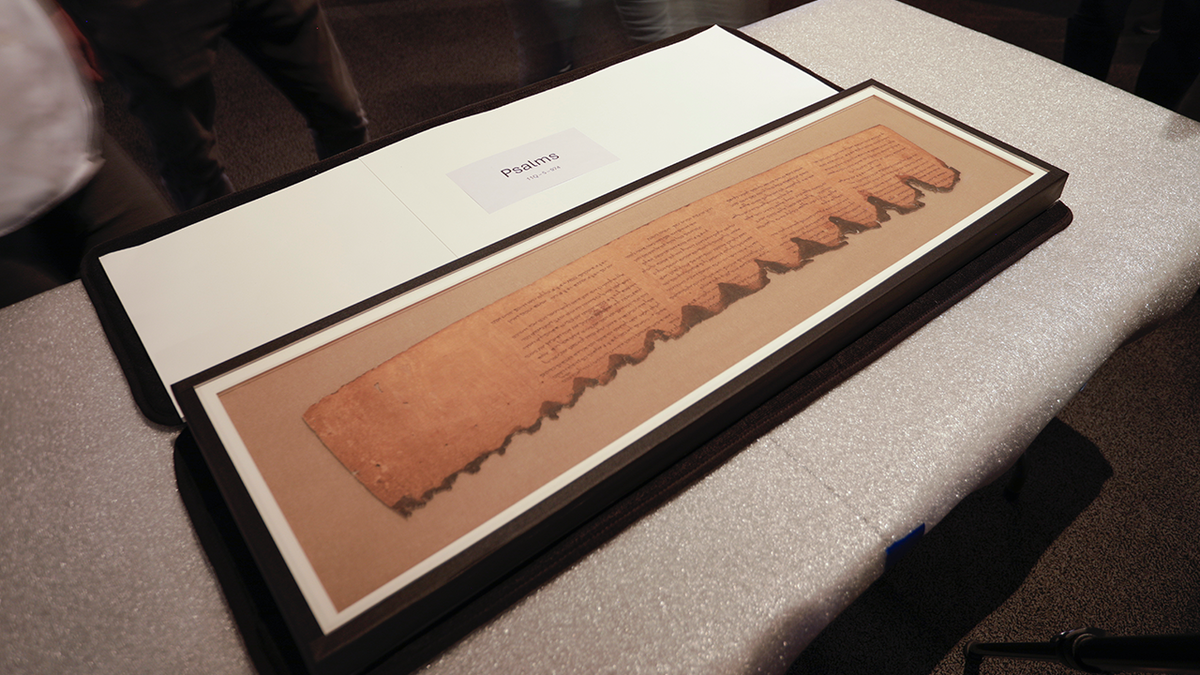
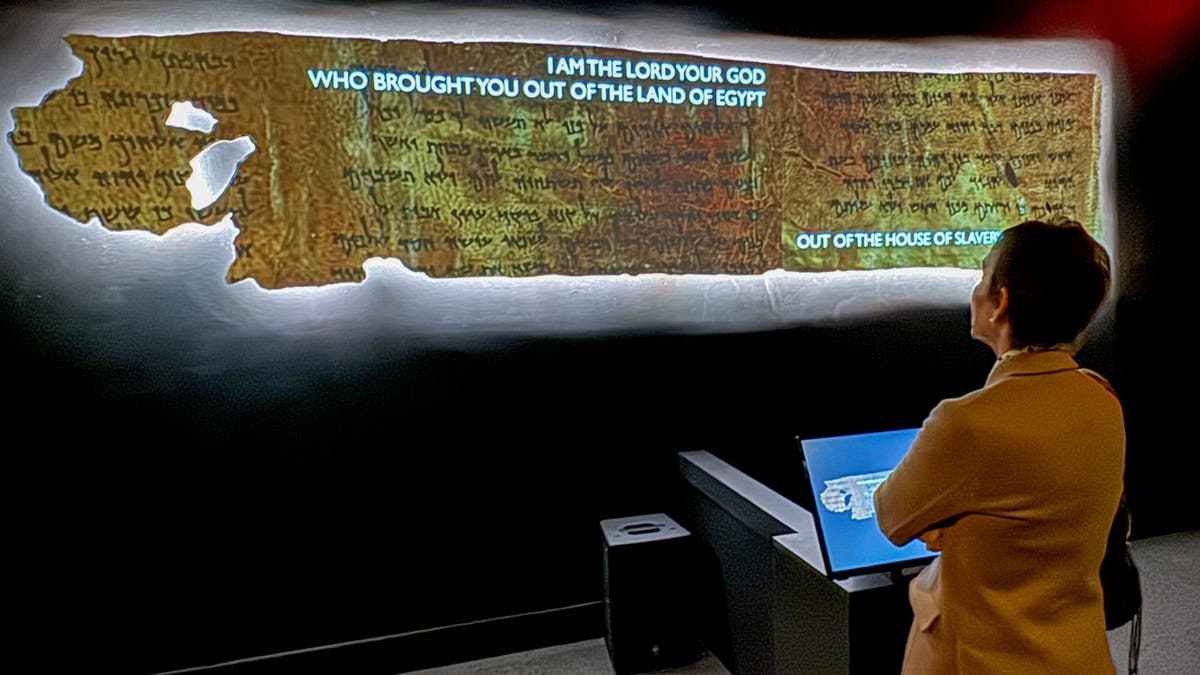
Among the exhibition’s most significant treasures is the Ten Commandments Scroll, a manuscript that scholars believe contains the oldest surviving copy of portions of the Ten Commandments. The artifact is being displayed in California for the first time and marks its first appearance in the United States since 2013, making the event a rare opportunity for both scholars and the public.
The scroll, known to researchers as 4Q41, was discovered in 1952 in Cave 4 near Qumran, the site where many of the Dead Sea Scrolls were unearthed. Dating to a period between 250 B.C. and A.D. 68, the manuscript contains passages from Deuteronomy, including portions of Deuteronomy 5, where the Ten Commandments are recorded, and Deuteronomy 8, which emphasizes obedience to God’s laws.
Its significance extends far beyond its age. The scroll offers direct evidence of how sacred texts were copied, preserved, and transmitted centuries before the standardization of biblical manuscripts. For historians, theologians, and archaeologists, documents like 4Q41 provide invaluable insight into the development of religious traditions that continue to influence billions of people today.
According to the Reagan Library, the Ten Commandments Scroll will be displayed for a limited two-week period beginning April 11. Because of anticipated demand, the museum has extended operating hours and limited attendance to approximately 1,600 visitors per day. Officials have encouraged guests to reserve tickets in advance.
The exhibition itself, however, extends far beyond a single manuscript.

The Dead Sea Scrolls are widely considered among the most important archaeological discoveries of the 20th century. Found in caves near the Dead Sea between 1947 and 1956, the collection includes biblical manuscripts, religious writings, legal texts, and community documents that illuminate Jewish life during the Second Temple period.
These texts have transformed scholars’ understanding of ancient Judaism by providing manuscripts that predate previously known biblical copies by nearly a thousand years. Their discovery offered unprecedented insight into the religious diversity, beliefs, and practices that existed during a crucial period in Near Eastern history.
The exhibition also explores the broader cultural environment in which these texts were produced.
Visitors can examine artifacts that reveal aspects of daily life, religious observance, and community organization among the people who lived in the region more than two thousand years ago. Through these objects, the exhibition places the scrolls within their historical context, helping visitors understand not only the texts themselves but also the world that created them.
For the Ronald Reagan Presidential Foundation and Institute, the exhibition carries additional significance.
David Trulio, president and CEO of the organization, noted that President Ronald Reagan’s Christian faith was a central part of his life and public identity. Throughout his presidency, Reagan frequently engaged with both Jewish and Christian communities and often spoke about the importance of biblical teachings.
The exhibition reflects that broader interest in understanding the origins and development of the world’s major monotheistic traditions.
Melissa Giller, chief marketing officer for the foundation, emphasized Reagan’s deep respect for scripture, recalling his belief that the Bible contained timeless wisdom capable of guiding individuals and societies through complex challenges.
Beyond its religious significance, the exhibition highlights the enduring influence of the Ten Commandments themselves. According to biblical tradition, God revealed the commandments to Moses on Mount Sinai, inscribing them on stone tablets as foundational principles for the Israelite community. Over the centuries, these teachings became central to Judaism, Christianity, and later Islam, shaping ethical systems, legal traditions, and cultural values across much of the world.
Whether viewed as sacred scripture, historical documents, or archaeological treasures, the manuscripts on display represent a direct connection to some of humanity’s oldest surviving religious traditions.
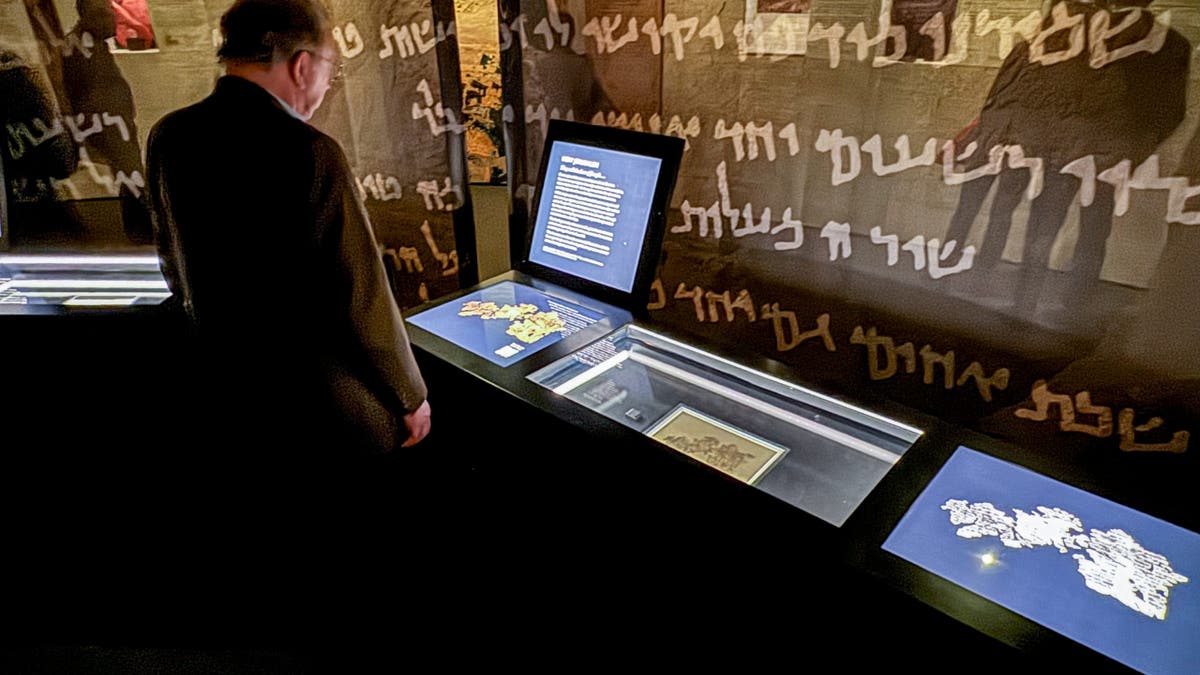
The exhibition also demonstrates how archaeology continues to deepen our understanding of the ancient world. Every manuscript fragment, pottery shard, and artifact contributes to a broader picture of how people lived, worshipped, and understood their place in history more than two millennia ago.
As the Reagan Library describes it, the exhibition is more than a display of ancient texts. It is a journey through spirituality, resilience, and humanity’s enduring search for meaning.
From the caves overlooking the Dead Sea to a museum in Southern California, the story of the Dead Sea Scrolls continues to captivate scholars and visitors alike. More than 2,000 years after they were written, these remarkable manuscripts still offer new opportunities to explore the origins of faith, the preservation of sacred texts, and the historical foundations of some of the world’s most influential religious traditions.