Monumental Roman Tomb Unearthed in Ancient Turkish City Reveals Spectacular Marble Sarcophagus
Archaeologists excavating the ancient city of Olympos have uncovered a towering Roman-era tomb containing an elaborately carved marble sarcophagus, offering new insights into the wealth and power of Lycia’s elite nearly 2,000 years ago.
Along Turkey’s stunning Mediterranean coastline, hidden among forests, rivers, and ancient ruins, archaeologists have uncovered a remarkable monument that has remained buried for centuries.
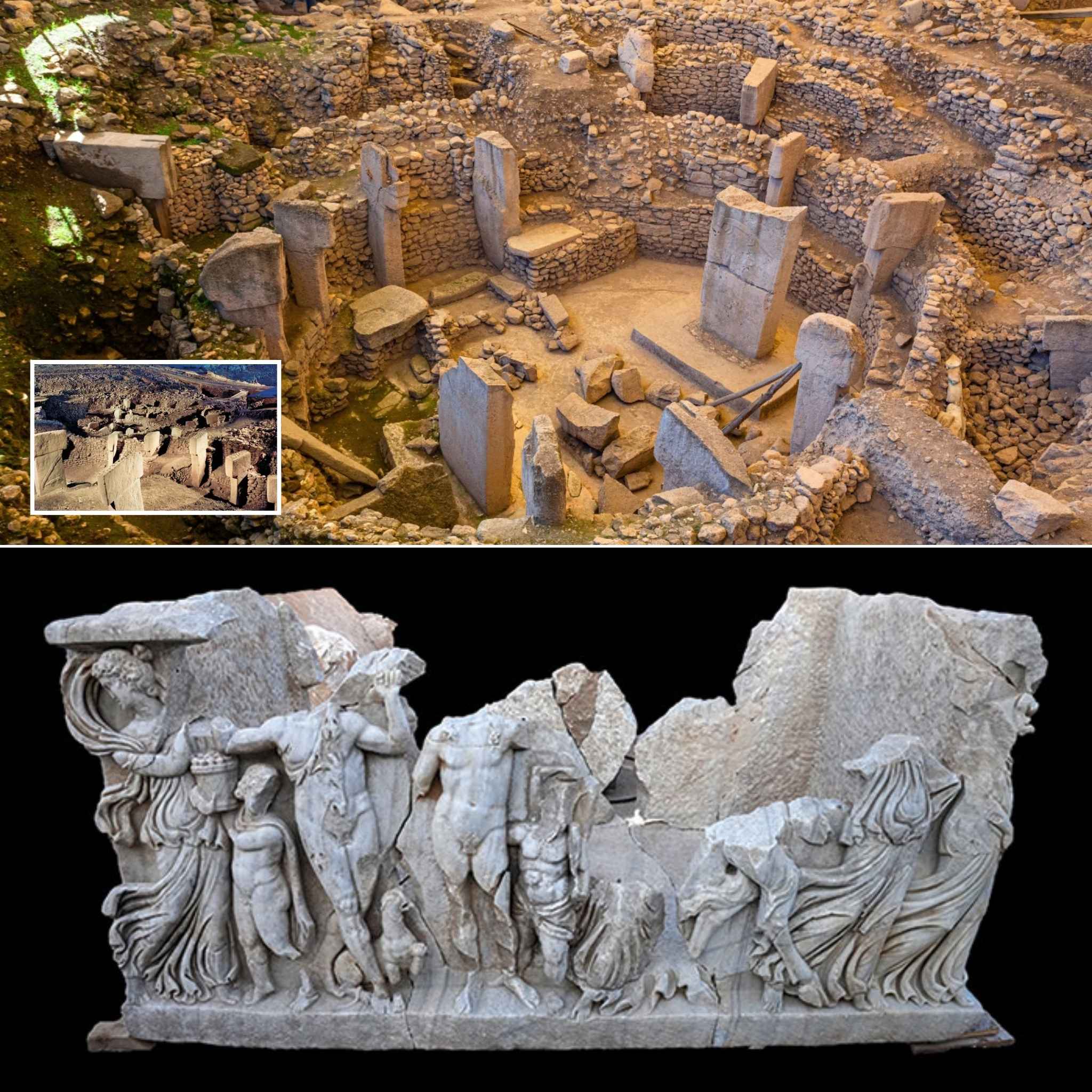
The discovery was made in the ancient city of Olympos, one of the most important settlements of the Lycian civilization and later the Roman Empire. There, researchers recently unearthed a monumental Roman-period tomb standing approximately 30 feet (9 meters) tall and containing a magnificent marble sarcophagus decorated with intricate hunting scenes and images of Nike, the Greek goddess of victory.
The find represents the third monumental tomb discovered at the site and is being hailed as one of the most significant recent discoveries in the region.
Although parts of the sarcophagus were badly damaged over time, archaeologists say its artistic quality, imported materials, and monumental scale reveal the extraordinary status of the individual once buried within.
The discovery is shedding new light on life, death, and power in one of the ancient Mediterranean’s most fascinating cities.
A City Hidden Along the Mediterranean
The tomb was discovered in Olympos, an ancient city located near modern-day Antalya on Turkey’s southern coast.
Nestled between mountains and the sea, Olympos occupies one of the most picturesque archaeological landscapes in the eastern Mediterranean.
The city was originally part of ancient Lycia, a region renowned for its distinctive culture, powerful cities, and spectacular funerary architecture.
Long before Roman rule, Lycian communities became famous for constructing elaborate tombs carved into cliffsides and mountainsides.
Many of these structures were designed to emphasize the status and prestige of the deceased.
When Rome expanded into the region, local traditions blended with Roman artistic influences, producing some of the most impressive monuments in Anatolia.
Olympos became an important commercial and political center during the Roman era, benefiting from maritime trade routes that connected the eastern Mediterranean with the broader empire.
Today, the city’s ruins include:
- Temples
- Public baths
- Residential structures
- Necropolises
- Monumental tombs
- Churches from the Byzantine era
Each excavation season continues to reveal new surprises.
The Discovery of a Monumental Tomb
Archaeologists recently uncovered what is now the third monumental tomb identified at Olympos.
Unlike ordinary burials, monumental tombs were often reserved for society’s wealthiest and most influential individuals.
These structures served not only as final resting places but also as powerful public displays of prestige.
According to excavation director Gökçen Kurtuluş Öztaşkın of Pamukkale University, the newly discovered tomb stood approximately 30 feet tall.
Its impressive size immediately distinguished it from surrounding burials.
The tomb featured a vaulted architectural design, demonstrating sophisticated engineering and significant investment in construction.
Inside, researchers discovered the structure’s most remarkable feature: an enormous marble sarcophagus adorned with detailed carvings.
Although centuries of damage had taken their toll, enough survived to reveal the extraordinary craftsmanship involved.
The tomb’s owner was almost certainly a member of the local elite.
The scale of the monument suggests an individual whose wealth and influence extended far beyond ordinary society.
A Sarcophagus Fit for an Elite
At the heart of the discovery lies the marble sarcophagus.
Sarcophagi were often among the most expensive funerary objects produced in the Roman world.
Crafted from stone and decorated with intricate reliefs, they served both practical and symbolic functions.
The newly discovered example appears to have been exceptionally elaborate.
Researchers identified detailed scenes depicting hunting activities—a common theme in Roman funerary art.
In ancient society, hunting was frequently associated with courage, nobility, and elite status.
Depictions of successful hunters symbolized strength, mastery over nature, and heroic virtue.
Such imagery often reflected how wealthy individuals wished to be remembered after death.
Even more striking are the carvings of Nike, the Greek goddess of victory.
Throughout the Greek and Roman worlds, Nike represented triumph, achievement, and divine favor.
Her appearance on funerary monuments carried powerful symbolic meaning.
The inclusion of Nike may suggest that the deceased was viewed as victorious in life, honored in death, or destined for eternal glory.
Together, the hunting scenes and divine imagery transformed the sarcophagus into far more than a burial container.
It became a statement of identity, power, and prestige.
The Challenge of Restoration
Unfortunately, time has not been kind to the monument.
Archaeologists report that the sarcophagus survived only in a damaged state.
Many decorative elements had broken apart over the centuries.
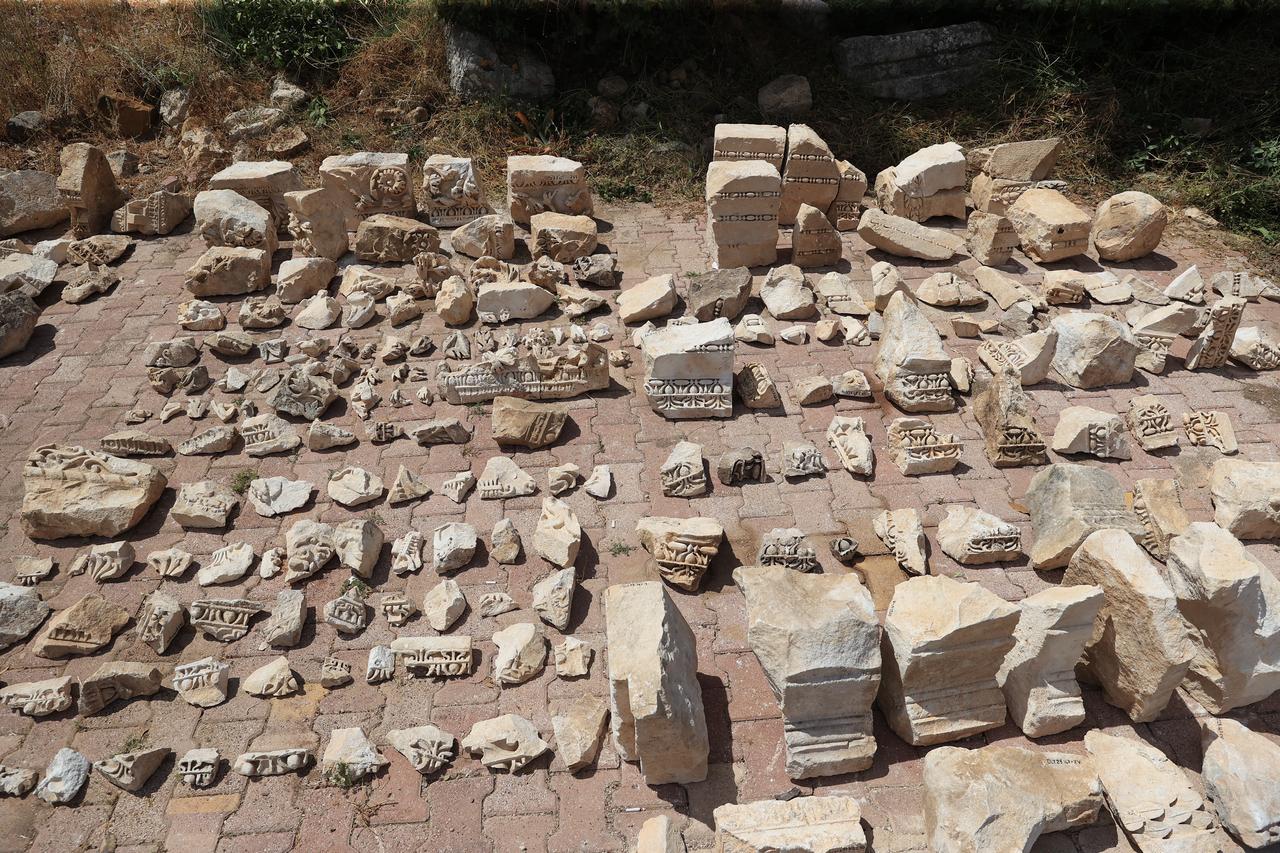
Some sections were scattered into dozens of fragments.
Yet the damage has not discouraged researchers.
Restoration work began almost immediately after excavation.
According to Öztaşkın, specialists are currently working to reconstruct approximately 50 separate pieces belonging to the lower section of the sarcophagus.
The process is painstaking.
Each fragment must be cleaned, documented, analyzed, and carefully fitted back into place.
In many cases, conservators work much like puzzle solvers, attempting to reconstruct original designs from hundreds of broken pieces.
Modern technologies such as 3D scanning, digital modeling, and structural analysis often assist these efforts.
The goal is not merely to repair the monument but also to recover valuable information about its original appearance and craftsmanship.
Every restored detail adds another piece to the story of the individual buried inside.
Tracing the Marble’s Origins
One of the most fascinating aspects of the discovery involves the stone itself.
Researchers determined that the high-quality marble used to create the sarcophagus did not originate near Olympos.
Instead, analysis suggests it was quarried in western Turkey, hundreds of miles away.
This finding highlights the extensive trade networks operating within the Roman Empire.
Transporting massive marble blocks over such distances required enormous resources.
The process likely involved:
- Quarry extraction
- Overland transportation
- Maritime shipping
- Specialized workshops
- Skilled artisans
Such logistics were expensive.
Only wealthy patrons could afford monuments crafted from imported premium marble.
The choice of material therefore reinforces the idea that the tomb belonged to a person of exceptional social standing.
Imported marble was not simply a building material—it was a symbol of wealth and status.

The Importance of Olympos
The discovery is particularly significant because Olympos continues to reveal evidence of its importance during the Roman period.
Founded as part of the Lycian world, the city experienced periods of prosperity, piracy, conquest, and renewal.
During the Hellenistic era, Olympos became associated with powerful regional rulers.
Later, it attracted the attention of Rome, which eventually integrated the region into its expanding empire.
Under Roman administration, Olympos flourished.
Trade connections brought wealth to the city.
Public buildings expanded.
Monumental architecture became increasingly common.
The newly discovered tomb fits within this broader pattern of prosperity.
Its scale reflects a society capable of investing tremendous resources into commemorating influential individuals.
At the same time, it demonstrates how local Lycian traditions merged with Roman artistic and cultural influences.
The result was a unique blend of regional identity and imperial style.
Why Monumental Tombs Matter
To modern observers, monumental tombs may appear extravagant.
But in the ancient world, they served several important functions.
First, they preserved memory.
Families invested heavily in funerary monuments because they believed remembrance carried social and spiritual significance.
Second, they communicated status.
Large tombs publicly displayed wealth, power, and achievement long after death.
Third, they reflected cultural values.
The images chosen for decoration often reveal how societies understood heroism, virtue, and success.
In the case of the Olympos sarcophagus, the hunting scenes and Nike imagery suggest ideals associated with strength, victory, and prestige.
These artistic choices provide valuable insight into how elite individuals wished to be perceived by future generations.
A Window Into Roman Anatolia
The discovery also contributes to our understanding of Roman Anatolia, a region that played a crucial role within the empire.
Stretching across modern Turkey, Anatolia connected Europe, Asia, and the Mediterranean world.
It served as a crossroads for commerce, military movements, and cultural exchange.
Cities such as Olympos participated in networks that linked distant regions together.
Marble from western Turkey could be transported to southern coastal cities.
Artistic styles spread across provinces.
Religious symbols traveled alongside merchants and officials.
The tomb illustrates these connections perfectly.
Its imported marble, Roman artistic themes, and local setting reveal a world far more interconnected than many people realize.
The Person Behind the Monument
Perhaps the greatest mystery remains unanswered.
Who was buried inside?
At present, archaeologists cannot identify the individual.
No inscriptions have yet been reported that would reveal a name.
Nevertheless, the evidence paints a picture of someone highly influential.
The monument’s size, decoration, and materials suggest a person of considerable wealth and status.
Possibilities include:
- A wealthy merchant
- A local political leader
- A military officer
- A member of a prominent family
- A regional administrator
Future excavations may uncover clues that help narrow the possibilities.
Human remains, grave goods, inscriptions, or additional architectural features could provide critical information.
For now, the identity of the tomb’s occupant remains one of Olympos’ most intriguing mysteries.
More Discoveries Await
The excavation of Olympos is far from complete.
Each season reveals new structures, artifacts, and insights into the ancient city’s history.
Researchers believe many significant discoveries still lie hidden beneath the soil.
The newly uncovered tomb demonstrates how much remains to be learned.
Even after centuries of study, ancient cities continue to produce unexpected revelations.
As restoration work progresses, archaeologists hope the sarcophagus will yield additional information about Roman-period life in Lycia.
Every fragment restored helps reconstruct not only a monument but also a forgotten chapter of history.
For now, the towering tomb of Olympos stands as a powerful reminder of the ambitions, beliefs, and achievements of a civilization that flourished along Turkey’s Mediterranean coast nearly two millennia ago.
And buried within its marble walls may still be secrets waiting to be uncovered.