Archaeologists have long studied Tell es‑Sultan, the site widely accepted as ancient Jericho, uncovering evidence of extensive occupation dating back thousands of years. Excavations have revealed impressive prehistoric fortifications, including some of the earliest defensive walls ever found, indicating that Jericho was one of the world’s first fortified settlements.

In the mid‑20th century, British archaeologist Kathleen Kenyon conducted a major excavation and found layers of collapsed mudbrick walls and signs of fiery destruction, which she dated to the Middle Bronze Age around 1550 BCE — long before the traditional date assigned to Joshua’s conquest. Radiocarbon dating in the 1990s largely supported her findings.
This discrepancy has led many scholars to conclude that if the biblical narrative reflects a real event, it does not correspond clearly with the archaeological remains from the Late Bronze Age. Many archaeologists argue that there was no substantial fortified city at Jericho during the period when Joshua’s conquest is traditionally placed, and that the biblical account may instead reflect later theological or literary traditions.
Still, recent research continues to refine our understanding. Some archaeologists, including Lorenzo Nigro and his team, have identified evidence that Jericho was occupied in the Late Bronze Age and that walls existed during that era, though the precise nature and timing of destruction are debated.
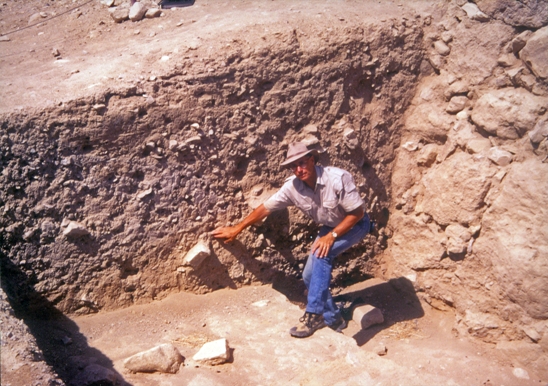
The archaeological record clearly shows that Jericho’s walls collapsed at least once and that the city suffered major destruction, including fire and abandonment. These findings confirm that ancient Jericho experienced significant turmoil in antiquity, even if the exact cause, date, and connection to the biblical story remain debated among experts.
Rather than proving or disproving religious claims, the evidence from Jericho helps historians and archaeologists understand how complex ancient societies were, how cities evolved and fell over millennia, and how oral traditions and texts like the Book of Joshua may preserve cultural memories in symbolic form.