27 August 2026
The final breaths of Timothy Shaun Stemple came with a shudder and a gasp, his eyes briefly fluttering open before his face turned pale and still. At 6:11 p. m. on Thursday, March 15, 2012, the 46-year-old was pronounced dead inside the Oklahoma State Penitentiary in McAlester, ending a 16-year legal battle over one of the most brutal and calculated murders in the state’s history. The execution, carried out by lethal injection, marked the culmination of a case that prosecutors described as a chilling blueprint of greed, betrayal, and cold-blooded premeditation. Stemple, who had maintained his innocence to the very end, declined to offer any last words, shaking his head silently as the warden asked if he had a final statement. His family, seated behind the glass partition, watched in tearful silence as the drugs took effect, his 21-year-old daughter sobbing quietly into her aunt’s shoulder as her father took his final, labored breaths. The crime that sent Stemple to death row began on a seemingly ordinary October evening in 1996, when his wife, Trisha Stemple, a 30-year-old mother and beloved member of the Tulsa community, left their home expecting a casual drive. Instead, she walked into a meticulously planned ambush that would leave her body broken beyond recognition. According to court testimony, Stemple had feigned car trouble along a desolate stretch of U. S. Highway 75 between 81st and 91st Streets, a pre-selected location where his teenage accomplice, Terry Hunt, lay waiting in the woods. What followed was a savage attack that investigators would later describe as almost unimaginable in its brutality. Stemple, armed with a cellophane-wrapped baseball bat, struck his wife in the back of the head between 20 and 30 times, according to Hunt’s testimony, while the young accomplice delivered additional blows. The attack was so ferocious that Trisha’s skull, neck bone, and pelvis were crushed, with 17 ribs broken and over 170 separate injuries cataloged in the autopsy report. The horror did not end with the beating. As Trisha lay bleeding and barely conscious on the roadside, her husband and his accomplice drove a pickup truck over her body multiple times, attempting to crush her completely. Hunt testified that Stemple tried to drive the truck’s tires directly over his wife’s head, and when she miraculously managed to drag herself onto the grass along the highway, they returned and struck her again at approximately 60 miles per hour. In a moment of unspeakable cruelty, court records indicate that after the initial attack, Stemple got out of the truck, walked over to his dying wife, and told her, "Don't worry, Trish. The ambulance is on its way." He then picked up the bat once more and struck her in the back of the head an additional 8 to 12 times, ensuring she would never survive to testify against him. The medical examiner’s report painted a picture of prolonged, conscious suffering, with Trisha alive and aware during much of the assault. The motive for this heinous crime was as simple as it was sinister: money. Specifically, a $950,000 life insurance policy that Stemple had taken out on his wife, a payout he hoped to collect to fund a new life with his teenage mistress, Danny Wood. At the time of the murder, Stemple, a married youth soccer coach and father, was living a double life, carrying on an affair with Wood while presenting himself as a devoted family man to the community. The plan, prosecutors argued, was hatched with chilling precision. Stemple drilled a hole into one of Trisha’s car tires to make it appear she had suffered car trouble, staging the scene to look like a random hit-and-run or carjacking. After the murder, he reported his wife missing, playing the role of the grieving husband while investigators initially treated the case as a tragic auto-pedestrian collision. But the facade began to crumble when forensic examiners noted the absence of the typical primary point of impact below the knees that is characteristic of a standard pedestrian accident, raising suspicions that this was no ordinary hit-and-run. The investigation soon turned toward Stemple, and the case cracked wide open when his accomplice, Terry Hunt, agreed to testify against him in exchange for a life sentence. Hunt, who was the 16-year-old cousin of Stemple’s mistress, provided a harrowing account of the murder that left even seasoned prosecutors shaken. Hunt testified that Trisha was conscious during much of the attack, describing how she begged for her life as her husband rained down blows with the bat. He detailed how Stemple tried to drive over her head and how they returned to finish the job when she showed signs of life. The testimony was so damning that it helped prosecutors secure the death penalty for Stemple, who was convicted of first-degree murder in 1997. Hunt, who is serving a life sentence in prison in Hominy, Oklahoma, expressed disappointment that Stemple never confessed, telling the Associated Press in a prison interview just days before the execution, "I'm not innocent and Shawn is not innocent." Throughout the years of appeals and legal proceedings, Stemple and his family mounted a vigorous campaign to prove his innocence, hiring forensic experts who argued that Trisha’s injuries were consistent with being hit by a vehicle and run over, with no evidence of a beating. The New York-based Innocence Project also became involved, urging Governor Mary Fallin to stay the execution and calling for additional DNA testing on blood found on the plastic wrapping of the bat. However, prosecutors noted that the blood was too deteriorated to determine whose it was, and the Oklahoma Pardon and Parole Board denied Stemple’s plea for clemency. At a clemency hearing last month, Stemple declined to address the board, stating that it was not the appropriate forum to discuss his case. His family, including his mother Leah, his daughter Lauren, and his sisters, held a desperate last-minute campaign to halt the execution, but Governor Fallin denied the request, and the legal avenues were exhausted. The execution itself was carried out with clinical efficiency, though not without moments of visible distress. After the lethal injection began at 6:05 p. m. , Stemple gasped for approximately 20 seconds, his eyes opened, and he groaned before lying still with closed eyes. His family, seated on one side of the glass, held each other tightly, with one sister cradling the crying face of his daughter. On the other side, members of Trisha Stemple’s family watched, including her youngest sister, Deborah Ruddick Bird, who had waited 16 years for this moment. After the execution, Ruddick Bird addressed reporters with a mixture of relief and sorrow, stating, "Today is not about Shawn. It's about justice, finality, and closure for my gorgeous sister Trisha and my family. Today we put a period at the end of the chapter that held us captive for far too long. Today we breathe again. Today we move forward and move on." Her words echoed the sentiments of a family that had endured more than a decade and a half of legal battles, appeals, and the painful reliving of their loved one’s horrific final moments. Stemple’s final meal, a request for a large stuffed crust pizza with extra cheese, half pepperoni and half Canadian bacon, along with a 2-liter bottle of orange soda with ice, was a stark contrast to the gravity of the occasion. He was the second Oklahoma inmate to be executed that year, and his execution was the first of three scheduled over the following two months in the state. The case also highlighted a growing controversy over the use of the lethal injection drug pentobarbital, an anesthetic that manufacturers had objected to selling for use in executions. The Department of Corrections had noted that the state had only four doses of the drug left, raising questions about the future of capital punishment in Oklahoma. Attorney General Scott Pruitt issued a statement before the execution, reiterating that a jury of Stemple’s peers had examined the evidence and sentenced him to death 14 years ago, and that his thoughts were with Trisha Stemple’s family and what they had endured.…
 Dallas rapper Yella Beezy missed his scheduled pretrial hearing for the Mo3 murder case after the passing of his mother. His attorneys confirmed the news and are working with the court to establish a new trial date. The rapper, 33, has been under house arrest since March 2025 after his bond was reduced from $2 million to $750,000.
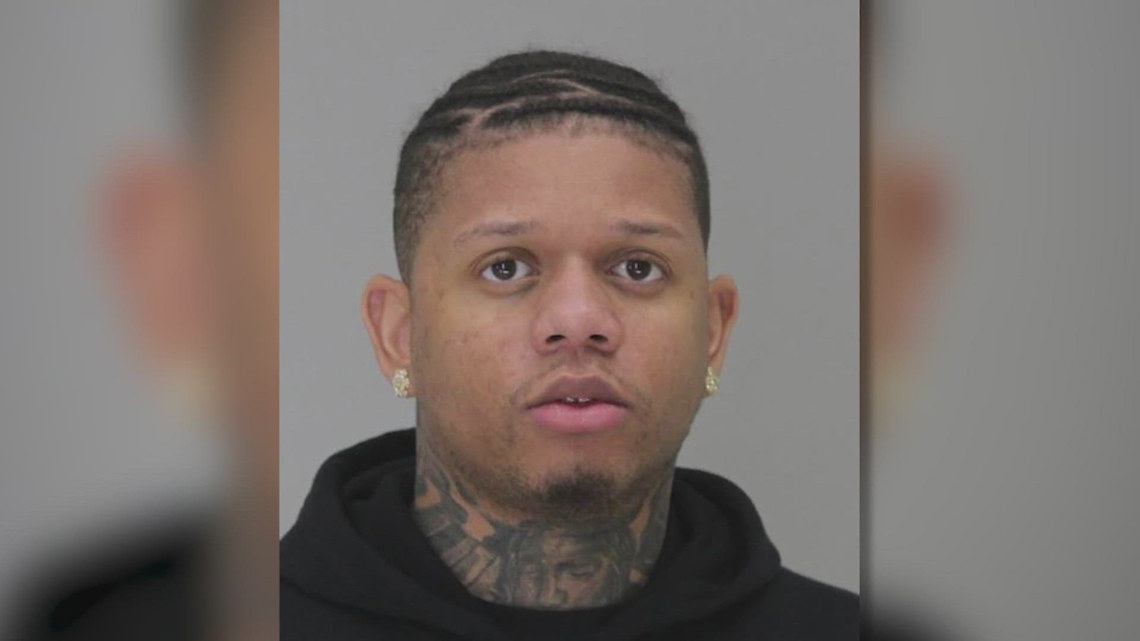 The legal proceedings have moved slowly, with Yella Beezy recently criticizing prosecutors for overloading him with evidence and paperwork in advance of his trial. His legal team stated, “We can confirm his mother’s passing. We are having another hearing next week to go over some of the pre-trial motions. We will also be discussing a new trial date.”
 If convicted of capital murder, Yella Beezy could face life in prison without parole or the death penalty. Both sides are expected to reconvene next week to address pretrial motions and procedural matters.

