Excavations in the City of David National Park, near the biblical Pool of Siloam — the site mentioned in the Gospel of John where Jesus healed a man born blind — have uncovered a monumental ancient dam wall dating back about 2,800 years to the First Temple period (around 805–795 BCE).

Researchers from the Israel Antiquities Authority and the Weizmann Institute of Science used high‑precision radiocarbon dating on organic material in the structure’s mortar to establish its age with an unusual level of accuracy. The dam measures roughly 12 meters high, over 8 meters wide, and at least 21 meters long, making it the largest ancient dam discovered in Jerusalem and one of the most significant engineering works of its time.
Far from being an isolated find, this structure forms part of a comprehensive water management system that also included a tower that dammed the Gihon Spring and channels that directed its water into the Siloam Pool. Together these elements show how ancient Jerusalemites planned for both water supply and flood control in response to climatic challenges of the late Iron Age.
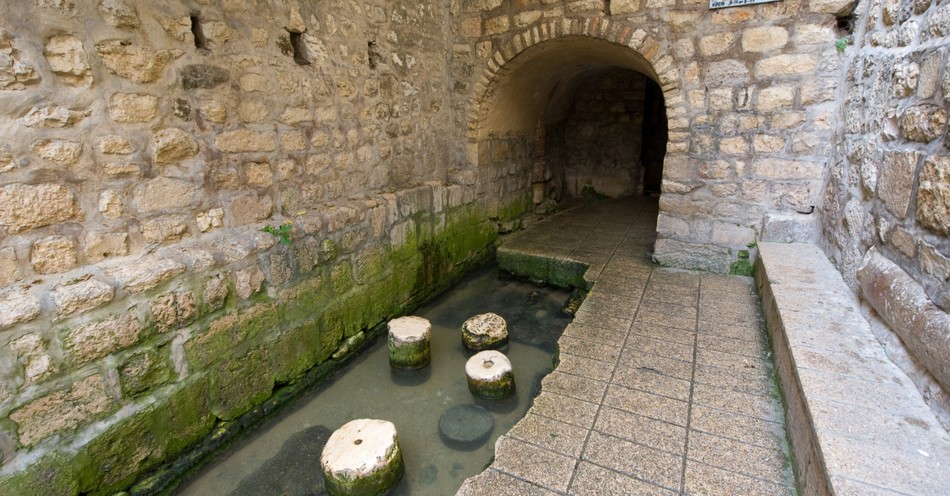
The discovery offers important context for the Pool of Siloam’s long history. The pool itself appears in both biblical texts and later traditions as a place of ritual purification and community activity, and its steps were only rediscovered and excavated in the early 21st century.
Rather than a mystical or sensational “shock,” the find is archaeologically remarkable because it highlights the sophistication and engineering capabilities of the Kingdom of Judah nearly three millennia ago and confirms aspects of the ancient city’s infrastructure previously known only from texts.
The research will be presented at the City of David Studies Conference, and scientists see it as a major step in understanding how ancient Jerusalem adapted to environmental stress, supported its population, and integrated natural water sources into urban planning.
In short, what archaeologists have uncovered near the Pool of Siloam is a tangible piece of Jerusalem’s water system history — a testament to early urban engineering that complements written sources and deepens our knowledge of life in the First Temple era.