Italian Teenagers Discover an 1,800-Year-Old Roman Luxury House Beneath Their High School Gym
What began as a routine renovation project at a high school in Italy has led to an extraordinary archaeological discovery. Beneath the school’s gymnasium, students and archaeologists uncovered the remains of a lavish Roman residence dating back nearly 1,800 years, offering a remarkable glimpse into life among the wealthy elite of the Roman Empire.
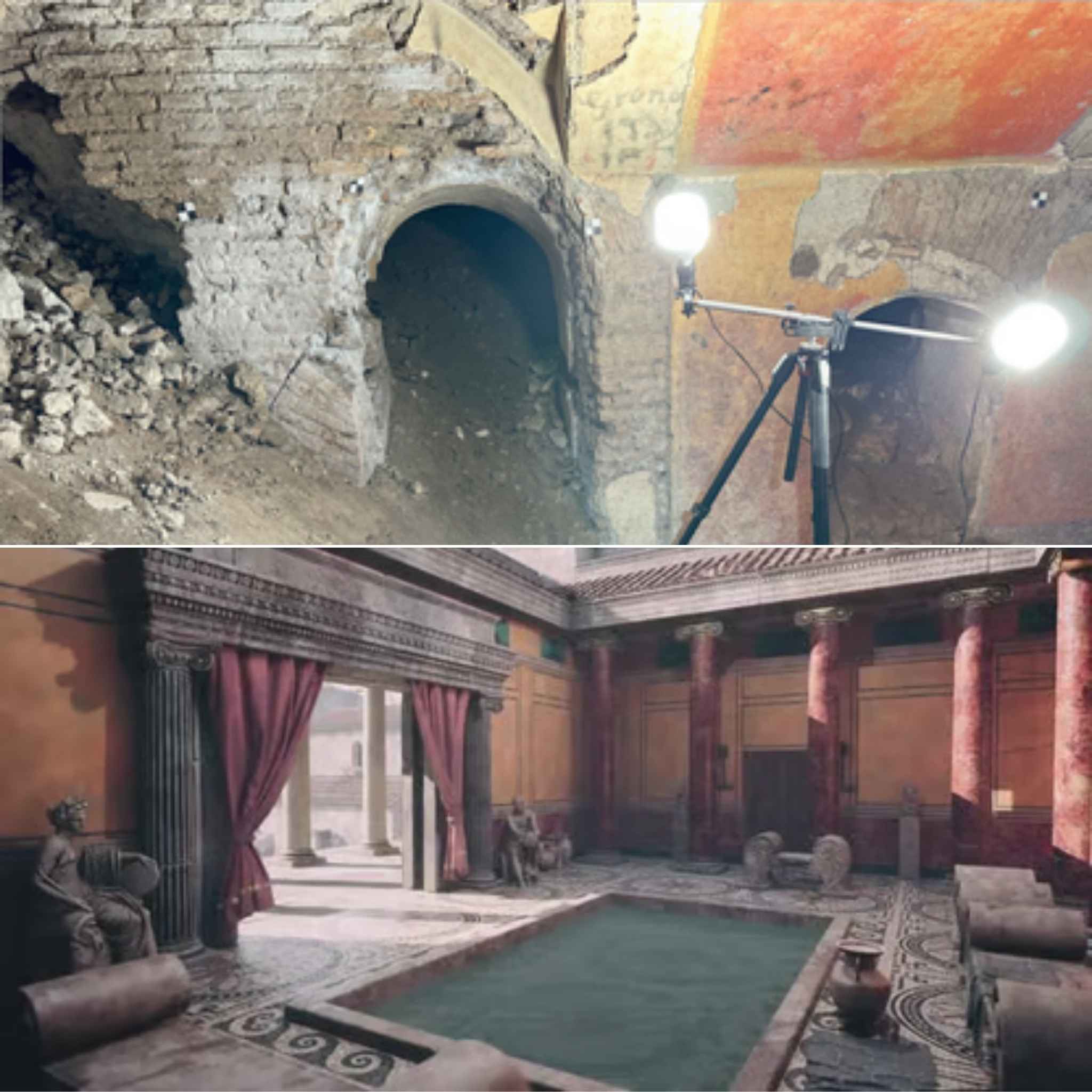
Construction projects in Italy often carry an unexpected risk: uncovering history.
From ancient roads and temples to forgotten cemeteries and buried villas, the country’s modern cities sit atop layers of civilizations stretching back thousands of years.
Yet few discoveries have captured public imagination quite like the recent find beneath a school gymnasium, where students found themselves learning about ancient Rome not from textbooks, but from the ground beneath their feet.
What initially appeared to be an ordinary building project soon revealed an elegant Roman residence hidden for nearly two millennia.
The discovery has provided archaeologists with valuable new evidence about urban life in the Roman Empire while giving local students a unique opportunity to witness history emerging before their eyes.
An Unexpected Discovery
The remarkable find occurred during renovation work beneath a high school gym.
Construction crews were carrying out routine excavations when they encountered ancient walls and unusual architectural remains.
As required under Italian heritage laws, work was immediately suspended and archaeologists were called to investigate.
What they uncovered exceeded expectations.
Beneath the modern building lay the remains of a substantial Roman house dating to approximately the second or third century A.D., a period when the Roman Empire controlled vast territories across Europe, North Africa, and the Middle East.
The structure was far more than a simple dwelling.
Evidence suggested it belonged to a wealthy family and had once been decorated with luxurious architectural features.
For students attending classes above the site, the discovery transformed an ordinary school year into a firsthand lesson in archaeology.
A House of Wealth and Status
Initial investigations revealed that the building was a domus, a type of urban residence associated with affluent Roman citizens.
Unlike the crowded apartment blocks occupied by much of the urban population, a domus served as a private home designed to display wealth, influence, and social status.
The remains indicate that the house was carefully planned and richly decorated.
Archaeologists uncovered sections of:
- Painted plaster walls
- Decorative flooring
- Architectural features
- Residential rooms
- Courtyard areas
These elements suggest that the owner belonged to the upper levels of Roman society.
The size and quality of construction distinguish the building from more modest residences commonly found in Roman towns.
Researchers believe the home may have occupied a prominent position within the ancient settlement that once stood on the site.
Preserved Beneath the Centuries
One reason the discovery is so significant is the exceptional state of preservation.
Over centuries, later construction gradually buried the Roman structure.
Rather than being destroyed completely, many features remained protected beneath layers of soil and newer buildings.
The gymnasium built above the site unintentionally acted as a shield, preserving sections of the ancient residence from modern development.
Archaeologists were able to document walls, floor surfaces, and structural layouts that provide important information about the original design of the house.
Such discoveries help researchers reconstruct how Roman urban neighborhoods evolved through time.
Every room, corridor, and architectural detail contributes to a broader understanding of daily life during the Roman period.

Life Inside a Roman Luxury Home
For wealthy Romans, the home served as both a residence and a public statement.
Visitors entering a domus would immediately encounter architectural features intended to impress guests and clients.
Many luxury homes included:
- Reception halls
- Interior courtyards
- Decorative gardens
- Dining rooms
- Private baths
- Elaborate wall paintings
Colorful frescoes often covered walls.
Mosaic floors displayed intricate geometric patterns or mythological scenes.
Water features and ornamental plants added further prestige.
Although only parts of the newly discovered house survive, archaeologists believe it once reflected many of these characteristics.
The remains suggest a household accustomed to comfort and social prominence.
The Roman World in the Second Century
The house appears to date from a period when the Roman Empire stood near the height of its power.
During the second century A.D., cities across the empire experienced economic growth and urban expansion.
Trade routes connected distant regions.
Luxury goods flowed between provinces.
Wealthy families invested heavily in impressive homes that reflected their social standing.
Italian cities in particular benefited from their position at the center of imperial administration and commerce.
The residence discovered beneath the school likely belonged to a family participating in this prosperous environment.
Its architecture reflects the cultural values of an era that emphasized status, refinement, and public reputation.
Archaeology Meets Education
One of the most unusual aspects of the discovery is the role played by the school’s students.
Rather than reading about Roman archaeology in a classroom, they witnessed an excavation unfolding directly beneath their campus.
Many students were able to observe archaeologists at work as they documented and analyzed the remains.
The experience offered a rare introduction to:
- Archaeological methods
- Historical preservation
- Scientific investigation
- Cultural heritage management
Teachers incorporated the discovery into educational activities, helping students understand how archaeology contributes to historical knowledge.
For many young people, it was their first opportunity to see how ancient history is reconstructed from physical evidence.
Why Italy Continues to Produce Discoveries
Italy remains one of the world’s richest archaeological landscapes.
The country contains layers of human occupation spanning thousands of years.
Ancient settlements often lie directly beneath modern towns and cities.
As a result, construction projects frequently uncover previously unknown remains.
Examples include:
- Roman roads
- Villas
- Temples
- Cemeteries
- Water systems
- Public buildings
Each discovery adds another piece to the puzzle of Italy’s long and complex history.
The luxury house beneath the gymnasium joins a growing list of unexpected finds emerging from modern development projects.
These discoveries demonstrate how much remains hidden beneath contemporary urban environments.
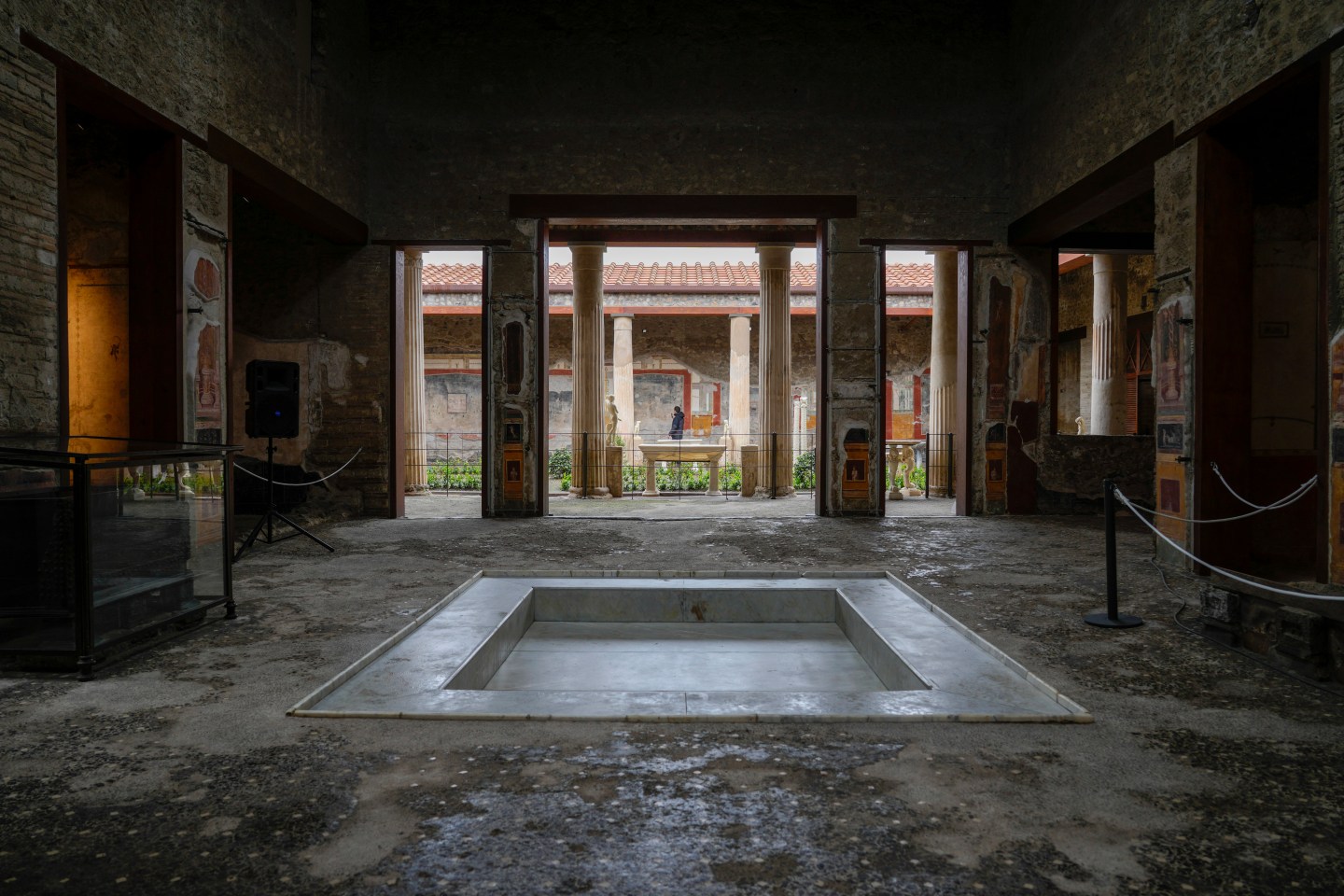
Preserving the Past
Once archaeological remains are discovered, authorities face important decisions regarding preservation.
In some cases, artifacts are removed and documented before construction resumes.
In others, sites are incorporated into public exhibits or museums.
The future of the newly discovered Roman house will depend on ongoing assessments by archaeologists and heritage officials.
Researchers are carefully documenting every aspect of the site.
Detailed mapping, photography, and analysis ensure that valuable information is preserved regardless of how the location is ultimately managed.
Modern technologies such as 3D scanning allow experts to create digital models that can be studied long after excavations conclude.
What Archaeologists Hope to Learn
Although the discovery has already yielded important information, many questions remain unanswered.
Researchers hope future analysis may reveal:
- The identity of the home’s occupants
- The precise date of construction
- Changes made over time
- The economic status of the family
- Connections to the surrounding Roman settlement
Artifacts recovered from the site may provide additional clues.
Pottery, coins, tools, and household objects often help establish dates and reveal details about daily life.
Even small fragments can contribute valuable information.
A Window Into Roman Society
Luxury residences offer unique insights into the social structure of the Roman Empire.
They reveal how wealth was displayed, how families organized domestic life, and how architecture reflected status.
The newly discovered house demonstrates the considerable resources available to certain members of Roman society.
At the same time, it highlights the contrast between elite lifestyles and those of ordinary citizens.
Most Romans lived in far more modest conditions.
Studying affluent homes therefore helps historians understand broader patterns of inequality, culture, and urban development within the empire.
History Beneath the Classroom
For nearly eighteen centuries, the remains of this Roman residence lay hidden beneath layers of earth and modern construction.
Generations passed unaware of the ancient home resting below.
Then, during an ordinary renovation project, the past resurfaced.
The discovery serves as a reminder that history is often closer than we realize.
Across Italy and much of the Mediterranean world, traces of ancient civilizations remain buried beneath streets, buildings, and public spaces.
Each excavation has the potential to reveal forgotten chapters of human history.
In this case, a group of students gained an unforgettable lesson in archaeology, not from a museum or textbook, but from a Roman house concealed beneath their own school.
The luxury residence may have vanished from memory centuries ago, but its rediscovery is helping scholars reconstruct the world of the people who once called it home.
And for the students who watched the excavation unfold, the discovery transformed the ground beneath their gymnasium into a direct connection with the distant past.