How Many Generations of Humans Have There Been?
Modern humans have existed for roughly 300,000 years. But how many generations separate us from the earliest members of our species? The answer depends on how scientists define a generation—and the result offers a fascinating perspective on humanity’s deep past.
Many people are curious about their family history.
Some trace their ancestry through old photographs and family records. Others use DNA testing services or genealogy websites to connect with distant relatives and reconstruct family trees stretching back centuries.
The longest documented family tree in the world belongs to the descendants of the Chinese philosopher Confucius (551–479 B.C.), whose lineage spans more than 80 generations and nearly 3,000 years.
Impressive as that may be, it represents only a tiny fraction of humanity’s history.
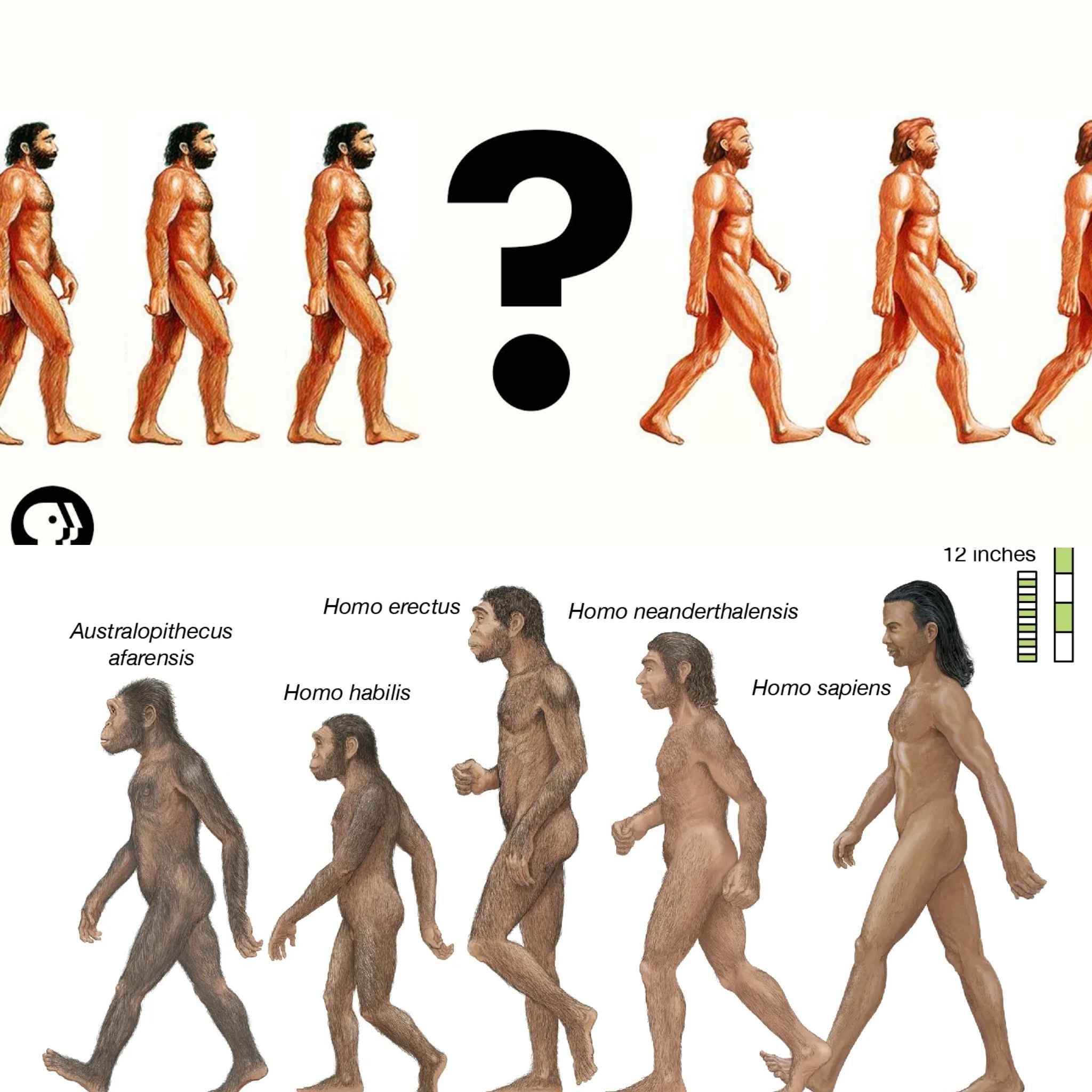
Modern humans, known scientifically as Homo sapiens, have existed for approximately 300,000 years. During that immense span of time, countless generations have been born, lived, and died.
But exactly how many?
The answer is not as straightforward as it might seem.
Defining a Human Generation
To calculate the number of generations that have existed, scientists need two pieces of information:
- How long Homo sapiens has existed.
- The average length of a human generation.
The first number is relatively well established.
Fossil discoveries from sites such as Jebel Irhoud in Morocco suggest that early members of our species lived around 300,000 years ago.
The second number is more complicated.
A generation is usually defined as the average age at which individuals have children.
This figure varies significantly across cultures, historical periods, and even between men and women.
Population geneticists often refer to this measurement as the generation interval.
According to researchers, women historically tend to have children at younger ages than men, while men can continue fathering children later in life.
As a result, the average generation interval is often calculated somewhere between 25 and 30 years, although estimates vary.
Calculating the Number of Generations
If we use a generation length of 25 years, the calculation is straightforward:
300,000 years ÷ 25 years per generation = 12,000 generations
If we use a generation interval of 30 years:
300,000 years ÷ 30 years per generation = 10,000 generations
This means that somewhere between 10,000 and 12,000 generations of Homo sapiens have likely existed since our species first emerged.
While the exact number remains uncertain, most scientific estimates fall within this general range.
Why the Answer Isn’t Exact
Although the math appears simple, determining the true number of generations is more complex.
Human societies have changed dramatically over time.
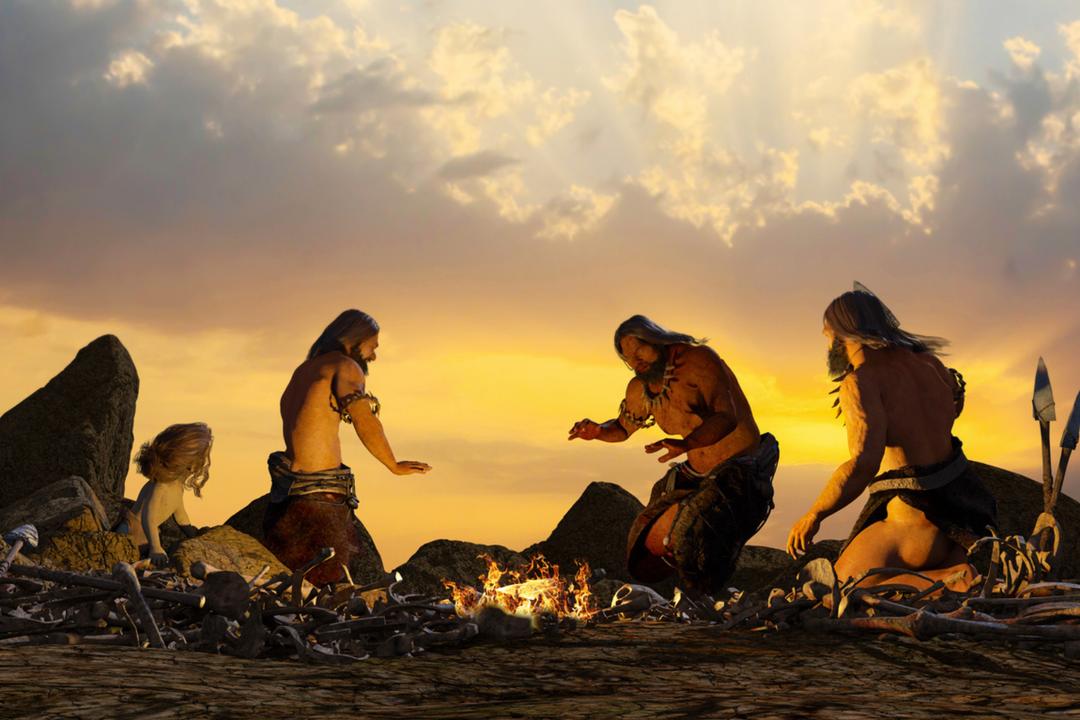
In some ancient hunter-gatherer communities, people may have become parents in their late teens or early twenties.
In agricultural societies, family patterns differed.
In modern industrialized nations, people often have children much later than previous generations.
These variations affect generation length.
Even small differences accumulate significantly over hundreds of thousands of years.
For example:
- At 20 years per generation: approximately 15,000 generations
- At 25 years per generation: approximately 12,000 generations
- At 30 years per generation: approximately 10,000 generations
The longer the generation interval, the fewer generations fit into 300,000 years.
What Genetics Reveals
Modern genetics provides another way to estimate generation length.
Scientists can study mutations that accumulate in DNA over time.
Because genetic changes are passed from parents to children, researchers can use mutation rates to estimate how many generations separate modern humans from ancient ancestors.
Recent genetic studies generally suggest an average generation interval of about 26 to 29 years over long periods of human history.
Interestingly, evidence indicates that male generation intervals have often been longer than female generation intervals.
Throughout much of history, men tended to become fathers at older ages than women became mothers.
These differences leave detectable patterns within human DNA.
A Surprisingly Small Number
Ten thousand generations may sound enormous.
Yet compared with Earth’s history, it is surprisingly small.
If the entire 300,000-year history of Homo sapiens were compressed into a single calendar year:
- The first modern humans would appear on January 1.
- Agriculture would emerge only in the final days of December.
- Ancient Egypt would appear in the final hours.
- The Roman Empire would exist in the last few minutes.
- The Industrial Revolution would occupy only the last few seconds.
Viewed this way, the number of generations connecting us to the first Homo sapiens is not impossibly large.
In fact, every person alive today is linked to those early humans through a chain of roughly 10,000 to 12,000 parent-child relationships.
How Many Ancestors Would That Create?
At first glance, the number of ancestors grows exponentially.
You have:
- 2 parents
- 4 grandparents
- 8 great-grandparents
- 16 great-great-grandparents
Continuing this pattern backward for thousands of generations would produce a number larger than all humans who have ever lived.
Clearly, something doesn’t add up.
The reason is a phenomenon called pedigree collapse.
As family trees extend further into the past, the same individuals appear multiple times through different ancestral lines.
Distant cousins marry, family branches reconnect, and ancestors are shared repeatedly.
As a result, humanity’s family tree resembles a complex web rather than a perfectly branching structure.
The Last Common Ancestors

Genetic and genealogical research suggests that all living humans share common ancestors surprisingly recently.
Scientists estimate that the most recent common ancestor of all living humans may have lived only a few thousand years ago.
This does not mean that everyone descended exclusively from one person.
Rather, it means that a particular individual who lived during that period is either an ancestor of everyone alive today or of no one alive today.
Over thousands of generations, human populations became increasingly interconnected.
Migration, trade, conquest, and exploration linked communities across continents.
The result is that humanity’s family tree is deeply intertwined.
Beyond Homo sapiens
If we expand the question beyond modern humans, the number of generations becomes even larger.
Our species evolved from earlier human relatives, including:
- Homo heidelbergensis
- Homo erectus
- Earlier hominin species
The human lineage stretches back millions of years.
Considering all ancestral hominins, the total number of generations leading to modern humans could exceed 100,000 generations.
And if we follow the evolutionary chain all the way back to the earliest mammals—or even the first life forms—the number becomes almost unimaginable.
A Chain Stretching Back 300,000 Years
The idea that only about 10,000 to 12,000 generations separate us from the earliest modern humans offers a remarkable perspective on human history.
Every person alive today is connected to those distant ancestors through an unbroken sequence of births spanning hundreds of millennia.
Each generation inherited knowledge, culture, language, and genes from the generations before it.
Most left no written record.
Many lived lives that history never documented.
Yet together they formed the continuous chain that eventually produced the modern world.
From the first Homo sapiens walking across ancient African landscapes to people living in today’s technologically connected societies, humanity’s story spans only a few thousand generations—a surprisingly short bridge across an extraordinary stretch of time.
And somewhere within those 10,000 to 12,000 generations lies the complete story of our species.