Enki, the Great Flood, and the Mystery of a Supposed Lost Sumerian Tablet
A Modern Legend Rooted in One of Humanity’s Oldest Civilizations
For more than a century, the ancient civilization of Sumer has occupied a unique place in the public imagination.
Located in southern Mesopotamia, in what is now Iraq, the Sumerians built some of the world’s earliest cities, developed one of the first known writing systems, and produced myths that would influence cultures for thousands of years. Their clay tablets preserve stories of gods, kings, floods, creation, and the origins of civilization itself.
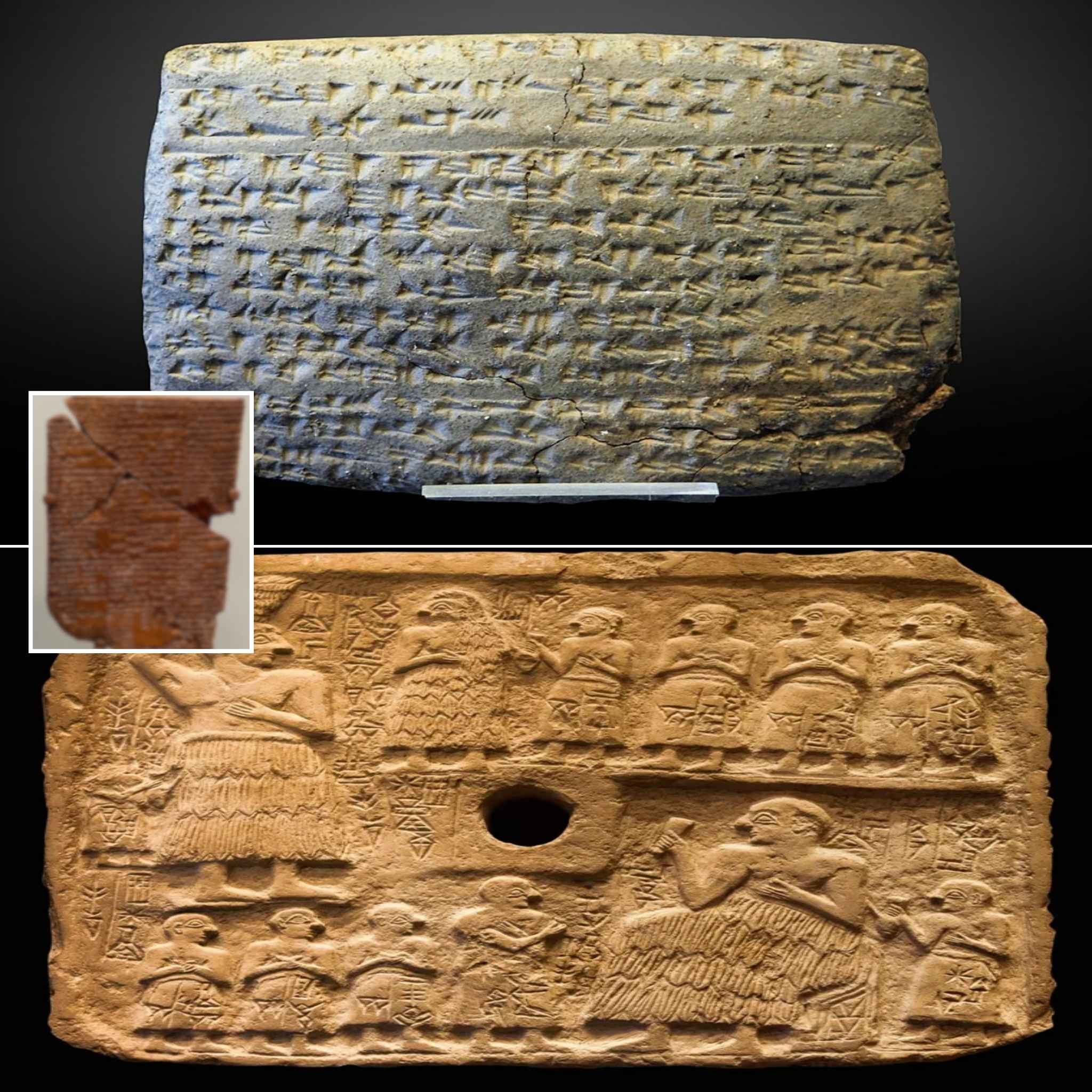
In recent years, a dramatic story has circulated across the internet, documentaries, and social media platforms. According to this narrative, a forgotten Sumerian tablet allegedly deciphered in 2019 contains a shocking message from the god Enki. The text supposedly claims that humanity was not the first intelligent creation, that several earlier versions of humankind existed before us, and that a mysterious “door” containing knowledge of these lost civilizations remains sealed until specific conditions are met.
Some versions of the story go even further.
They suggest that the Great Flood described in Mesopotamian myths was not a divine punishment but a deliberate reset, and that modern humanity is approaching a moment foretold thousands of years ago when hidden knowledge will return.
The claims are extraordinary.
But do they have any basis in ancient Mesopotamian texts?
To answer that question, it is necessary to separate authentic Sumerian mythology from modern speculation and examine what scholars actually know about Enki, the flood traditions of Mesopotamia, and the remarkable civilization that produced them.
The World of Ancient Sumer
Long before the rise of Egypt’s pyramids or the classical civilizations of Greece and Rome, the cities of Sumer flourished between the Tigris and Euphrates rivers.
By approximately 3500 B.C., urban centers such as Uruk, Ur, Eridu, and Lagash had become hubs of commerce, religion, and political power.
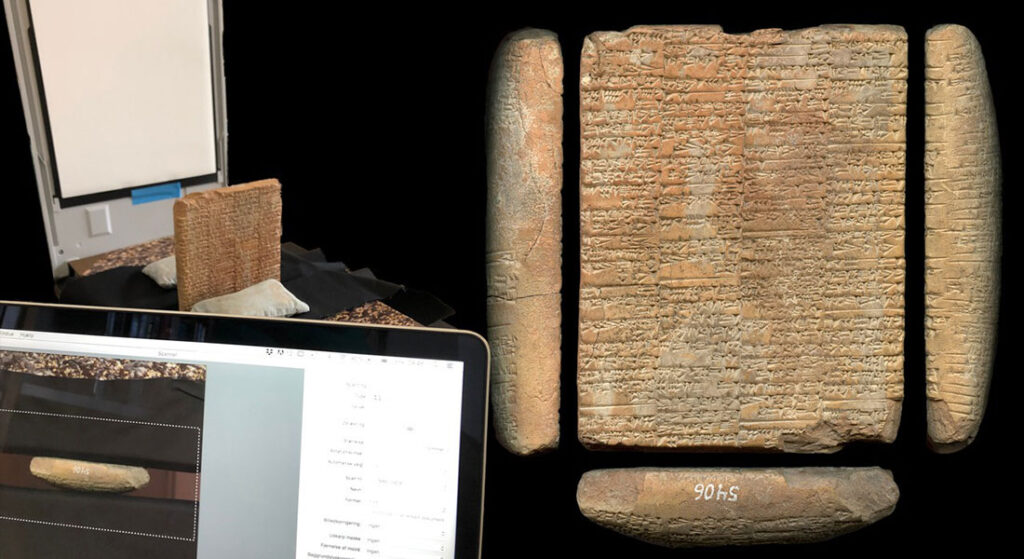
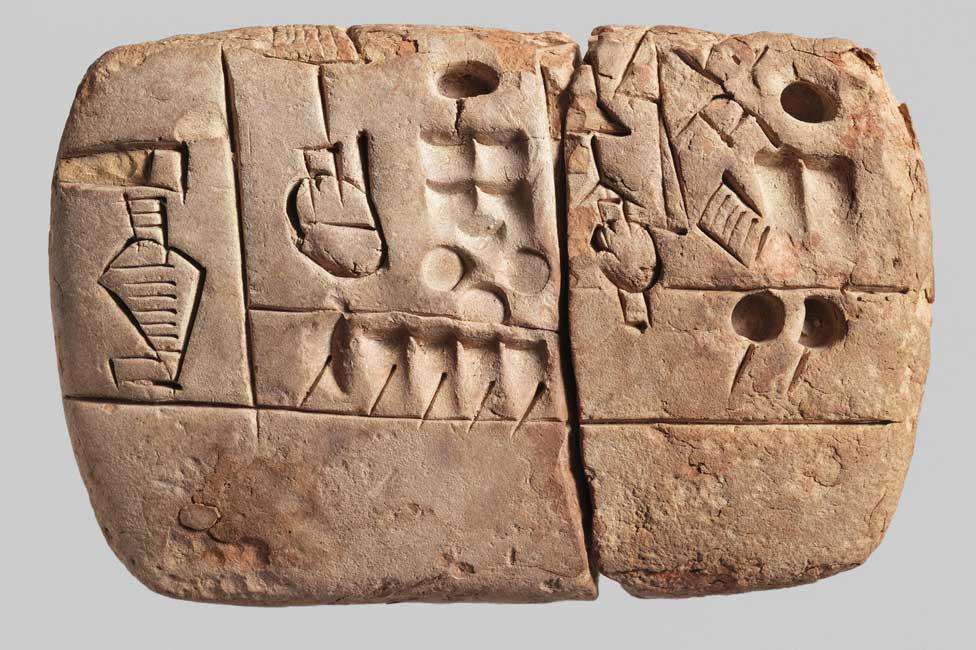
The Sumerians left behind tens of thousands of clay tablets inscribed with cuneiform writing.
These texts include:
- Administrative records
- Legal documents
- Royal inscriptions
- Hymns and prayers
- Scientific observations
- Mythological narratives
Through these records, historians have reconstructed much of Sumerian culture and religion.
Among the most important figures in the Sumerian pantheon was Enki.
Who Was Enki?
Enki was one of the principal deities of Mesopotamian religion.
Associated with wisdom, fresh water, creation, craftsmanship, and knowledge, he occupied a central role in many myths.
His primary cult center was Eridu, one of the oldest cities in southern Mesopotamia.
Unlike some gods who were depicted primarily as warriors or rulers, Enki often appears as a problem solver.
In mythological narratives, he frequently intervenes to assist humanity when other gods threaten destruction.
He is portrayed as intelligent, resourceful, and sometimes willing to challenge divine authority.
This reputation has made Enki particularly attractive to modern alternative-history writers, who often cast him as a benevolent figure attempting to help humanity against the wishes of other gods.
However, the authentic ancient texts present a far more complex picture.
[IMAGE 1]

The Mesopotamian Creation Stories
Several Mesopotamian texts describe the creation of humanity.
One of the best-known examples appears in the Akkadian Atrahasis Epic, composed during the second millennium B.C.
According to this account, the gods initially performed all labor themselves.
Over time, the lesser gods became exhausted and rebelled.
To solve the crisis, the gods created humans.
Humanity’s purpose was straightforward:
To perform labor and maintain the world so that the gods no longer had to do so.
The creation process involved divine intervention and the use of clay mixed with the essence of a sacrificed deity.
While modern readers may find this story unusual, it reflects a common ancient worldview in which humanity existed within a cosmic order governed by divine beings.
Importantly, none of the surviving Mesopotamian creation texts describe humanity as the eighth failed experiment of a divine council.
Nor do they mention multiple earlier versions of humanity being discarded in a sequence resembling modern scientific experimentation.
Those concepts appear to originate from much later interpretations rather than ancient sources.
The Great Flood of Mesopotamian Tradition
Perhaps the most famous Mesopotamian story involving Enki concerns the Great Flood.
Long before the biblical story of Noah was written, Mesopotamian civilizations preserved flood narratives in texts such as:
- The Eridu Genesis
- The Atrahasis Epic
- The Epic of Gilgamesh
In these stories, humanity becomes numerous and noisy.
The gods decide to send a catastrophic flood.
Enki, however, secretly warns a righteous man—known variously as Ziusudra, Atrahasis, or Utnapishtim depending on the version—and instructs him to build a vessel.
The hero survives while much of humanity perishes.
Afterward, life begins anew.
These accounts are among the oldest surviving flood narratives in world literature.
Some researchers believe they preserve distant memories of devastating regional floods that affected Mesopotamian communities thousands of years ago.
Others view them primarily as religious and symbolic narratives.
Either way, the texts clearly describe the flood as a divine event within a mythological framework.
They do not portray it as a technological “system reset” or maintenance procedure as modern speculative theories sometimes suggest.
The Origin of the “Hidden Tablet” Story
The internet narrative concerning a mysterious tablet deciphered in 2019 appears to blend authentic Mesopotamian mythology with ideas popularized by alternative-history authors during the twentieth century.
Several recurring themes can be traced to works associated with ancient astronaut theories:
- Lost advanced civilizations
- Multiple human creations
- Hidden archives of knowledge
- Returning cosmic teachers
- Prophecies tied to astronomical alignments
Many of these ideas gained popularity through authors such as Zecharia Sitchin, whose interpretations of Mesopotamian texts remain rejected by mainstream Assyriologists.
Professional scholars note that Sitchin’s translations often differ dramatically from accepted readings of the original cuneiform inscriptions.
No verified academic publication has identified a Sumerian tablet containing the specific claims commonly attributed to Enki in modern online accounts.
Why Enki Became Central to Modern Mysticism
Enki occupies a unique position among ancient deities.
Unlike many mythological figures, he frequently acts in ways that appear sympathetic to humanity.
In flood narratives, he saves human lives.
In creation stories, he helps shape the world.
In wisdom literature, he represents knowledge and understanding.
These characteristics make him particularly appealing to modern audiences seeking ancient sources for hidden truths.
Over time, Enki has become transformed from a Mesopotamian deity into a symbolic figure representing forbidden knowledge.
This transformation says as much about modern culture as it does about ancient religion.
[IMAGE 2]
The Fascination with Lost Knowledge
One reason stories about hidden tablets continue to attract attention is humanity’s enduring fascination with lost knowledge.
Throughout history, many cultures have imagined secret libraries, forgotten wisdom, and hidden archives.
Examples include:
- The Library of Alexandria
- Atlantis
- Hidden Buddhist scriptures
- Medieval legends of concealed treasures
- Esoteric religious traditions
The idea that ancient civilizations possessed profound knowledge lost to later generations is deeply appealing.
It offers a sense that history contains mysteries yet to be uncovered.
Archaeology occasionally reinforces this perception.
New discoveries frequently reveal unexpected aspects of ancient societies.
Lost cities emerge from deserts.
Sunken settlements are found beneath lakes.
Ancient texts continue to be translated.
Yet genuine discoveries tend to expand existing knowledge rather than completely overturn established history.
Astronomy and Ancient Prophecy
Many versions of the modern Enki narrative include references to astronomical alignments occurring between 2028 and 2063.
Ancient Mesopotamians certainly observed the heavens.
In fact, they were among the world’s earliest systematic astronomers.
Babylonian scholars recorded:
- Planetary movements
- Lunar cycles
- Solar eclipses
- Constellations
Their observations contributed significantly to the development of astronomy.
However, no known Mesopotamian text predicts a future reopening of hidden archives based on specific twenty-first-century celestial alignments.
Such interpretations appear to be modern constructions imposed upon ancient traditions.
Ancient Civilizations and Modern Technology
Another intriguing aspect of the story involves claims that humanity must achieve global communication and genetic engineering before hidden knowledge can be accessed.
These ideas resonate strongly with contemporary concerns.
Today, humanity possesses technologies that would have seemed unimaginable only decades ago.
Instant communication connects billions of people.
Artificial intelligence processes vast quantities of information.
Genetic editing technologies such as CRISPR allow unprecedented control over biological systems.
Because these developments are so transformative, some people naturally search ancient traditions for signs that they were anticipated long ago.
Yet historians caution against projecting modern concepts onto ancient texts.
The people who composed Mesopotamian myths lived in a radically different world.
Their concerns centered on agriculture, kingship, religion, and survival.
What the Tablets Actually Reveal
Although the sensational claims lack historical support, authentic Mesopotamian texts remain extraordinary.
They reveal:
- One of humanity’s earliest written traditions
- Sophisticated religious thought
- Complex views of creation and destruction
- Early scientific observation
- Rich literary imagination
The Epic of Gilgamesh, for example, explores mortality, friendship, grief, and the search for meaning.
The Atrahasis Epic addresses humanity’s relationship with divine forces.
These works continue to resonate because they confront questions that remain relevant today.
Who are we?
Why do we exist?
What responsibilities do we bear toward one another?
What happens when civilizations rise and fall?
A Legacy That Endures
The true significance of Enki lies not in hidden prophecies or secret archives but in the remarkable cultural legacy of Mesopotamia itself.
The people who carved cuneiform signs into wet clay thousands of years ago helped shape the foundations of civilization.
Their inventions transformed human society.
Their myths influenced later religious traditions.
Their observations contributed to science and astronomy.
Their literature remains among humanity’s oldest surviving voices.
Modern stories about hidden tablets and forgotten warnings demonstrate that these ancient texts continue to inspire curiosity.
Even when interpretations wander far from historical evidence, they reflect a continuing fascination with the distant past.
[IMAGE 3]
Between Myth and History
The story of Enki’s alleged final warning illustrates the complex relationship between mythology, archaeology, and modern imagination.
No verified Sumerian tablet describes humanity as the eighth failed experiment.
No authenticated text predicts a sealed archive reopening between 2028 and 2063.
No scholarly translation supports the claim that Enki left behind a technological prophecy for the modern world.
Yet the popularity of these stories reveals something important.
Human beings have always searched for hidden meaning.
Ancient myths continue to provide a framework through which people explore questions about origins, destiny, knowledge, and the future.
In that sense, the enduring appeal of Enki may have less to do with what ancient tablets actually say and more to do with humanity’s timeless desire to understand its place in the universe.
The real mystery is not whether a forgotten door will someday open.
It is why stories about lost wisdom and ancient knowledge continue to captivate us thousands of years after the first cuneiform signs were pressed into Mesopotamian clay.