The Megalithic Landscapes of Western Mexico: Ancient Stone Monuments and the Legacy of the Teuchitlán Culture
A Valley of Stone, Memory, and Mystery
In the rugged landscapes of western Mexico, towering stone formations rise above valleys that have witnessed thousands of years of human history.
Some of these immense rock pillars reach heights approaching 30 meters (98 feet), dominating the surrounding terrain and attracting the attention of archaeologists, geologists, pilgrims, and travelers alike. Scattered across regions associated with the ancient Teuchitlán cultural tradition, these striking geological formations have become the focus of both scientific investigation and local legend.
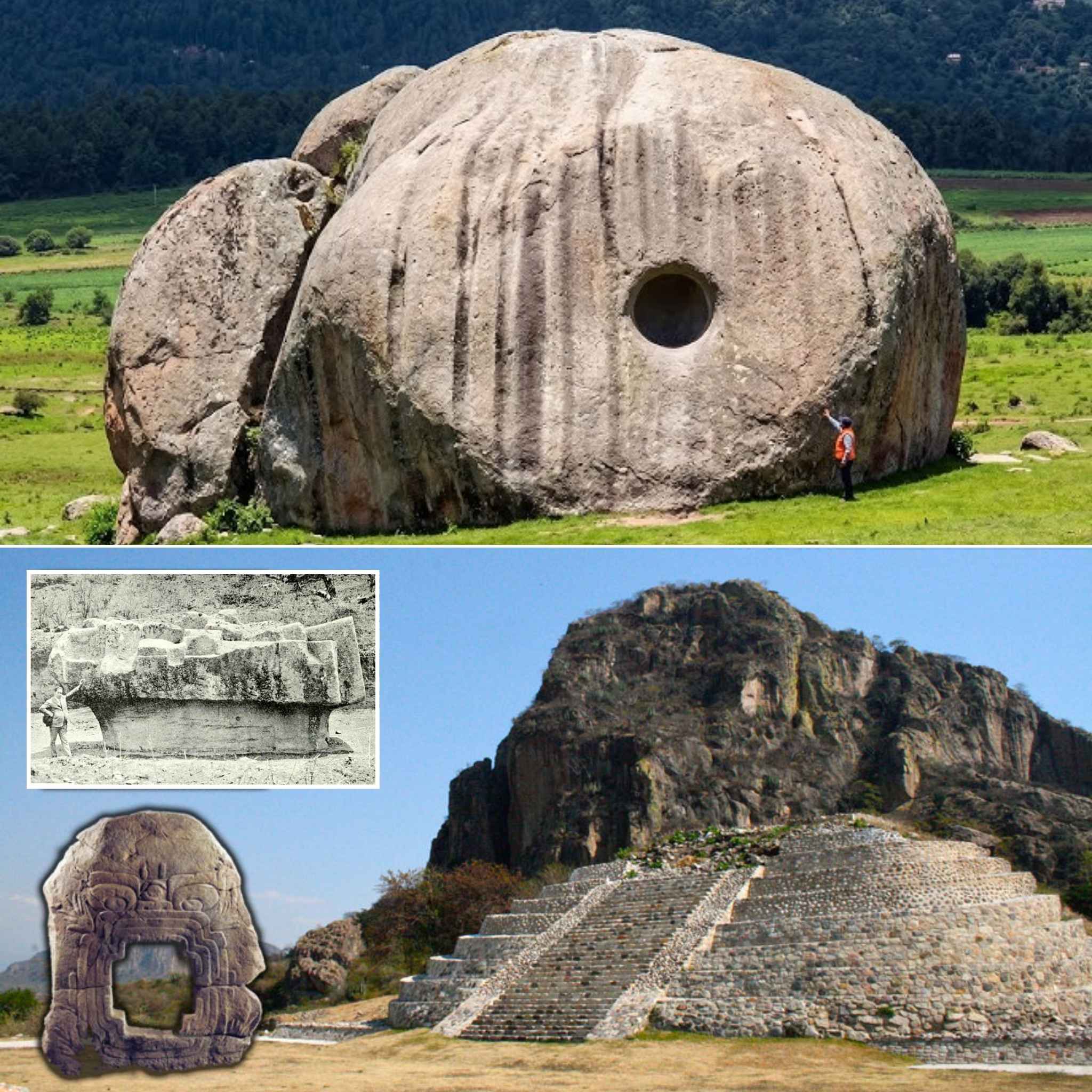
To geologists, they are remarkable examples of volcanic processes and erosion. To archaeologists, they exist within a cultural landscape shaped by one of Mesoamerica’s most distinctive civilizations. To Indigenous communities whose traditions remain deeply connected to the land, they form part of a sacred geography that continues to hold spiritual significance today.
Over the years, stories have emerged suggesting that these giant stones were astronomical markers, ceremonial monuments, or even remnants of forgotten civilizations. Some local traditions describe unusual lights seen near the formations, while others connect them to ancient pilgrimage routes that still cross the region.
Although many questions remain unanswered, one thing is clear: these monumental stones stand within a landscape that was carefully observed, traveled, and revered for centuries.
Their story offers a fascinating glimpse into the relationship between ancient peoples, natural landmarks, and the sacred geography of western Mexico.
The Land of Volcanoes and Ancient Settlements
Western Mexico is a region shaped by dramatic geological forces.
Volcanic activity over millions of years created mountains, valleys, lava fields, and unusual rock formations that define much of the modern landscape. Wind, rain, and erosion gradually sculpted these formations into the shapes visible today.
Many of the towering stone columns found throughout the region originated as volcanic plugs or hardened magma cores.
When surrounding softer rock eroded away over thousands of years, these resistant structures remained standing.
The result is a landscape filled with imposing natural monuments.
Long before the arrival of Europeans, these geological features became woven into the cultural and spiritual traditions of local societies.
Rather than viewing the environment as separate from daily life, ancient Mesoamerican peoples often integrated natural landmarks into religious beliefs, settlement planning, and ceremonial activities.
Mountains, caves, springs, and unusual rock formations frequently acquired sacred significance.
The towering megalithic stones of western Mexico appear to have followed this pattern.
The Rise of the Teuchitlán Tradition
Among the most remarkable cultures of western Mexico was the Teuchitlán tradition.
Flourishing roughly between 300 B.C. and A.D. 900, this society developed a distinctive cultural identity unlike any other in ancient Mesoamerica.
Its most famous legacy is the construction of circular ceremonial complexes known as guachimontones.
Unlike the pyramids of central Mexico or the stepped temples of the Maya, Teuchitlán ceremonial centers featured concentric circular platforms surrounding central pyramidal structures.
These architectural designs remain unique within the ancient Americas.
The largest and best-known example is found at the archaeological site of Guachimontones near Teuchitlán in the state of Jalisco.
Excavations have revealed a sophisticated society supported by agriculture, trade, craft production, and extensive social networks.
Archaeologists have discovered evidence of:
- Monumental architecture
- Elite burials
- Long-distance trade
- Obsidian production
- Ritual activities
- Complex social organization
Far from being isolated, the Teuchitlán people participated in broader economic and cultural exchanges that connected western Mexico to distant regions.
Their influence extended across significant portions of Jalisco and neighboring territories.
The Giant Stones of the Valley
Within landscapes associated with the Teuchitlán tradition stand numerous massive rock formations.
Some rise dramatically above the surrounding terrain, appearing almost like deliberately erected monuments.
To modern visitors, their scale can be astonishing.
Several formations tower tens of meters above the valley floor.
At first glance, they seem almost artificial.
Yet geological studies indicate that these structures are natural products of volcanic activity and erosion.
What makes them particularly intriguing, however, is evidence that ancient peoples may have intentionally modified some of them.
Researchers have documented carved features on certain stones, including:
- Spirals
- Geometric markings
- Cupules
- Petroglyphs
- Surface modifications
The exact age of many carvings remains uncertain.
Some may date to pre-Columbian periods, while others could represent later additions.
Their meanings remain a topic of ongoing investigation.
[IMAGE 1]

Reading the Language of Stone
Ancient petroglyphs are notoriously difficult to interpret.
Unlike written texts, carved symbols often lack clear context.
Nevertheless, recurring motifs can offer clues.
Spirals, for example, appear throughout ancient cultures worldwide.
In Mesoamerica, they have been associated with:
- Water
- Wind
- Movement
- Cycles of time
- Sacred journeys
- Cosmological concepts
Some researchers suggest that the carvings found on western Mexican stones may have served symbolic or ritual purposes.
Others propose that they marked important locations within ceremonial landscapes.
Because many carvings appear in areas with strong visibility across the surrounding valleys, some scholars have explored whether they were connected to observation points or pilgrimage routes.
Although definitive conclusions remain elusive, it is clear that these stones were not ignored by the people who lived among them.
Astronomy and Sacred Landscapes
Ancient Mesoamerican civilizations devoted considerable attention to celestial observation.
The movements of the Sun, Moon, planets, and stars influenced agriculture, ritual calendars, political authority, and religious ceremonies.
Many ceremonial centers throughout Mexico display astronomical alignments.
Buildings were often positioned to correspond with:
- Solstices
- Equinoxes
- Sunrise points
- Sunset points
- Planetary cycles
Because of this broader cultural pattern, some researchers have wondered whether prominent stone formations in western Mexico also played a role in astronomical observation.
Natural landmarks can function as horizon markers.
A particular mountain peak or stone pillar may indicate where the Sun rises on a specific day of the year.
If certain rock formations aligned with seasonal events, they could have served as practical tools for tracking time.
At present, evidence remains suggestive rather than conclusive.
Yet the possibility illustrates how ancient peoples may have integrated natural geography into systems of observation and ritual.
A Landscape Still Walked Today
The cultural significance of the region did not disappear with the decline of the Teuchitlán tradition.
For Indigenous communities, many ancient routes and sacred places remain meaningful.
Among the most notable are the pilgrimage traditions of the Wixárika people, often known internationally as the Huichol.
For centuries, Wixárika pilgrims have traveled across large portions of western Mexico, visiting sacred sites connected to their cosmology and ceremonial traditions.
These journeys can span hundreds of kilometers.
The routes link mountains, springs, deserts, caves, and other significant landmarks.
Many locations are associated with creation stories, ancestral journeys, and spiritual obligations.
In recent years, international recognition has highlighted the cultural importance of these pilgrimage networks.
The preservation of these routes reflects the remarkable continuity of Indigenous traditions despite centuries of political and social change.
[IMAGE 2]

Legends of Lights and Unexplained Phenomena
Like many ancient landscapes around the world, western Mexico’s stone formations have inspired stories that blend observation with folklore.
Local residents occasionally report unusual lights seen near certain hills or rock formations.
Similar accounts occur in many regions and often become incorporated into local oral traditions.
Possible explanations include:
- Atmospheric effects
- Reflections
- Geological phenomena
- Human activity
- Misidentified celestial objects
From a historical perspective, such stories are valuable regardless of their origin.
They reveal how communities interact with meaningful places and how landscapes accumulate layers of cultural significance over time.
Legends often persist because they reinforce connections between people and place.
Whether viewed through scientific or cultural lenses, the stories contribute to the rich heritage surrounding these sites.
The Importance of Place in Ancient Mesoamerica
One of the most significant lessons emerging from recent archaeological research is that ancient monuments cannot always be understood in isolation.
Their meaning often depended upon their relationship with the surrounding environment.
For many ancient societies, landscapes themselves were sacred.
Mountains were not merely mountains.
They could represent ancestors, deities, or points of communication between worlds.
Rivers, caves, and unusual rock formations held similar significance.
The Teuchitlán culture appears to have embraced this perspective.
Its circular ceremonial centers were carefully integrated into the terrain rather than imposed upon it.
The giant stone formations of western Mexico may have functioned within a similar framework.
Rather than serving as standalone monuments, they likely formed part of a broader sacred geography.
Modern Technology and Ancient Landscapes
New technologies are helping researchers investigate these sites in unprecedented detail.
Tools now include:
- Drone mapping
- LiDAR scanning
- Geographic Information Systems (GIS)
- Photogrammetry
- Satellite imagery
These methods allow archaeologists to identify patterns invisible from the ground.
Ancient pathways, settlement networks, and landscape alignments can now be reconstructed with far greater precision.
In some cases, technologies have revealed connections between archaeological sites and natural landmarks that were previously overlooked.
Future studies may clarify whether specific stone formations were intentionally incorporated into ceremonial systems.
[IMAGE 3]
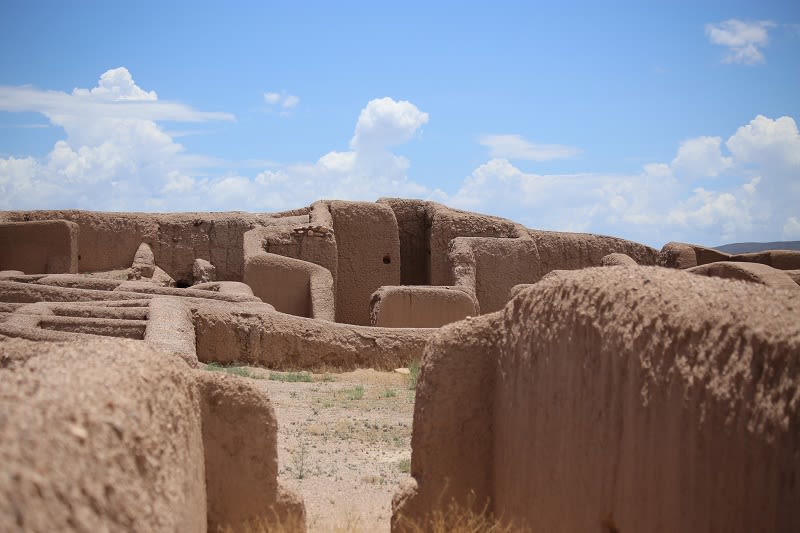
What the Stones Really Tell Us
Popular media sometimes presents discoveries like these as evidence that history must be rewritten.
The reality is both more cautious and more fascinating.
The giant stones of western Mexico do not overturn our understanding of ancient civilizations.
They do not require lost technologies, vanished super-civilizations, or extraterrestrial explanations.
Instead, they reinforce something archaeologists increasingly recognize:
Ancient societies possessed sophisticated ways of understanding and organizing their worlds.
The people of the Teuchitlán tradition built monumental architecture, maintained trade networks, developed distinctive religious practices, and interacted deeply with the landscapes around them.
The stones stand as reminders of that relationship.
A Landscape of Enduring Meaning
Today, visitors who stand among these towering formations encounter more than unusual geology.
They enter a landscape shaped by thousands of years of human experience.
Generations of people observed these stones, carved symbols into them, passed stories about them, and incorporated them into systems of belief and identity.
The questions surrounding the formations remain important.
Why were particular stones selected for carving?
How were they integrated into ceremonial activities?
What meanings did they hold for the communities that lived nearby?
Archaeologists continue to search for answers.
Yet perhaps the most remarkable fact is not that mysteries remain.
It is that these stones continue to matter.
They remain part of living cultural traditions, historical inquiry, and public imagination.
Far older than the Aztec Empire and deeply embedded within the history of western Mexico, these monumental formations remind us that landscapes themselves can become archives of memory.
Their silent presence preserves traces of ancient worlds that are still being discovered, interpreted, and understood.
And as research continues, the valleys of western Mexico may yet reveal new chapters in the story of the people who once gathered beneath these towering stones and looked toward the sky.


