Declassified FBI UFO Files Reveal 1960s Reports of Small Humanoid Occupants
Newly Released Records Reignite a Longstanding Mystery
For decades, government files concerning unidentified flying objects have occupied a curious space between history, intelligence gathering, public fascination, and speculation.
Some documents describe unusual lights in the sky.
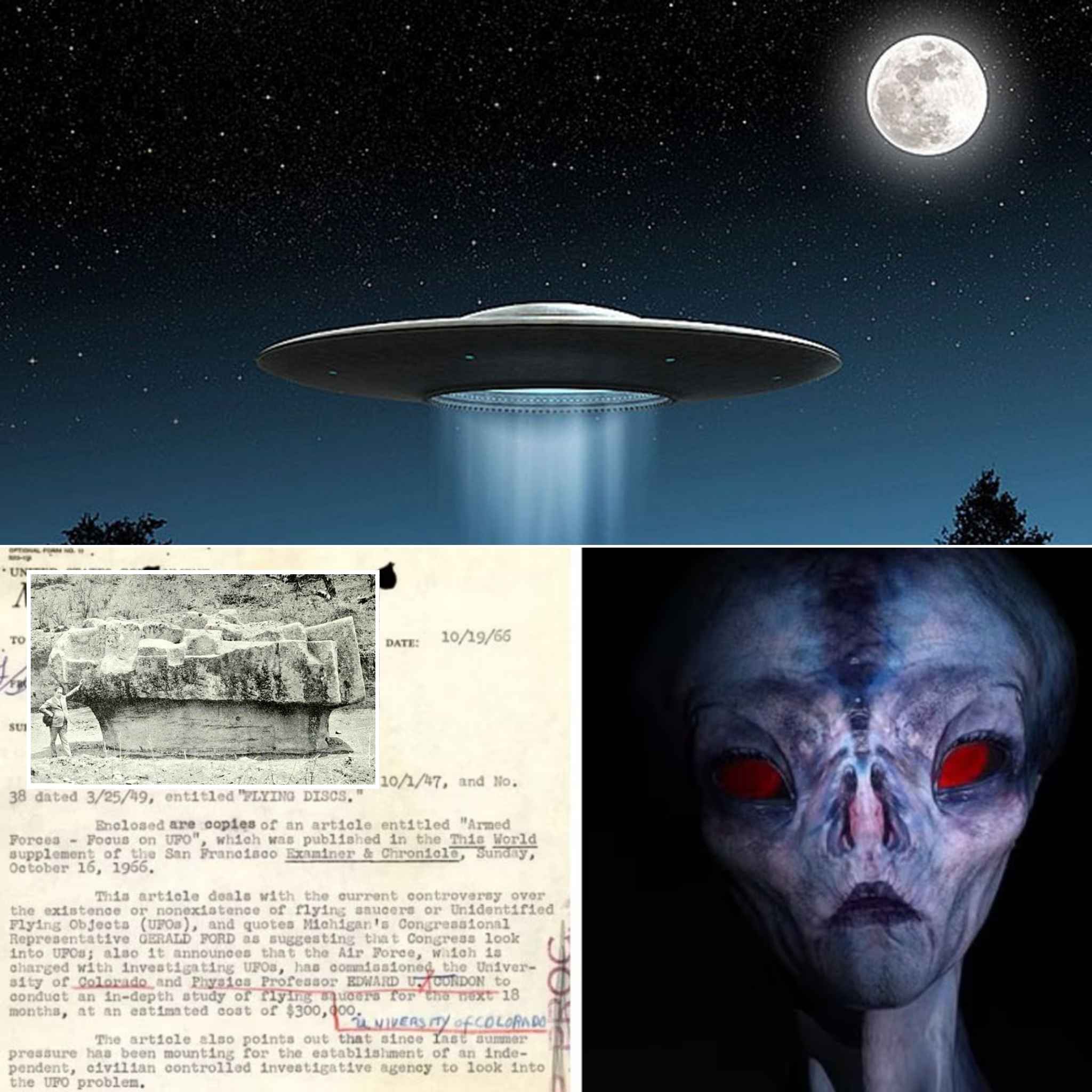
Others contain reports of strange aircraft that appeared to perform maneuvers beyond the capabilities of known technology.
A smaller number contain something even more extraordinary: witness claims of seeing occupants associated with these mysterious objects.
Recently released archival records have once again drawn attention to one such case.
Among a large collection of declassified UFO-related documents is an FBI memorandum from 1966 summarizing reports received during one of the most intense periods of UFO activity in American history.
The document contains references to witnesses who claimed to have observed small humanoid figures emerging from unidentified craft.
According to the reports, these beings stood only three and a half to four feet tall and appeared to wear what witnesses described as spacesuits and helmets.
The accounts are fascinating.
But they also raise an important question:
What exactly do these documents tell us?
Do they provide evidence of extraterrestrial visitors?
Or do they instead offer insight into how governments, investigators, and the public responded to unexplained events during the Cold War era?
To understand the significance of these records, it is necessary to examine both the historical context and the evidence itself.
America and the UFO Wave of the 1960s
The 1960s represented one of the most active periods in the history of UFO reporting.
Across the United States and many other countries, thousands of individuals reported seeing unusual aerial phenomena.
These reports occurred during a period of rapid technological change and geopolitical tension.
The Cold War shaped public consciousness.
The Space Race was underway.
Humanity was preparing to land astronauts on the Moon.
Experimental military aircraft regularly crossed the skies.
Against this backdrop, unusual sightings naturally attracted attention.
Government agencies became increasingly interested in the phenomenon.
The Air Force launched investigations through projects such as:
- Project Sign
- Project Grudge
- Project Blue Book
Meanwhile, the FBI occasionally collected reports that appeared relevant to national security concerns.
Although most cases were eventually attributed to conventional explanations, a small percentage remained unresolved.
Those unresolved cases contributed to a growing public fascination with UFOs.
The 1966 FBI Memorandum
One of the most discussed documents in the recently released collection is an internal FBI memorandum dated October 19, 1966.
The report originated from the Bureau’s San Francisco field office and was forwarded to FBI Director J. Edgar Hoover.
The memorandum summarized various UFO reports circulating during the period.
It noted that 1965 had seen an unusually high number of UFO sightings.
Among the cases discussed were reports of unidentified craft allegedly landing in remote areas.
More remarkably, the memo referenced witnesses who claimed to have observed occupants.
According to the document, several individuals described:
- Small humanoid figures
- Heights between 3.5 and 4 feet
- Helmet-like head coverings
- Suit-like clothing
- Association with metallic aerial craft
The descriptions closely resemble what later became known in popular culture as the classic “alien encounter” narrative.
However, it is important to understand what the document actually represents.
The memo records witness claims.
It does not constitute proof that the events occurred exactly as described.
Government agencies frequently collected reports without endorsing their accuracy.
Strange Craft and Extraordinary Maneuvers
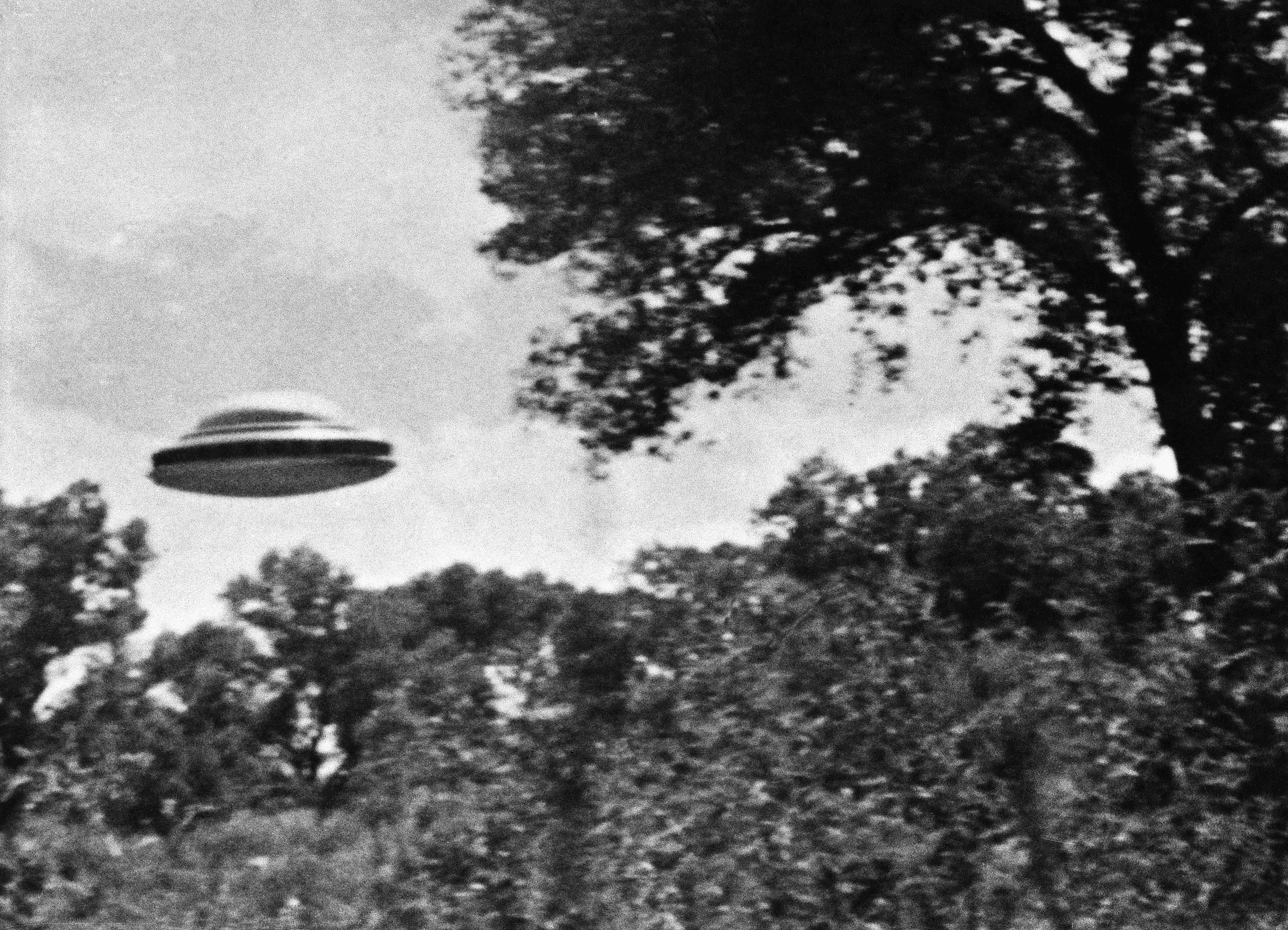
The reports included in the memo describe objects that witnesses found difficult to explain.
The alleged craft were characterized as:
- Metallic in appearance
- Silent during operation
- Capable of hovering
- Able to accelerate rapidly
- Emitting intense lights
Witnesses described colors ranging from brilliant white to orange and red.
Some accounts reported sudden directional changes and apparent speeds far exceeding those of conventional aircraft.
Such observations have long formed the core of UFO reports.
Interestingly, similar descriptions appear throughout decades of sighting records from multiple countries.
Whether these similarities reflect genuine unidentified phenomena, common perceptual experiences, cultural influence, or some combination of factors remains a subject of debate.
[IMAGE 1]
Reports of Physical Effects
The files also contain references to alleged physical effects associated with UFO encounters.
Witnesses claimed that certain objects appeared to interfere with:
- Electrical systems
- Vehicle engines
- Radio equipment
- Power sources
Other reports described scorched vegetation or burned ground after the departure of unidentified objects.
Animals were also said to react unusually.
Some witnesses reported livestock becoming agitated, dogs barking excessively, or wildlife fleeing areas where strange lights appeared.
These types of claims have appeared repeatedly in UFO literature since the 1940s.
Investigators have often struggled to determine whether such effects resulted from actual physical events, misinterpretations, environmental factors, or retrospective embellishment.
The Question of Recovered Materials
Perhaps the most controversial aspect of the released files involves references to alleged recovered debris.
Some reports mention materials reportedly collected following supposed UFO crashes.
Descriptions included:
- Unusual metallic fragments
- Lightweight alloys
- Highly durable materials
- Metallic spheres embedded within larger structures
Such claims immediately evoke comparisons to famous cases like Roswell.
However, historians and researchers caution that references in government documents do not automatically verify the authenticity of the underlying claims.
In many cases, agencies simply recorded information received from witnesses or other investigators.
The presence of a claim in an official file demonstrates that it was reported—not necessarily that it was confirmed.
This distinction remains essential when evaluating historical UFO records.
Frank Edwards and the UFO Boom
The 1966 memo also reflects the broader cultural environment surrounding UFO reports.
One figure mentioned prominently is broadcaster and UFO researcher Frank Edwards.
His book Flying Saucers – Serious Business became one of the most influential UFO publications of its era.
Edwards argued that government agencies were withholding information from the public.
He suggested that officials feared widespread panic if the truth about UFOs became known.
These allegations resonated with many readers.
The book helped transform UFOs from a niche topic into a national conversation.
As public interest grew, reports increased dramatically.
Whether this reflected more sightings or greater willingness to report them remains uncertain.
Either way, the cultural impact was significant.
[IMAGE 2]
Politics and Public Pressure
UFO reports were not merely a media phenomenon.
They also attracted political attention.
One of the most notable examples occurred in Michigan during 1966.
Following a series of highly publicized sightings, Congressman Gerald Ford called for a formal congressional inquiry.
Ford argued that the public deserved credible explanations for unexplained aerial reports.
The controversy contributed to the creation of a major scientific investigation led by physicist Edward U. Condon at the University of Colorado.
The resulting study, commonly known as the Condon Report, examined numerous UFO cases.
Its final conclusions suggested that further UFO research was unlikely to produce major scientific breakthroughs.
Yet critics argued that some cases remained unresolved and that aspects of the study were influenced by preconceived assumptions.
The debate continues today.
What Historians and Scientists Say
Most researchers approach these files cautiously.
Historians view them as valuable records of public perceptions during a unique period in American history.
Scientists emphasize that extraordinary claims require extraordinary evidence.
The documents themselves provide descriptions, not verification.
No physical evidence accompanying the reports conclusively demonstrates extraterrestrial visitation.
Likewise, the reported humanoid occupants remain unconfirmed.
Many possible explanations exist for such observations:
- Misidentification
- Optical illusions
- Psychological factors
- Hoaxes
- Cultural influence
- Rare but genuine unexplained events
The challenge lies in determining which explanation applies to any particular case.
Decades later, that task is often impossible.
Why Small Humanoid Encounters Became Common
One intriguing aspect of UFO history is the recurring appearance of small humanoid beings.
Beginning in the 1950s and becoming especially common during the 1960s, witness reports increasingly described:
- Short stature
- Large heads
- Protective suits
- Unusual eyes
- Silent behavior
Researchers have noted that these descriptions evolved alongside science-fiction films, television programs, and popular literature.
Some scholars argue that cultural imagery influenced witness expectations and interpretations.
Others suggest that the consistency of reports across locations deserves closer attention.
Regardless of interpretation, the phenomenon became a defining feature of UFO folklore.
Government Transparency and Public Curiosity
The release of historical UFO records reflects a broader trend toward transparency.
In recent years, governments have declassified increasing amounts of information related to unidentified aerial phenomena.
This process has encouraged renewed public interest.
At the same time, officials consistently stress that declassification does not equal confirmation.
Many documents contain raw reports rather than verified conclusions.
Their value lies in showing what governments investigated, what information they received, and how they responded.
For historians, these records provide insight into official procedures and public concerns.
For UFO researchers, they offer additional data points in a much larger puzzle.
[IMAGE 3]

What the Files Really Reveal
The newly released FBI memorandum does not prove that extraterrestrial visitors landed on Earth.
Nor does it demonstrate that the government secretly confirmed alien life.
What it does reveal is something equally fascinating.
It shows that ordinary citizens reported extraordinary experiences.
It shows that government agencies took some of those reports seriously enough to document them.
And it illustrates how deeply UFO phenomena became embedded in the culture of the twentieth century.
The reports of four-foot-tall beings remain among the most intriguing entries in the files.
Whether they represent misperceptions, folklore, psychological phenomena, or encounters with something genuinely unexplained remains unknown.
Between Evidence and Mystery
More than half a century after the reports were recorded, the questions they raise remain unresolved.
Why did so many witnesses describe similar objects?
Why did accounts of small humanoid occupants emerge repeatedly during this period?
Were all cases the result of conventional explanations, or do some genuinely defy easy interpretation?
The released files do not provide definitive answers.
Instead, they offer a snapshot of a moment when the boundaries between science, politics, public imagination, and mystery blurred in remarkable ways.
For believers, skeptics, and historians alike, the documents serve as reminders that the UFO phenomenon is not merely a question about what may exist beyond Earth.
It is also a story about how human beings respond to the unknown.
And in that sense, the mystery remains as compelling today as it was in 1966.