31 August 2026
The gentle strains of the neighborhood trolley bell and the soft cadence of a cardigan-clad host have long been synonymous with childhood comfort. For over three decades, Mister Rogers’ Neighborhood served as a sanctuary of calm in a chaotic world, a place where children were spoken to with respect and complex emotions were untangled with patience. Yet, beneath the placid surface of make-believe and the quiet rituals of changing shoes, lies a tapestry of astonishing facts, bold social statements, and deeply personal choices that transformed a simple children’s program into a revolutionary act of television. The legacy of Fred Rogers is not merely one of kindness; it is a story of calculated defiance, hidden codes, and a profound understanding of the human condition that continues to resonate with startling clarity today. The most intimate secret of Fred Rogers was not hidden in a closet or a vault, but rather displayed every single day on a bathroom scale. For more than three decades, Rogers maintained his weight at a remarkably precise 143 pounds, a number that was far more than a health metric. It was a personal mantra, a physical manifestation of his life’s core message. The number was a code: one letter in "I," four letters in "love," and three letters in "you." Each morning, as he stepped onto the scale, he was not just checking his weight; he was reminding himself of his purpose, reaffirming his commitment to the children he served. This private ritual turned an ordinary act into a daily affirmation of love, a quiet promise to keep that sentiment at the center of his work. The dedication to this number was so profound that it later inspired "143 Day" in Pennsylvania, a statewide encouragement for citizens to perform acts of kindness in honor of the beloved host, proving that a simple number could carry the weight of an entire philosophy. While the meaning behind 143 was a sweet, private devotion, the origin of his most famous wardrobe choice was born of pure practicality. The iconic sneakers that signaled the start of every visit were not a stylistic choice but a solution to a technical problem. The polished dress shoes Rogers initially wore on set created a distracting cacophony of clicks and echoes that were easily picked up by the sensitive studio microphones. This noise threatened to shatter the intimate, quiet atmosphere he worked so hard to create. The solution was a pair of soft-soled canvas sneakers, which allowed him to move with the silent grace of a gentle ghost. This simple production fix evolved into one of the most recognizable and comforting rituals in television history. The act of swapping his outdoor shoes for his indoor sneakers became a visual cue for millions of children, a signal that the busy, loud outside world was being left behind, and it was time to settle in for a quiet, focused visit. The sneakers became a symbol of presence, a testament to the idea that true connection requires a deliberate act of settling in and giving one’s full attention. Perhaps the most powerful and quietly revolutionary moment in the show’s history occurred in 1969, during a time of intense racial strife and segregation across the United States. In a scene that appeared almost incidental, Fred Rogers invited his friend François Clemmons, who played Officer Clemmons, to join him at a small plastic wading pool. Rogers, complaining of tired feet, invited the officer to cool his own feet in the water. On the surface, it was a moment of simple, shared comfort between two colleagues. But in the context of an America where public pools were still fiercely segregated and racial tensions were boiling over, the image of a Black man and a white man sharing the same water on national television was a seismic statement. Rogers did not punctuate the moment with a lecture or a dramatic speech. He simply treated the act of sharing the pool as the most normal thing in the world, a quiet display of equality and friendship. When they were done, Rogers even handed Clemmons a towel, a gesture of care that reinforced the scene’s message of mutual respect. This silent, powerful act was a clear and direct counter to the racism of the era, teaching children a lesson in humanity without uttering a single word about race. Long before he donned the cape and cowl of Batman, Michael Keaton was learning the ropes of show business in the most unlikely of places: the set of Mister Rogers’ Neighborhood. During the mid-1970s, a young Keaton worked as a production assistant in Pittsburgh, a behind-the-scenes role that involved moving props, setting up scenes, and ensuring the smooth operation of the show. One of his specific duties was operating the famous Neighborhood Trolley, the little red vehicle that transported viewers into the world of make-believe. It was a humble job, a far cry from the blockbuster fame that awaited him. Keaton even made a brief on-screen appearance as one of the "Flying Zucchini Brothers" during a circus-themed episode, showcasing a comedic flair that would later define his career. Years later, Keaton would speak of Rogers with immense fondness, describing him as a genuinely kind and consistent person, a man whose on-screen warmth was not an act but a reflection of his true character. The journey from guiding a trolley to saving Gotham City is a testament to the unpredictable paths of Hollywood, but for Keaton, his time in the Neighborhood was a foundational experience, a lesson in grace from a master of the craft. The vibrant and diverse world of the Neighborhood of Make-Believe was populated with a cast of memorable puppets, from the regal King Friday XIII to the timid Daniel Striped Tiger and the mischievous Lady Elaine Fairchilde. What most viewers never realized was that these distinct personalities, each with their own voice, quirks, and emotional depth, were all brought to life by the singular talent of Fred Rogers himself. He was the puppeteer and voice behind the majority of the characters, using subtle changes in pitch, pacing, and tone to create a cast of beings that felt entirely separate from one another. This was not merely a feat of vocal dexterity; it was a brilliant pedagogical tool. Through these characters, Rogers was able to explore complex emotions and social dynamics in a way that was accessible to children. Daniel became the voice of fear and insecurity, King Friday embodied stubbornness and the challenges of authority, and Lady Elaine represented curiosity and the value of being different. By giving these feelings a voice, Rogers provided children with a language to understand their own internal worlds, creating a safe space for them to recognize and process their own emotions. The cardigans that became synonymous with Fred Rogers were more than just comfortable clothing; they were a direct link to his family and a symbol of maternal care. Many of the sweaters he wore on air were hand-knitted by his mother, Nancy Rogers. Each time he slipped one on before filming, he was wrapping himself in a tangible expression of his mother’s love, a gesture that added a layer of profound personal meaning to his familiar television ritual. For viewers, the cardigans represented warmth, safety, and the comforting predictability of a visit with a trusted friend. The simple act of changing into a sweater helped establish the welcoming atmosphere that defined the program. When Nancy passed away in 1981, the supply of handmade sweaters eventually ran out, creating a unique challenge for the production team. The cardigans had become so integral to Rogers’s identity that they could not simply be replaced with off-the-shelf clothing. Years later, one of these original sweaters was preserved at the Smithsonian Institution, a testament to how a simple piece of clothing, imbued with family history and personal meaning, could become an iconic piece of American history. The reach of Fred Rogers’s message of kindness extended far beyond the human world, touching the life of one of the most famous animals in history. In 1998, Rogers visited Koko, the western lowland gorilla renowned for her ability to communicate using American Sign Language. Before their meeting, Koko had been a regular viewer of Mister Rogers’ Neighborhood, absorbing the show’s gentle rhythms and familiar routines. During the visit, Koko astounded onlookers by recognizing one of Rogers’s most famous habits. She gently removed his shoes, perfectly mimicking the ritual he had performed at the start of each episode for decades. The act was a profound demonstration of the power of television and repetition.…
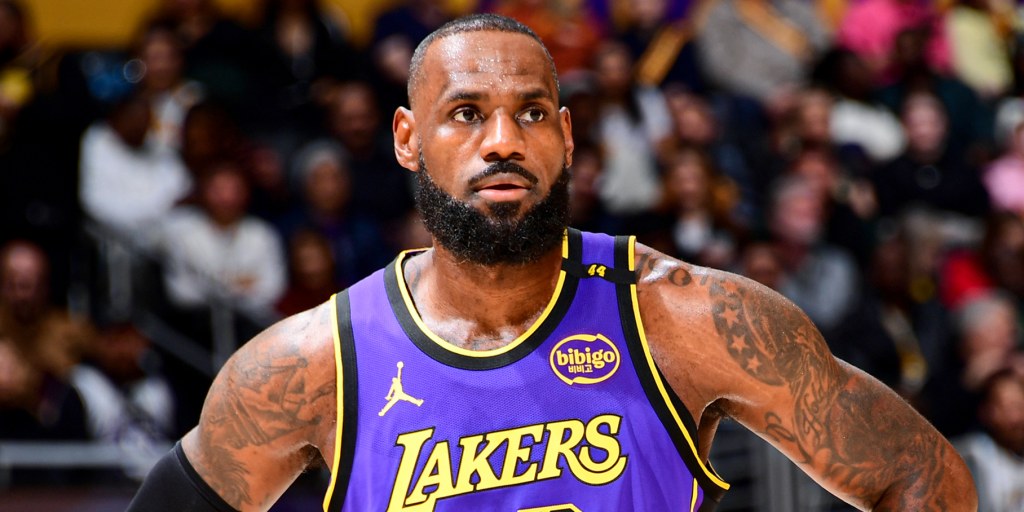 In a gripping NBA Finals showdown, Victor Wembanyama is facing a fierce challenge as he transitions from a grueling seven-game series against the Oklahoma City Thunder to the relentless defense of the New York Knicks. Despite his impressive stats, the young star is struggling to find his rhythm, and basketball legend LeBron James has some advice for the San Antonio Spurs on how to unleash Wemby’s full potential.
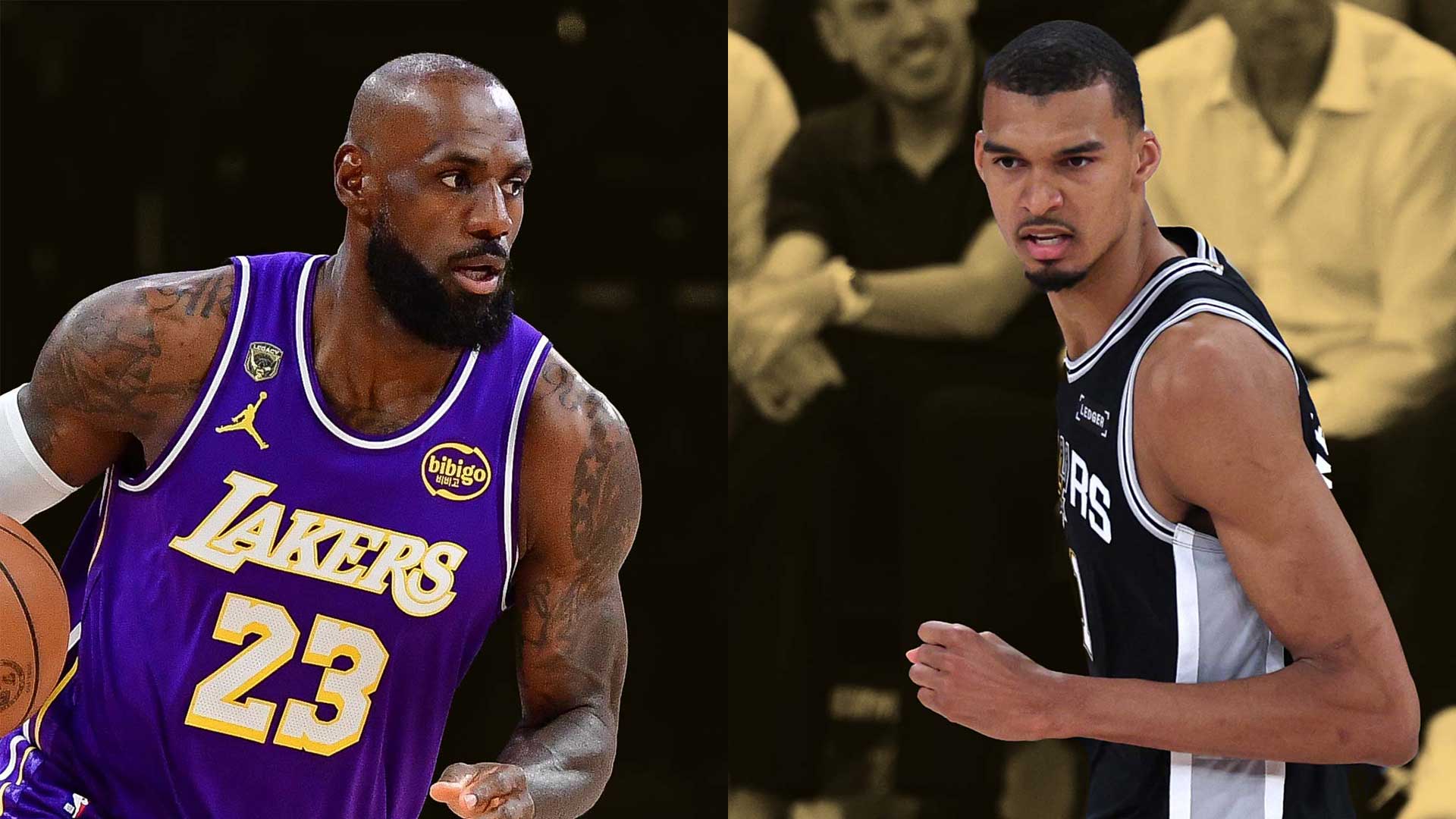 The Knicks have managed to contain Wembanyama in the initial games, employing a roster filled with physical players like Josh Hart and Mitchell Robinson, who are more than capable of challenging the young center. LeBron noted that while it’s difficult to completely neutralize a 7-foot-4 talent, New York has shown they can implement strategies to limit his impact.
 Wembanyama’s slight frame has its disadvantages, especially against more traditional centers, which is why LeBron’s emphasis on movement and tactical plays is vital. In that pivotal Game 3, Wembanyama showcased his skills with a remarkable performance, tallying 30 points, eight rebounds, and six assists, while maintaining a high shooting efficiency.