Göbekli Tepe’s Vulture Stone and the Trypillia Connection: Did Europe Inherit a Forgotten Sacred Language?
Long before the rise of Egypt’s pyramids, before Stonehenge crowned the plains of Britain, and millennia before the first cities emerged in Mesopotamia, a remarkable sanctuary stood atop the hills of southeastern Anatolia. Today known as Göbekli Tepe, this prehistoric complex continues to challenge everything scholars once believed about the origins of religion, astronomy, and civilization itself.
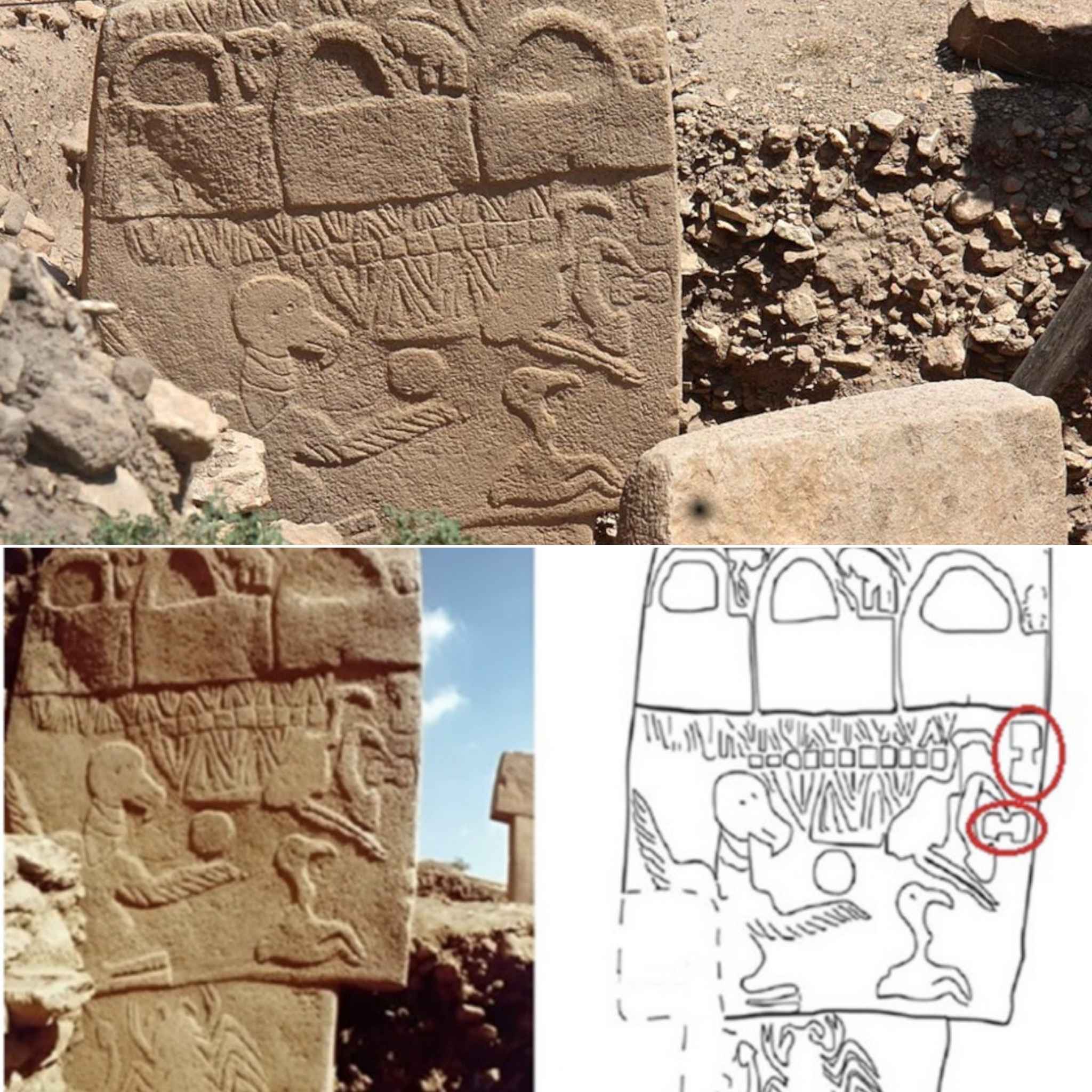
At the center of its mysteries stands one of the world’s most famous prehistoric monuments: Pillar 43, commonly known as the Vulture Stone.
Covered with enigmatic carvings of birds, snakes, scorpions, abstract symbols, and a strange headless human figure, the Vulture Stone has inspired decades of debate. Was it a star map? A record of a catastrophic celestial event? A funerary monument? Or perhaps something even more profound?
A new study published in the International Journal of Culture and History proposes an intriguing possibility. According to researcher Oleksandr Zavalii, the Vulture Stone may represent part of an ancient symbolic system that encoded concepts of time, sacred space, seasonal cycles, death, and the structure of the cosmos itself.
Even more remarkably, Zavalii suggests that elements of this symbolic language may have survived thousands of years later among the people of the Trypillia culture in Eastern Europe.
If correct, the implications are extraordinary.
Rather than developing in complete isolation, some of Europe’s earliest farming communities may have inherited religious concepts whose roots stretched back to the world’s first monumental ritual centers.
The connection raises a fascinating question:
Did the spread of agriculture also carry a shared spiritual understanding of the universe?
The Enigma of Göbekli Tepe
Perched on a limestone ridge in modern-day Turkey, Göbekli Tepe dates to approximately 9600–8200 BC, making it more than 11,000 years old.
When archaeologists first realized its age, the discovery sent shockwaves through the academic world.
For decades, historians believed that large-scale monuments appeared only after agriculture, cities, and organized political systems had developed.
Göbekli Tepe overturned that assumption.
The site was constructed by communities that existed before pottery, before metalworking, and before urban civilization.
Yet these people moved massive limestone pillars weighing up to twenty tons and arranged them in sophisticated circular enclosures.
The scale of the undertaking suggests an extraordinary level of organization.
Equally remarkable are the carvings that cover many of the pillars.
Foxes, snakes, boars, birds, insects, and abstract symbols appear throughout the complex, forming one of humanity’s earliest known monumental symbolic systems.
Among these carvings, none has attracted more attention than Pillar 43.
The Famous Vulture Stone
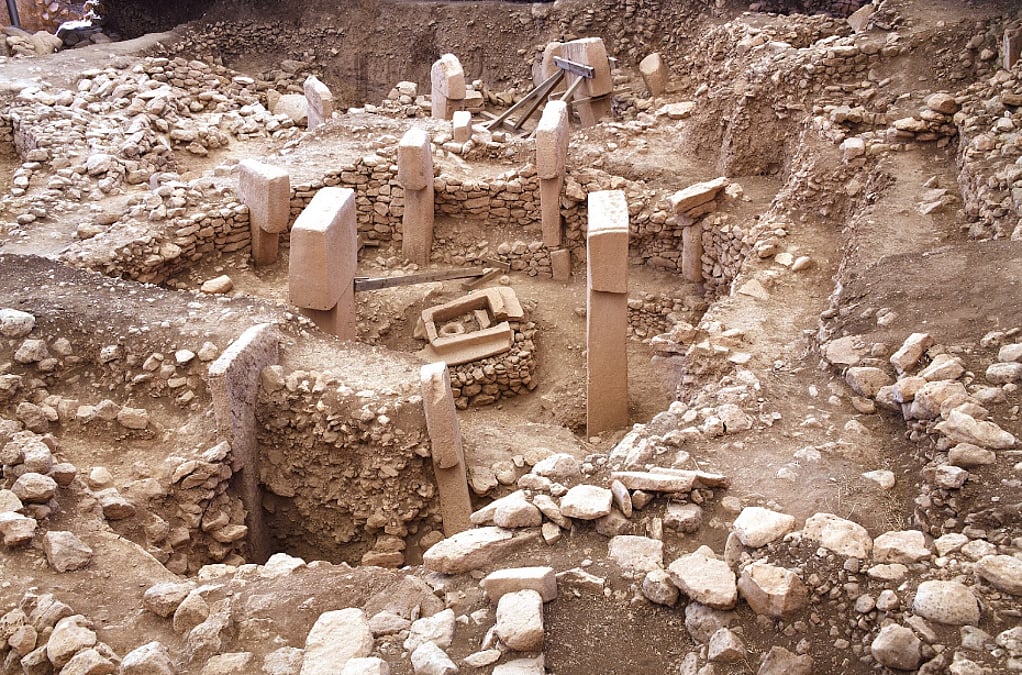
Pillar 43 stands inside Enclosure D, one of Göbekli Tepe’s most important ritual structures.
The monument contains a complex arrangement of images unlike anything else from the period.
Large birds dominate the upper portion.
Below them appear a scorpion, serpents, geometric signs, and a mysterious headless human figure.
For decades, archaeologists have struggled to interpret these symbols.
Some researchers suggested the pillar represented a mortuary scene.
Others proposed that the birds symbolized spiritual beings transporting souls into the afterlife.
One influential theory argued that the carvings recorded a catastrophic comet impact that occurred near the end of the Younger Dryas period.
While these interpretations remain controversial, they share a common assumption:
The symbols were intended to communicate something important.
The challenge lies in understanding precisely what message prehistoric people were attempting to preserve.
According to Zavalii’s study, the answer may lie not in individual symbols but in how they interact as part of a larger visual system.
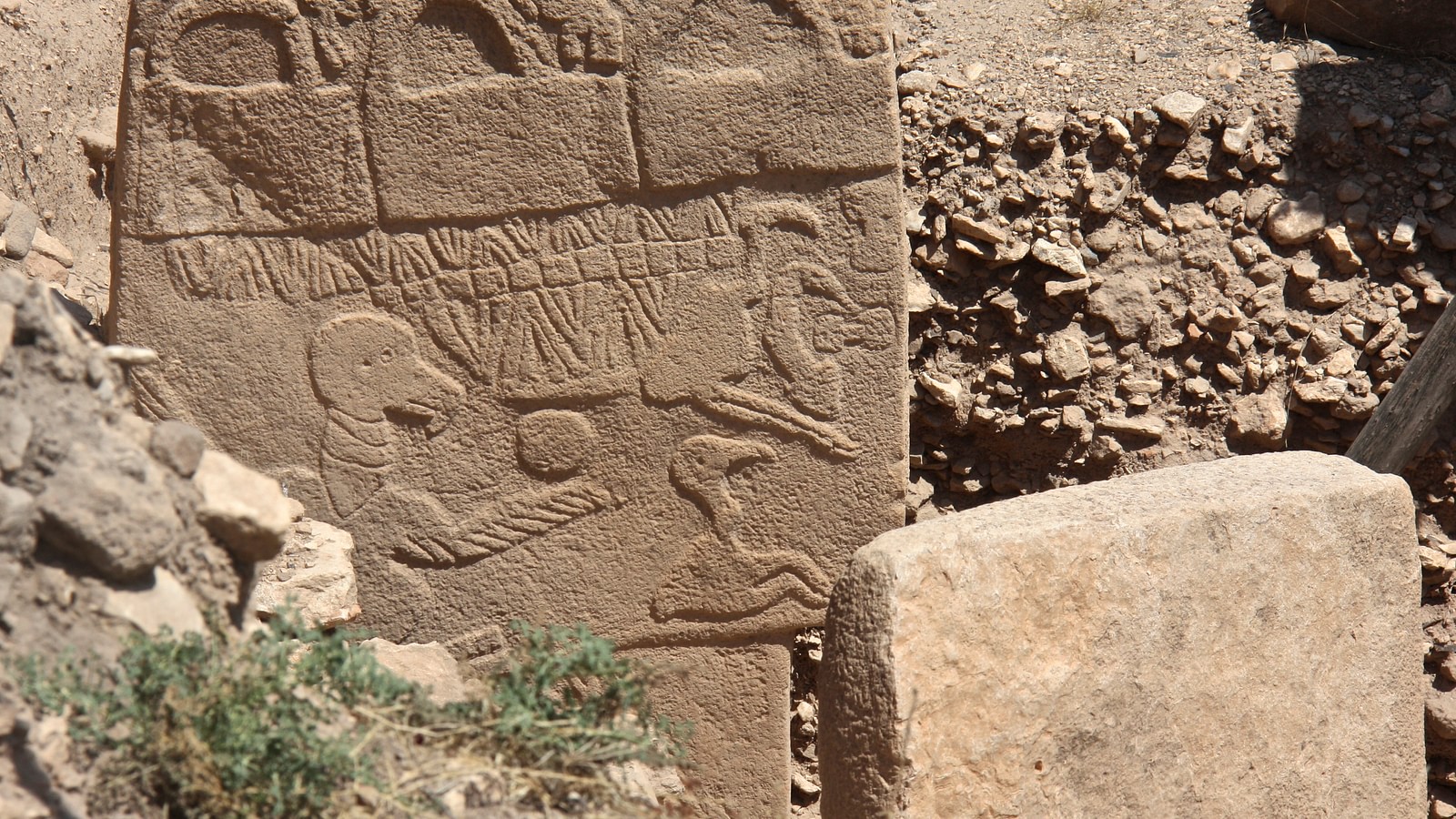
A Visual Grammar of the Cosmos
Rather than treating the Vulture Stone as a collection of isolated images, the new interpretation approaches it as a carefully structured symbolic composition.
In this view, the arrangement of figures follows a deliberate cosmological design.
The upper section appears associated with celestial phenomena.
Birds soar across the stone, while arch-like forms suggest heavenly domains.
The lower section contains earthly creatures such as the scorpion and serpent, alongside the enigmatic human figure.
Together they may represent a two-tiered universe:
- The heavens above
- The earthly or underworld realm below
This division appears repeatedly throughout ancient religions.
Egyptian cosmology separated the celestial realm from the world of humans.
Mesopotamian traditions described layered heavens and underworlds.
Many indigenous belief systems organized existence according to similar principles.
The Vulture Stone may represent one of the earliest surviving examples of this cosmological framework.
Numbers Hidden in Stone
The study also focuses on recurring numerical patterns found throughout Göbekli Tepe.
Numbers often play crucial roles in religious systems because they provide a way to connect ritual practice with natural cycles.
Researchers observed that the Vulture Stone contains eleven rectangular forms.
Intriguingly, several of Göbekli Tepe’s circular enclosures also incorporate eleven major pillars.
Another monument, known as Pillar 33, appears to emphasize the numbers two, three, eleven, and thirteen.
According to Zavalii, these numbers may encode relationships between:
- Solar cycles
- Lunar cycles
- Seasonal transitions
- Ritual calendars
The number thirteen, for example, has long been associated with lunar months.
Eleven may have represented another astronomical rhythm important to Neolithic observers.
Whether these interpretations prove correct remains uncertain, but they suggest that Göbekli Tepe’s builders possessed a sophisticated awareness of celestial patterns.
The monument may therefore have functioned not only as a sacred center but also as a symbolic calendar connecting human life to cosmic order.
The Unexpected Connection to Trypillia
The most surprising aspect of the study emerges when attention shifts westward.
Nearly four thousand years after Göbekli Tepe flourished, another remarkable culture appeared across parts of modern Ukraine, Moldova, and Romania.
Known as the Trypillia culture, these farming communities created some of prehistoric Europe’s largest settlements.
They constructed enormous villages, produced sophisticated ceramics, and developed rich symbolic traditions.
At first glance, the two cultures appear too distant in time to be connected.
Yet Zavalii argues that important similarities exist between their symbolic systems.
Among the most intriguing parallels are distinctive H-shaped motifs.
At Göbekli Tepe, these forms appear repeatedly in carvings and architectural arrangements.
In Trypillian ritual contexts, archaeologists have discovered peculiar binocular-shaped objects that resemble similar geometric concepts.
The resemblance does not prove direct cultural transmission.
However, it raises the possibility that both societies drew from a deeper symbolic tradition associated with early agricultural life.
The Spread of Farming and Ideas
Agriculture transformed human society.
Beginning in the Fertile Crescent, farming gradually expanded into Europe through waves of migration and cultural exchange.
People carried more than seeds and domesticated animals.
They also transmitted technologies, myths, rituals, and social structures.
The new study proposes that cosmological concepts may have traveled alongside agriculture.
As communities adapted to seasonal planting cycles, they developed increasingly sophisticated systems for tracking time.
Observing the movements of the sun, moon, and stars became essential.
Religious beliefs naturally intertwined with these observations.
The result may have been the emergence of a shared symbolic vocabulary stretching across vast regions of Eurasia.
If this interpretation is correct, the similarities between Göbekli Tepe and Trypillia reflect not coincidence but the long-term evolution of an ancient worldview.
Architecture as Sacred Memory
Göbekli Tepe demonstrates that architecture can serve as a form of memory.
The site’s builders encoded ideas into stone.
Rather than writing texts, they communicated through symbols, spatial arrangements, and monumental construction.
Each pillar acted as part of a larger narrative.
The Vulture Stone may therefore have functioned as a visual map of reality itself.
Its imagery connected celestial cycles, earthly existence, death, ancestry, and communal identity into a single sacred framework.
Such symbolic environments helped societies remember their place within the cosmos.
The architecture was not merely decorative.
It was a living expression of belief.
Rethinking Humanity’s Earliest Religious Traditions
Göbekli Tepe continues to challenge conventional assumptions about prehistoric peoples.
Far from being simple hunter-gatherers focused solely on survival, its builders demonstrated remarkable intellectual sophistication.
They observed the heavens.
They developed symbolic systems.
They organized massive construction projects.
And they created sacred landscapes whose meanings continue to puzzle researchers today.
The possible connection to the Trypillia culture broadens this story even further.
Rather than viewing Europe’s first farmers as isolated communities, we may need to understand them as participants in a much larger cultural conversation that began thousands of years earlier in the Near East.
The builders of Göbekli Tepe may have contributed more than architecture.
They may have helped shape some of humanity’s earliest ideas about time, death, ancestry, and the structure of the universe.
Although many questions remain unanswered, the Vulture Stone continues to offer tantalizing clues.
Its carved birds, animals, geometric signs, and mysterious human figure remind us that the first monument builders were also the first great storytellers—people who sought to understand their place in the cosmos and preserve that understanding in stone.
More than eleven thousand years later, their message still speaks, even if we are only beginning to learn its language.