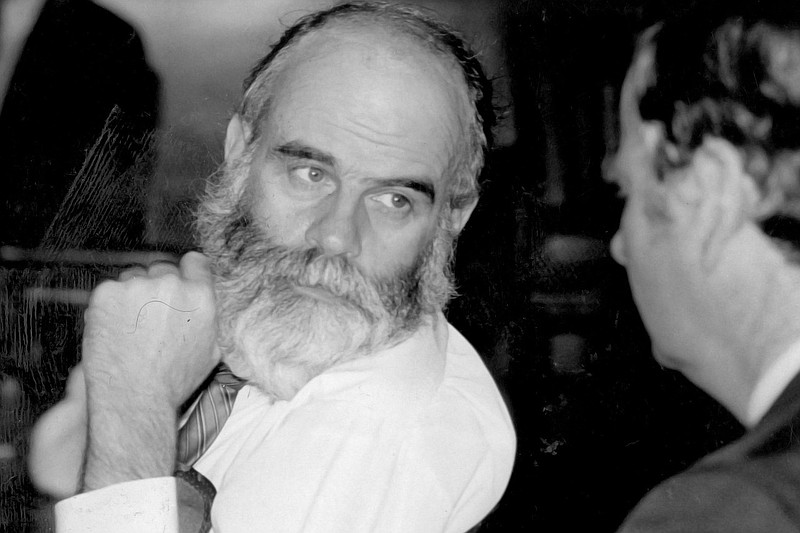
 In December 1987, Ronald Gene Simmons carried out one of the most devastating family murder cases ever recorded in the United States. Over the course of several days, the former military veteran murdered 14 members of his own family before launching a separate shooting spree that killed two additional people and wounded several others. The scale of the violence shocked the nation and remains one of the most disturbing examples of family annihilation in American criminal history.
Born in 1940, Simmons served in the U.S. Air Force before returning to civilian life. Former family members and acquaintances later described him as controlling, isolated, and increasingly volatile. By the 1980s, he was living with his family on a rural property near Dover, Arkansas, a location that would later become infamous under the name “Mockingbird Hill.”

The killings began on December 22, 1987. According to investigators, Simmons first murdered his wife, Rebecca Simmons, and several members of his immediate family inside the family home. Over the next several days, additional relatives arrived at the property for holiday gatherings, unaware of what had already happened. Authorities later determined that Simmons systematically murdered family members as they arrived.
Among the victims were his children and grandchildren. By the time the killings at the property ended, fourteen members of his family had lost their lives. The ages of the victims ranged from young children to adults, making the crime particularly shocking even by the standards of major homicide investigations.
On December 28, 1987, Simmons left the property and traveled to Russellville, Arkansas. There, he carried out a series of shootings at businesses connected to people he believed had wronged him in the past. Two additional victims were killed, and several others were injured before police arrested him without significant resistance.
When authorities discovered the bodies at the family property, investigators described the scene as one of the worst mass murder cases they had ever encountered. The crimes immediately drew national media attention and prompted widespread public discussion about domestic violence, family control, and psychological warning signs.
 During court proceedings, Simmons did not seriously dispute responsibility for the killings. He was convicted and sentenced to death. Unlike many death row inmates, he repeatedly expressed a desire for the legal process to move forward and opposed efforts to delay the execution through extended appeals.
After courts rejected final legal challenges, Arkansas carried out the execution by lethal injection on June 25, 1990. Simmons was 49 years old. His execution brought a legal conclusion to a case that remains one of the most notorious mass murder prosecutions in American history.
More than three decades later, criminologists, psychologists, and true crime researchers continue to study the Simmons case. Questions persist about whether warning signs were missed, whether intervention could have prevented the tragedy, and how one individual was able to carry out such extensive violence against his own family.
Today, the Ronald Gene Simmons case remains a grim reminder of the devastating consequences of family violence and one of the deadliest mass murder events ever committed by a single offender in the United States.