Sazan Island: The Tiny Mediterranean Outpost That Empires Fought Over for Millennia
At first glance, Sazan Island seems insignificant.
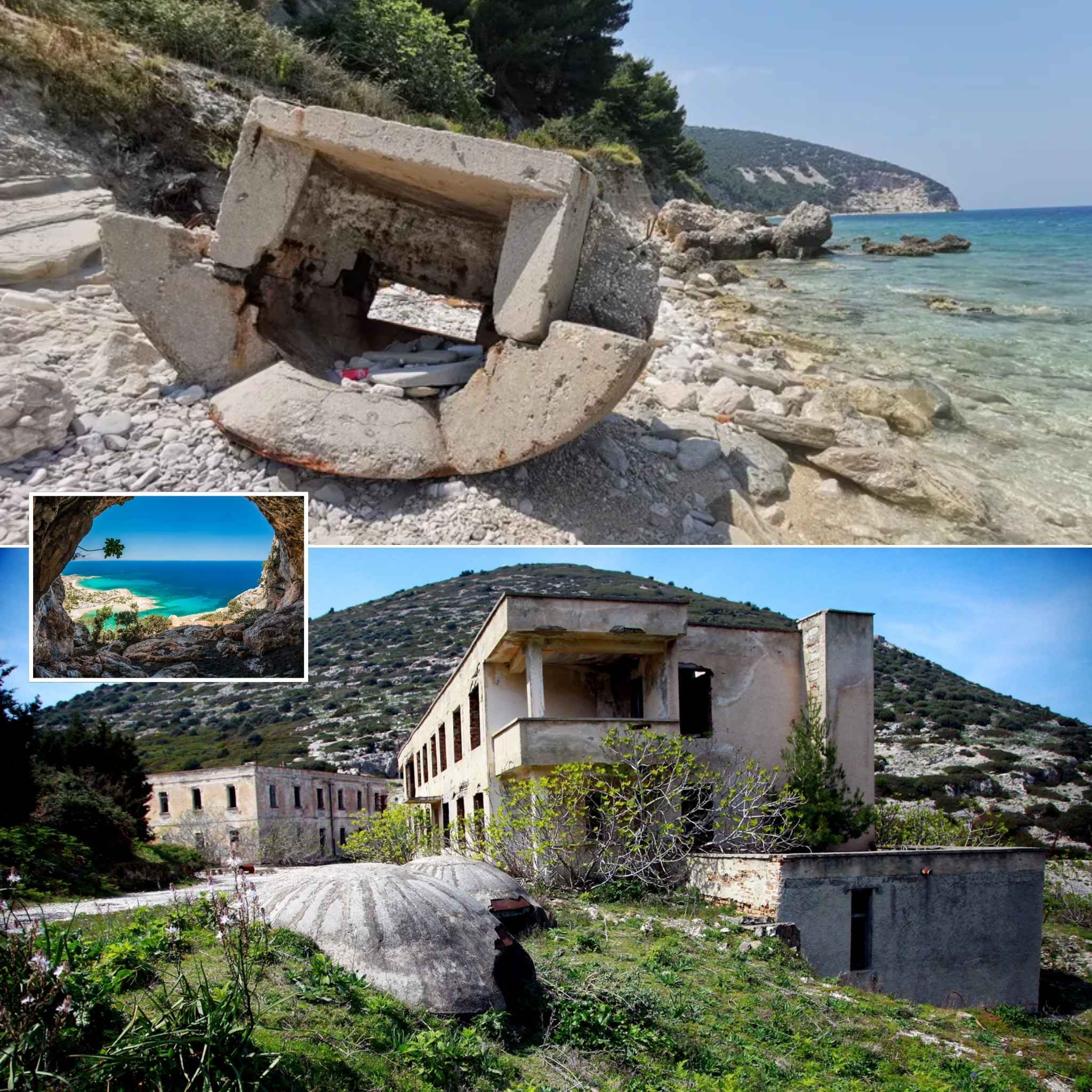
Rising from the sparkling waters where the Adriatic Sea meets the Ionian Sea, this rocky island covers barely 2.2 square miles (5.7 square kilometers). It has no permanent civilian population, no bustling towns, and no sprawling infrastructure. Yet for more than two thousand years, some of the world’s most powerful empires have fought to control it.
From Roman admirals and Venetian merchants to Ottoman sultans, Fascist Italy, Nazi Germany, Soviet military planners, and Cold War strategists, countless powers recognized what geography made obvious: whoever controlled Sazan Island possessed a strategic key to the entrance of the Adriatic Sea.
Today, abandoned bunkers and military tunnels stand silently amid thriving wildlife habitats. The island has transformed from fortress to nature sanctuary, from military outpost to emerging tourist destination.
But beneath its tranquil appearance lies one of the most remarkable geopolitical stories in the Mediterranean.
A Small Island with an Outsized Importance
Sazan Island sits in the Strait of Otranto, the narrow maritime passage connecting the Adriatic Sea to the wider Mediterranean.
Located just off Albania’s southwestern coast, the island overlooks the Bay of Vlorë, one of the most strategically valuable natural harbors in the region.
Its location has always been its greatest asset.
Any naval power controlling Sazan could monitor shipping entering and leaving the Adriatic. For centuries, that meant influence over some of Europe’s most important ports, including Venice, Dubrovnik, Trieste, and numerous trading centers along the Balkan coastline.
Petar Kurečić, a Croatian political scientist, summarized the island’s significance perfectly:
“There has not been a significant historical power in the region that has not controlled or tried to control Sazan.”
The island’s importance is therefore not rooted in its size or resources, but in its position.
Throughout history, geography repeatedly transformed this tiny piece of land into a strategic prize.
The Roman Era: Gateway to the Adriatic
Long before modern nations existed, the Romans recognized the value of the Bay of Vlorë and the waters surrounding Sazan.
During the Roman Republic, the Adriatic Sea served as a vital transportation route connecting Italy with the eastern Mediterranean.
Roman ships frequently used the bay as a safe anchorage during military campaigns and commercial voyages.
The region played an especially important role during the Roman Civil War between Julius Caesar and Pompey the Great from 49 to 45 BC.
Several major military operations occurred along the nearby Albanian coast as the rivals fought for control of the Roman world.
While Sazan itself was not the site of famous battles, its location made it an important observation point for naval activity.
For Roman commanders, controlling these waters meant controlling the movement of armies, supplies, and trade.
The island’s strategic value was already firmly established.

Medieval Rivalries and Maritime Empires
Following the collapse of the Roman Empire, the Adriatic became a battleground for emerging maritime powers.
By the Middle Ages, trade routes across the Mediterranean generated enormous wealth.
Control of these routes often determined the success or failure of entire states.
The Republic of Venice emerged as one of the dominant naval powers in the region.
For centuries, Venetian merchants and warships traversed the waters surrounding Sazan.
However, Venice faced fierce competition from another powerful maritime republic: Genoa.
In 1264, the rival powers clashed in naval combat near Sazan’s shores as they struggled for dominance over Mediterranean commerce.
The island once again found itself caught between competing empires.
Whoever controlled Sazan gained an advantage in monitoring and influencing maritime traffic through the Adriatic.
As trade expanded, the island’s importance only increased.
The Ottoman Frontier
By the fifteenth century, a new power had risen across southeastern Europe.
The Ottoman Empire steadily expanded into the Balkans and eventually incorporated Albania into its territories.
Recognizing Sazan’s strategic significance, Ottoman authorities transformed it into an official naval outpost.
For centuries, Ottoman fleets utilized the island as part of their wider maritime defense network.
The Ottomans viewed the Adriatic not merely as a frontier but as a vital route connecting their European possessions with broader Mediterranean interests.
Sazan provided surveillance, security, and a forward position from which naval operations could be conducted.
The island became another link in the vast chain of Ottoman military infrastructure stretching across three continents.
For hundreds of years, Ottoman rule maintained the island’s role as a strategic stronghold.
Albania’s Independence Sparks a New Struggle
The modern era brought dramatic changes.
In 1912, Albania declared independence from the Ottoman Empire.
Suddenly, the political status of Sazan became uncertain.
Several nations viewed the island as strategically valuable and sought control.
Italy, Greece, and Albania all laid claim to the territory.
The competition reflected broader tensions throughout the Balkans, where collapsing empires left numerous territorial disputes unresolved.
For Italy, Sazan represented an opportunity to expand influence across the Adriatic.
Italian leaders believed that controlling both sides of the sea would enhance national security and strengthen Italy’s position as a Mediterranean power.
Their ambitions soon became reality.
In 1920, Italy formally took possession of Sazan Island.
When Benito Mussolini rose to power in 1922, the island’s military importance increased dramatically.
Mussolini’s Fortress in the Adriatic
Under Fascist rule, Italy embarked upon an ambitious military expansion program.
Sazan became a key component of Mussolini’s Adriatic defense system.
Engineers constructed barracks, fortifications, observation posts, and coastal defenses across the island.
Military planners viewed Sazan as a forward operating base capable of projecting power throughout the region.
Its position enabled Italian forces to monitor maritime traffic while protecting routes connecting Italy with its possessions elsewhere in the Mediterranean.
As tensions mounted across Europe during the 1930s, the island’s strategic role grew even more significant.
When World War II erupted, Sazan once again became part of a larger military struggle.
Italian forces occupied the island throughout much of the war.
Following Italy’s surrender in 1943, German troops briefly assumed control before the conflict ended.
Albania’s Communist Fortress
Following World War II, Albania emerged under the leadership of Enver Hoxha.
The Paris Peace Treaty of 1947 officially returned Sazan to Albanian control.
Under Hoxha, the island entered perhaps the most militarized phase of its long history.
Hoxha’s regime was deeply isolationist.
Convinced that foreign powers constantly threatened Albania, he invested enormous resources in military defenses.
Throughout the country, hundreds of thousands of bunkers were constructed.
Sazan became one of the most heavily fortified locations in Albania.
With assistance from the Soviet Union, extensive military facilities were built across the island.
These included:
- Underground tunnel systems
- Submarine shelters
- Ammunition depots
- Coastal artillery positions
- Military barracks
- Command centers
The island effectively became a giant fortress.
Its strategic significance during the Cold War attracted international attention.
A secret CIA report reportedly described Sazan as a “Red Gibraltar” in the Mediterranean.
The comparison reflected the island’s role as a heavily defended military outpost controlling an important maritime chokepoint.
The Soviet Submarine Base
One of Sazan’s most remarkable Cold War features was its submarine infrastructure.
The island housed an extensive underground network capable of concealing submarines from aerial observation.
These tunnels provided shelter, maintenance facilities, and secure operating positions for naval forces.
The submarine base symbolized Albania’s close relationship with the Soviet Union during the early years of the Cold War.
However, relations eventually deteriorated.
When Hoxha broke with Moscow during the 1960s, tensions escalated.
According to historical accounts, Albania retained several Soviet submarines after the split.
The Soviet Union considered retrieving them but ultimately avoided confrontation.
Crossing NATO-controlled waters to recover the vessels carried significant risks.
As a result, the submarines remained in Albanian hands.
The episode became one of the most unusual chapters in Cold War naval history.
A Symbol of Isolation
Military defenses on Sazan served more than one purpose.
Officially, they protected Albania from foreign invasion.
Unofficially, they also helped prevent citizens from escaping the country.
The island became a symbol of the broader isolation imposed by Hoxha’s regime.
Historian Elidor Mëhilli notes that military installations often functioned as barriers against both external enemies and internal dissent.
For many Albanians, Sazan came to represent state secrecy, paranoia, and authoritarian control.
Its tunnels and bunkers embodied the fears that shaped Albanian politics for decades.
Yet history would once again transform the island.
Nature Reclaims the Fortress
The collapse of communism during the early 1990s dramatically altered Albania’s relationship with Sazan.
Military activity declined.
Troops departed.
Many facilities were abandoned.
As human presence diminished, nature began reclaiming the island.
Vegetation spread across former military installations.
Wildlife populations expanded.
The absence of large-scale development allowed ecosystems to flourish.
In 2010, Albania established the Karaburun-Sazan National Marine Park.
The protected area encompasses both Sazan and surrounding waters.
Today the island hosts:
- Over 300 plant species
- Approximately 40 bird species
- Mediterranean monk seals
- Loggerhead sea turtles
- Flamingos
- Rare marine life
Conservationists consider the region one of the Mediterranean’s most valuable ecological refuges.
Decades of restricted access inadvertently preserved its natural environment.

The Island Opens to the World
In 2015, Albania officially opened portions of Sazan to tourism.
Although the island technically remains under military jurisdiction, visitors can now explore selected areas through guided tours.
The experience is unlike any other destination in Europe.
Visitors encounter:
- Massive Cold War tunnels
- Abandoned military barracks
- Coastal fortifications
- Hidden bunkers
- Untouched beaches
- Rare wildlife habitats
The island feels frozen in time.
Historians describe it as a living museum of the twentieth century.
Divers are particularly drawn to the surrounding waters.
Numerous shipwrecks from both World Wars lie scattered across the seabed.
These wrecks provide valuable archaeological insights while creating spectacular diving opportunities.
The combination of military history and natural beauty makes Sazan unique among Mediterranean destinations.
A Living Monument to Mediterranean History
Few places illustrate the power of geography as clearly as Sazan Island.
Over thousands of years, empires rose and fell.
Romans, Venetians, Ottomans, Italians, Germans, Soviets, and Albanians all recognized the island’s strategic importance.
Each left traces behind.
Today, abandoned bunkers stand beside flourishing ecosystems.
Military tunnels wind beneath landscapes inhabited by rare birds and marine life.
The island’s story reflects the broader history of the Mediterranean itself—a region shaped by trade, warfare, migration, empire, and cultural exchange.
For historians, Sazan offers a remarkable window into the past.
For conservationists, it represents a rare ecological sanctuary.
For visitors, it provides an unforgettable journey through centuries of human ambition.
And for Albania, Sazan remains both a symbol of its turbulent history and a testament to the resilience of nature.
On this tiny island where empires once competed for supremacy, silence now reigns. Yet every bunker, tunnel, and cliff still whispers stories of the powers that once fought to control one of the Mediterranean’s most strategic pieces of land.