Jerusalem remains one of the most important biblical places still inhabited today, with its Old City preserving sites tied to key events in Jewish and Christian traditions, including areas associated with the life of Jesus and earlier biblical history. Bethlehem, referenced in both Old and New Testament narratives as the birthplace of King David and Jesus, is a living city in the West Bank with ongoing archaeological evidence confirming its long history. Nazareth, where Jesus grew up, also exists as a modern city in northern Israel with significant historical and religious landmarks such as the Church of the Annunciation.
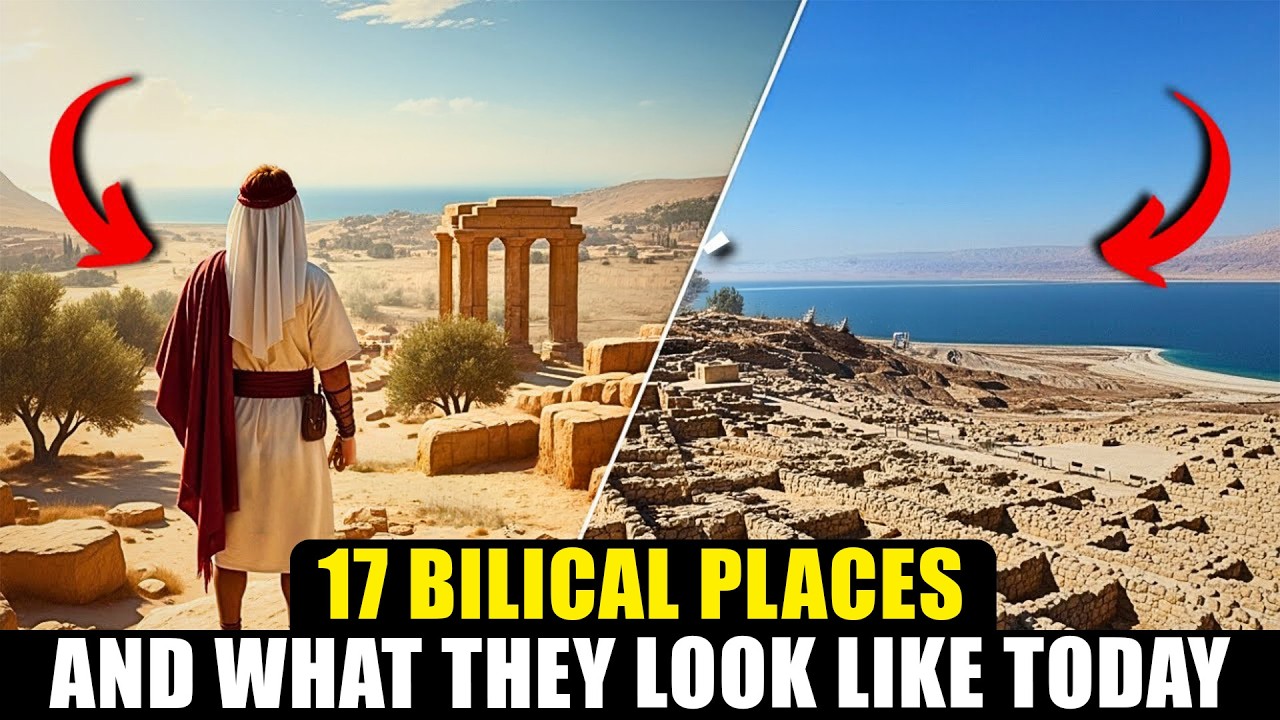
Other ancient places endure in recognizable form. Jericho, one of the oldest continuously inhabited cities in the world, still lies near the Jordan River and retains its historical setting from the Book of Joshua. The Sea of Galilee — central to the Gospels as the backdrop for many teachings — remains a prominent freshwater lake, with archaeological finds such as the first‑century Ancient Galilee Boat providing insight into life in the time of Jesus.
Sites in neighboring regions also reflect biblical geography: Damascus in Syria, one of the oldest cities in continuous habitation, is mentioned several times in the Old Testament, and Corinth in Greece figures prominently in the New Testament as a center of early Christian activity. North of the Sea of Galilee, archaeologists are exploring the proposed site of Bethsaida, the fishing village linked to apostles Peter, Andrew, and Philip, though its exact location is still debated between candidates like et‑Tell and el‑Araj.
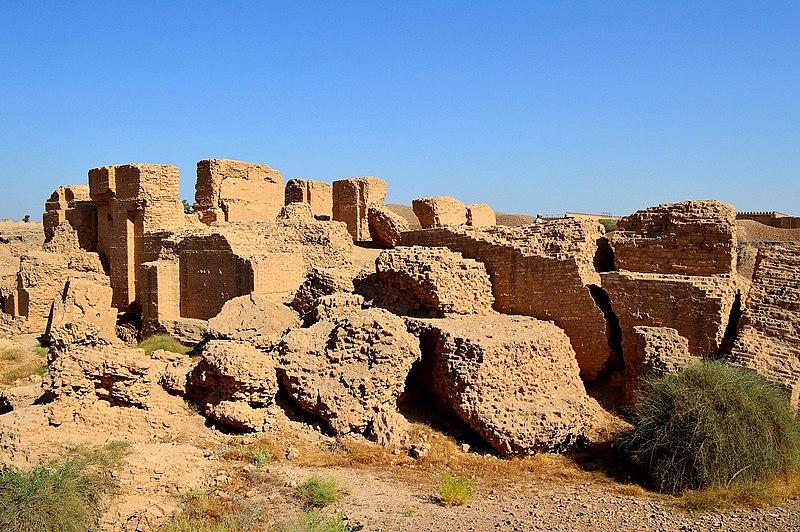
Many other places, such as Hebron with its Patriarchal traditions, Antioch (modern Antakya, Turkey), Ephesus (Turkey), and Corinth (Greece), retain layers of occupation and ruins that span from ancient times into the present. Together, these sites illustrate how the landscapes of the Bible — whether urban centers, rural towns, or natural features — continue to be part of today’s geography, bridging ancient narrative with archaeological and historical reality.