How Humans Survived the Toba Supervolcano Eruption 74,000 Years Ago
Around 74,000 years ago, humanity faced what may have been one of the greatest natural disasters in the history of our species. Deep within what is now northern Sumatra, Indonesia, a colossal supervolcano erupted with a force almost beyond imagination. Known today as the Toba supereruption, the event expelled an estimated 2,800 cubic kilometers (672 cubic miles) of volcanic material into the atmosphere, making it one of the largest volcanic eruptions of the last 2.5 million years.
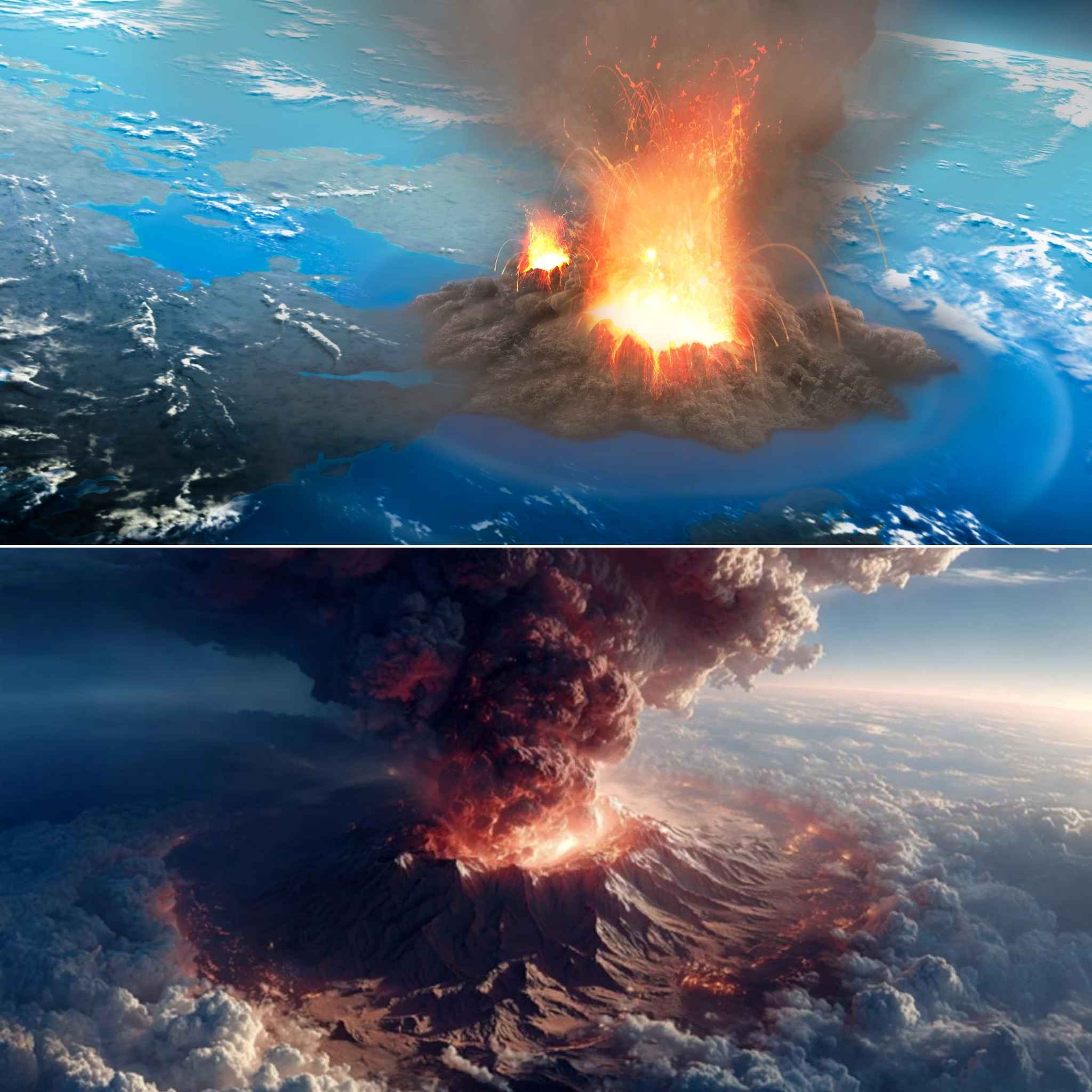
The explosion transformed the landscape of Southeast Asia, leaving behind the vast Lake Toba caldera, a geological scar stretching approximately 100 kilometers (62 miles) long and 30 kilometers (18 miles) wide. Ash clouds spread across continents. Fine volcanic particles drifted through the atmosphere and circled the globe. Sunlight was reduced. Temperatures dropped. Ecosystems were disrupted.
For decades, many scientists believed this catastrophe nearly wiped out humanity.
According to a theory known as the Toba Catastrophe Hypothesis, the eruption triggered a volcanic winter severe enough to push Homo sapiens to the brink of extinction. Some researchers suggested that the global human population may have fallen to just a few thousand individuals, creating a genetic bottleneck whose effects can still be detected in modern DNA.
Yet recent archaeological discoveries are telling a different story.
Instead of evidence for human collapse, researchers are uncovering signs of survival, adaptation, and even innovation. Far from being helpless victims of environmental disaster, our ancestors appear to have responded with remarkable resilience.
The story of Toba is no longer simply a tale of catastrophe. It has become a powerful testament to the adaptability that helped Homo sapiens become the dominant species on Earth.
The Largest Eruption of the Human Age
The Toba eruption dwarfs any volcanic event recorded in human history.
For comparison, the eruption of Mount Tambora in 1815—which caused the famous “Year Without a Summer”—released approximately 150 cubic kilometers of material. Krakatoa’s devastating eruption in 1883 released even less.
Toba was orders of magnitude larger.
Scientists classify it as a VEI-8 event, the highest category on the Volcanic Explosivity Index. The eruption column likely penetrated deep into the stratosphere, injecting vast quantities of sulfur dioxide and volcanic ash into the upper atmosphere.
These particles reflected sunlight back into space.
Global temperatures may have fallen dramatically. Some climate models suggest cooling of several degrees Celsius across large regions of the world. Rainfall patterns shifted. Vegetation declined. Animal populations were affected.
The consequences were severe enough that many researchers initially believed human populations could not have escaped unscathed.

The Toba Catastrophe Hypothesis
The idea that Toba nearly exterminated humanity gained popularity during the 1990s.
Researchers studying human genetics noticed that modern humans possess surprisingly low genetic diversity compared to many other species. One possible explanation was that our ancestors had experienced a dramatic population crash in the distant past.
The timing seemed to align with the Toba eruption.
Scientists proposed that volcanic winter conditions may have reduced the global population of Homo sapiens to fewer than 10,000 individuals—or perhaps even just a few thousand breeding adults.
According to this theory, small groups of survivors became the ancestors of all living humans.
The hypothesis appeared elegant because it linked geological evidence with genetic observations.
However, as more archaeological sites were investigated, cracks began to appear in the catastrophe narrative.
Tiny Fragments of Ash Reveal a Bigger Story
One of the most important breakthroughs came through the study of cryptotephra.
Cryptotephra consists of microscopic volcanic glass particles produced during eruptions. These tiny shards are often invisible without specialized laboratory techniques, yet they retain unique chemical fingerprints that allow scientists to identify their volcanic source.
In other words, researchers can determine whether a tiny particle of ash originated from Toba.
This capability transformed the investigation.
Instead of relying solely on climate models, archaeologists could now examine precisely what humans were doing before, during, and after the eruption.
By locating Toba ash within archaeological layers, they could determine whether people disappeared, declined, or continued living in affected regions.
The results were surprising.
Pinnacle Point: A Community That Refused to Vanish
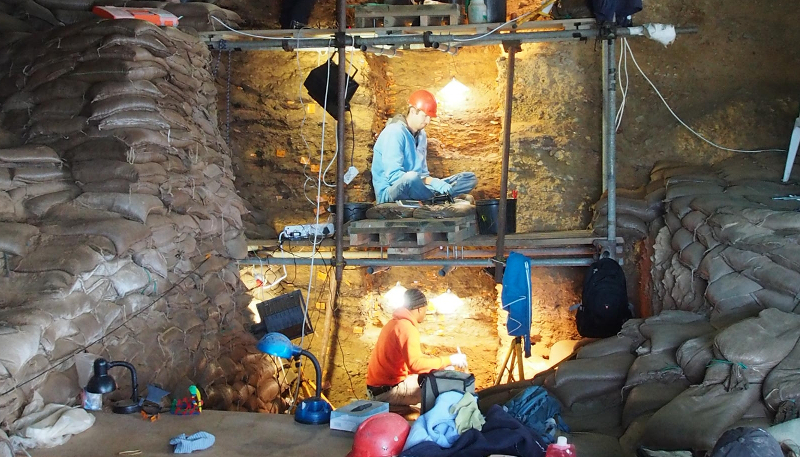
One of the most important discoveries emerged from Pinnacle Point on the southern coast of South Africa.
This remarkable archaeological site contains evidence of human occupation spanning tens of thousands of years. Researchers identified microscopic Toba ash within the site’s sediment layers, allowing them to precisely correlate human activity with the eruption.
What they found challenged expectations.
Instead of signs of abandonment, the site showed continuous occupation throughout the period.
Even more striking, evidence suggests human activity increased after the eruption.
Researchers discovered indications of technological innovation, improved resource use, and expanding occupation.
Rather than collapsing under environmental stress, these populations adapted.
Coastal resources likely played a critical role in their survival. Shellfish, fish, and marine mammals provided dependable food sources even when inland ecosystems were disrupted.
The ocean may have served as a lifeline during one of humanity’s greatest environmental crises.
Ethiopia’s Hidden Survival Strategy
Additional evidence emerged from Shinfa-Metema 1 in Ethiopia.
This site offers a glimpse into how early humans adapted to increasingly arid environments.
Researchers found that local populations relied heavily on seasonal water systems. During dry periods, rivers shrank into isolated pools where fish became concentrated and easier to catch.
Human groups adjusted their movements to follow these changing water resources.
The archaeological record also suggests the adoption of increasingly sophisticated hunting technologies around this period.
Evidence for early projectile weapons, including bow-and-arrow technology, indicates a growing ability to exploit diverse food sources.
This behavioral flexibility may have been one of humanity’s greatest strengths.
Rather than depending on a single strategy, humans adapted their methods to changing conditions.
That adaptability appears repeatedly in the archaeological record following Toba.
Survival Across Continents
Evidence from South Africa and Ethiopia is not unique.
Archaeological sites in India, Indonesia, and China also reveal continuity of human occupation across the period associated with the eruption.
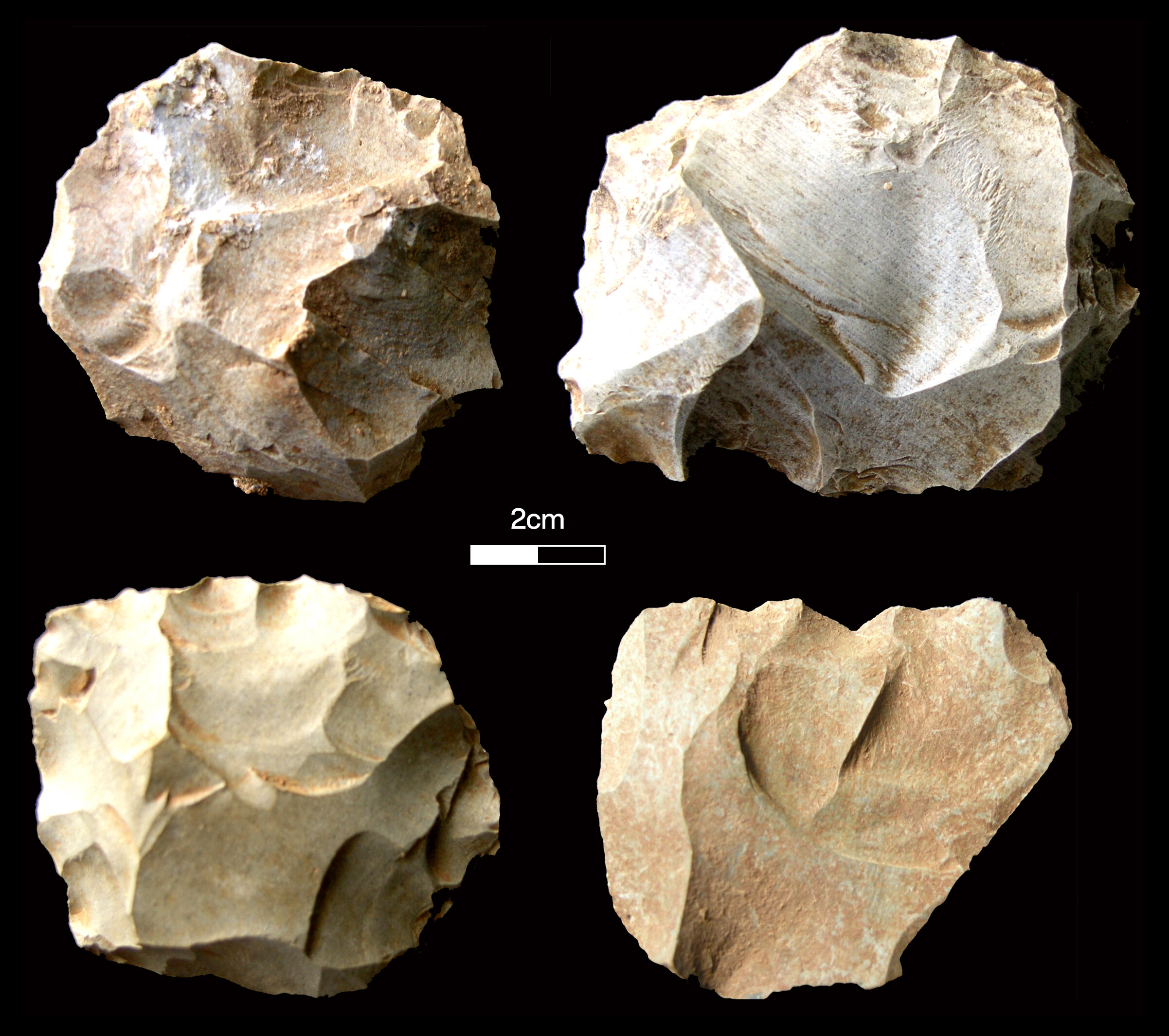
In India, stone tool assemblages found both below and above Toba ash layers show remarkable consistency.
This suggests local populations survived rather than disappearing and being replaced later.
Similarly, evidence from Southeast Asia indicates that human communities continued to occupy the region despite their relative proximity to the eruption site.
While the disaster undoubtedly caused hardship, the archaeological record increasingly supports the conclusion that many populations persisted through it.
The emerging picture is one of regional variation rather than global collapse.
Some areas likely suffered severe ecological disruption.
Others appear to have remained relatively stable.
Humans responded differently depending on local environments and available resources.
Why Humans Were Different
Many species struggle when environments change rapidly.
Humans possess a unique advantage.
Unlike most animals, our survival depends less on biological adaptation and more on behavioral adaptation.
We change our tools.
We change our diets.
We change our social structures.
We share information.
We innovate.
This flexibility allows humans to occupy deserts, rainforests, mountains, coastlines, and Arctic environments.
The archaeological evidence from the Toba period suggests these abilities were already highly developed 74,000 years ago.
Communities experimented with new technologies.
They expanded resource use.
They adjusted settlement patterns.
Rather than relying solely on instinct, they solved problems.
The same qualities that helped humans survive Toba would later allow them to spread across every continent on Earth.
Rethinking the Genetic Bottleneck
The growing archaeological evidence has forced scientists to reconsider the relationship between Toba and human genetic diversity.
Modern genetic studies still indicate that human populations experienced bottlenecks at various points in prehistory.
However, the timing and causes may be more complicated than originally believed.
Population reductions may have occurred gradually rather than suddenly.
Climate fluctuations before and after Toba may have contributed.
Migration patterns may have fragmented populations into isolated groups.
The eruption may have played a role without being the sole cause.
Many researchers now view the original catastrophe hypothesis as too simplistic.
Human history rarely follows a single cause-and-effect narrative.
The reality appears far more complex.
Lessons From an Ancient Disaster
The Toba supereruption remains one of the most dramatic natural events our species has ever faced.
Its environmental effects were undoubtedly significant.
Ash darkened the skies.
Climate patterns shifted.
Ecosystems were disrupted.
Entire regions experienced profound challenges.
Yet humans survived.
More importantly, they adapted.
The archaeological record increasingly suggests that early Homo sapiens responded creatively rather than passively.
They altered technologies.
They exploited new food resources.
They relied on social cooperation.
They adjusted to changing environments.
These are the same qualities that continue to define humanity today.
Humanity’s Greatest Strength
The story of the Toba supereruption has undergone a remarkable transformation.
What was once viewed as a near-extinction event is increasingly understood as a demonstration of human resilience.
The eruption certainly caused hardship and suffering. Entire ecosystems were affected, and some populations may have declined dramatically. Yet the evidence now points toward survival rather than annihilation.
Our ancestors endured one of the most powerful volcanic disasters in Earth’s recent history not because they were physically stronger than other species, but because they were adaptable.
They learned.
They innovated.
They cooperated.
The lessons of Toba extend far beyond archaeology.
As modern humanity faces environmental challenges of its own, the archaeological record reminds us that adaptability has always been our greatest asset.
Seventy-four thousand years ago, beneath darkened skies and falling ash, our ancestors demonstrated a truth that remains relevant today: survival belongs not to the strongest, but to those most capable of adapting to change.