How a Journey to New Orleans Helped Shape Abraham Lincoln’s View of Slavery
Before Abraham Lincoln became the president who led the United States through the Civil War, he was a young man from the frontier trying to understand the country around him.
He had grown up in poverty, worked with his hands, taught himself to read, and slowly built a life in Illinois. Like many Americans of his generation, Lincoln lived in a nation divided by slavery but not yet at war over it. In the North, slavery was increasingly criticized as immoral. In the South, it was defended as essential to the economy and social order. Between these two worlds stood the Mississippi River, the great commercial artery of the young republic.
For Lincoln, that river became a road into the heart of America’s contradiction.
As a young man, he traveled down the Mississippi to New Orleans. There, he saw something that left a deep impression on him: the slave markets of the South.
It was one thing to know slavery existed.
It was another to see human beings bought and sold.
That experience did not instantly turn Lincoln into the Great Emancipator. His political views would evolve over many years. But the journey helped shape his moral imagination. It gave him a personal encounter with slavery’s brutality and helped form the convictions that would later define his presidency.
A Nation Expanding and Dividing
The 19th century opened with the United States still young and uncertain.
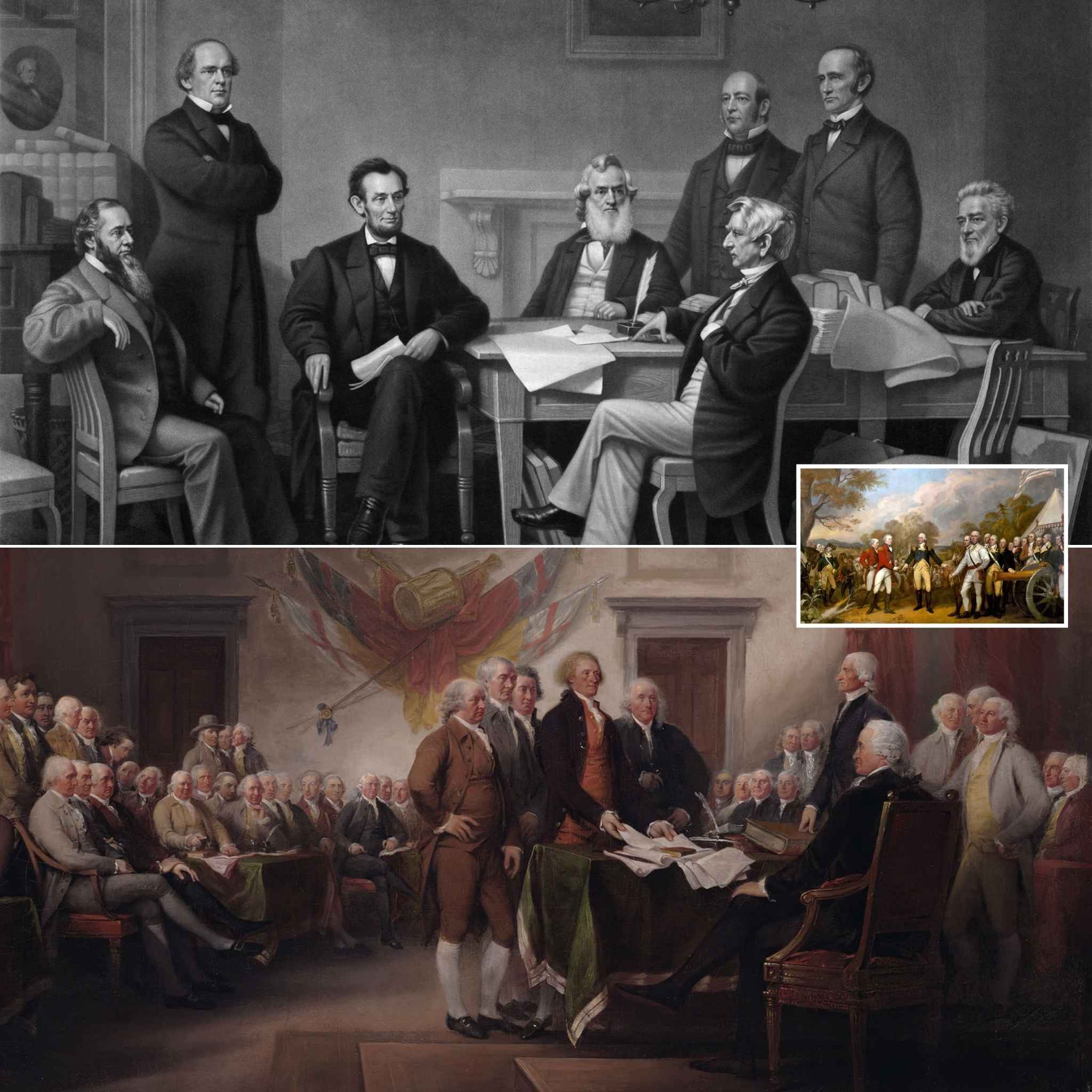
George Washington had stepped away from power, and John Adams became the second president. Soon after, Adams lost the election of 1800 to his own vice president, Thomas Jefferson. That election helped create the modern American party system and revealed how sharply divided the nation already was.
Jefferson’s presidency then transformed the country through the Louisiana Purchase.
In 1803, the United States bought an enormous territory from France, doubling the size of the nation. Jefferson had originally wanted control of New Orleans, the key port at the mouth of the Mississippi River. Instead, Napoleon offered the entire Louisiana Territory.
The purchase opened the continent to westward expansion.
But it also intensified one of the central questions of American history:
Would slavery expand with the nation?
The Mississippi River and the Southern Slave Economy
For frontier farmers in places like Illinois, Indiana, and Kentucky, the Mississippi River was essential.
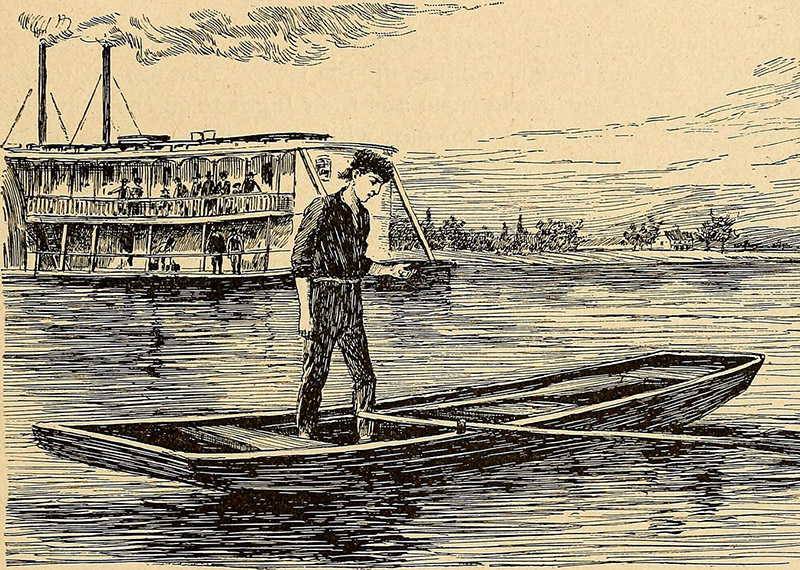
Before railroads connected the Midwest to eastern markets, goods often moved south by river. Farmers and merchants sent produce, timber, and livestock down the Mississippi to New Orleans, where they could be sold and shipped elsewhere.
This meant that young men from free states sometimes traveled directly into the slaveholding South.
Lincoln was one of them.
As a young laborer, he helped guide flatboats downriver to New Orleans. The trip exposed him to a world far removed from rural Illinois.
New Orleans was wealthy, crowded, multicultural, and deeply tied to slavery.
Its markets displayed the human cost of the plantation economy.
Enslaved men, women, and children were inspected, priced, separated, and sold.
For Lincoln, the sight was unforgettable.
Seeing Slavery Face to Face
Lincoln had grown up in a society where slavery was debated, but the experience of New Orleans made the issue painfully real.
The slave market was not an abstract political problem.
It was a public spectacle of human suffering.
People were treated as property. Families could be broken apart. Bodies were examined like livestock. The system revealed itself not through theory but through daily business.
According to historians, this encounter contributed to Lincoln’s growing belief that slavery was morally wrong.
He did not immediately become an abolitionist in the radical sense. He did not begin his political career demanding immediate nationwide emancipation. But the emotional memory of what he saw in New Orleans remained with him.
Later in life, Lincoln would describe slavery as a great moral evil, even while he struggled with the constitutional and political limits of ending it.
The young man who saw the slave markets would eventually become the president who signed the Emancipation Proclamation.
Lincoln’s Political Evolution
Lincoln’s views on slavery developed gradually.
As a lawyer and politician in Illinois, he opposed the expansion of slavery into new territories. He believed the institution was morally wrong, but he also understood that the Constitution protected slavery where it already existed.
This created a political challenge.
How could slavery be placed on a path toward extinction without tearing the nation apart?
Lincoln’s answer was not revolution, but containment.
He opposed allowing slavery to spread westward. He believed that if slavery could be confined, it would eventually weaken.
That position made him a central figure in the growing national crisis of the 1850s.
When Lincoln emerged as a national politician, the country was already deeply divided.
Southern states feared that his election meant slavery’s future was doomed.
After he won the presidency in 1860, several southern states seceded from the Union.
Union First, Emancipation Next
At the beginning of the Civil War, Lincoln’s primary goal was to preserve the Union.
He believed the United States could not survive if states could simply leave whenever they disliked an election result.
But as the war continued, slavery became impossible to separate from the conflict.
The Confederacy was built to protect slavery.
The Union could not be fully restored without confronting it.
In 1863, Lincoln issued the Emancipation Proclamation, declaring enslaved people in Confederate-held territory to be free.
The proclamation did not immediately end all slavery in America, but it transformed the meaning of the war.
The Union was no longer fighting only to preserve the nation.
It was fighting to destroy slavery.
The Man Shaped by a Century of Crisis

Lincoln did not emerge from nowhere.
He was shaped by the entire 19th-century American story.
The Louisiana Purchase expanded the nation.
The War of 1812 strengthened American identity.
The Monroe Doctrine announced American ambitions in the hemisphere.
The rise of cotton deepened the South’s dependence on slavery.
The growth of canals, railroads, and northern industry increasingly separated the North from the plantation economy.
By the time Lincoln entered politics, the United States was no longer merely debating slavery.
It was being pulled apart by it.
His genius was not that he saw the problem before anyone else.
Abolitionists such as Frederick Douglass, William Lloyd Garrison, and John Quincy Adams had spoken against slavery with greater urgency for years.
Lincoln’s greatness lay in his ability to move a divided nation through crisis without abandoning moral purpose.
New Orleans and the Moral Shock of Slavery
The trip to New Orleans mattered because it gave Lincoln a direct experience of what slavery meant.
He saw the system not as a legal category or political compromise, but as a human reality.
That memory helped shape his later language.
When Lincoln spoke about slavery, he often returned to the idea that it violated the basic principles of the Declaration of Independence.
A nation founded on the claim that all men are created equal could not forever tolerate human bondage.
The contradiction had to be resolved.
It would take war, constitutional amendments, and enormous sacrifice.
But Lincoln’s moral journey began long before the White House.
It began in part on a river journey south, when a young man from Illinois saw the slave markets of New Orleans and understood that the country he loved was built around a terrible wound.
Lincoln’s Defining Legacy
After Lincoln’s assassination in 1865, the United States entered Reconstruction, a period of hope and betrayal.
The 13th, 14th, and 15th Amendments abolished slavery, granted citizenship, and sought to protect Black voting rights.
For a brief time, Black Americans participated in democracy in unprecedented numbers.
But white resistance in the South soon produced new systems of exclusion, violence, and segregation.
The struggle Lincoln helped advance was far from finished.
Still, his presidency changed the nation forever.
He preserved the Union.
He made emancipation a central aim of the Civil War.
He helped move the United States closer to the ideals it had proclaimed but never fully practiced.
And behind that transformation was a lifetime of experience, including one early journey that exposed him to slavery’s cruelty in its most public form.
The young Abraham Lincoln who entered New Orleans did not yet know he would one day lead the country through its greatest crisis.
But what he saw there helped shape the man he would become.
It helped prepare him to confront the defining moral question of the 19th century.
And it helped make him, in the eyes of many historians, the central figure of America’s most turbulent age.