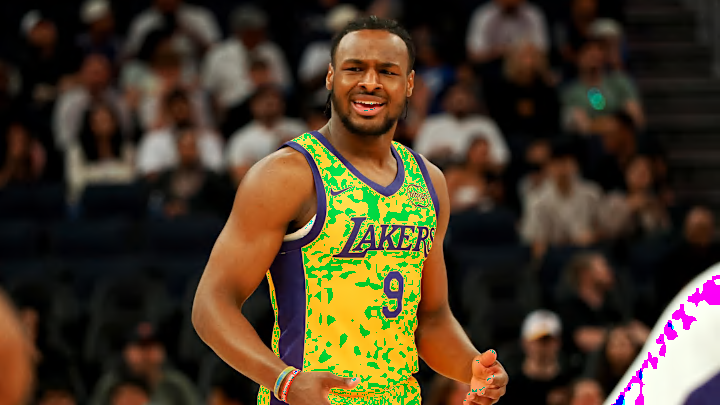
 Bronny James continues to be one of the most closely watched young guards in the NBA, with every stage of his development generating significant attention from fans and analysts alike.
As he progresses through his early professional years, discussions around his long-term role have increasingly focused on what type of system would best maximize his strengths and potential impact at the NBA level.
One consistent theme in player development evaluations is fit.
For young guards like Bronny, establishing a clear identity—particularly on defense, shooting consistency, and decision-making—often determines whether they can secure long-term rotation minutes on a championship-caliber roster.
Defensively, point-of-attack pressure remains a key area of focus. Competing at the NBA level requires the ability to contain opposing guards, navigate screens effectively, and maintain consistent energy across possessions.
Offensively, floor spacing is equally important. Modern NBA systems rely heavily on guards who can reliably convert catch-and-shoot opportunities and make quick decisions within structured offensive sets.
 Playmaking is another area of continued development. While not expected to run an offense full-time, secondary creation skills can significantly increase a young guard’s value in lineups featuring established stars.
Bronny’s early career has shown moments of progress, particularly through extended minutes in developmental settings and occasional NBA opportunities. These experiences are widely viewed as important steps in adjusting to the speed and physicality of the league.
However, like many young prospects, his role at the NBA level remains fluid.
In situations where teams are structured around established stars, rotation spots often become highly competitive, requiring young players to excel in specialized roles rather than complete all-around development at once.
Ultimately, Bronny’s long-term NBA outlook will depend less on expectations and more on consistent improvement in specific skill areas that translate directly to winning basketball.
For now, his path remains that of a developing guard working to define his role in a league where opportunity is earned possession by possession.