EXECUTION OF TERESA LEWIS PROCEEDS AFTER SUPREME COURT REFUSES TO INTERVENE IN HIGHLY CONTROVERSIAL MURDER-FOR-HIRE CASE

The execution of Teresa Lewis moved forward after the United States Supreme Court declined to block the sentence, ending last-minute legal efforts to stop what became one of the most debated death penalty cases in Virginia’s modern history.
Teresa Lewis, 41, was convicted in connection with a 2002 murder-for-hire plot involving the killings of her husband and her stepson. Prosecutors alleged that Lewis orchestrated the plan in order to collect a $250,000 life insurance payout, recruiting two men to carry out the killings. One of those men was identified as her lover, who later died by suicide while serving his own sentence.
The case immediately drew attention because of the disparity in sentencing between the co-defendants. The two men who physically carried out the murders received life sentences, while Lewis was sentenced to death for her role in planning and facilitating the crime. This difference in punishment became one of the central points of debate in the years leading up to her execution.

As the execution date approached, Lewis’s legal team argued that her death sentence should not be carried out due to concerns regarding her intellectual functioning. Defense attorneys claimed that her cognitive limitations made her more vulnerable to manipulation by others involved in the crime, particularly her accomplice. They also argued that she was not the primary actor in the killings and that her role had been exaggerated in order to justify the death penalty.
Supporters of Lewis’s execution, including prosecutors and state officials, strongly disagreed. They maintained that she was the driving force behind the murder-for-hire scheme and that the killings were planned in a calculated manner for financial gain. According to the prosecution, the evidence presented at trial clearly demonstrated intent and coordination rather than passive involvement.
The case escalated to the highest levels of the judicial system in the final days before the scheduled execution. Attorneys filed emergency appeals requesting a stay, arguing that the execution would violate constitutional protections due to her alleged intellectual disability. However, those requests were denied.

Within the United States Supreme Court, the application to halt the execution was rejected without further explanation. Justices Ruth Bader Ginsburg and Sonia Sotomayor were noted as dissenting from the decision to allow the execution to proceed, but the court’s majority did not issue additional commentary.
Virginia Governor Robert McDonnell also refused to grant clemency, stating that the available medical evaluations did not meet the legal threshold required to prevent execution based on intellectual disability claims.
With all appeals exhausted, Virginia proceeded with the execution by lethal injection, making Lewis the first woman executed in the state in nearly a century. The case quickly became a focal point in national and international discussions about capital punishment in the United States.
Critics of the execution argued that the case highlighted systemic issues within the death penalty system, particularly regarding intellectual disability standards, sentencing disparities among co-defendants, and the influence of accomplice testimony. They claimed that the justice system failed to adequately account for Lewis’s mental capacity and her level of influence in the crime.
Supporters of the sentence, however, emphasized the nature of the crime itself. They pointed to the deliberate planning involved in the murder-for-hire scheme, the financial motive behind it, and the loss of two lives as justification for the death penalty. In their view, the sentence reflected the seriousness of orchestrating a premeditated double homicide.
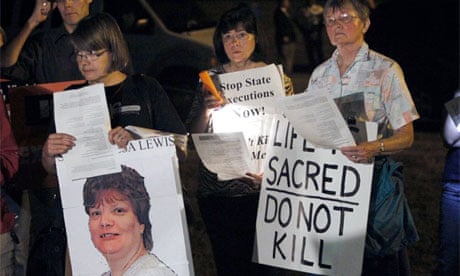
The execution of Teresa Lewis continues to be cited in legal and academic discussions surrounding capital punishment, particularly in cases involving claims of intellectual disability and unequal sentencing among participants in the same crime.
Even years later, the case remains controversial, illustrating the deep divisions in American society over the use of the death penalty, the interpretation of constitutional protections, and the extent to which personal characteristics such as cognitive ability should influence sentencing outcomes.