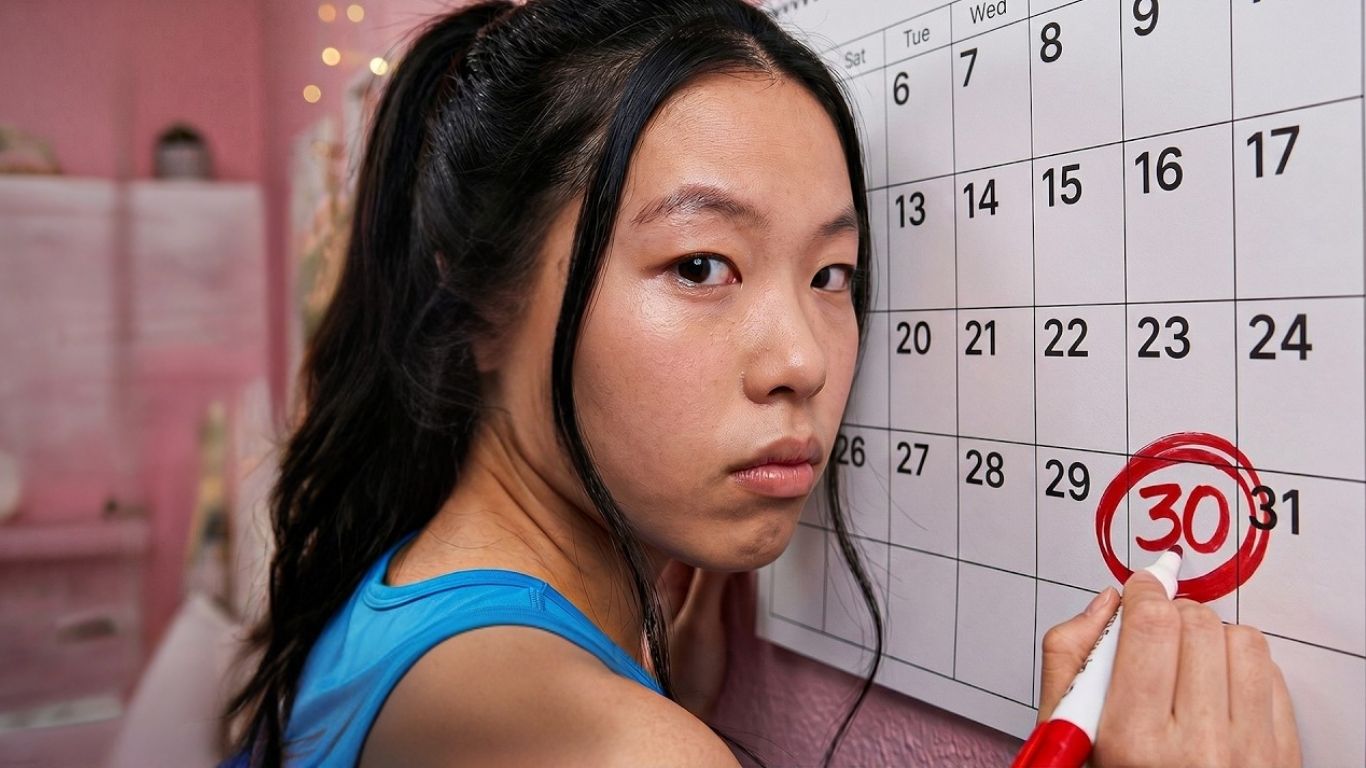
 The first time they told Grace something was wrong, she laughed.
Not because it was funny.
Because it didn’t belong to her life.
She was seventeen. Running track every morning before school. Eating whatever she wanted without thinking about it. Staying up too late scrolling her phone, arguing with friends about pointless things, planning a summer she assumed she would absolutely get to live.
People like her didn’t get life-altering diagnoses.
That happened in movies.
Or to other people.
So when the neurologist walked into the room with that careful, rehearsed expression—neutral face, soft eyes, slow voice—Grace didn’t take him seriously at first.
Her mother did.
Her mother always did.
“I’m afraid the scan shows an aggressive tumor,” he said.
Grace blinked. “Okay… so surgery, right?”
The doctor didn’t answer immediately.
That silence was the first crack in the world she knew.
Then he said the sentence that rearranged everything.
“It’s likely glioblastoma.”
Grace didn’t know what that meant at first. She just knew the room suddenly felt colder.
Her mother reached for her hand so fast it hurt.
“And treatment?” her mother asked quickly. “We do treatment. We start today.”
The doctor nodded slowly, but not with confidence.
“There are options. But we need to be honest. The standard prognosis… is around thirty days without intervention.”
Grace laughed again, weaker this time.
“Thirty days? That’s not real.”
But nobody corrected her.
Because it was real.
And the worst part wasn’t the number.
It was how calmly it sat in the room, like it had always been there waiting to be spoken.
Thirty days.
Not metaphorical.
Not approximate.
Thirty days of mornings she would never get back.
Thirty days of conversations that would now feel different forever.
Thirty days that suddenly mattered more than everything she had taken for granted the day before.
Her mother was already crying quietly, trying not to make noise like grief could be contained if it stayed polite.
Grace looked at the doctor again.
“And if I do treatment?” she asked.
He hesitated just long enough to make the answer heavier.
“There is an experimental protocol. It carries significant risk. The success rate is… low. Around ten percent in comparable cases.”
Ten percent.
Grace repeated it in her head.
Like she could change it by understanding it differently.
Ten percent meant nine out of ten people still didn’t make it.
Her mother shook her head immediately. “No. No, absolutely not. There has to be something else—something safer—”
But Grace wasn’t listening to her mother.
She was listening to something else entirely.
Not hope.
Not fear.
Something quieter.
Something sharper.
A realization that didn’t ask permission.
She had thirty days either way.
That was the only certainty left.
And suddenly, thirty days didn’t feel like a countdown.
It felt like a question.
What do you do when time stops being infinite and becomes intentional?
That night, Grace couldn’t sleep.
Hospitals are loud in a way people don’t notice until they’re forced to listen. Machines that beep like they’re reminding you the body is still trying. Doors that open and close like decisions being made somewhere else.
Her mother sat beside her bed the entire time.
“Don’t think about anything big right now,” she whispered. “Just rest. We’ll figure it out tomorrow.”
But Grace wasn’t thinking about tomorrow.
She was thinking about running.
Because running had always been the one place her mind went quiet.
Not because it was easy.
Because it was honest.
You couldn’t fake breathlessness.
You couldn’t negotiate with exhaustion.
You either kept going, or you stopped.
And for the first time, she wondered what it would feel like to run knowing there was an actual finish line she might not reach.
The next morning, she told her mother she wanted to leave the hospital.
Her mother immediately said no.
Then the doctors said no.
Then everyone said no in different medical and emotional languages.
But Grace kept thinking about the same thing.
Thirty days.
Thirty days of being protected from life.
Or thirty days of actually living it.
Eventually, she made a decision that felt simple and impossible at the same time.
“I’m not wasting it here,” she said.
Her mother looked at her like she didn’t recognize her daughter anymore.
“You think this is wasting it?” her mother said, voice breaking. “Fighting for your life is wasting it?”
Grace shook her head.
“No,” she said softly. “But waiting for it to happen is.”
That was the first real fracture between them.
Not anger.
Not disagreement.
Fear pulling in one direction.
And something else pulling in another.
Grace didn’t choose the aggressive treatment immediately.
She chose movement.
She checked out of the hospital against medical advice, a decision that made doctors uncomfortable and her mother terrified.
At home, everything felt the same but wrong.
Her room was unchanged. Posters still on the wall. Shoes still by the door. Half-finished homework still on her desk like time had paused expecting her to come back unchanged.
But she had changed.
And she hadn’t even started yet.
The first thing she did was record a video.
It wasn’t planned.
She just turned on her phone while sitting on her bed.
Her face looked normal.
That was the strangest part.
No one would know by looking at her that anything was happening inside her skull that would eventually end her life.
“Hi,” she said awkwardly at first, laughing a little because she didn’t know how else to start.
Then she stopped laughing.
“So… I was told I have about thirty days,” she said.
She paused.
Because saying it out loud made it real in a way the hospital had not.
“I don’t really know what I’m supposed to do with that,” she continued. “But I don’t want to spend it waiting.”
She ended the video without editing it.
Without rehearsing.
Without turning it into something else.
Then she posted it.
Her mother saw it five minutes later and cried in the kitchen without making a sound.
By the end of the day, the video had started spreading.
Not because it was polished.
Because it wasn’t.
People didn’t know what to do with honesty that raw.
And Grace, watching the views climb, felt something unfamiliar inside her.
Not hope.
Not despair.
Something closer to direction.
She started small.
Walking first.
Then light jogging.
Then longer distances.
Every run came with consequences. Fatigue hit faster than before. Headaches arrived without warning. There were days she had to stop halfway and sit on the sidewalk, breathing like her body was arguing with her decision.
Her mother begged her to stop pushing.
“There’s still treatment,” she would say. “We can still do the protocol. We can still try the safer route.”
But Grace had already seen what “safer” meant.
It meant waiting.
And she didn’t want to spend her last days waiting for permission to fight.
So she kept running.
She posted every day.
Not to inspire people.
But because documenting it made it feel real.
Day 3: I ran further than yesterday.
Day 6: I had to stop twice, but I still finished.
Day 9: I cried halfway through and kept going anyway.
The internet reacted the way it always does to something it can’t categorize.
Some people called it inspiring.
Some called it reckless.
Some said she was in denial.
But a quieter group began to form.
People with their own diagnoses.
People with their own countdowns.
People who had stopped believing their lives could still include movement.
They didn’t comment much.
They just watched.
And kept watching.
One evening, after a particularly difficult run where she barely made it home, Grace collapsed on her bed still in running clothes.
Her phone buzzed nonstop.
Messages. Shares. Comments.
But one stood out.
A message from someone she didn’t know.
“I’m a researcher studying glioblastoma,” it read. “I saw your videos. I think you should look at a trial we’re running.”
She almost ignored it.
Almost.
But something about the tone felt different.
Not emotional.
Not exploitative.
Precise.
Professional.
Hope, in a language she understood better than optimism.
The trial wasn’t simple.
It wasn’t guaranteed.
Nothing about it was easy.
But it wasn’t ten percent.
It was different enough that her hands started shaking when she read the details.
Her mother was cautious immediately.
“This could be false hope,” she warned. “We don’t know this person.”
But Grace had stopped trusting certainty a long time ago.
Certainty was what told her she only had thirty days.
She chose uncertainty instead.
And said yes.
The treatment wasn’t a miracle.
It was a process.
Hard. Exhausting. Unpredictable.
There were days she couldn’t stand without help. Days she couldn’t run at all. Days where her videos stopped because even holding a phone felt like too much.
But something else started happening alongside it.
Change.
Slow.
Quiet.
Measured in small recoveries that didn’t feel dramatic but mattered deeply.
A slightly longer walk.
A shorter recovery time.
A morning where she woke up and didn’t immediately feel like the world was slipping away.
The researcher, Dr. Patel, explained it carefully.
“We’re seeing a response,” he said once during a checkup. “It’s early, but it’s real.”
Grace didn’t cry.
Not then.
She just nodded like she was trying to understand what “real” meant in a body that had been told otherwise.
She went back to running as soon as she was allowed light physical activity again.
Not because she had to.
Because she needed to know she still could.
And something changed in how she moved.
Not faster.
Not stronger.
More intentional.
Like every step mattered more than it used to.
Her videos changed too.
Less fear.
More focus.
Less countdown.
More presence.
People noticed.
One comment said: “You stopped running like you’re dying and started running like you’re living.”
She read it twice.
Then kept it.
The race came unexpectedly.
A local marathon event she had always ignored before because it felt like something other people prepared for.
Now it felt like something she could not ignore.
Her mother protested immediately.
“You’re not ready,” she said. “Your body is still recovering.”
Grace nodded.
“I know.”
“And if something happens—”
“I know.”
Silence.
Then her mother said the thing she always said when she was scared enough to stop arguing.
“Obstacles either stop you or make you stronger.”
Grace smiled faintly.
“I think I want to find out which one this is.”
Race day was cold in a way that made everything feel sharper.
People lined up with different reasons. Some for competition. Some for personal goals. Some just because they always had.
Grace stood near the middle of the pack, not at the front, not at the back.
Just present.
Alive.
The starting signal didn’t feel cinematic.
It felt like permission.
And she ran.
Not fast at first.
Not dramatically.
Just steadily.
The first kilometers were almost normal.
Then the pain came.
Then fatigue.
Then doubt.
All the familiar things she had learned to expect.
At one point, she saw Beckett—one of the runners she had met during training sessions—pull alongside her briefly.
“You good?” he asked.
Grace nodded.
“Yeah,” she said. “Just living.”
He looked at her like he didn’t fully understand.
Then he kept running.
Somewhere around the halfway mark, everything became harder.
Her vision blurred slightly. Her legs felt heavier. Her breath shortened.
But she didn’t stop.
She adjusted.
Slowed.
Then continued.
One step at a time stopped being a cliché and became survival.
At the final stretch, she wasn’t thinking about winning.
She wasn’t thinking about survival.
She was thinking about finishing.
Just finishing.
And when she crossed the line, it wasn’t dramatic.
She didn’t collapse.
She didn’t raise her arms.
She just stopped.
Breathing.
Standing.
Still here.
The researcher called her the next day.
“The trial is showing continued improvement,” he said. “We’re cautiously optimistic.”
Cautiously optimistic.
Grace liked that phrase.
It didn’t lie.
It didn’t promise.
It just acknowledged possibility.
Her mother cried that night in a way that felt different from before.
Less fear.
More release.
Months later, people would ask Grace what saved her.
She never gave the answer they expected.
It wasn’t the treatment alone.
It wasn’t the running alone.
It wasn’t even the videos.
It was the decision.
The moment she stopped asking how much time she had left and started asking what she could do with it.
Because fear counts time.
But purpose changes it.
And sometimes, living doesn’t begin when everything is certain.
It begins when you decide uncertainty is not a reason to stop moving.
And that, more than any diagnosis or statistic, was the part of her story people never forgot.
Not that she had thirty days.
But that she refused to live like she only had thirty days to exist.