RARE ARTEFACTS AND FULL HORSE SKIN FOUND IN MEDIEVAL SIBERIAN BURIAL
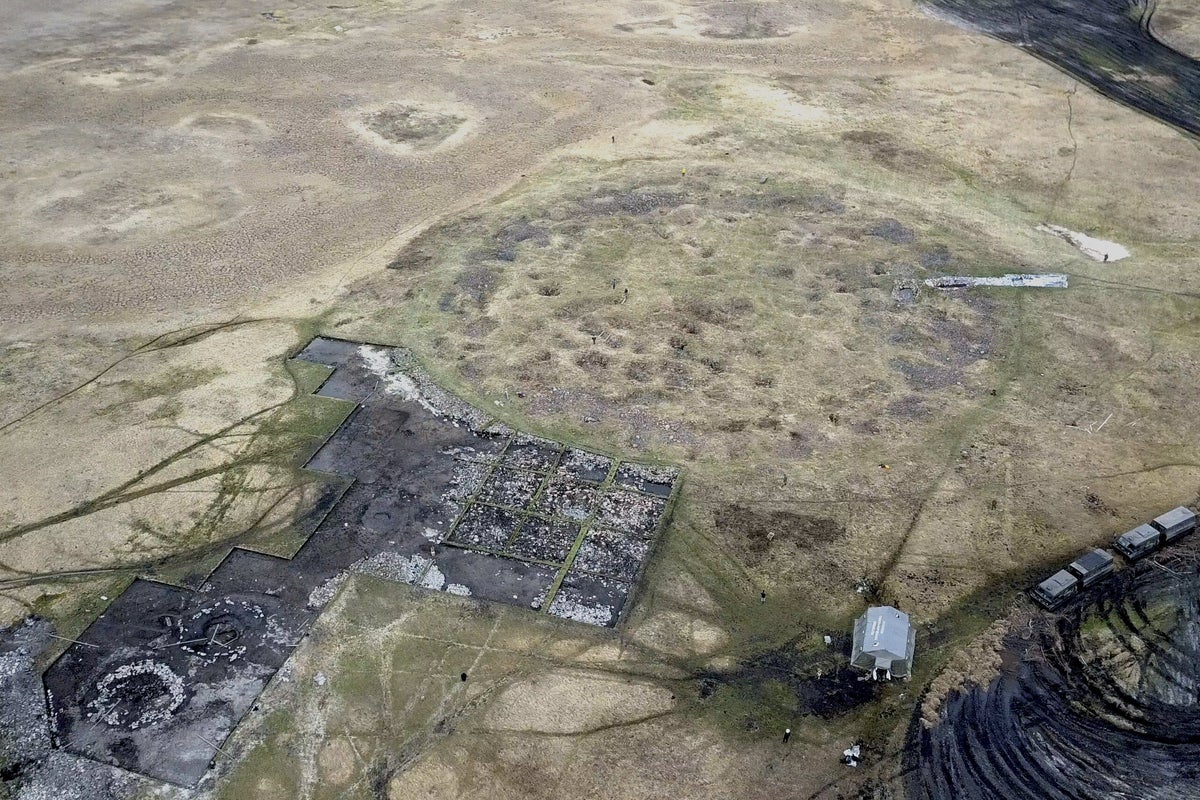
In the remote valleys of the Sayan Mountains in southern Siberia, archaeologists working ahead of major infrastructure development have uncovered an extraordinary medieval burial that offers a rare glimpse into the world of Eurasian steppe elites.
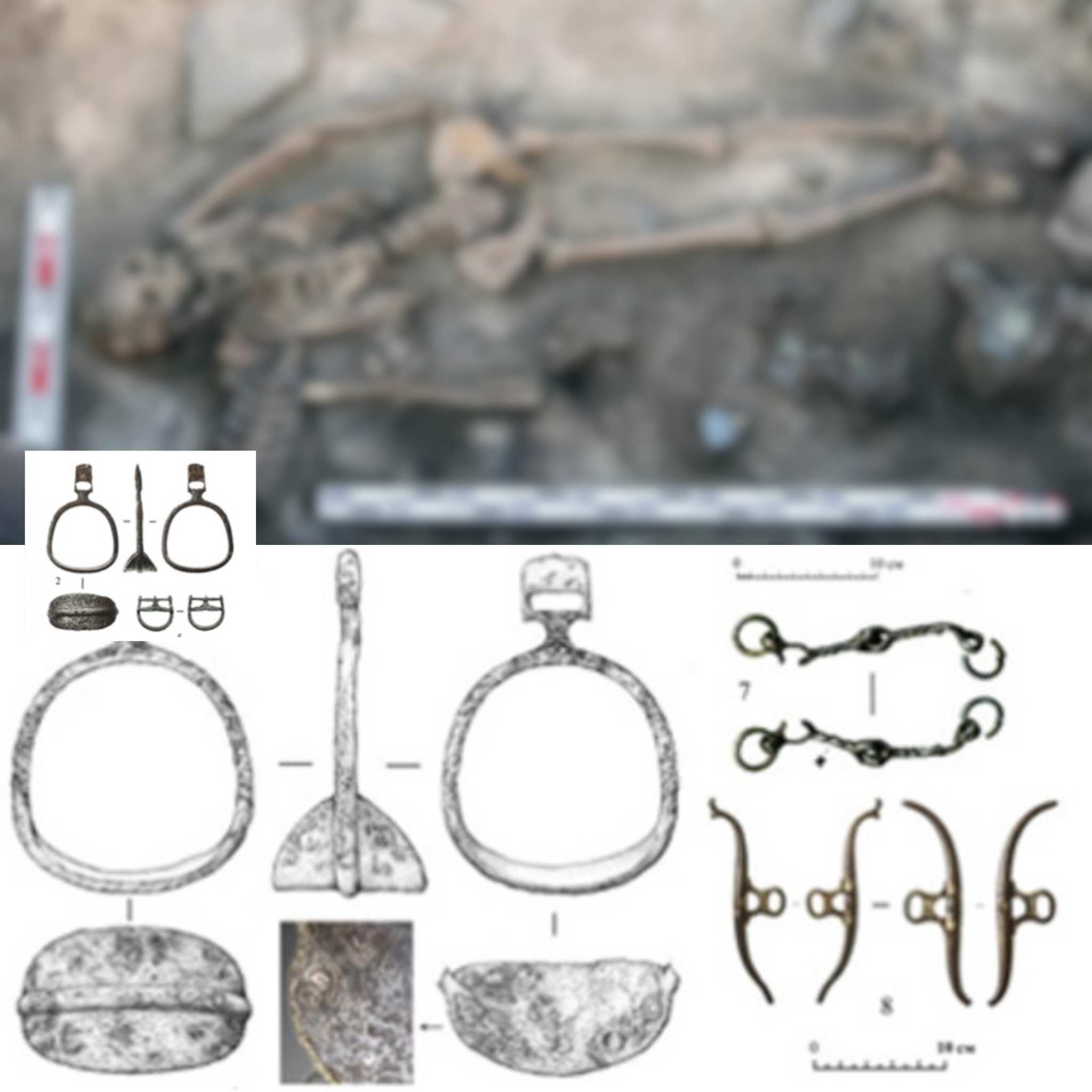
Dated to the 9th–10th century AD, the grave—identified as Sayany-Pogranichnoye-4 in the Idzhim River valley of Krasnoyarsk Krai—contained the remains of a woman buried alongside a newborn child and an exceptionally rare funerary offering: the complete skin of a horse, including skull and lower limbs.
The discovery, published by researchers from Novosibirsk State University and institutions of the Russian Academy of Sciences, is being described as one of the most unusual burial complexes ever found in the region.
A BURIAL UNLIKE MOST OTHERS IN THE STEPPE
Elite burials in the medieval Eurasian steppe are often rich in symbolism, but the Sayany-Pogranichnoye-4 grave stands out even in this context.
Inside the burial mound, archaeologists found:
- A woman of high status
- A newborn child placed beside her
- A full horse skin with skull and lower limbs preserved
- Elaborate horse harness equipment
- Gold and gilt-bronze personal ornaments
- Ritual and domestic objects
The combination of human and animal remains suggests a deeply symbolic burial tradition tied to beliefs about journeys into the afterlife and the central importance of horses in nomadic identity.
IMAGE 1: ELITE STEPPE BURIAL RECONSTRUCTION
THE HORSE SKIN: A RITUAL OF STATUS AND TRANSFORMATION
One of the most striking features of the burial is the presence of a complete horse hide, preserved with its skull and lower limbs.
While horse burials are known across steppe cultures, this specific method—where the animal is represented in a “reassembled” form rather than fully interred—is rare in the Sayan-Altai region.
Researchers believe this reflects a symbolic practice in which:
- The horse was sacrificed as a spiritual companion
- Its preserved form represented mobility in the afterlife
- The hide acted as a substitute for the full animal
- The ritual reinforced the elite status of the deceased
Andrey Poliakov, one of the study’s authors, notes that only a small number of similar cases are known, making this burial a significant contribution to understanding regional funerary diversity.
ELITE HORSE EQUIPMENT AND SOCIAL STATUS
Alongside the horse remains, archaeologists recovered an impressive collection of equestrian equipment, including:
- Decorated bridle fittings
- Belt plaques and ornamental mounts
- Stirrup fragments
- Silver and gilded decorative elements
- Buckles featuring paired predator motifs
According to researcher Oleg Mitko, the assemblage represents an exceptionally rich set of horse gear for the region, comparable only to high-status Turkic elite burials.
These objects strongly suggest that the woman buried at the site belonged to a wealthy or politically significant social group, where horses were not only transport but also symbols of power, identity, and authority.
IMAGE 2: MEDIEVAL STEPPE HORSE GEAR

A NEWBORN CHILD AND QUESTIONS OF MEANING
The presence of a newborn buried alongside the woman adds another layer of complexity.
While the exact relationship between the two individuals remains uncertain, archaeologists consider several possibilities:
- Mother and child died during or shortly after childbirth
- The child was included as part of a family burial ritual
- The pairing had symbolic rather than biological meaning
- Both were part of a broader funerary or sacrificial context
The careful arrangement of grave goods suggests that this was not a simple or accidental burial, but a structured ritual act shaped by cultural and spiritual beliefs.
CONNECTIONS TO THE TANG DYNASTY AND LONG-DISTANCE TRADE
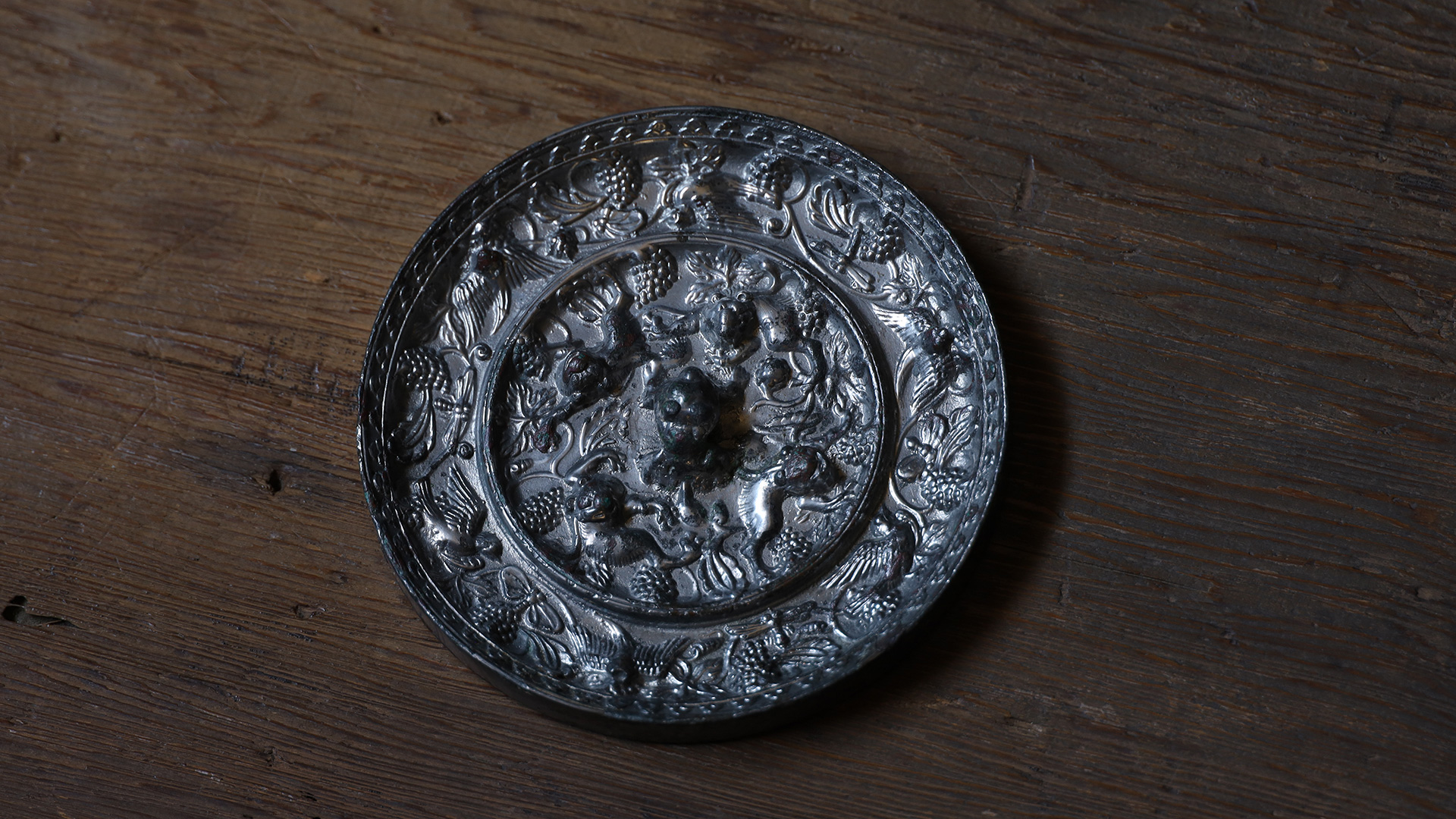
Among the most intriguing artifacts is a ritually broken bronze mirror, decorated with vine and grape motifs.
This design is strongly associated with luxury mirrors produced during the Tang Dynasty in China (618–907 AD).
Its presence in a Siberian burial highlights the extraordinary reach of medieval trade and cultural exchange across Eurasia:
- Goods moved along steppe trade corridors
- Nomadic elites acquired prestige objects from distant empires
- Artistic styles were transmitted across vast distances
- Objects were reinterpreted in local ritual contexts
The mirror was intentionally broken before burial—a practice common in many ancient societies, interpreted as a way of “deactivating” the object so it could accompany the deceased into the afterlife.
IMAGE 3: TANG-STYLE BRONZE MIRROR MOTIFS
A WORLD IN TRANSITION: THE 9TH–10TH CENTURY STEPPE
The burial dates to a period of major transformation across Eurasia.
During the 9th and 10th centuries:
- Turkic and steppe confederations were reorganizing politically
- Trade routes between China, Central Asia, and Siberia were active
- Elite cultures were blending local and foreign traditions
- Horse-based societies dominated movement and warfare
The Sayany-Pogranichnoye-4 burial reflects this complexity. The combination of local burial traditions with imported luxury goods suggests a society deeply connected to wider Eurasian networks while still maintaining distinct cultural identity.
HEIRLOOMS, HERITAGE, AND MEMORY
Researchers suggest that some objects in the burial may not have been newly acquired at the time of burial.
Instead, they could represent:
- Family heirlooms passed down through generations
- Symbols of ancestral prestige
- Ritual objects reused in funerary ceremonies
- Items deliberately chosen for symbolic meaning rather than material value
This reinforces the idea that the burial was not only about wealth or status, but also about memory, lineage, and identity.
A GLIMPSE INTO THE NOMADIC ELITE WORLD
Although the identity of the woman remains unknown, the richness of her burial speaks clearly.
She was likely part of a high-status nomadic or semi-nomadic elite, living in a world where:
- Horses defined social rank
- Trade connected Siberia to China and Central Asia
- Rituals guided transitions between life and death
- Mobility shaped politics and survival
Her burial represents not only a personal story but also a snapshot of a broader cultural system that stretched across the Eurasian steppe.
CONCLUSION: A BURIAL THAT CONNECTS WORLDS
The Sayany-Pogranichnoye-4 discovery is more than an archaeological find—it is a meeting point of cultures, beliefs, and histories.
A woman, a newborn, a horse, and objects from distant empires were brought together in a single ritual moment more than a thousand years ago in the Sayan Mountains.
What remains today is a carefully preserved record of a society where movement, animals, and long-distance exchange defined human life—and where death was not an end, but a transition carried out with extraordinary symbolism and care.


