CHARLES STARKWEATHER: THE SPREE KILLER WHO SHOCKED AMERICA
Charles Starkweather remains one of the most infamous names in American crime history—a teenage spree killer whose brutal rampage across Nebraska and Wyoming between late 1957 and early 1958 left 11 people dead and shocked the nation. Alongside his 14-year-old girlfriend, Caril Ann Fugate, Starkweather carried out a series of murders that would later become one of the earliest widely publicized crime sprees in U.S. history.
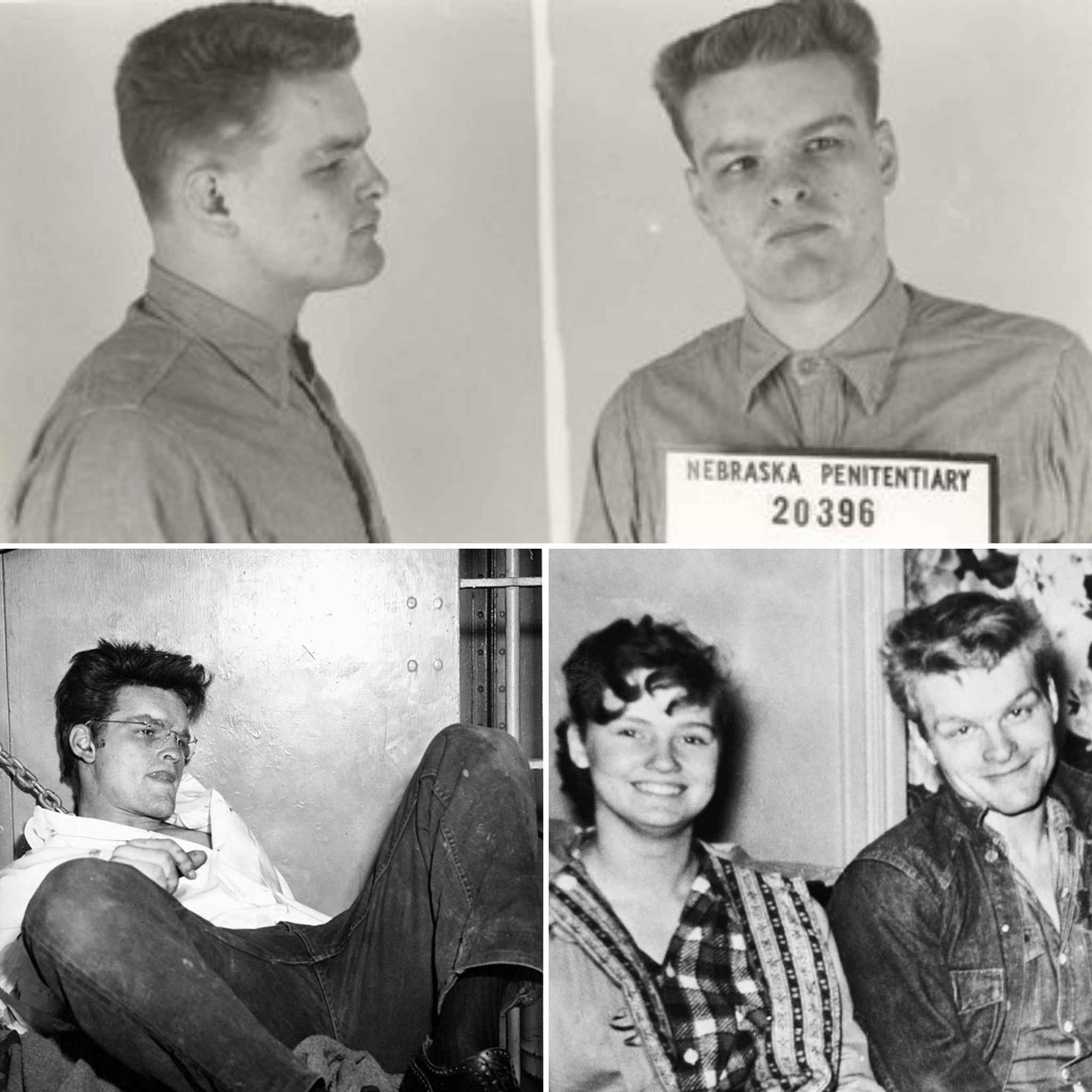
His case not only captivated the public but also helped shape how American media covered violent crime, turning Starkweather into a symbol of youthful brutality, manipulation, and mass violence long before modern true-crime storytelling existed.
THE BEGINNING OF THE SPREE
The killing spree began in December 1957 in Lincoln, Nebraska.
According to historical records and trial testimony, Starkweather’s first known victim was a gas station attendant, killed during a robbery attempt. What began as a single act of violence quickly escalated into a multi-state killing spree spanning weeks.
As panic spread across Nebraska, Starkweather and Fugate fled, leaving behind a growing list of victims and a rising sense of fear in multiple communities.
Over the course of approximately two months, authorities attributed 11 murders to the pair, including entire families, acquaintances, and individuals who encountered them during their escape.
The brutality and randomness of the killings created widespread national attention, making the case one of the most notorious crime stories of its era.
THE VICTIMS AND ESCALATION OF VIOLENCE
Among the victims were members of Fugate’s family, including her mother, stepfather, and younger sibling, as well as a family friend.
Other victims included individuals who unknowingly encountered the pair during their flight from law enforcement.
In one of the most disturbing aspects of the case, Starkweather and Fugate were also accused of killing teenagers who offered them transportation, further intensifying public outrage when the details became known.
The violence escalated rapidly, with each new crime adding to the urgency of the manhunt.
Law enforcement agencies across Nebraska and Wyoming coordinated efforts to locate the pair as fear spread across the region.
MANHUNT AND CAPTURE
The spree ended in Wyoming after a high-speed police pursuit.
Authorities eventually surrounded Starkweather and Fugate, leading to their arrest.
The capture brought relief to communities that had been gripped by fear during the weeks-long killing spree.
Starkweather was extradited back to Nebraska, where he faced trial for multiple counts of murder.
Caril Ann Fugate’s involvement became a major point of legal debate, with questions surrounding coercion, control, and her level of participation in the crimes.
TRIAL AND SENTENCING
Starkweather was convicted of first-degree murder and sentenced to death.
Prosecutors described him as the primary actor behind the killings, responsible for the majority of the violence committed during the spree.
The case also raised early public debates about youth violence, influence, and criminal psychology, as Starkweather was only 19 years old at the time of the crimes.
Caril Ann Fugate was also tried separately, with her defense arguing that she had been manipulated and controlled by Starkweather throughout the events.
EXECUTION
Charles Starkweather was executed by electric chair at the Nebraska State Penitentiary on June 25, 1959.
At the time, he was one of the most widely known death row inmates in the United States, and his execution attracted significant public attention.
Rather than requesting an elaborate final meal, Starkweather reportedly declined anything substantial and requested only simple cold food items.
Accounts of his final moments note that he did not deliver a traditional final statement. However, when being escorted to his execution, he reportedly made a brief remark to prison officials, asking, “What’s your hurry?”
His execution brought a formal end to one of the most infamous crime sprees in American history up to that point.

IMPACT ON AMERICAN CRIME REPORTING
The Starkweather case had a lasting influence beyond the crimes themselves.
It became one of the first American murder sprees to receive nationwide media coverage in real time, shaping public fascination with serial and spree killers.
The case also influenced later cultural portrayals of violent crime, inspiring films, books, and ongoing true-crime analysis.
Many criminologists and historians view Starkweather as a pivotal figure in the development of modern American crime media narratives.
THE LEGACY OF FEAR AND FASCINATION
Even decades later, the Starkweather case continues to be studied for its psychological, social, and cultural implications.
It raises enduring questions about:
- the nature of violent criminal behavior
- influence and manipulation in young offenders
- the role of media in shaping public perception of crime
- and how society responds to extreme acts of violence
For many, the case represents both a tragedy and a turning point in how America understands and reports mass violence.
CONCLUSION
Charles Starkweather’s execution in 1959 closed one of the most shocking crime sprees in American history. Alongside Caril Ann Fugate, he left a trail of devastation across Nebraska and Wyoming that would become a defining case in the study of mass violence and criminal psychology.
While his execution marked the legal end of his crimes, the cultural and historical impact of the case continues to resonate.
More than six decades later, Starkweather remains a symbol of early American spree killings—and a reminder of how quickly violence can spiral beyond control.
⚖️ Does society’s fascination with cases like Starkweather help us understand crime—or risk turning tragedy into myth?