“It Frickin’ Hurts”: Scottie Scheffler Opens Up on the Brutal Reality of Contending at the U.S. Open
Scottie Scheffler is no stranger to winning, but even the World No. 1 admits that golf’s toughest moments often come not from losing badly—but from coming painfully close.
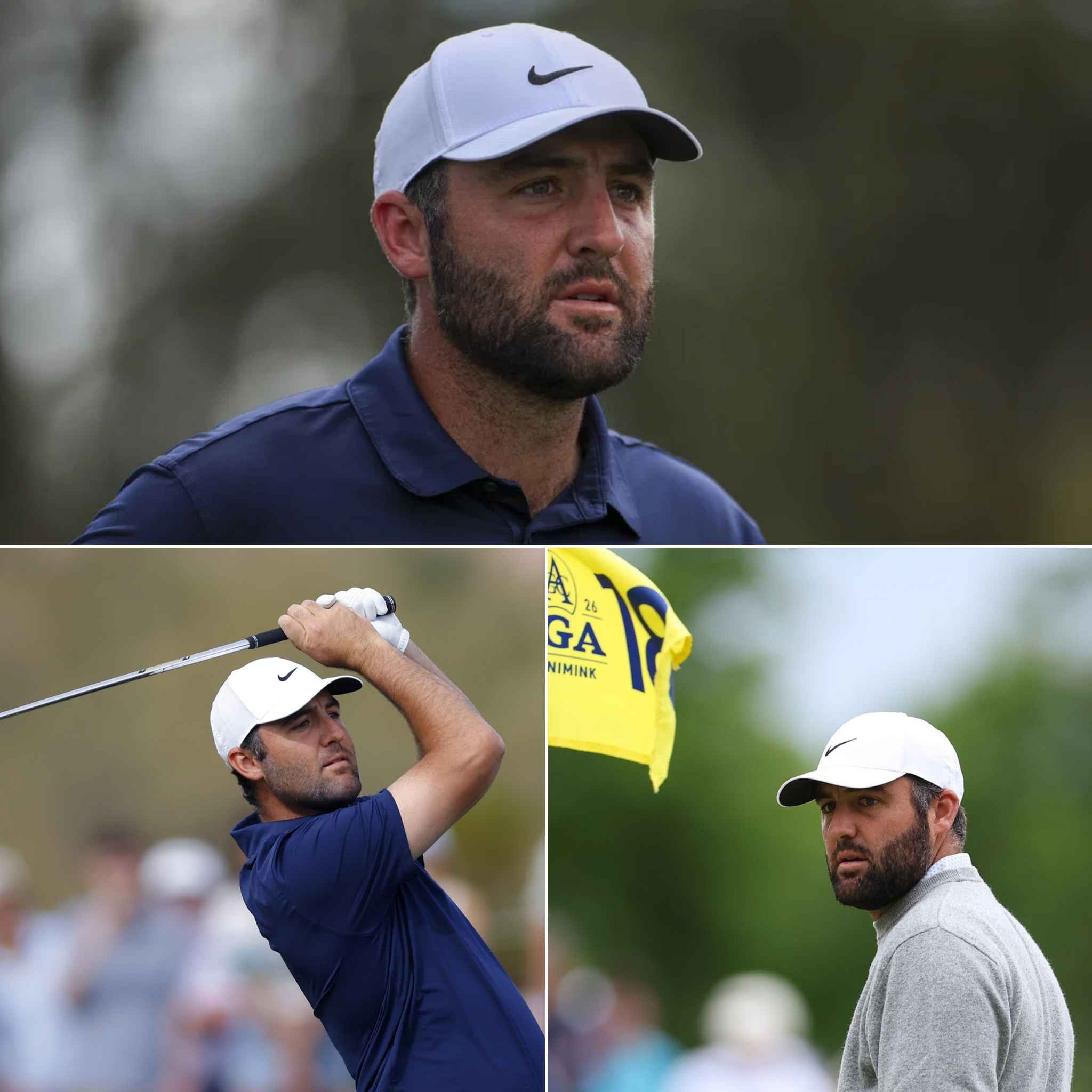
Ahead of the 2026 U.S. Open at Shinnecock Hills, Scheffler reflected on the emotional toll of repeated near-misses in major championships, particularly at the U.S. Open, where he has consistently been in contention but unable to close the deal.
For a player who has already established himself as one of the most dominant forces in the game, the frustration is not about lack of success—it is about how fine the margins truly are at the highest level.
“It Frickin’ Hurts”

Scheffler was candid when asked about the pressure of finishing close but not winning, especially in a championship that has repeatedly tested him.
“Every time you don’t win a tournament, you always have those feelings,” he said.
He went on to explain how finishing second can feel like both success and failure at the same time, depending on perspective.
“If I finish second this week, it’s almost like, ‘Hey, you failed in your first chance to win the career grand slam.’ Is finishing second a failure? Yeah, it can feel that way… but I think sometimes when you look at a wider view of the sport and where your game’s at, second is not always that bad. But man, does it frickin’ hurt at the same time.”
The honesty behind the statement reflects the emotional duality elite golfers face: objective success versus personal expectations.
The Fine Line Between Winning and Falling Short

Scheffler’s recent history at the U.S. Open highlights just how narrow that line can be.
He has recorded multiple top finishes in recent years, including several top-10 results in his last five appearances at the championship. Each time, he has been close enough to feel the possibility of victory—yet just far enough away to fall short.
That pattern has defined much of his major championship narrative: consistent contention, elite statistics, but narrowly missed opportunities on Sundays.
Even in a season where his form remains among the best in the world, the frustration stems from small mistakes that carry massive consequences.
“I feel like I just haven’t been as sharp as I needed to be,” Scheffler admitted. “The margins in this game are so small. I’m either not making the momentum putt, or I make a sloppy bogey somewhere, or I hit an iron shot a touch thin… and all of a sudden it ends up in the bunker.”
At this level, even the slightest imperfection can swing an entire championship.
Small Mistakes, Big Consequences
Scheffler’s reflections highlight a recurring theme in professional golf: success is often determined by fractions of a shot.
A missed putt here.
A slightly misjudged iron shot there.
A fractionally off tee shot into the wind.
Over 72 holes, those small moments accumulate into the difference between lifting a trophy and finishing second.
For Scheffler, those moments have often come at the worst possible time—late on Sundays, when pressure is at its peak and championships are decided.
Despite that, his consistency remains unmatched. He continues to rank among the best in strokes gained categories across the PGA Tour, reinforcing his status as the most statistically dominant player in the world.
A Season of Consistency Without Closure
Scheffler’s 2026 season has been defined by elite performance without as many victories as his standards suggest he should have.
He continues to lead or rank near the top in key statistical categories such as strokes gained: total and tee-to-green, while remaining highly efficient across all areas of his game.
Yet even with that dominance, wins have not come as frequently as expected, creating a narrative of near-misses rather than breakthroughs.
That tension is part of what makes him both the favorite and the focal point heading into Shinnecock Hills.
The Weight of Expectations
Scheffler’s position as World No. 1 adds another layer to the pressure.
He has now entered more than a dozen consecutive major championships as the top-ranked player in the world, a level of sustained dominance that places him in rare historical company alongside Tiger Woods.
But with that status comes expectation—not just to contend, but to win.
Every U.S. Open brings the same question: will this finally be the week he converts dominance into victory?
Learning From Near Misses
Despite the frustration, Scheffler also acknowledges the importance of perspective. While second place can feel like failure in the moment, stepping back reveals a different truth.
At the highest level of professional golf, simply being in contention is a sign of elite performance.
Still, Scheffler’s tone suggests that awareness does not fully soften the sting.
Because in majors, especially the U.S. Open, there is only one outcome that truly satisfies those at the top.
Everything else is a reminder of how close—but not close enough—they were.
Shinnecock Hills: Another Test of Precision and Patience

The 2026 U.S. Open at Shinnecock Hills presents yet another opportunity for Scheffler to change the narrative.
A demanding layout, fast greens, and unpredictable conditions will once again test every part of his game—from driving accuracy to putting under pressure.
For a player who thrives on consistency, the challenge will be turning control into closure.
And if he does, it could mark one of the most defining victories of his career.
The Bigger Picture
Scheffler’s story at the U.S. Open is not one of failure, but of proximity.
He has been close enough to feel the weight of victory, yet just short of lifting the trophy.
That is what makes his honesty so striking.
Because at the highest level of golf, even the best player in the world is still chasing moments that can define a legacy.
And as he heads into Shinnecock Hills once again, the question remains the same:
Will this finally be the week where “frickin’ hurts” turns into triumph?