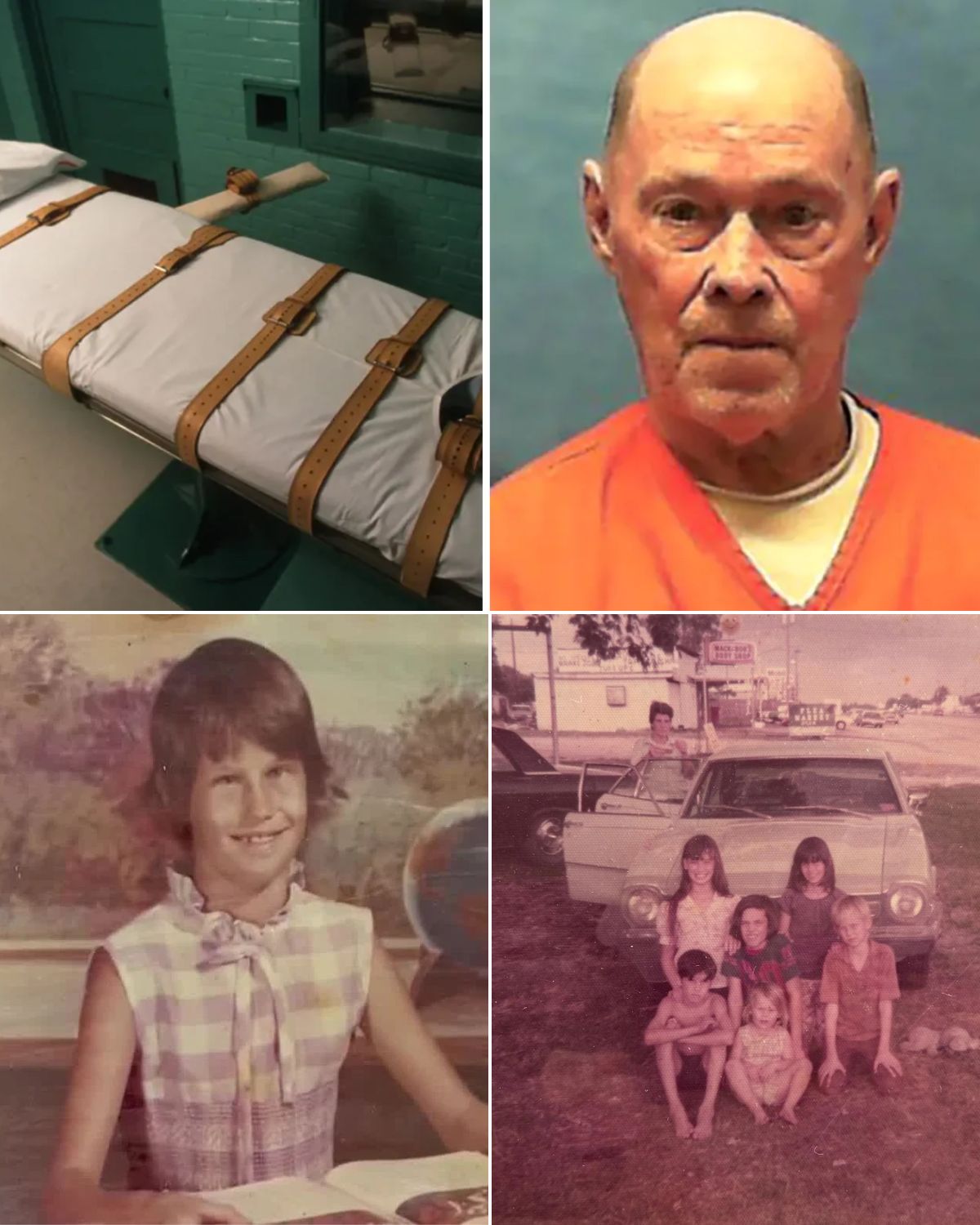
Nearly five decades after the rape and murder of a 13-year-old girl shocked a small Florida community, the man convicted of the crime has been executed.

James Ernest Hitchcock, one of the longest-serving death row inmates in Florida history, was put to death by lethal injection at Florida State Prison on April 30, 2026. He was 70 years old.
His execution brought an end to a legal battle that stretched across half a century, surviving multiple death sentences, repeated appeals, landmark Supreme Court litigation, and generations of grieving family members who waited decades to see the case finally resolved.
For the family of Cynthia Driggers, the execution marked the conclusion of a nightmare that began on a summer day in 1976.
The Murder That Shocked Winter Garden
On July 31, 1976, 20-year-old James Hitchcock attacked 13-year-old Cynthia Driggers inside her family’s home in Winter Garden, Florida.
Driggers was the stepdaughter of Hitchcock’s brother, making the crime one committed against a child he knew personally.
Investigators determined that Hitchcock sexually assaulted the teenager before strangling her to death.

After his arrest, Hitchcock initially confessed to police.
According to court records, he admitted killing the girl after she became frightened and threatened to tell her mother what had happened.
The confession became a central piece of the prosecution’s case.
But by the time the trial began, Hitchcock changed his story.
He claimed that his brother—the victim’s stepfather—was actually responsible for the murder and that he had falsely confessed to protect him. Prosecutors argued that the claim was a desperate attempt to avoid responsibility, and jurors ultimately rejected the defense.
The evidence convinced the jury that Hitchcock alone committed the crime.
He was convicted of first-degree murder and sentenced to death in 1977.
A Death Sentence That Refused to End
What followed was one of the longest and most complicated death penalty cases in modern Florida history.
Over the next several decades, Hitchcock’s sentence repeatedly moved through state and federal courts.
Changes in death penalty law, constitutional challenges, and procedural errors resulted in multiple resentencing hearings.
Remarkably, Hitchcock was sentenced to death four separate times for the same murder.
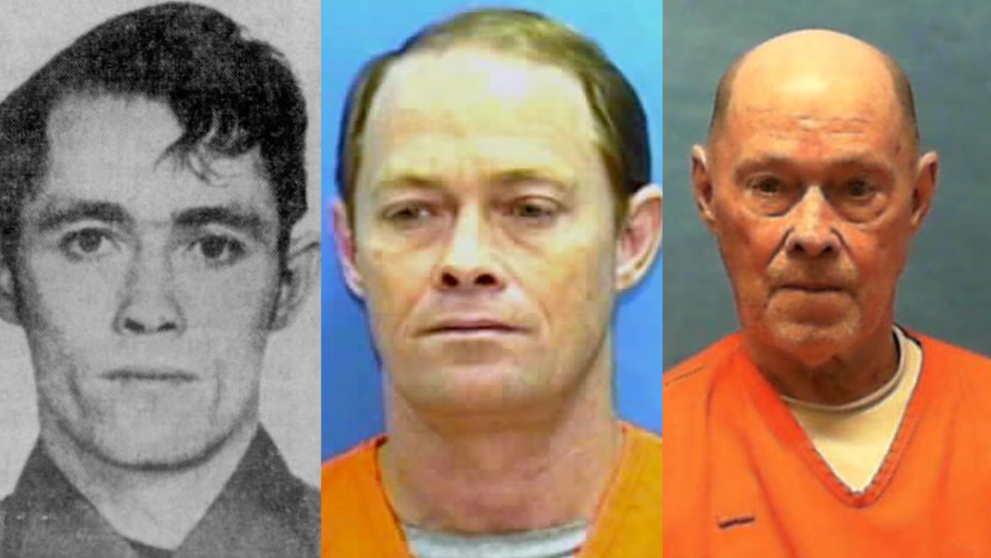
The first sentence came in 1977.
Additional death sentences followed in 1988 and 1993 before a fourth and final sentencing proceeding in 1996 left the punishment intact.
Each new hearing reopened a case that many believed had long been settled.
For prosecutors and the victim’s family, every appeal meant revisiting the details of Cynthia Driggers’ death. For defense attorneys, the process represented the constitutional safeguards built into America’s capital punishment system.
The result was a case that remained active for nearly 50 years.
A Landmark Supreme Court Decision
Hitchcock’s legal battles eventually reached the highest court in the nation.

In 1987, the United States Supreme Court issued its decision in Hitchcock v. Dugger, a case that became an important death penalty precedent.
The Court ruled that juries and sentencing judges must be allowed to consider all mitigating evidence presented by a defendant—not merely those factors specifically listed under state law.
The decision influenced capital sentencing procedures far beyond Florida and became part of the broader national debate over how death penalty cases should be decided.
Although Hitchcock won that legal victory, it did not overturn his conviction.
Instead, it led to further sentencing proceedings that ultimately ended with another death sentence.
Final Appeals and Execution
In the months leading up to his scheduled execution, Hitchcock’s attorneys pursued several final legal challenges.
Among them were requests related to DNA testing and access to public records that they argued could potentially provide new information relevant to the case.
Florida courts rejected those claims.
The U.S. Supreme Court also declined to intervene.
With all avenues of appeal exhausted, Florida officials moved forward with the execution.
On April 30, 2026, Hitchcock was strapped to a gurney inside the execution chamber at Florida State Prison in Raiford.
The lethal injection process began shortly afterward.
At 6:12 p.m., officials pronounced him dead.
The execution was Florida’s sixth of 2026 and part of a broader increase in executions carried out under Governor Ron DeSantis.
A Family’s Wait for Justice
Among those present for the execution were members of Cynthia Driggers’ family.
Many had spent decades attending hearings, monitoring appeals, and reliving the events of 1976 whenever the case returned to court.
For them, the passage of time had never erased the loss.
Family members expressed relief that the legal process had finally come to an end and that the man convicted of raping and killing Cynthia had ultimately been held accountable.
The execution could not restore the life that was taken, nor erase nearly fifty years of grief.
But for those who loved Cynthia Driggers, it represented the final chapter of a case that had shaped multiple generations of their family.
The Legacy of the Hitchcock Case
The story of James Ernest Hitchcock remains significant not only because of the crime itself, but because of the extraordinary length of time between conviction and execution.
His case highlighted the tension at the center of America’s death penalty system.
Supporters argue that extensive appeals are necessary to ensure fairness and prevent wrongful executions.
Critics counter that decades of litigation create uncertainty, prolong suffering for victims’ families, and raise questions about whether justice delayed can ever truly be justice served.
When Hitchcock entered Florida’s death row in the 1970s, Gerald Ford was president, the Vietnam War had recently ended, and many of today’s prosecutors, judges, and attorneys had not yet been born.
By the time his execution was carried out in 2026, nearly fifty years had passed.
The legal fight was over.
But the case of James Ernest Hitchcock will likely remain a lasting example of how America’s death penalty system can extend across generations—long after the crime itself has faded into history.