Two Sides of History: The Rediscovery of Alamo Cannonballs
In the heart of San Antonio, Texas, a centuries-old symbol of courage and tragedy continues to reveal secrets long buried in its walls. The Alamo, a mission-turned-fortress, is globally recognized as the site of the 1836 battle that has become emblematic of the Texas Revolution. For nearly two centuries, historians and archaeologists have pieced together the story of the battle from accounts of the defenders, the Mexican army, and the small yet vital cache of artifacts left behind. But in June 2026, the Alamo revealed a new secret: an intact iron cannonball, fired by Texan forces during the historic siege, was uncovered, marking the second such find in the mission’s northeast corner and providing unprecedented insight into the final clash of the 13-day battle.
Unearthing a Two-Century Secret
Archaeologists had long known that the Alamo’s grounds concealed countless artifacts spanning centuries—from Indigenous stone tools predating the Spanish mission to remnants of its later life as a general store and warehouse. Yet, the discovery of solid cannonballs, spherical projectiles fired from artillery, had eluded researchers until recently.
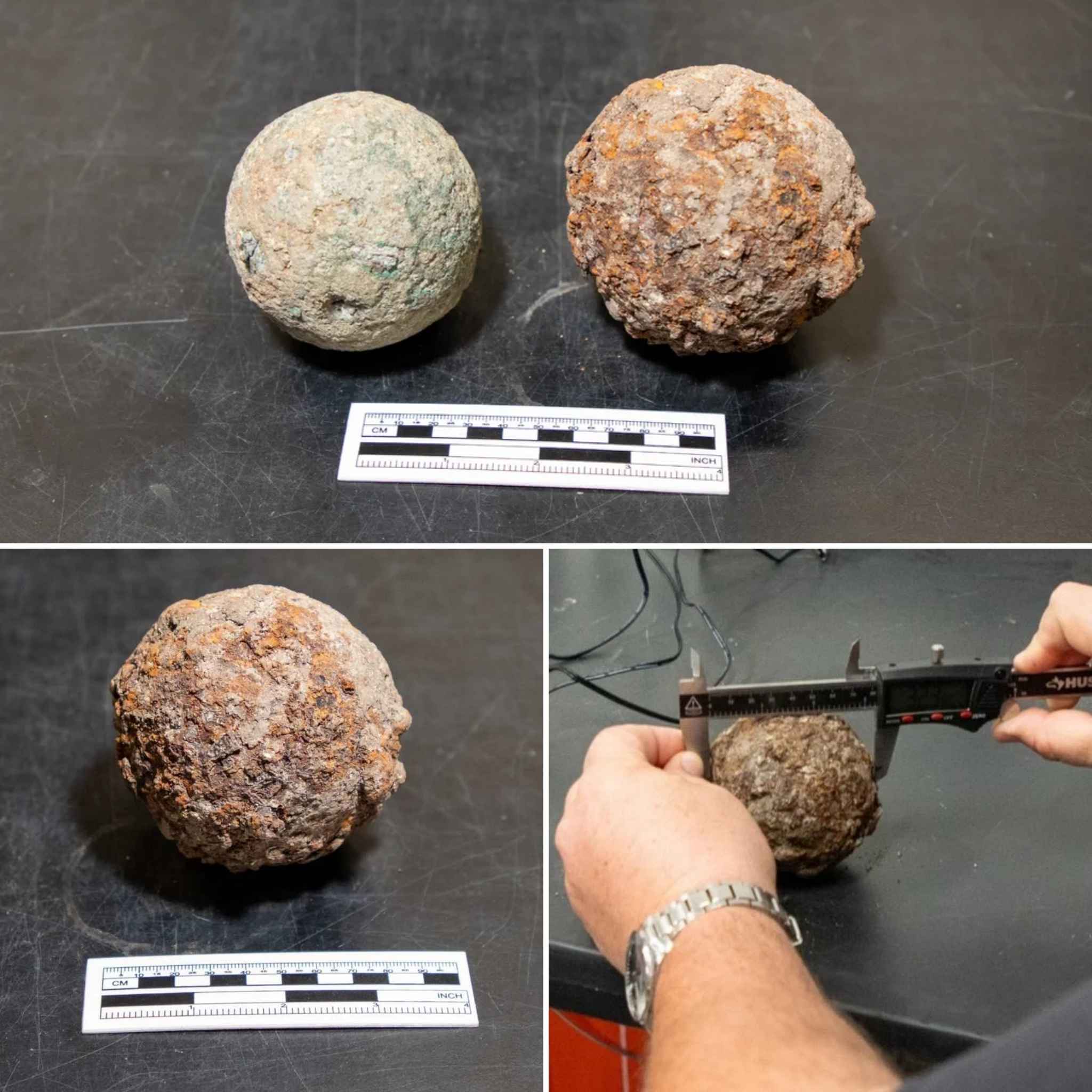
The first cannonball, a bronze sphere discovered in March 2026, was identified as a likely projectile from the Mexican army. Just months later, the second, an iron cannonball, was unearthed on June 2. Kolby Lanham, a senior researcher and historian at the Alamo, explained the significance:
“The newest one is slightly larger and was likely fired from a cannon that shot 6-pound (2.7-kilogram) cannonballs. The likelihood is that the bronze one belonged to the Mexican Army and the iron one belonged to the Texans.”
Together, these artifacts represent the first solid shots ever recovered from the historic battle, a tangible connection to a conflict that claimed the lives of 180 Texan defenders, including legendary figures such as Davy Crockett and William B. Travis. Tiffany Lindley, director of archaeology at the Alamo, described the moment as “a huge deal,” emphasizing the rare nature of the finds.
A Clash Etched in Stone
The Battle of the Alamo began in late February 1836, when Mexican forces under General Antonio López de Santa Anna laid siege to the mission, which had been converted into a fortress by a small group of Texan defenders. For 13 days, the defenders held their ground, repelling assaults and sustaining hope against overwhelming odds.
March 6 marked the tragic climax: Mexican troops stormed the Alamo, killing nearly every defender. The cry “Remember the Alamo!” would later serve as a rallying call for Texan forces fighting for independence.
The northeast corner of the church, where the cannonballs were discovered, bore witness to this historic exchange of fire. Archaeologists found the two cannonballs near each other, likely representing the direct confrontation between the Mexican and Texan forces. Their survival for nearly two centuries, undisturbed in the same spot where they were dropped, provides an extraordinary snapshot of the battle in physical form.
The Science of Archaeology Meets History
Excavation at the Alamo is meticulous work. Over the years, the site has yielded countless fragments of history—ceramics, musket balls, architectural remnants, and even Indigenous tools predating European settlement. The discovery of these cannonballs, however, is unprecedented.
The iron cannonball was measured carefully with calipers in the lab, confirming its weight and size as consistent with the cannons used by Texan forces. Unlike shrapnel or fragmentary musket balls, solid shots like these were designed to penetrate fortifications and cause maximum destruction. “Whenever they were dropped the very first time—possibly in 1836—they haven’t been touched since, and that makes them extra special,” Lindley explained.
These artifacts are not only evidence of military strategy but also a direct physical link to the people who fought, bled, and died during those critical days of the Texas Revolution. By comparing the bronze and iron cannonballs, historians can now better understand the dynamics of the siege, including the relative positions of Texan defenders and Mexican attackers.
Life Inside the Alamo Before the Siege

The Alamo’s history extends far beyond the 1836 battle. Originally built in 1718 as a Spanish mission, the structure served as a religious, military, and community hub. Over time, the mission transformed into a fortress, then a military garrison, and later a general store and storage facility.
Artifacts recovered from the Alamo reflect these layered histories. Indigenous stone tools indicate long-standing occupation of the region before Spanish colonization, while 19th-century remnants illustrate the adaptive reuse of the structure. Every discovery, from fragments of pottery to gunpowder residue, helps archaeologists reconstruct daily life in a frontier outpost and the intensity of the siege itself.
The new cannonball discoveries fit seamlessly into this ongoing narrative. Unlike previously unearthed debris, solid artillery rounds provide direct evidence of combat tactics, artillery capabilities, and the placement of defenders.
Texans and Mexicans in Metal and Fire
Understanding the significance of these cannonballs requires a brief look at 19th-century military technology. Cannons were among the most effective weapons of the period, capable of firing solid shots at high velocities over significant distances. Bronze cannons, typically used by the Mexican army, were durable and fired hollow or solid projectiles depending on the intended effect. Iron cannons, on the other hand, were employed by Texan forces and fired solid shot, often aimed at fortification walls or enemy artillery positions.
The discovery of both types of cannonballs in proximity provides a rare point of comparison. Not only can archaeologists confirm the types of weapons used, but they can also reconstruct the trajectory and likely points of impact, offering insight into the battle strategies employed by both sides.
A Window into the Past for Students and Scholars
The Alamo remains an active archaeological site, attracting both scholars and the public. These recent finds have sparked renewed interest in the site, with researchers emphasizing the importance of hands-on investigation alongside archival research.
For students of history, the cannonballs provide a tangible connection to the past. Unlike textual accounts, which may be biased or incomplete, these artifacts represent unmediated evidence of human action. They allow modern observers to witness, in a literal sense, the force and proximity of historical events.
Tiffany Lindley emphasized this point:
“These cannonballs haven’t been touched since they were fired. They connect us to a moment in history in a way that no text ever could.”
Contextualizing the Siege
The Alamo siege is often taught as a story of heroism and martyrdom, but the reality was complex. The Texan defenders were vastly outnumbered, and while their sacrifice galvanized the independence movement, it also reflected the harsh realities of frontier warfare. Archaeological finds, like the cannonballs, underscore the intensity of the combat and the strategic importance of artillery.
By examining these artifacts, researchers can study the physics of 19th-century combat, including the range, impact, and effectiveness of artillery used in urban and semi-urban environments. The positioning of the cannonballs within the northeast corner provides clues about the defensive measures employed by the Texan forces and the likely angles of Mexican attacks.
Preserving History for the Future
The Alamo Trust and associated archaeologists are now working to ensure that these cannonballs, along with other artifacts, are carefully preserved and documented for both research and public education. Plans include detailed cataloging, conservation of the metal surfaces, and integration into interactive exhibits that allow visitors to understand the material and historical context of the siege.
These discoveries also highlight the need for continued protection of archaeological sites. Even centuries after their creation, such artifacts remain vulnerable to natural decay, urban development, and looting. At the Alamo, careful excavation and preservation ensure that the story of the battle remains accessible for future generations.
Conclusion: A Tangible Link to Courage
The Alamo’s cannonballs are more than mere metal spheres—they are enduring symbols of human courage, ingenuity, and resilience. Found nearly two centuries after they were fired, they provide a direct, material connection to the defenders who stood against overwhelming odds.
By studying these artifacts, historians, archaeologists, and visitors alike can reimagine the battle in its full intensity. They remind us that history is not only written in books but also embedded in the earth, preserved in iron, bronze, and stone. The Alamo continues to speak, and for those who listen closely, these cannonballs offer a rare and intimate glimpse into one of the defining moments of Texan and American history.
“They haven’t been touched since 1836,” Lindley said. “And in that, there’s a story—a moment frozen in time.”