Archaeologists working beneath the floor of the Church of the Holy Sepulchre — a site long venerated in Christian tradition as encompassing both Golgotha (the place of crucifixion) and the tomb where Jesus was buried — have uncovered botanical remains indicating that olive trees and grapevines grew there around 2,000 years ago, consistent with the Gospel of John’s description of a garden near the place of crucifixion and burial (John 19:41).
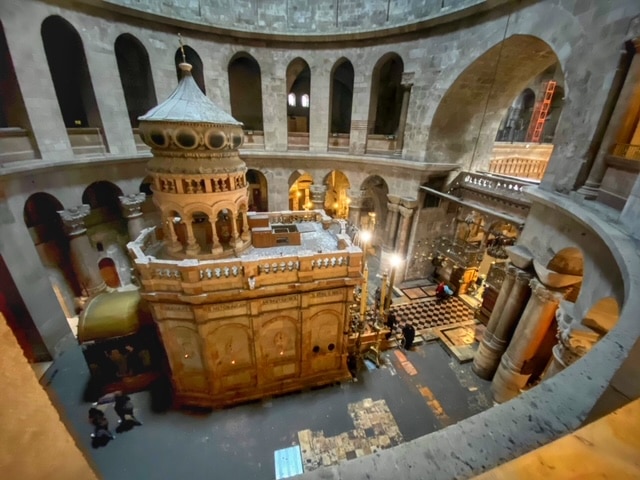
The excavations, led by Professor Francesca Romana Stasolla of Sapienza University of Rome and begun in 2022 as part of a major restoration project, have also revealed stratified archaeological layers beneath the basilica that include Iron Age soil, pottery, oil lamps, and traces of ancient agricultural use, showing how the area changed from a quarry to cultivated land and later to burial grounds.
While these physical findings provide strong contextual support for the geographical and environmental details described in the Gospel — such as the presence of a garden outside the city walls where burial could take place — archaeologists caution that they do not constitute scientific proof of the specific events of the crucifixion or burial. Radiocarbon dating of the plant remains and further analyses are still underway to refine the chronology.

The discoveries deepen understanding of Jerusalem’s landscape around the first century CE and support the longstanding tradition that early Christians associated this location with the narratives of Jesus’ death and burial. They also illustrate the complex history of the site, which has been continuously modified over centuries, from ancient quarry to early church under Constantine in the fourth century, and later medieval reconstructions.
In summary, while the archaeological evidence beneath the Church of the Holy Sepulchre supports certain details found in the biblical text and enriches historical context, it does not by itself provide definitive empirical proof of the miraculous events described in the New Testament; instead, it offers material insight into the environment and human activity at one of Christianity’s most important pilgrimage sites.


