This Ancient Discovery is a NIGHTMARE for Atheists — And It Could Change History
For centuries, skeptics have questioned the historical veracity of the Bible, dismissing its narratives as myth or legend. Yet, hidden deep in the ruins of ancient Mesopotamia, stone and clay preserve secrets that force even the most skeptical historian to reconsider. Among the most remarkable of these discoveries are the Lachish reliefs, carved over 2,700 years ago in the palace of Sennacherib, the Assyrian king whose empire once stretched across the Near East. These exquisite reliefs depict a momentous military campaign that resonates eerily with accounts recorded in the Hebrew Bible. The precision of the artwork, the alignment with archaeological evidence, and the subtle narrative nuances all point toward a convergence of history and scripture that few scholars expected.
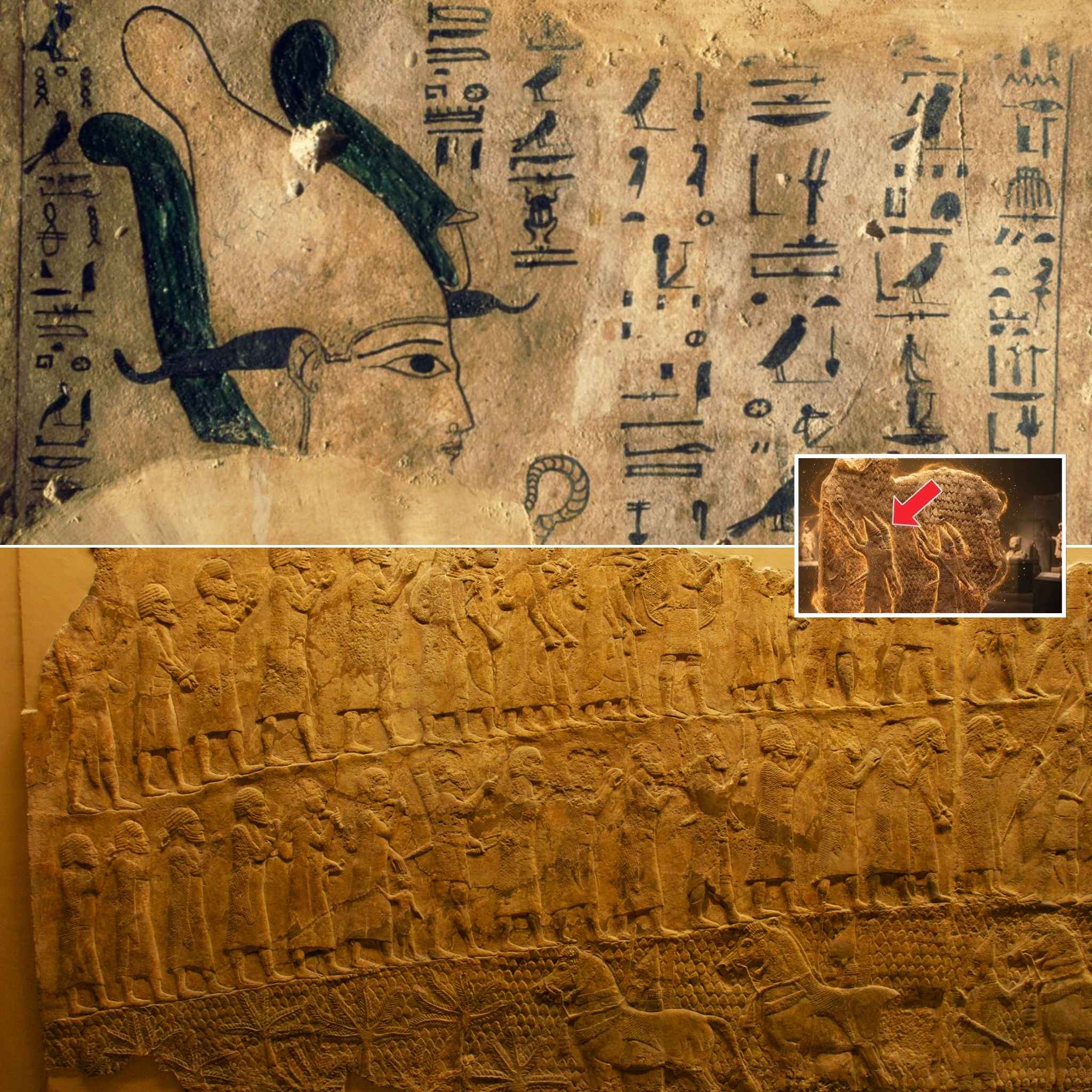
The Discovery of the Lachish Reliefs
The Lachish reliefs were uncovered in the mid-19th century during excavations of Nineveh, Sennacherib’s capital city in modern-day northern Iraq. Scholars immediately noted their extraordinary craftsmanship: scenes of soldiers, siege ramps, prisoners, and the final destruction of a city meticulously etched into limestone panels. At first, the reliefs were simply admired as examples of Assyrian imperial art, celebrated for their intricate depictions of military conquest. But over time, historians and archaeologists realized something far more significant. These panels didn’t merely glorify Assyria; they also documented events recorded elsewhere, including the Hebrew Bible.
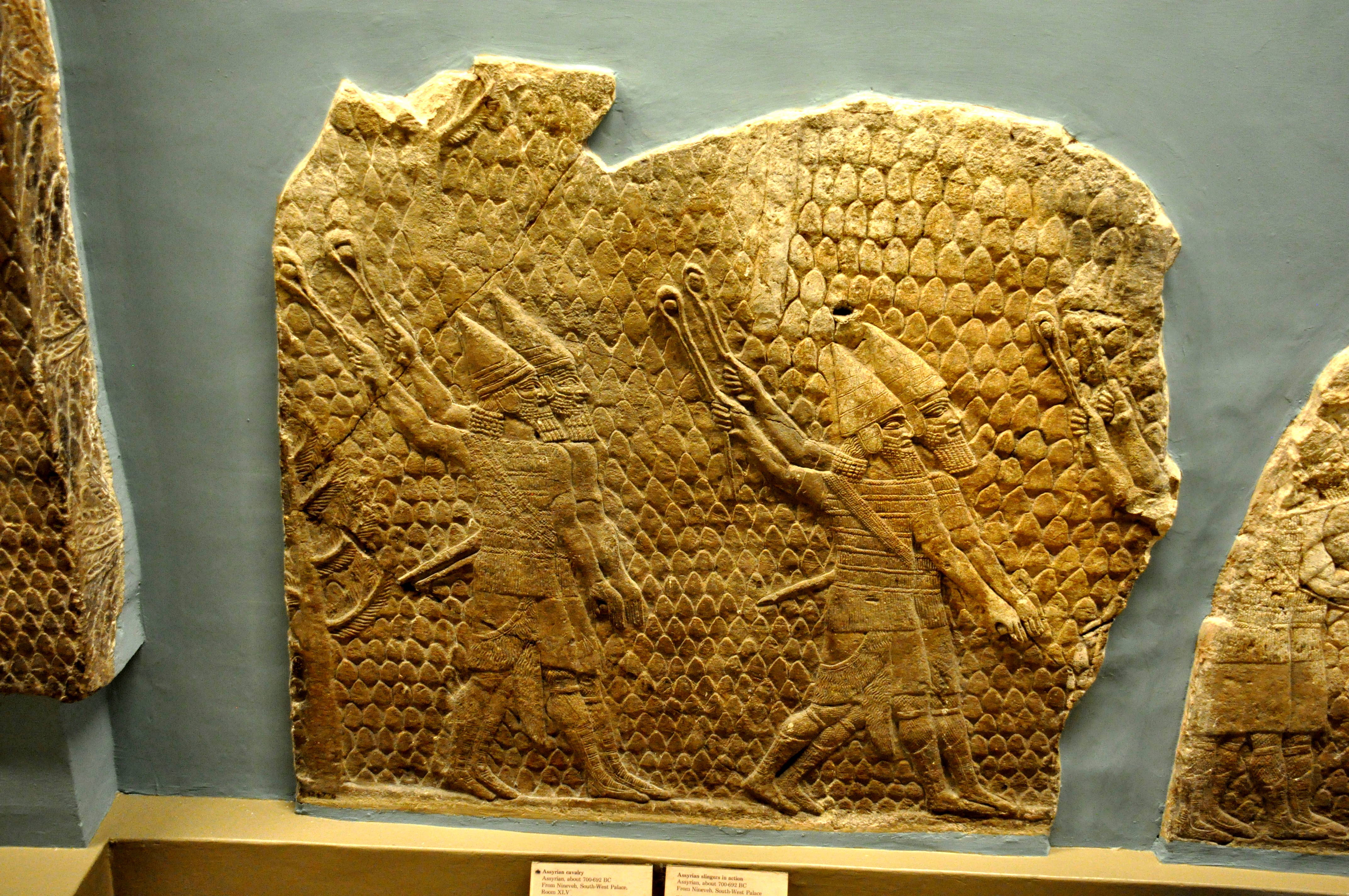
The scenes depict the siege of Lachish in precise, almost cinematic detail. Archers line the walls, soldiers scale ramps, and captives are led away. Every element mirrors biblical accounts, where Lachish is described as falling to the Assyrian army while Jerusalem, by contrast, miraculously survives. This juxtaposition between the reliefs and scripture is both striking and unnerving.
Archaeology Confirms the Reliefs’ Accuracy
Over the decades, archaeological excavations at Lachish itself have corroborated the scenes depicted in the reliefs. Layers of ash and debris indicate a catastrophic siege, while arrowheads, weapon fragments, and remnants of siege ramps align with the depictions in Nineveh. The reliefs are not allegorical or symbolic—they are accurate military records, offering a rare window into the strategic, technical, and human dimensions of ancient warfare.
According to Tiffany Lindley, director of archaeology at the Alamo Trust (whose own experience with battlefield archaeology has shown her the value of physical evidence), “Seeing the reliefs in conjunction with excavated layers at Lachish is like watching history unfold before your eyes. You can almost trace the path of the ramp, the placement of the archers, the panic in the city streets. It’s breathtaking.”
Sennacherib’s Boast—and the Biblical Twist
One of the most fascinating aspects of the reliefs is what they don’t say. Sennacherib’s inscriptions are notoriously self-aggrandizing. He boasts of his conquests, the cities he destroyed, the kings he subdued. Yet, conspicuously absent is any claim of capturing Jerusalem. The Bible notes this omission, narrating that Jerusalem remained unconquered while Lachish fell. This convergence of independent accounts—Assyrian reliefs, royal inscriptions, and biblical text—demonstrates a historical precision rarely seen in ancient sources. It also undermines claims that biblical writers invented or exaggerated these events.
The implication is profound. While the Bible is not necessarily infallible in every detail, these artifacts confirm that certain narratives—events that skeptics have long questioned—align with external evidence. Lachish was real, its siege was catastrophic, and the Assyrian army was meticulously documented by the victors themselves.
The Science Behind the Evidence
Modern archaeology has gone further. Excavations in Lachish have uncovered entire layers of the city dating to 701 BCE, the approximate date of Sennacherib’s campaign. Carbon dating, stratigraphy, and artifact analysis confirm that the destruction aligns perfectly with the Assyrian account. Arrowheads and sling stones, distributed in the same pattern depicted in the reliefs, suggest methodical siege tactics. Burn layers testify to widespread fire and looting. Even the placement of gates, walls, and defensive towers matches the reliefs.
The Lachish reliefs also reveal nuances of Assyrian warfare: the use of specialized siege engines, division of labor among soldiers, and even the psychological strategy of terror, as captives are paraded and decapitated figures displayed. These details were previously unknown and now provide historians with an unparalleled insight into Near Eastern military practice.
The Biblical Implications
The biblical Book of Kings and Chronicles describe the siege of Lachish and the miraculous survival of Jerusalem under King Hezekiah. While skeptics have argued that these narratives were mythologized, the material evidence challenges that stance. Not only did Lachish fall, but the absence of Jerusalem in Sennacherib’s inscriptions provides external validation that the biblical account—at least in this instance—is historically accurate.
For scholars of theology, this raises intriguing questions. How many other narratives, dismissed as legend, might be corroborated by archaeological evidence? The Lachish reliefs demonstrate that biblical texts sometimes preserve real history, recorded contemporaneously or in near-contemporaneous oral tradition. They also highlight the limitations of interpreting ancient texts without considering material evidence.
Beyond Lachish: The Broader Historical Context
The siege of Lachish occurred during a tumultuous period in the Near East. Assyria, under Sennacherib, was expanding aggressively, asserting dominance over the Levant. Smaller kingdoms, including Judah, faced overwhelming military pressure. The reliefs, therefore, are not merely artistic achievements—they are political propaganda, intended to demonstrate Assyria’s power to both its citizens and its adversaries.
Yet, they are remarkably detailed, blending propaganda with factual accuracy. The accuracy of these depictions suggests that Assyrian scribes and artists had access to precise intelligence, possibly through scouts, captives, or direct observation. The reliefs were designed to impress, intimidate, and preserve a record of conquest—ironically providing modern historians with the most reliable source of information about the event.
The Archaeology of Memory
Lachish was not the only city affected by Sennacherib’s campaigns, but it is one of the best documented. Excavations have uncovered arrowheads, sling stones, and remnants of burnt houses, as well as public inscriptions praising the Assyrian king. These artifacts create a composite narrative when combined with the Nineveh reliefs: a story of conquest, resistance, and survival.
The careful preservation of both the physical city and the Nineveh reliefs allows scholars to study not just the events themselves, but the ways in which history was recorded and remembered. These artifacts represent the intersection of archaeology, historiography, and theology.
Cultural Significance and Modern Implications
The Lachish reliefs are more than ancient propaganda—they are windows into human behavior, political strategy, and historical memory. They remind us that even in antiquity, truth could coexist with narrative embellishment. They also challenge modern assumptions about skepticism, historiography, and the relationship between archaeology and textual tradition.
By aligning physical evidence with written accounts, the reliefs force a re-evaluation of what “history” really is. In a world where skepticism often dominates public discourse, the Lachish reliefs demonstrate that independent corroboration across millennia is possible, and that even events recorded in religious texts can have a basis in reality.

Lessons for Today
The discovery of the Lachish reliefs, combined with archaeological confirmation at the site, serves as a cautionary tale against outright dismissal of ancient texts. While skepticism is vital in historical inquiry, it must be tempered with a willingness to integrate evidence across disciplines. Archaeology, textual analysis, and scientific techniques such as radiocarbon dating and material analysis all converge to offer a more nuanced picture of the past.
For the public, these finds illuminate a world where politics, war, and faith intersected in complex ways. The siege of Lachish was not merely an event of ancient history; it was a narrative of survival, resilience, and the human cost of empire-building.
Conclusion
The Lachish reliefs and their corresponding archaeological evidence provide a rare case where independent sources—ancient inscriptions, artistic depictions, and modern digs—converge to tell a cohesive story. These findings confirm aspects of the biblical narrative, challenge assumptions about myth and history, and reveal the incredible detail with which ancient civilizations recorded their world.
In the end, the story of Lachish is a testament to the enduring power of evidence to speak across millennia. It reminds us that history is written not only in texts but in stone, soil, and memory—and that even skeptics must reckon with the material traces left by those who came before us.