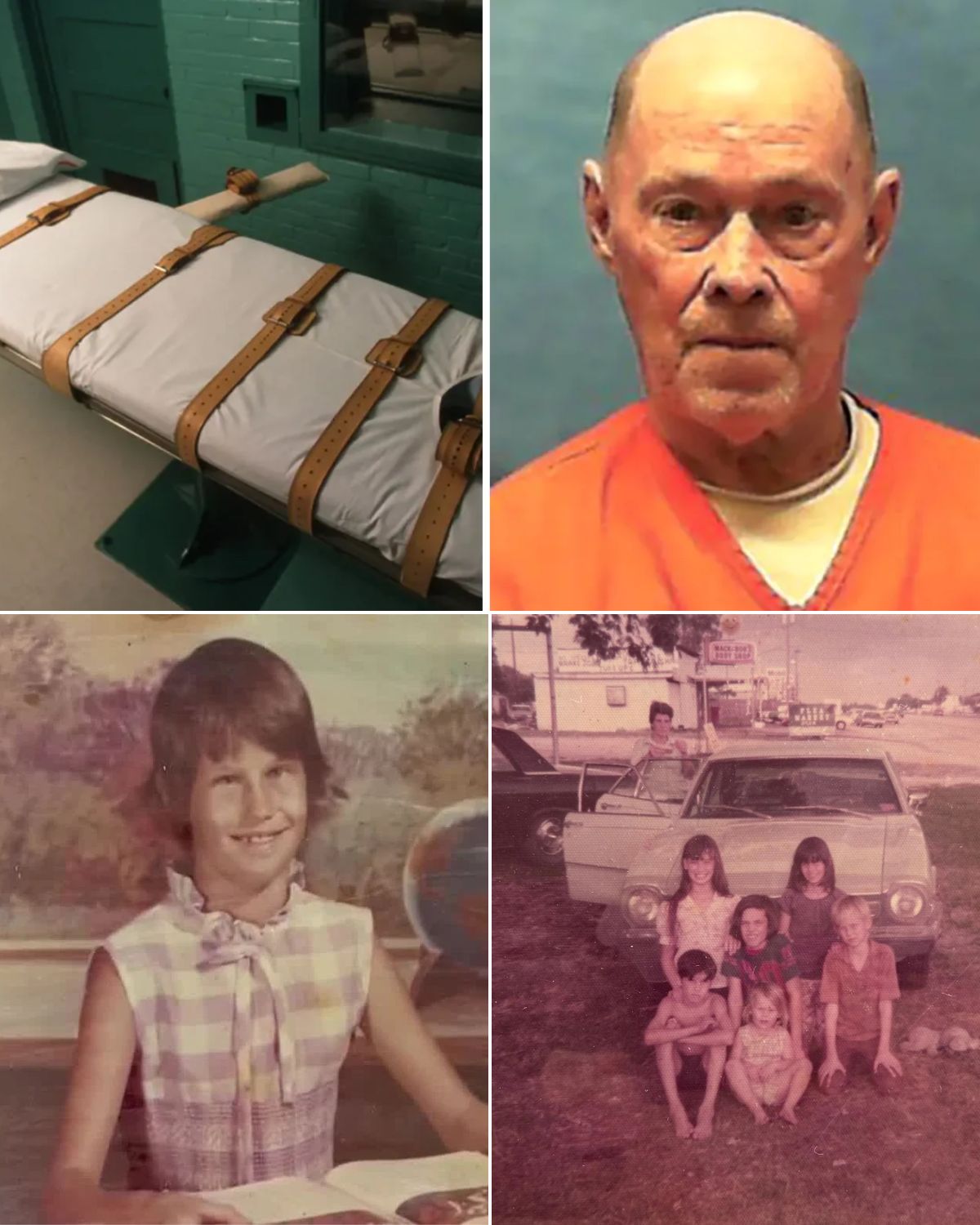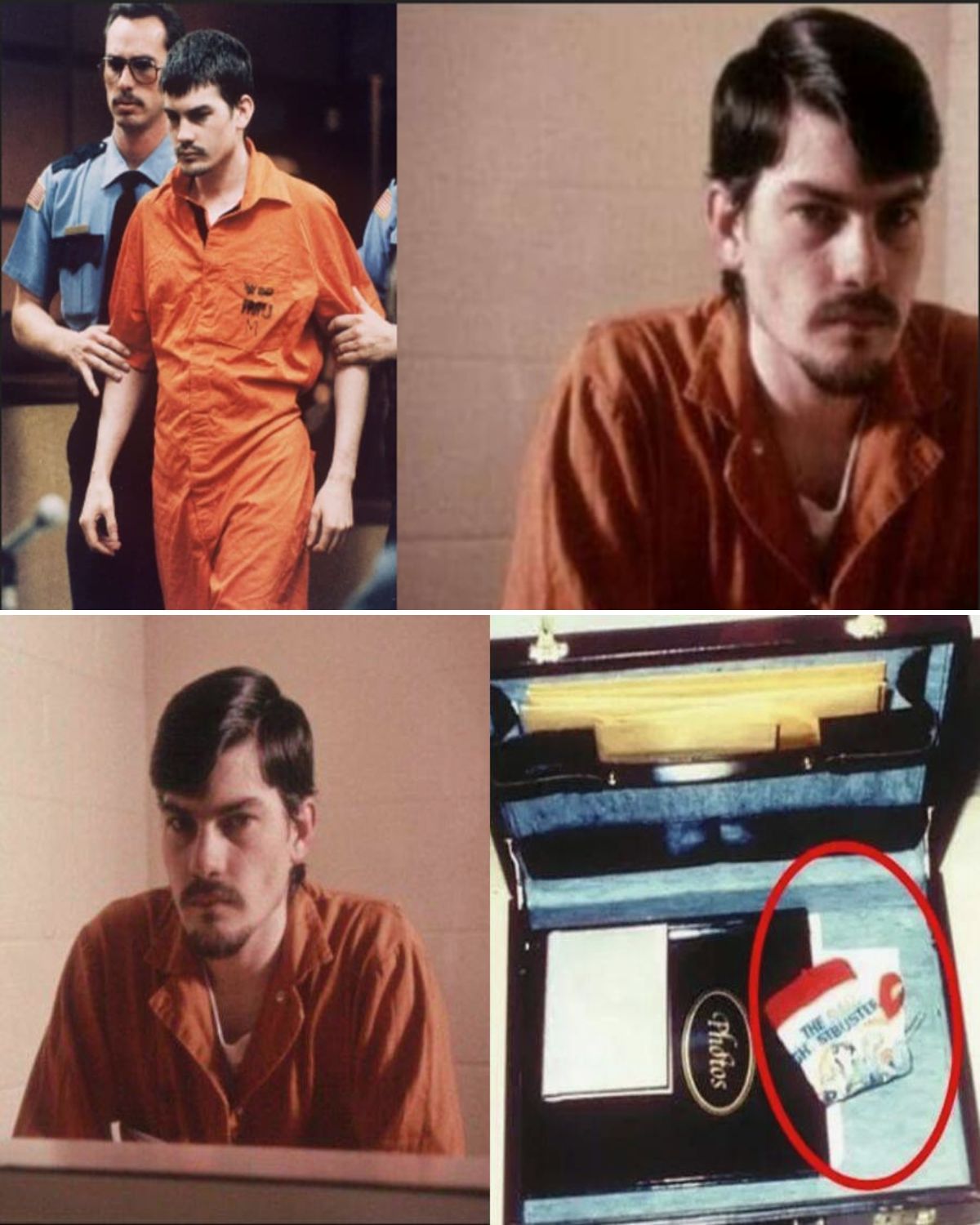
In the early hours of January 5, 1993, convicted child killer Westley Allan Dodd walked calmly toward a fate that few Americans had witnessed in modern times.
Minutes later, a trapdoor opened beneath his feet.
The execution ended one of the nation’s most disturbing serial murder cases and marked the first legal hanging carried out in the United States since 1965.
Unlike many condemned inmates who spend their final days fighting for a reprieve, Dodd spent his last hours doing the opposite. He rejected appeals, demanded that his sentence be carried out, and repeatedly insisted that execution was the only way to stop him from harming children again.
For prison officials, the case was unlike any they had ever handled.
For the families of his victims, it marked the end of a nightmare that had haunted them for years.
A Killer Who Admitted Everything
Westley Allan Dodd became one of the most feared child predators in the Pacific Northwest after confessing to a series of crimes against young boys.
His final victim was four-year-old Lee Iseli of Vancouver, Washington.
In September 1989, Dodd abducted the child from a school playground, sexually assaulted him, and murdered him.

The crime triggered an intensive manhunt that quickly unraveled Dodd’s past.
After his arrest, Dodd not only confessed to killing Lee Iseli but also admitted responsibility for the murders of two brothers, Cole and William Neer, ages 10 and 11, whom he had killed earlier that same year.
Investigators would later describe his confessions as chillingly detailed.
Dodd openly acknowledged that he posed an ongoing danger to children and repeatedly stated that he would offend again if given the opportunity.
Rejecting Every Chance to Live
Most death penalty cases are defined by decades of appeals and legal battles.
Dodd’s case was different.
From the beginning, he opposed efforts to save his life.

He instructed attorneys not to pursue challenges that could delay his execution and repeatedly told courts that he wanted the sentence carried out as quickly as possible.
His position created an unusual legal dilemma.
Death penalty opponents and civil liberties organizations attempted to challenge Washington’s use of hanging, arguing that it constituted cruel and unusual punishment.
Yet the inmate himself opposed those efforts.
Hours before the scheduled execution, the Washington Supreme Court rejected final attempts to halt the hanging, leaving no legal barriers in place.
For perhaps the first time in a modern American capital case, the condemned man and the state were in complete agreement about the outcome.
Preparing the Gallows
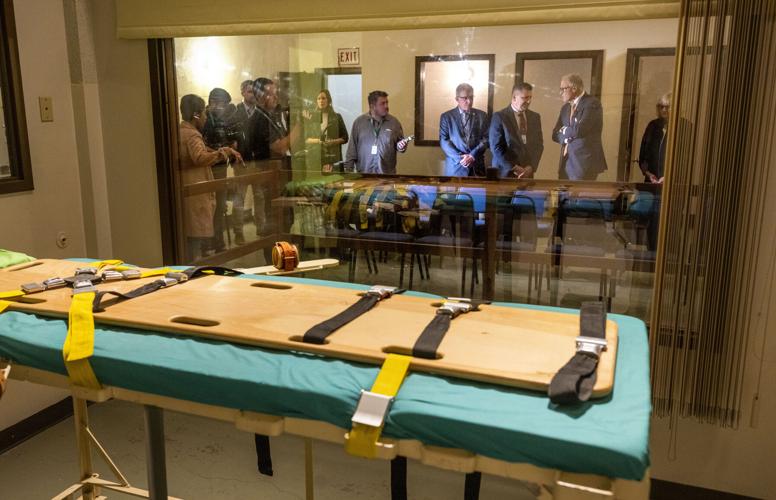
Inside Washington State Penitentiary, prison officials spent weeks preparing for an execution method that had not been used in the United States for nearly three decades.
The gallows had to be carefully assembled and tested.
Officials relied on historical execution procedures and technical guidelines designed to ensure a rapid death through cervical fracture rather than prolonged strangulation.
Dodd was weighed shortly before the execution.
The measurement was used to calculate the precise drop length required to maximize the likelihood of an instantaneous neck break.
Every detail was scrutinized.
For many correctional officers involved, it would be the only hanging they would ever witness.
A Nation Watches
As midnight approached, intense media attention surrounded the prison.
Television crews gathered outside the facility alongside demonstrators from both sides of the death penalty debate.
Supporters of capital punishment argued that Dodd’s crimes represented one of the clearest justifications for the death penalty.
Opponents maintained that no execution, regardless of the crime, should be carried out by hanging.
The atmosphere outside the prison grew increasingly emotional as the scheduled time approached.
Inside, however, witnesses described a remarkably calm inmate.
Dodd reportedly spent much of his final day reading and speaking quietly with prison staff and spiritual advisers.
There were no dramatic last-minute legal filings.
No emergency court rulings.
No frantic race against the clock.
The execution proceeded exactly as scheduled.
The Last Meal
Before his execution, Dodd selected a final meal from the prison menu.
His request included salmon, scalloped potatoes, mixed vegetables, coleslaw, and lemon cake.
It was a simple meal preceding one of the most unusual executions in modern American history.
Final Words
Shortly after midnight, Dodd was escorted into the execution chamber.
Witnesses watched as he stood on the gallows platform beneath the noose.
Before a black hood was lowered over his head, Dodd delivered a brief final statement centered on religion, accountability, and his belief that offenders like himself posed a continuing threat.
“I was once asked if there was any way sex offenders could be stopped. I said no. I was wrong. I had peace when I found Jesus Christ. I have peace now.”
Moments later, prison officials completed the final preparations.
At 12:04 a.m., the trapdoor opened.
America’s First Hanging Since 1965
Dodd dropped approximately seven feet through the opening beneath the scaffold.
According to the coroner’s findings, the fall caused catastrophic neck injuries that rendered him unconscious almost immediately.
Five minutes later, at 12:09 a.m., he was pronounced dead.
The execution ended the life of a man whose crimes had horrified the nation and devastated multiple families.
It also marked a historical milestone.
No American prisoner had been legally executed by hanging since 1965.
For many observers, the execution represented a collision between two eras of criminal justice: the modern death penalty system and one of the oldest execution methods in American history.
A Legacy of Horror
More than three decades later, the name Westley Allan Dodd remains synonymous with some of the most disturbing child murders in Washington State history.
His case continues to be studied by criminologists, psychologists, and legal scholars because of one extraordinary fact:
Unlike nearly every other death row inmate in modern America, Dodd never asked for mercy.
Instead, he spent his final days insisting that the sentence be carried out.
And on a cold January morning in 1993, the State of Washington did exactly that.