Rare Pre-Hispanic Structure and Symbolic Monolith Unearthed in Veracruz
In a groundbreaking archaeological discovery along the Gulf Coast of Mexico, researchers from Mexico’s National Institute of Anthropology and History (INAH) have uncovered the remains of a pre-Hispanic ceremonial complex and an associated monolithic stone sculpture in Coatepec, Veracruz. Dating to the Early Classic period (AD 200–600), this find provides unprecedented insights into local cultural practices over 1,400 years ago. The site, part of the San Lucas residential development, reveals architectural and ritualistic features previously undocumented in central Veracruz, expanding our understanding of Mesoamerican societies beyond the well-studied Totonac civilization.
Rediscovering a Lost Ceremonial Platform
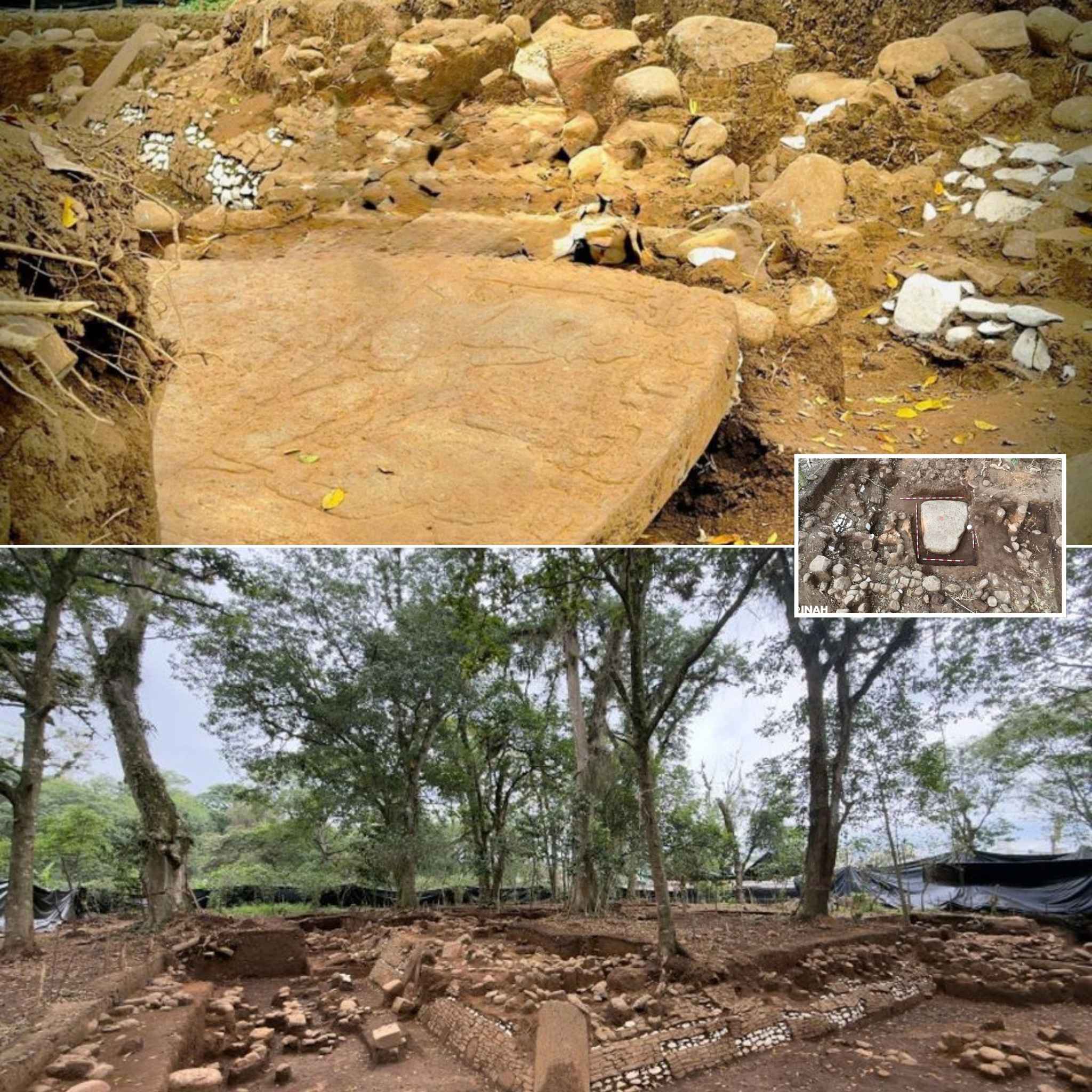
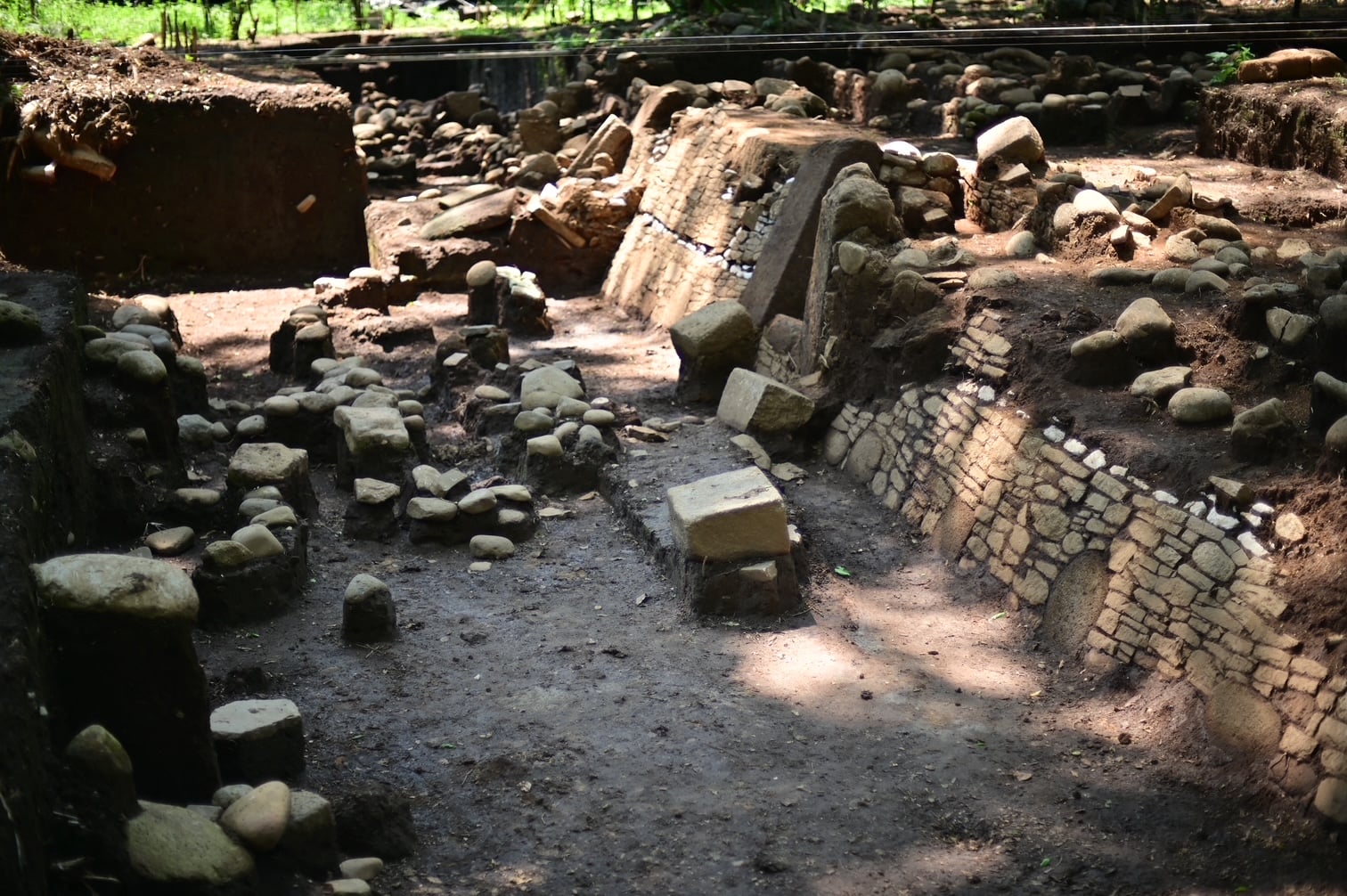
The centerpiece of the excavation is a rectangular platform measuring approximately 30 meters (98 feet) long and 12 meters (39 feet) wide. Built using flagstones and white limestone, the structure exhibits a plaster-like finish that may have been treated with an induced firing process to enhance its durability and appearance. The walls feature geometric motifs—squares engraved with precision, alongside circular stones embedded along two sides—an architectural style not previously observed in Veracruz. These elements suggest that the builders adhered to a distinct local design tradition, blending aesthetic sophistication with practical construction techniques.
Archaeologists emphasize that such monumental platforms were not purely utilitarian. They served as ceremonial spaces for elite gatherings, religious rites, and possibly astronomical observances. The combination of architectural precision and ornamental features indicates that the site was ritually and politically significant, likely representing a local ruling elite who maintained both religious authority and social influence.
A Monolithic Story Carved in Stone
Adjacent to the platform, the excavation team discovered a monolithic stela standing 1.88 meters (6.1 feet) tall, carved in remarkable detail. The stone depicts a ceremonial scene: two seated elite figures, elaborately attired, receive a sacred fluid from a higher divine entity. Scholars interpret this as a symbolic depiction of a ritual transfer of spiritual power, emphasizing the connection between the divine and terrestrial elites.
One figure displays Maya-like features, including distinctive headdresses and facial proportions, suggesting either direct contact with Maya populations or stylistic influence from distant Mesoamerican regions. This visual evidence indicates cultural exchange and interaction, demonstrating that Veracruz was not an isolated region but part of a broader network of Early Classic civilizations.
Preliminary sketches of the stela reveal intricate detailing, from ceremonial garments to the divine emblem above, underscoring the artistic sophistication of the era. Conservation efforts are already underway to stabilize and restore the stela, protecting its carvings from environmental deterioration.
Ritual Offerings Illuminate Religious Life
Alongside the architectural structures, archaeologists uncovered a range of ceremonial offerings: buried pottery, charred maize, and a broken greenstone bead. Each artifact provides tangible evidence of the religious practices of this Early Classic culture, offering glimpses into ritual behavior, dietary practices, and symbolic material culture.
The presence of charred maize suggests fire-related ceremonies, while the greenstone bead—a material often associated with elite or sacred status—indicates the ritual importance of the offerings. The careful placement of these objects within the ceremonial context demonstrates that the platform and stela were not solely decorative; they were the focus of complex spiritual activity.
A Culture Beyond the Totonac
While central Veracruz is commonly linked to the Totonac civilization, INAH researchers have found no direct evidence connecting this site to Totonac culture. Instead, the San Lucas complex appears to belong to a distinct local population with unique architectural and artistic traditions, though influenced by broader Gulf Coast cultural patterns. This discovery challenges assumptions that regional ceremonial practices were homogenous, revealing a diverse cultural landscape in Early Classic Veracruz.
The site’s private land ownership and its recent development pressures underscore the fragility of Mexico’s archaeological heritage. Archaeologists were called in following plans to transform the area into residential housing, demonstrating how modern expansion continues to intersect with ancient cultural sites.
Fieldwork, Conservation, and Future Research
The excavation, initiated in late 2025, is expected to continue through August 2026, with full analysis of the recovered materials projected for early 2027. Researchers from the INAH Veracruz Centre, led by Alberto Vázquez Domínguez and Lino Espinoza García, are employing interdisciplinary approaches, combining archaeology, material analysis, and architectural reconstruction.
Conservation measures include stabilizing the monolithic stela, restoring portions of the ceremonial platform, and cataloging artifacts for future study. The goal is not only to preserve the material heritage but also to reconstruct the ceremonial functions of the site, shedding light on ritual hierarchy, social organization, and interregional connections.
A Glimpse into Early Classic Society
This discovery is emblematic of how archaeological research can transform our understanding of ancient societies. The combination of monumental architecture, symbolic sculpture, and ritual offerings suggests a complex society capable of sophisticated engineering, artistry, and religious expression.
The San Lucas complex provides evidence of elite leadership, spiritual authority, and regional interactions, highlighting Veracruz as a vibrant hub in Early Classic Mesoamerica. Moreover, the Maya-influenced stela emphasizes the interconnectedness of ancient cultures, suggesting that ceremonial and artistic traditions traveled across considerable distances through trade, migration, or diplomacy.
National Significance and Cultural Heritage
Mexico’s Secretary of Culture, Claudia Curiel de Icaza, highlighted the importance of such discoveries:
“Every structure, object and symbol that emerges from archaeological research reminds us that Mexico possesses one of the deepest and most diverse cultural heritages in the world. This discovery provides new knowledge about our past and reaffirms the importance of protecting heritage as a common good.”
Indeed, the site illustrates the continuity and richness of pre-Hispanic civilizations, offering invaluable material for scholars, students, and the public alike.

Looking Ahead: Unlocking Veracruz’s Hidden Past
The San Lucas excavations are part of a broader research initiative around the nearby Campo Viejo site, aimed at mapping Early Classic settlement patterns and ceremonial centers along the Gulf Coast. Future work may uncover additional platforms, stelae, or artifact assemblages, potentially rewriting our understanding of social organization, regional influence, and religious life in ancient Veracruz.
As modern urban expansion presses against these ancient landscapes, the project underscores the urgent need for cultural heritage preservation. Each discovery not only enriches our understanding of the past but also reminds us that hidden histories remain beneath our feet, waiting to reveal themselves to patient and careful study.