A Stone from 853 BC Just Exposed What Atheists Denied for Years
For centuries, the historical reality of Israel’s kings was debated. Scholars and skeptics questioned whether biblical figures such as King Ahab existed beyond the pages of sacred texts, relegating them to myth and legend. Today, one stone, carved in 853 BC in the heart of Assyria near modern Diyarbakır, Turkey, shatters that skepticism. Its inscriptions do more than record military campaigns—they confirm the biblical narrative in startling detail, proving that the Israel of the 9th century BC was not a fragile, insignificant kingdom but a formidable power capable of confronting one of history’s greatest empires.
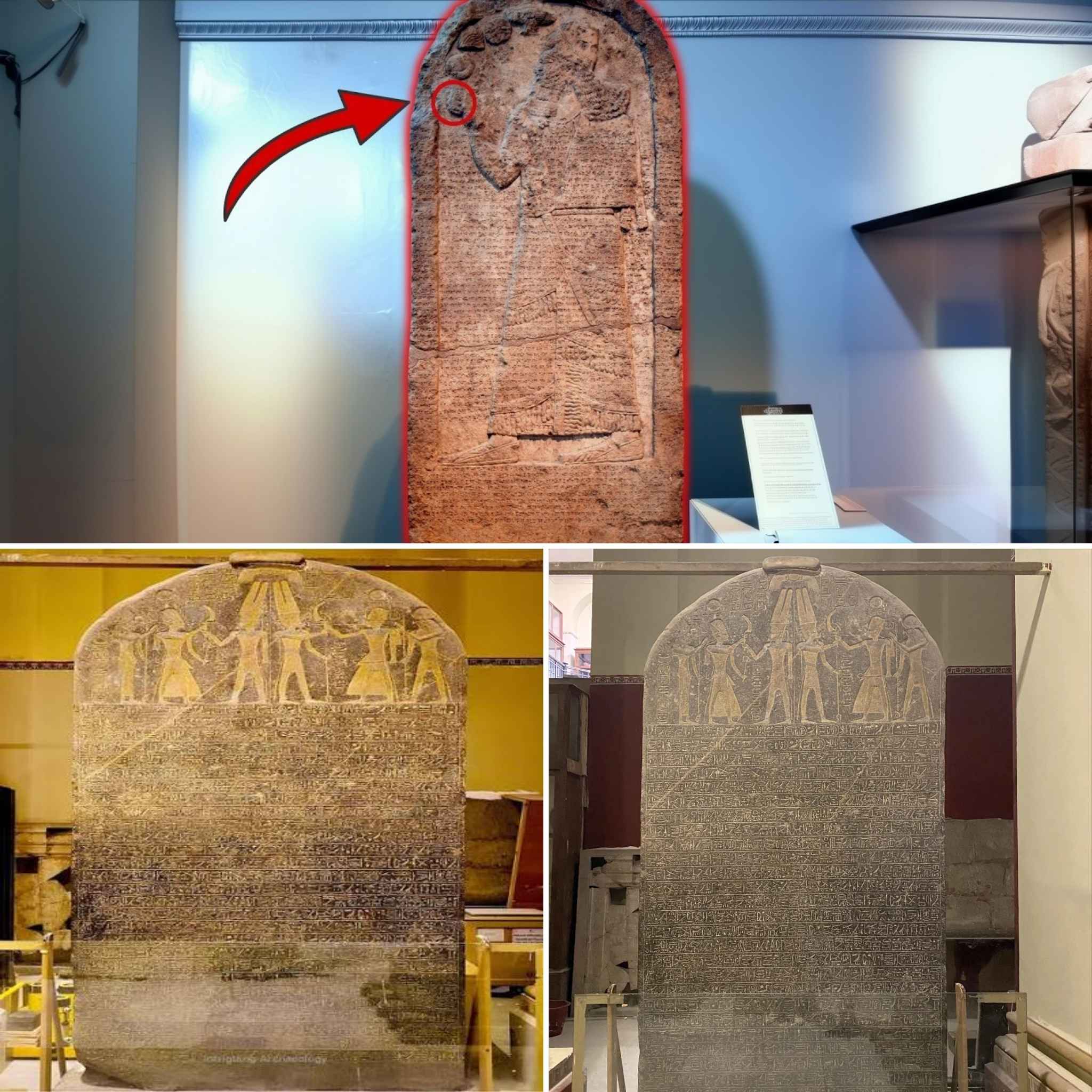
The Discovery of the Monolith
The stone in question, known as the Kurkh Monolith, was unearthed in the 19th century during early archaeological surveys of Assyrian ruins in Upper Mesopotamia. At nearly two meters tall, the slab is carved in cuneiform and celebrates the military campaigns of King Shalmaneser III, ruler of the Neo-Assyrian Empire. While initial translations highlighted Assyria’s victories over various city-states and vassal kingdoms, a particularly striking line drew the attention of biblical scholars: the monolith lists King Ahab of Israel as one of Shalmaneser’s opponents at the Battle of Qarqar, commanding 2,000 chariots—a force rivaling Assyria’s own war machine.
This is no minor footnote. The monolith dates to 853 BC, nearly contemporaneous with the biblical account in 1 Kings 22, which describes Ahab’s participation in coalition forces against Assyria. For the first time, there was archaeological confirmation from a third-party source, and it came not from Israel or Judah but from the empire Ahab opposed.
The Battle of Qarqar: A Clash of Kingdoms
The Battle of Qarqar was a seminal event in the history of the ancient Near East. Situated in modern Syria, Qarqar became the stage for a coalition of Levantine kingdoms, including Israel, Aram-Damascus, Phoenician city-states, and others, facing the expanding Assyrian empire. According to the Kurkh Monolith, Shalmaneser III led an army of tens of thousands of soldiers, including chariots, cavalry, and infantry. The text painstakingly records the contributions of each coalition member, giving precise numbers for troops and equipment.
King Ahab is listed as commanding 2,000 chariots, making Israel’s contribution the largest among the coalition. This suggests a degree of military organization and resource mobilization that historians relying solely on biblical texts had previously underestimated. Scholars now recognize that Israel in the 9th century BC was militarily capable, economically organized, and strategically sophisticated.
Confirming Scripture Through Assyrian Eyes
The significance of the Kurkh Monolith extends beyond historical curiosity. It aligns with biblical accounts of Ahab’s reign and challenges the claims of skeptics who argued that the biblical kings were literary inventions. The monolith does not interpret Ahab through a religious or mythic lens; it records him as a factual participant in Assyria’s military campaigns. In doing so, it validates Scripture using an independent, contemporaneous source.
Moreover, the monolith preserves the names of other coalition rulers, many of whom are scarcely mentioned elsewhere. By cross-referencing these inscriptions with archaeological and textual evidence from neighboring regions, historians can reconstruct the geopolitical landscape of the Levant in the 9th century BC with remarkable clarity.
The Craftsmanship of the Monolith
The Kurkh Monolith is not only a historical document but also an artifact of artistic and administrative sophistication. Carved from durable limestone, the inscriptions were executed with meticulous precision, demonstrating the administrative rigor of the Assyrian empire. Each line of cuneiform was carefully aligned, and the names of kings and numbers of troops were recorded with remarkable consistency.
This attention to detail reflects the Assyrian practice of propagandistic record-keeping. While the monolith emphasizes Assyria’s power and military prowess, it inadvertently confirms the strength of its adversaries. By enumerating Ahab’s 2,000 chariots, the stone acknowledges Israel’s significance in regional politics—a fact that biblical narratives had long implied but could not substantiate independently.
The Legacy of Ahab and Ancient Israel

King Ahab, often remembered in the Bible for his conflict with the prophet Elijah and his marriage to Jezebel, emerges from the Kurkh Monolith in a new light. He is not merely a figure of moral or religious narrative; he is a real political and military actor in the ancient Near East. The presence of Israel at Qarqar demonstrates that the kingdom was strategically aligned with regional powers, capable of organizing large-scale warfare, and influential enough to be noted by one of the era’s greatest empires.
This reshapes our understanding of Israel’s history during the Iron Age. Rather than a marginal kingdom, it becomes clear that Israel played an active role in the balance of power, negotiating alliances and projecting military strength.
Scholarly Reception
Since its discovery, the Kurkh Monolith has been the subject of intense scholarly interest. Epigraphers, biblical historians, and archaeologists have praised the monolith for its clarity and reliability, often noting that it represents a rare case where an empire’s own record corroborates external textual sources. As Dr. Shimon Gibson, a biblical archaeologist, notes:
“The Assyrians were meticulous record-keepers. Their inscriptions were not meant to glorify Israel, yet by mentioning Ahab and his forces, they provide independent verification of the biblical account. This is a rare alignment between archaeology and Scripture.”
The stone also resides today in the British Museum, where it continues to be a silent witness to a 3,000-year-old confrontation and a tangible reminder of the historical reality behind the stories of kings and prophets.
Implications for Modern Scholarship
The Kurkh Monolith has broader implications for historical methodology. It demonstrates that archaeology and epigraphy can validate textual sources, even those considered by some to be mythological. It also highlights the need to integrate multiple types of evidence, from inscriptions and artifacts to literary accounts, in reconstructing ancient history.
Furthermore, the monolith challenges popular misconceptions about biblical Israel. Far from a small, inconsequential state, Israel during Ahab’s reign possessed military and logistical capabilities sufficient to challenge the Assyrian army—a fact confirmed by the empire’s own records.
Conclusion: When Stones Speak
The 853 BC Kurkh Monolith is more than a historical artifact; it is a testament to the enduring power of material evidence. It reminds us that history is often hidden in plain sight, waiting for careful scholarship to uncover it. For skeptics and believers alike, the stone serves as a bridge between text and reality, demonstrating that the past, when preserved in stone, can speak with remarkable authority.
In a world where historical narratives are constantly questioned, the monolith’s inscription is clear: King Ahab and the kingdom of Israel were real, and their role in the ancient Near East was significant. The 2,000 chariots recorded on this Assyrian monument are more than numbers—they are evidence that ancient texts often carry truths verified by the very civilizations that opposed them.
As the British Museum continues to preserve this artifact, and as scholars analyze it further, the Kurkh Monolith stands as a timeless witness to history, reminding us that sometimes, the stones themselves tell a story that no human argument can erase.