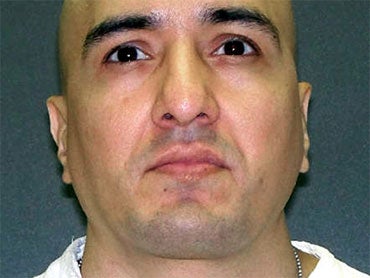
In a haunting culmination of nearly two decades of grief, Raymond Eugene Johnson was executed by lethal injection on May 14, 2026, at the Oklahoma State Penitentiary. His last meal and final words have sparked conversations about justice, remorse, and the lives forever altered by his actions.
 Johnson, who was 52 at the time of his execution, had a criminal history that began when he was just 21 years old. In 1995, he killed Clarence Ray Oliver during a confrontation, receiving a 20-year sentence for manslaughter. After serving only nine years, he was paroled in 2005, given a second chance that would tragically lead to more violence.
After his release, Johnson moved to Tulsa, where he met Brooke Whitaker, a vibrant mother of four. Their relationship quickly deteriorated, filled with threats and fear. Brooke, reportedly terrified for her life, sought legal protection through a restraining order. However, after a missed court date, the order was dropped, allowing Johnson back into her life.
 On June 23, 2007, Johnson returned to Brooke’s home, where a violent argument escalated into a horrific act of brutality. Grabbing a metal claw hammer, he struck Brooke multiple times, leaving her with severe injuries. In a desperate plea for help, she begged him to call 911 and think of their seven-month-old daughter, Kia, who was asleep in another room. Instead, Johnson doused Brooke and the house in gasoline and set it ablaze, resulting in the deaths of both Brooke and Kia.
The aftermath was swift; Johnson was arrested the same day and charged with two counts of first-degree murder and arson. His trial began in 2009, where the jury heard the harrowing details of the crime. Found guilty, he was sentenced to death, but his legal team fought tirelessly over the years to overturn the verdict, claiming his confession was coerced and his trial unfair. All appeals were ultimately denied, leading to the setting of his execution date.

In the months leading up to his execution, Johnson appeared before the Pardon and Parole Board, expressing remorse and claiming to have transformed his life on death row. His supporters painted a picture of a man who had found faith and redemption, but the board ultimately denied his clemency request, emphasizing the gravity of his past actions.
 On the night before his execution, Johnson requested a final meal consisting of chicken, gizzards, fried pickles, and sauces. The following morning, he was led into the execution chamber, where he expressed remorse in his final statement, apologizing to Brooke and Kia’s family and hoping they could one day remember them without his name attached.
At 10:12 a.m., Johnson was pronounced dead, marking a significant moment for the families affected by his actions. Following the execution, Oklahoma Attorney General Gentner Drummond described Johnson as a “cruel murderer,” while Brooke Whitaker’s family expressed a bittersweet sense of closure after years of waiting for justice.
As the nation grapples with the complexities of capital punishment, the case of Raymond Johnson raises profound questions about accountability and the impact of the justice system. In remembering Brooke and Kia, we are reminded of the lives lost and the enduring pain felt by those left behind. What does true justice look like in the wake of such tragedy?