The Ark of the Covenant is one of the most enduring symbols in Judeo‑Christian tradition: a gold‑overlaid wooden chest described in the Hebrew Bible as housing the stone tablets of the Ten Commandments and representing the divine presence among the Israelites. It was said to have resided in the Tabernacle and later in Solomon’s Temple before vanishing from the historical record after Jerusalem’s destruction by the Babylonians in 586 BCE.

For centuries, scholars and explorers alike have debated its fate, with theories ranging from destruction during war to deliberate concealment before invasions. Ancient texts and later traditions suggest it may have been hidden — perhaps in secret tunnels beneath Jerusalem or in distant locations — but no physical relic matching the Ark’s description has ever been conclusively identified.
One line of research has focused on the biblical site of Shiloh in Israel, where excavations have uncovered a monumental Iron Age structure that some archaeologists suggest could be the ancient tabernacle — the portable sanctuary in which the Ark originally rested. The building’s layout and proportions, along with associated ritual remains, align with biblical descriptions of the Mishkan, offering a possible context for where the Ark was kept in ancient times, though this does not constitute discovery of the Ark itself.
Another longstanding tradition, especially within the Ethiopian Orthodox Tewahedo Church, holds that the Ark resides in the Church of Our Lady Mary of Zion in Axum. According to local belief, the Ark was brought to Ethiopia in antiquity and guarded there. Scholars and historians, however, note that the object said to be the Ark in Axum is likely a later construction and not verified by archaeological or scientific examination.
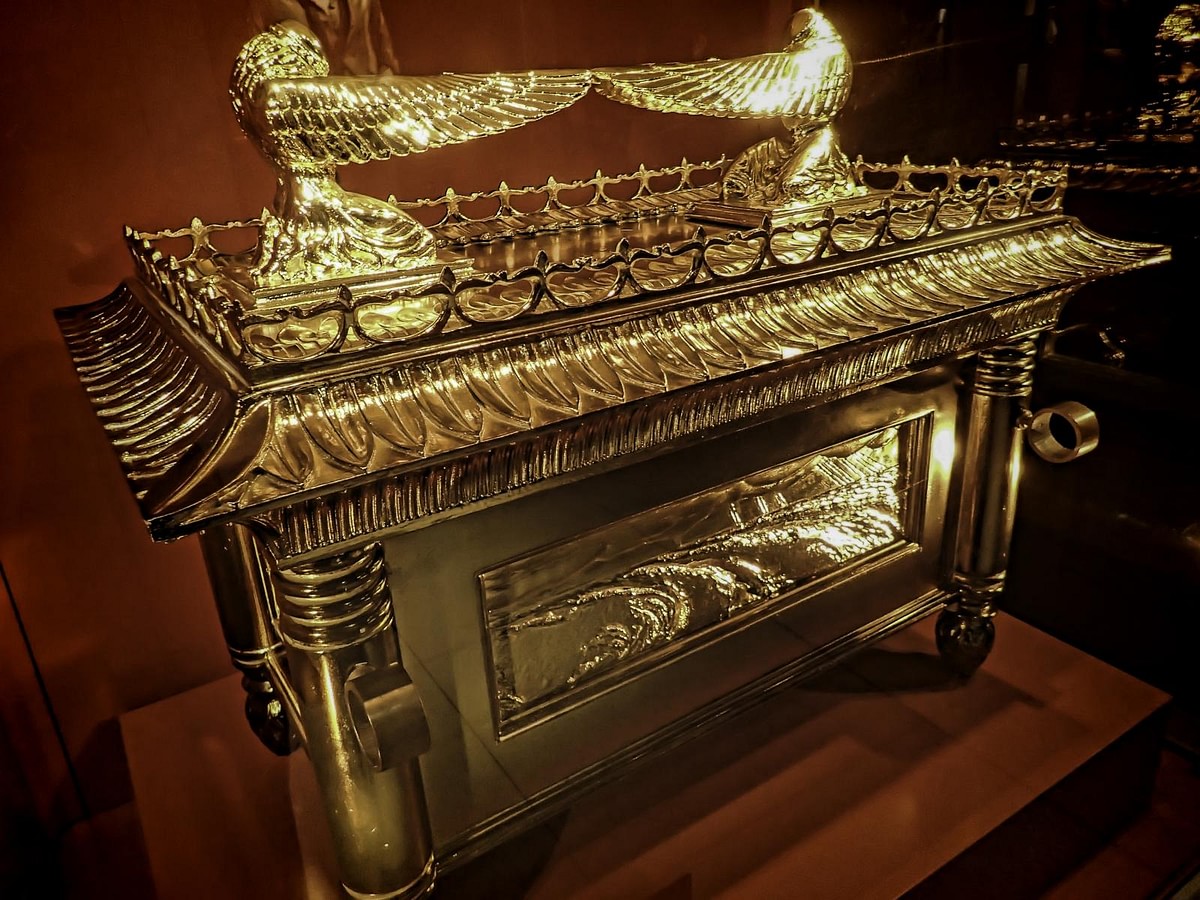
Modern approaches to the Ark mystery include using non‑invasive technologies like muon detectors to search underground spaces — for example, beneath the City of David in Jerusalem — but these methods have so far detected potential voids and structures rather than a specific artifact. Researchers emphasize that such scans are preliminary and cannot definitively identify the Ark without direct archaeological evidence.
Despite sensational headlines and speculative theories, the Ark’s physical existence and location remain unproven within the archaeological record. What is supported by scholarly research is that the Ark is a powerful cultural and religious symbol with deep roots in ancient texts and traditions, and that ongoing excavations continue to shed light on the environments and practices of the societies that revered it.