In the heart of Nebraska’s most secure prison, a chilling silence envelops Niko Jenkins, a name that still sends shivers through the state. Confined to a stark, concrete cell, Jenkins endures a reality that many would argue is worse than death itself. Since his arrest in 2013 for a series of brutal murders, he has faced a life of extreme isolation, cut off from the outside world and trapped within his own mind.
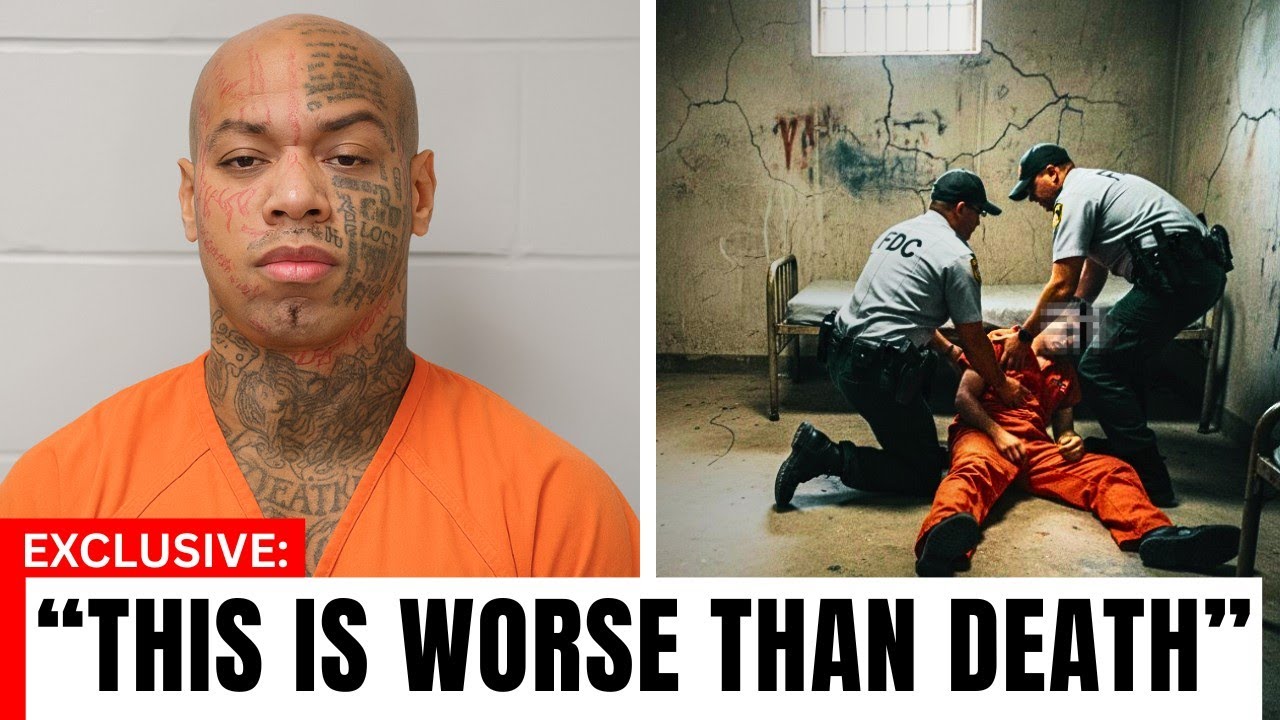 Jenkins, who claimed that ancient Egyptian deities compelled him to commit his heinous acts, was sentenced to death in 2014. However, contrary to various online claims, he remains alive on death row, enduring a grim existence far removed from any notion of freedom. The echoes of his own breathing are his only companions in a space where time seems to stand still.
His days are marked by a rigid routine: a solitary meal delivered through a slot in the steel door, followed by brief checks to ensure he is still alive. This monotonous cycle has taken a toll on his mental health, with reports indicating that he often paces his cell, muttering to himself or scribbling strange symbols on the walls. The prison environment, designed to contain the most dangerous inmates, has become a cage for Jenkins, amplifying his psychological turmoil.
Prison officials recognized early on that Jenkins was not an ordinary inmate. His erratic behavior and claims of divine communication made him a constant security concern, leading to his placement in solitary confinement. Here, he spends 23 hours a day in a cell that feels more like a tomb than a living space. The solitary hour he is allowed outside offers little solace, as he remains enclosed within razor-wire fences, a mere shadow of freedom.

As the years have passed, Jenkins’s mental state has reportedly deteriorated further. Diagnosed with multiple disorders, including schizophrenia, he has become increasingly detached from reality. His isolation has stripped away any semblance of social interaction, leaving him to grapple with his demons alone. The lack of human connection has led to alarming incidents, including self-harm and bizarre outbursts that have drawn the attention of prison staff.
Despite the heavy surveillance and control measures in place, Jenkins has continued to create chaos within the prison walls. Reports detail instances where he has harmed himself, smeared blood on his cell, and engaged in strange rituals, all while claiming to communicate with supernatural entities. These actions have only reinforced his reputation as a volatile presence, prompting guards to approach him with extreme caution.

In the midst of this turmoil, Jenkins has not given up his fight against the system. He has inundated the courts with handwritten motions and appeals, arguing that his mental health issues should exempt him from execution. His claims have sparked debates over his mental competency, leaving many to wonder whether he is genuinely unwell or simply manipulating the legal process.
Life on death row is not what many might expect. Jenkins exists in a tiny cell with minimal human contact, his days filled with silence and the weight of uncertainty. With no scheduled execution date in sight, he remains trapped in a limbo between life and death, a state that some inmates have described as more agonizing than the act of execution itself.

As time drags on, Jenkins’s situation raises profound questions about justice and punishment. Is the isolation he endures a rightful consequence for his actions, or is it a cruel form of torment? While some view him as a symbol of the failures of the mental health system, others see only the monster behind the crimes.
In the quiet confines of Nebraska’s death row, Niko Jenkins is left to confront the fragments of his sanity, a haunting reminder of the complexities of justice. What does this say about the nature of punishment in our society? Share your thoughts below.