‘Extraordinarily Difficult’: Scottie Scheffler Reflects on Golf’s Mental Toll and Points to Tiger Woods as an Example
Professional golf is a sport of extremes. Four days of tournament play, each lasting upwards of five to six hours, demands not only technical skill but immense mental fortitude. For Scottie Scheffler, the World No. 1 golfer, this reality is magnified under the weight of expectation, constant scrutiny, and the need to perform at the highest level consistently.

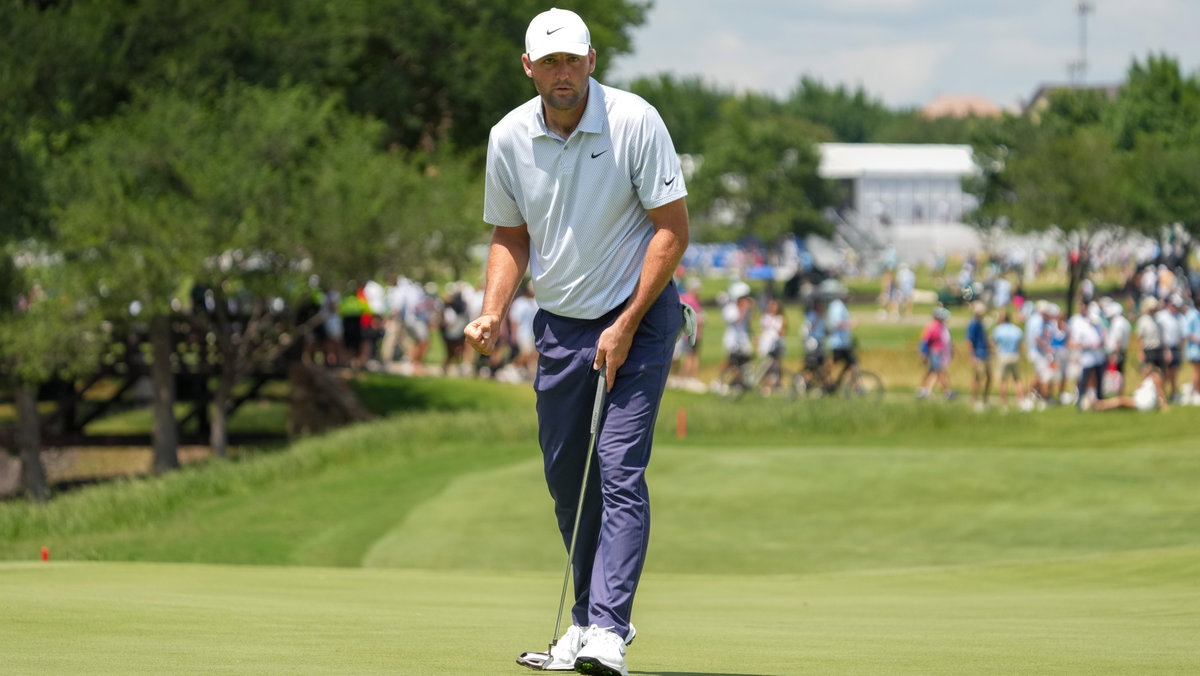
At the 2026 Travelers Championship, Scheffler spoke candidly about the mental strain that accompanies elite golf, referencing Tiger Woods’s approach to managing similar pressures during his career.
“I think when you look at this sport, it’s unique in a sense of the amount of time we spend in front of people throughout a week,” Scheffler said.
“For me to play four days of tournament golf, from the moment I step out onto the driving range if we’re playing at a four-hour pace, that’s over five hours, five and a half hours if you include this part of my day, where we’re in front of people. And doing that four days in a row in a mental sport, I think, can take a toll on you.”
The Mental Grind at the Top
Scheffler’s comments highlighted a side of golf that often goes unnoticed by casual fans: the mental exhaustion that comes from constant focus, decision-making, and managing expectations in front of thousands of spectators. While fans see swings, putts, and leaderboard movements, professionals endure an invisible toll that builds over hours, rounds, and weeks of competitive play.
“I think that’s why you see a guy like Tiger can only play so many events because I think mentally the challenge of just being in front of people for that long and being on and what it takes in order to compete week in, week out takes a lot out of you mentally. So, for me, playing more than three weeks in a row is extraordinarily difficult. I can’t handle much more than that.”
The observation underscores why top professionals like Scheffler and Woods selectively choose their schedules, balancing competitive opportunities with recovery and preparation.
Echoes of Concern from Legends and Peers
Scheffler is not alone in voicing concern over the packed PGA Tour calendar. Rory McIlroy has repeatedly reduced his schedule to prioritize majors, while Jack Nicklaus has criticized the trend of overly congested tournaments.
“See, the problem is not so much from the standpoint of players,” Nicklaus said ahead of the Memorial Tournament.
“It’s hard for the players to really be focused to play that much and be on top of their game.”
Scheffler, echoing the sentiment, has implemented a deliberate strategy: avoiding tournaments immediately before major events, taking time off to rest mentally, and focusing on practice without competitive pressure. This approach mirrors the patterns Woods established during his career, particularly at the height of his dominance when he structured his schedule around majors, limiting starts to approximately 20 events per year even at his peak.
Why Mental Fatigue Is Harder Than Physical Fatigue
Golf may appear less physically taxing than other sports, but Scheffler argues that the mental demands outweigh even the physical.
“With golf, the physical aspect of it is something you can really train for. The mental part, I would say, is more difficult to train for,” he explained.
The mental component includes managing expectations, maintaining concentration on each shot, adjusting strategy based on weather and course conditions, and navigating the psychological pressures of competition. Mental fatigue accumulates, influencing decision-making, swing mechanics, and even the ability to recover after a poor hole.

A Modern Solution: The Two-Tier PGA Tour Schedule
One of the promising solutions for mental strain comes in the form of the PGA Tour’s newly announced 2028 overhaul. CEO Brian Rolapp, alongside the Tiger Woods-led Future Competition Committee (FCC), developed a two-tier system: the Championship Series and the Challenger Series.
Maverick McNealy, a member of the FCC, explained that this format addresses not only logistical concerns but also allows players to manage mental and physical fatigue more effectively. By clarifying which events are part of the elite Championship Series and providing a Challenger Series for emerging professionals, golfers can strategically plan their calendars.
“Since everyone will know which events they are eligible for, they can better plan their calendars,” Scheffler pointed out. “It also gives more time off, more control, and the ability to recharge without compromising competitive opportunities.”
This structure also allows for a more relaxed off-season, letting players like Scheffler spend additional time with family or engage in focused training rather than competing back-to-back in high-pressure situations.
The Balance Between Rest and Competition
Scheffler emphasized that success in professional golf isn’t determined solely by quantity—how many tournaments a player enters—but by quality: knowing when to compete, when to rest, and when to prepare mentally.
“It’s about understanding the rhythm of your season. Playing more tournaments doesn’t guarantee better performance—it can often have the opposite effect if you’re mentally drained,” Scheffler said.
This mindset explains why the most successful golfers carefully curate their schedules, seeking periods of low stress to enhance focus and performance in the events that truly matter.
The Legacy of Tiger Woods and the Future of Scheduling
Woods’ career provides a blueprint for this approach. By focusing on select events and majors, he maximized performance while minimizing mental burnout, showing that sustainable excellence in golf requires more than just talent—it requires strategy and self-awareness.
Scheffler continues to apply these lessons, understanding that the mental game can determine outcomes as much as skill or technique. In the new PGA Tour era, with carefully structured events and clear tiers, top players now have the tools to maintain competitive intensity without compromising their mental health.
It’s not the first time Scottie Scheffler has highlighted the mental struggles of golf, though.
Conclusion
Scottie Scheffler’s candid observations remind fans that professional golf is as much a mental marathon as a physical one. The combination of constant attention, prolonged decision-making, and high-stakes competition creates an extraordinary pressure environment, one that even legends like Tiger Woods carefully navigated.
With the PGA Tour’s new 2028 two-tier schedule, golfers may finally have the flexibility to protect their mental health, strategically plan their seasons, and perform at peak levels without burning out. Scheffler’s approach, emphasizing rest, preparation, and strategic tournament selection, is likely to become a model for the next generation of professionals aiming to balance longevity with championship success.
“Knowing when to step away and recharge is part of winning golf,” Scheffler concluded. “It’s not about playing more—it’s about playing smart and staying sharp mentally.”