In a haunting tale of vengeance and tragedy, Charles Rodman Campbell, a notorious figure in Washington State, faced his grim fate on May 27, 1994. After spending over a decade on death row for the brutal murder of three women, his execution marked the end of a chilling chapter in a story filled with pain and loss.
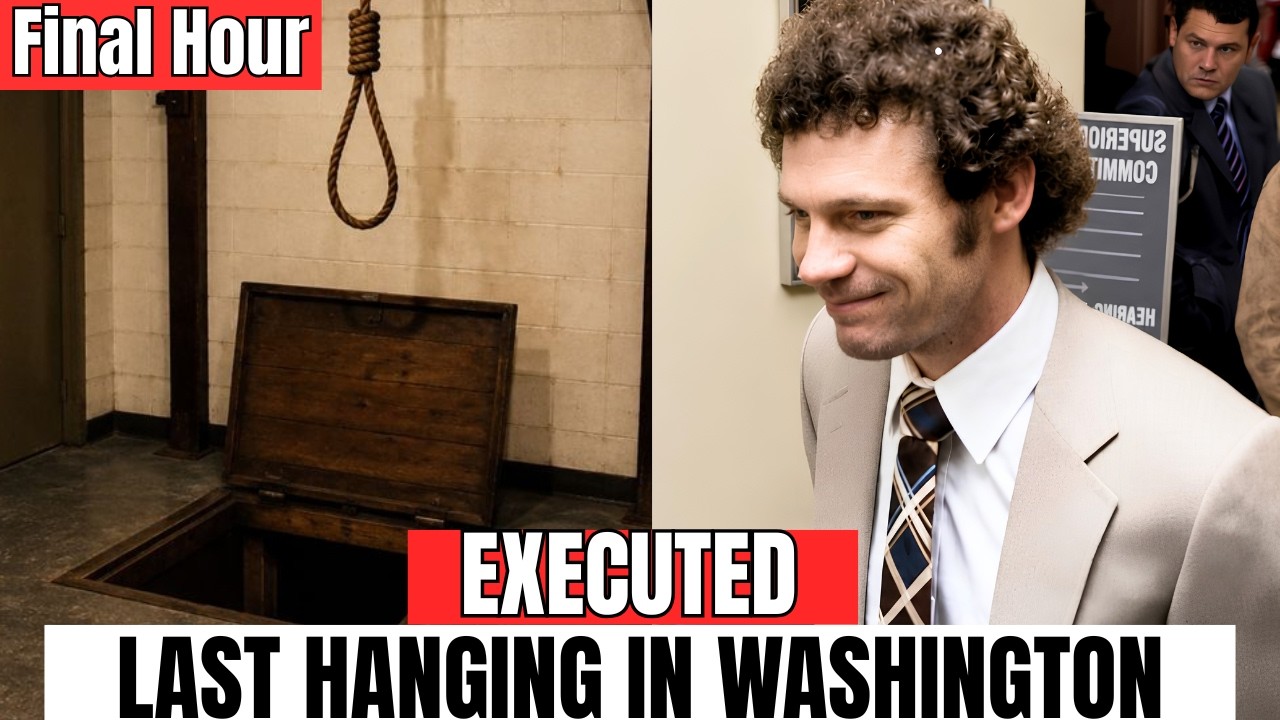 As the clock struck midnight, guards approached Campbell’s cell at the Washington State Penitentiary in Walla Walla. For twelve long years, he had fought against his impending execution, claiming the state’s actions were unjust and unconstitutional. But on this night, those arguments fell silent. When the guards opened his cell door, they found him curled on the floor, seemingly trying to escape the reality of his fate. Despite his size and strength, Campbell could not muster the will to walk to the gallows, requiring four guards to carry him.
At 12:08 a.m., the trapdoor beneath him opened, and within minutes, he was pronounced dead. This was the final act in a saga that began on December 11, 1974, when Campbell, fueled by rage and a troubled past, committed heinous acts against three innocent women: Renee Wicklund, her daughter Shanna, and their friend Barbara Hendrickson.
Renee, a vibrant young woman who had moved to Washington from North Dakota, was building a life filled with promise. She had a loving family and a close-knit community. However, Campbell, who had grown up in a chaotic and abusive environment, had set his sights on her. On that fateful day, he invaded her home, and the violence that ensued shattered lives forever.

The aftermath of the crime was devastating. Renee was found dead alongside her daughter and friend, leaving behind a community in mourning. Don Hendrickson, Barbara’s husband, discovered the scene and was left to grapple with the horror of what had occurred. The investigation quickly pointed to Campbell, who had been on the run after the attack. His history of violence and disregard for others painted a clear picture of a man who was a danger to society.
Despite being sentenced to 40 years in prison, Campbell’s time behind bars was marked by further violence and manipulation. He was eventually released into a work-release program, only to return to the neighborhood where he had committed his earlier crimes. This decision would prove catastrophic, as he stalked Renee’s home, plotting his revenge for years.

On April 14, 1982, Campbell executed his plan. Armed with a knife, he returned to the Wicklund household, where he brutally murdered Renee, Shanna, and Barbara. The details of that day are too painful to recount fully, but the impact on the community was profound. It was a crime that could have been prevented, as warnings about Campbell’s violent nature had been ignored.
In the trials that followed, Campbell was convicted and sentenced to death. His appeals dragged on for over a decade, frustrating the families of the victims who were left to relive their trauma. When the execution finally came, it was a bittersweet closure for those who had suffered so deeply.

Among those present during his execution were family members of the victims, including Renee’s sister, Lorraine, who had traveled from North Dakota to witness the end of Campbell’s life. For them, it was a moment of grim relief, knowing that he could no longer inflict harm.
Yet, the story does not end there. In a 𝓈𝒽𝓸𝒸𝓀𝒾𝓃𝑔 twist nearly 30 years later, detectives reopened a cold case involving the murder of Hallie Ann Seaman, a graduate student who had been killed in 1975. DNA evidence linked Campbell to this crime, revealing that he had been a predator long before his infamous acts against Renee and her family.
The tragic tale of Charles Campbell raises unsettling questions about justice, rehabilitation, and the systems meant to protect the vulnerable. As we reflect on the lives lost and the failures that allowed such a tragedy to unfold, we must ask ourselves: how do we ensure that history does not repeat itself?


