In a chilling conclusion to one of America’s most notorious crime sagas, George Rivas, the last surviving member of the infamous Texas Seven, was executed on February 29, 2012. This grim chapter in U.S. history began with a daring prison escape that spiraled into a nationwide manhunt and the tragic murder of a police officer on Christmas Eve.
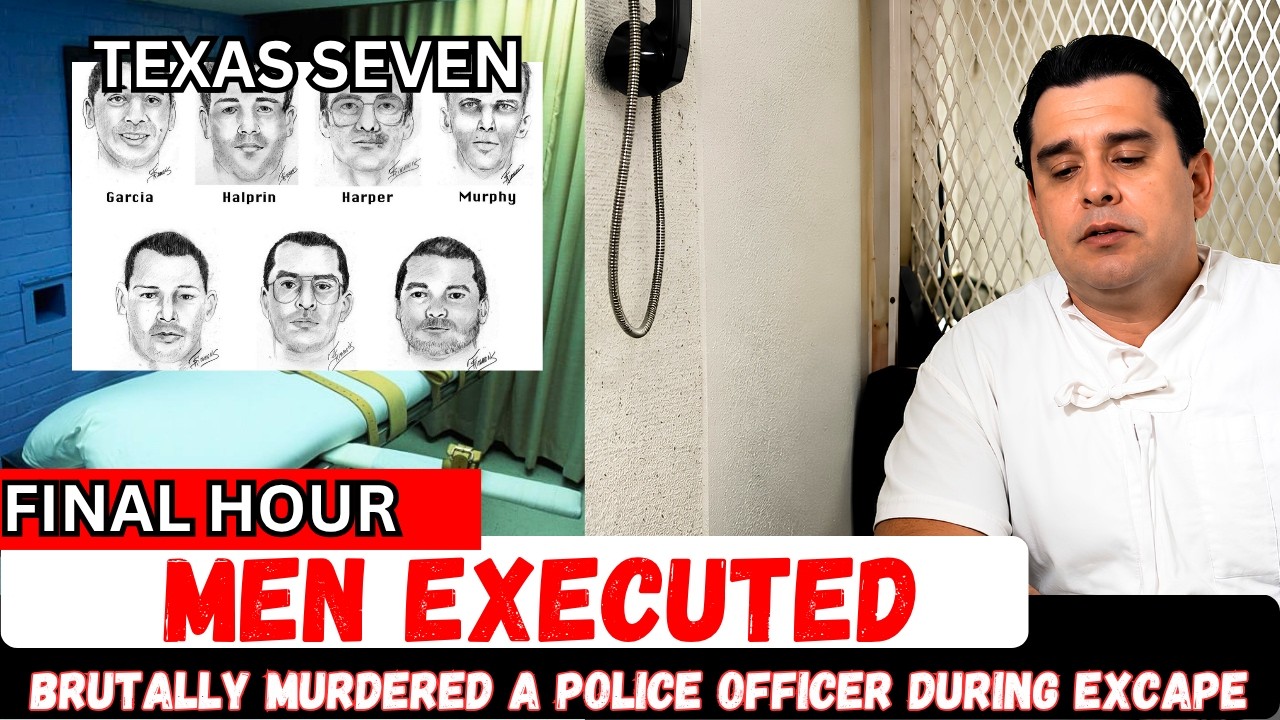 As rain drizzled outside the Huntsville Unit in Texas, reporters gathered under bright lights, capturing the somber atmosphere surrounding Rivas’ final moments. At 41 years old, he sat alone in a holding cell, just steps away from the execution chamber, reflecting on a life that had veered into darkness long ago.
Rivas, once a quiet teenager from El Paso, fell into a life of crime that escalated rapidly, leading to multiple convictions for violent offenses. By the late 1990s, he had become a notorious figure within the Texas prison system, where he began plotting an escape with a group of equally dangerous inmates. Their audacious plan culminated in December 2000, when they executed a well-orchestrated escape from the Connally Unit, taking control of the prison with alarming efficiency
 The escape, however, turned deadly on Christmas Eve when Rivas and his accomplices ambushed Officer Aubrey Hawkins outside a sporting goods store in Irving, Texas. Hawkins, a devoted husband and father, was responding to a call about suspicious activity when he was shot multiple times before the group fled, leaving his family shattered and the nation in shock.
In the aftermath of the murder, the Texas Seven became public enemies, their faces plastered across news outlets as a massive manhunt ensued. For weeks, they evaded capture, moving through Texas and beyond, living under false identities and resorting to desperate measures to survive. Their freedom was fleeting, and as pressure mounted, tensions within the group began to surface.

By January 2001, authorities had tracked them down to an RV park in Colorado, leading to a tense standoff. The situation escalated tragically when one member, Larry Harper, took his own life rather than face recapture. The remaining fugitives surrendered, and their capture marked the end of a harrowing chase that had captivated the nation.
 In the years that followed, Rivas and his accomplices faced trial for their crimes, with prosecutors painting Rivas as the mastermind behind the escape and the murder. The trials revealed the devastating impact of Hawkins’ death on his family and the community, transforming the narrative from a prison break to a heartbreaking tale of loss and tragedy.
Ultimately, Rivas was sentenced to death, and his execution on that rainy February evening brought a sense of closure to a story that had haunted many. As he took his last breaths, he expressed remorse for the pain inflicted on Hawkins’ family, but the scars of that fateful Christmas Eve would remain forever etched in the hearts of those left behind.
With the execution of George Rivas, the saga of the Texas Seven came to a close, leaving behind a haunting reminder of the consequences of violence and the fragility of life. What lessons can we draw from this dark chapter in American history?


