Pompeii’s Hidden Truth: DNA Unmasks the Lives Behind the Ashes
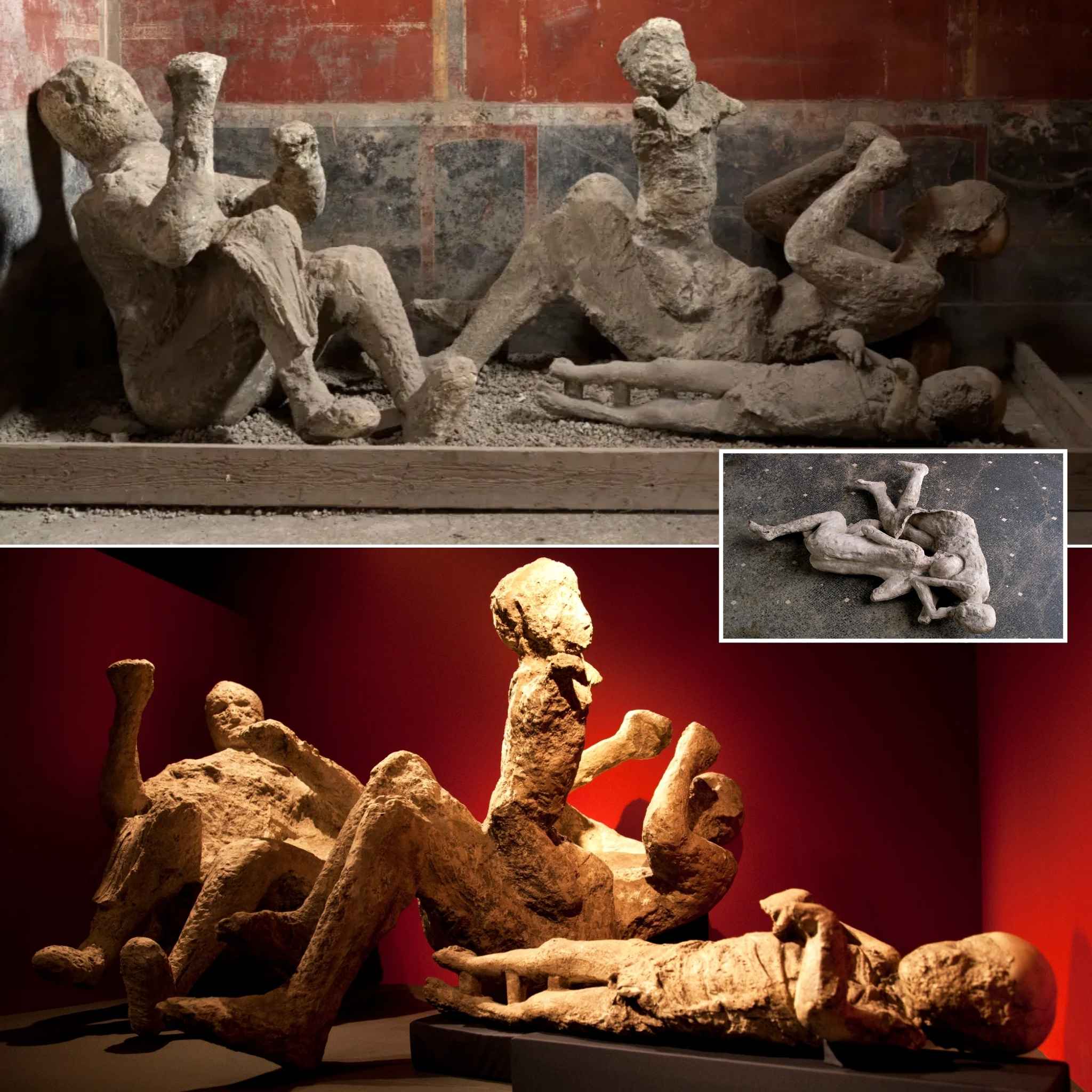
For centuries, the ruins of Pompeii have captured the world’s imagination. The volcanic eruption of 79 CE froze a thriving Roman town in an instant, preserving its streets, houses, and, most famously, the casts of those who perished. Visitors and scholars alike have looked at these plaster figures and assumed intimate family stories: a mother shielding her child, sisters embracing in a hallway, or a household frozen together under a stairwell.
But new DNA evidence is rewriting everything we thought we knew. The people of Pompeii were not Roman in the way we imagined. They were an empire’s crossroads, a living mosaic of Mediterranean, North African, and beyond. And the human stories captured in ash? Many were not what history—or our imagination—made of them.
The Study That Changed Pompeii
A team of geneticists from the University of Bologna, in collaboration with international bioarchaeologists, scanned 30 human casts excavated from Pompeii. Using advanced ancient DNA (aDNA) sequencing, they analyzed the genomes preserved in the bone and dental material inside the plaster casts. The results were stunning:
- 70% of individuals traced ancestry to the Eastern Mediterranean and North Africa, not central or northern Italy.
- The supposed “mother shielding her child” was actually a man holding a child unrelated to him, based on genetic markers and mitochondrial DNA.
- The pair identified as “sisters” in a collapsed tunnel were unrelated, a man and a woman sharing no detectable kinship.
- The group under the stairs? Four unrelated strangers from different continents, likely residents or travelers in a bustling, multiethnic urban center.
These findings challenge long-held assumptions about Pompeii’s demographics. The town was often thought of as a “typical Roman settlement,” yet in reality, it reflected the complex mobility and diversity of the Roman Empire.
Pompeii: Empire Crossroads
The aDNA evidence aligns with the broader historical understanding of Rome’s imperial system. Pompeii sat on the Bay of Naples, a hub for trade, artisans, and migration. Merchants, laborers, and slaves from across the Mediterranean—Syria, Egypt, North Africa, Greece—mingled with local Italians. This diversity is visible in skeletal analyses, where differences in cranial morphology, dental metrics, and isotopic signatures indicate a wide range of geographic origins.
Even the physical signs of slavery are telling. Many casts showed reshaped ankle bones or fused joints consistent with shackling or prolonged labor. Some individuals bore musculoskeletal markers typical of repetitive heavy labor, while others displayed signs of diet and nutrition differing from local Italians.
Pompeii was not merely a provincial town; it was a vital hub of the empire, a port city with transient populations, diverse communities, and a heavy presence of enslaved and migrant peoples.
Breaking the Family Myths
For 150 years, interpretations of the plaster casts relied on visual storytelling and assumption. Archaeologists and visitors imagined intimate family scenes, projecting modern ideas of domestic life onto frozen remains.
DNA shows these narratives were mostly false:
- The “Mother” and Child: The iconic cast, previously interpreted as a protective mother clutching her young son or daughter, is in fact an unrelated man holding a stranger’s child. Mitochondrial DNA shows no maternal link. The wrist adorned with a gold bracelet may have contributed to assumptions about gender, but ornamentation was not exclusively female in Roman society.
- “Sisters” in the Tunnel: This cast pair, huddled for safety in a collapsed corridor, has no detectable kinship. The identities imposed upon them were entirely speculative.
- The “Family” Under the Stairs: Four individuals from disparate origins, each with a unique genetic lineage, were interpreted as a household, but they likely had no connection beyond being in proximity when the eruption struck.
These revelations force a reconsideration of how archaeologists and the public interpret death in Pompeii. The human drama frozen in ash was not always familial; it was social, economic, and often transient.
Life in Pompeii Through DNA
Beyond ancestry, the genetic analysis reveals insights into health, nutrition, and daily life:
- Dietary Variation: Isotope analysis combined with aDNA shows differences in protein intake. Some individuals relied heavily on marine foods, while others had diets dominated by grains, pulses, and legumes.
- Disease and Stress Markers: Signs of infectious disease, malnutrition, and chronic stress were prevalent, especially among enslaved populations or migrants far from their birth regions.
- Mobility: Strontium isotope ratios indicate that a large portion of the population moved into Pompeii as adults, likely for trade, work, or enslavement. This aligns with historical accounts of a bustling, cosmopolitan port city.
Revising Pompeii’s Narrative
The implications of this research extend far beyond Pompeii. They challenge simplified views of Roman towns, showing that mobility, empire-wide trade, and slavery profoundly shaped the urban population. Pompeii’s residents were not a homogeneous Roman community but a mix of peoples whose stories have long been obscured by assumptions about family and locality.
The study also demonstrates the power of modern technology in archaeology: DNA sequencing, isotopic analysis, and 3D cast scanning reveal truths invisible to the eye. For decades, the plaster casts told a story. Now, science reveals the reality: those narratives were mostly our own.
Humanizing the Forgotten
Despite the DNA findings, the casts retain their emotional impact. Visitors can still see the expressions of fear, despair, and sudden catastrophe frozen in ash. But understanding that these were strangers, migrants, enslaved workers, and travelers adds layers of poignancy.
Dr. Giulia Morandi, co-leader of the project, explains:
“We have long projected our assumptions onto the dead of Pompeii. DNA gives them their real identities back. They were not Roman mothers or sisters as we imagined—they were individuals caught in a moment of disaster, each with their own story, origin, and journey.”
By reclaiming the biological truth, we acknowledge the diversity, mobility, and complex social dynamics of the Roman Empire. These individuals were part of a wider network of human movement, trade, and cultural exchange that defined life in the first century CE.
Visual References
- [Suggested Image 1: Plaster Cast of the “Mother” and Child] – Label notes on DNA revealing the man/child identity.
- [Suggested Image 2: Map of Pompeii] – Highlighting where different casts were found and their likely regions of origin.
- [Suggested Image 3: Skeletal Remains Under Casts] – Showing genetic sampling sites and isotopic analysis results.
Conclusion
The Pompeii DNA project fundamentally shifts how we understand the city, its people, and the narratives we have built around catastrophic events. For 150 years, we buried the dead in our own stories, imagining cohesive Roman families, communities, and domestic scenes. DNA has returned the dead to their own truth:
- They were migrants, enslaved workers, traders, and visitors from across the Mediterranean and beyond.
- Many had no familial or blood relation to those they were found beside.
- Pompeii was an empire’s crossroads, not a provincial Italian town.
These discoveries force a profound reassessment of historical assumptions. The city frozen in ash was a living, dynamic, multicultural hub, and the casts, once interpreted through a lens of familiarity and narrative, now speak a deeper truth: humanity is more interconnected, diverse, and complex than even our most vivid stories can capture.
DNA has done more than reveal origins—it has restored identity to Pompeii’s victims, forever changing how we view the tragedy of 79 CE.