Glen Edward Rogers, the man known as the Kasanova Killer, was executed by lethal injection Thursday evening at Union Correctional Institution in Florida, ending a 30-year stay on death row and leaving behind a trail of four confirmed murders, a confession to dozens more, and a cryptic last message that stunned those who witnessed his final moments.

Rogers, 62, was pronounced dead at 6:30 p.m. after the drugs began to flow at 6:20 p.m. Witnesses reported that the process was not smooth. His body trembled, his breathing became irregular, and for roughly 10 minutes he appeared to suffer before falling still. The execution followed a final death warrant signed by Florida’s governor on April 15, 2025.
Born in Ohio on July 15, 1962, Rogers dropped out of school before turning 16 and married his teenage girlfriend. The marriage quickly turned violent, with his wife accusing him of domestic abuse. His life spiraled into theft, scams, and bar fights, setting the stage for a killing spree that began in 1995.
His first confirmed murder came on September 28, 1995. Sandra Gallagher, a mother of three, was seen leaving a California bar with Rogers. The next day, her burned body was found inside her pickup truck. She had been strangled. Rogers fled the state, leaving no immediate trace.
In Mississippi, he met Linda Price at a fair. She found him charming and let him move in with her. A few days later, she was found dead in her bathtub. The killing was swift and brutal, but again Rogers slipped away before law enforcement could close in.
Florida became his next hunting ground. He met Tina Marie Cribs at a bar, and she offered to take him to her motel. Two days later, motel staff found Tina’s body in the bathtub. She had been stabbed multiple times in the chest and buttocks. Rogers escaped in her car.
Just four days later, on November 9, 1995, he struck again in Louisiana. Andy Giles Sudden was found naked, stabbed, and lying on a water bed that Rogers had punctured. The murder seemed gratuitous, the violence escalating. Rogers was now a fugitive under intense national scrutiny.
Authorities finally arrested him on November 13, 1995, in Kentucky after a chase in a stolen car. In custody, Rogers became a source of sensational claims. He confessed to killing more than 70 people, though only four murders were ever officially confirmed.
Among those claims was perhaps his most explosive: he said he killed Nicole Brown Simpson, the ex-wife of O.J. Simpson, and her friend Ron Goldman in 1994. No evidence ever linked him to that crime scene, but O.J. Simpson’s defense team mentioned Rogers as a possible alternate suspect during the 1995 trial.
Rogers’ brother, Klay Rogers, told CNN, “I’m absolutely certain my brother Glenn killed Nicole Simpson and Ron Goldman. I know he did it because I’ve seen proof that he was there.” Despite that assertion, no physical evidence has emerged to support the claim, and authorities have not reopened the case.
In 1997, Rogers received a death sentence in Florida for the murder of Tina Cribs. Two years later, he was sentenced to death in California for killing Sandra Gallagher. He spent the next nearly three decades on death row, fighting appeals that ultimately failed.
Earlier this year, Rogers requested a new hearing, arguing that he had suffered repeated sexual abuse during childhood. He hoped the jury would commute his sentence to life in prison. The request was denied, with courts finding no new evidence that warranted reconsideration.
His legal team also argued that Rogers suffered from perferia, a rare condition that could cause extreme pain during lethal injection, making the process inhumane. They asked for an alternative method, but Florida does not offer firing squad or gas chamber options, so that appeal was also rejected.
On the day of his execution, Rogers woke at 3:45 a.m. For his last meal, he requested pizza, chocolate, and a soda. He received a visit from his wife that same day. His brother, who had traveled from Kentucky, visited him the day before and then returned home.
As the execution team prepared the lethal injection, witnesses reported a tense silence in the chamber. Rogers was asked if he had any final words. He delivered a statement that left even seasoned observers baffled.
“I know there are a lot of questions that still need answers. I promise you, you’ll have them very soon, and I hope that somehow it helps you close this chapter,” Rogers said. Then, with unsettling calm, he added, “President Trump, keep making America great. I’m ready to begin.”
The room fell into confusion. Randy Robertson, son of one of the victims, later said, “I wondered, where did that come from?” His wife, Amy Robertson, who also witnessed the execution, told reporters, “I thought, what the hell did he just say?”
Rogers’ final words appeared to reference former President Donald Trump, who had been a vocal supporter of capital punishment during his time in office. The meaning behind the remark remains unclear, but it added yet another layer of strangeness to a case already filled with bizarre twists.
The execution itself was not without controversy. Witnesses described Rogers’ body trembling and his breathing becoming irregular for about 10 minutes. The process was deemed “not immediate or peaceful” by those in the room, raising questions about the humanity of the method.
Florida’s Department of Corrections released a brief statement confirming the execution was carried out in accordance with state law. The statement did not address the concerns about suffering, but officials noted that the drugs were administered by trained medical personnel.
Victims’ families have reacted with a mixture of relief and lingering anger. Tina Cribs’ sister, who asked not to be named, told a local station, “He took my sister’s life, and now he’s gone. It doesn’t bring her back, but at least he can’t hurt anyone else.”
Others expressed frustration that Rogers was never fully held accountable for the full scope of his alleged crimes. With 70 claimed victims, yet only four convictions, many feel justice remains incomplete. “He died with his secrets,” one family member said.
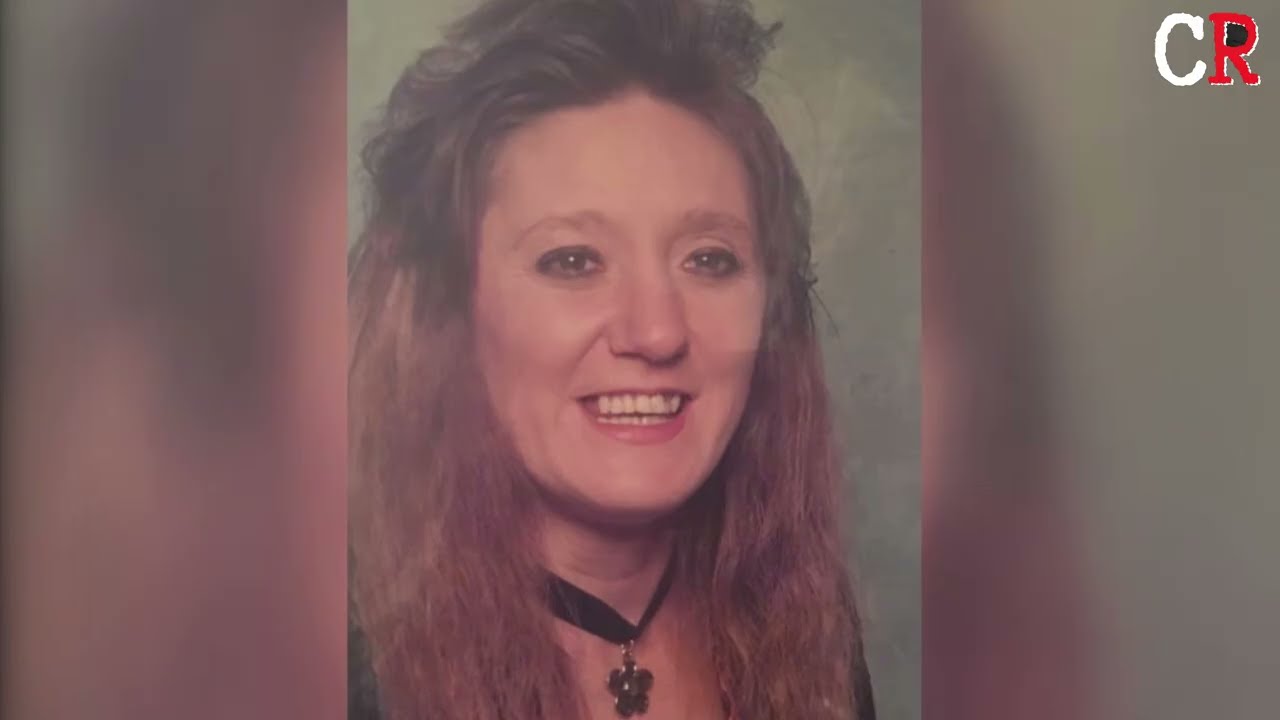 The O.J. Simpson connection continues to generate public interest. While Rogers’ claim about Nicole Brown Simpson and Ron Goldman has never been corroborated, his brother’s public statements keep the theory alive. Some true-crime analysts have called for a new investigation.
Law enforcement officials in California have declined to comment on whether they will revisit the Simpson case. “We have no reason based on current evidence to reopen the investigation,” one spokesperson said. The statute of limitations does not apply to murder, but physical evidence is scarce.
Rogers’ criminal history before the murders was extensive. He had a record of theft, scams, and bar fights. His life on the margins made him a predator who blended into the background, charming victims before turning violent.
The four confirmed victims each faced a similar pattern: Rogers would meet them in social settings, gain their trust, and then kill them in intimate settings like motel rooms or their own homes. His method often involved strangulation or stabbing.
Psychological evaluations conducted during his time on death row described Rogers as having antisocial personality disorder with narcissistic traits. He showed little remorse for his crimes and seemed to enjoy the attention his case attracted.
The execution marks the end of a long legal saga that stretched over three decades. Rogers exhausted every appeal available under Florida law. The U.S. Supreme Court denied his final petition for a stay without comment just hours before the execution.
Florida’s lethal injection protocol uses a three-drug combination: a sedative, a paralytic, and a drug that stops the heart. Critics argue the process can cause pain if the first drug is not properly administered, a concern raised in Rogers’ perferia claim.
Union Correctional Institution, where the execution took place, has been the site of numerous lethal injections in recent years. The facility houses the state’s death row and execution chamber. Security was tight throughout the day as protesters and supporters gathered outside.
Among the protesters were anti-death penalty activists who held signs reading “Justice not Killing” and “End Executions.” They argued that Rogers’ troubled childhood and mental health issues should have been considered as mitigating factors.
Supporters of capital punishment, including some victims’ rights groups, countered that Rogers’ crimes were so heinous that death was the only appropriate sentence. “He took four lives, and he claimed many more,” one supporter said. “Justice was served.”
Rogers’ last meal request was typical of many death row inmates: pizza, chocolate, and a soda. He ate the meal about four hours before the execution. Corrections officials said he appeared calm during his final hours.
His final phone call with his wife lasted about 15 minutes, according to prison records. The contents of that call have not been made public. His brother said they had a brief conversation the day before, in which Rogers did not offer any new confessions.
The execution room itself is small, with a gurney positioned in the center. Witnesses sit behind a glass partition. About 20 people were present, including media representatives, victims’ family members, and correctional officials.
Randy Robertson, who lost his mother in one of the murders, said he came hoping for closure. “I thought maybe he would apologize, or at least admit what he did. Instead, we got a political shoutout and a promise of answers that will never come.”
The confusion over Rogers’ final words has prompted widespread media speculation. Some analysts suggest the statement was a deliberate attempt to deflect attention or create a lasting mystery. Others see it as a sign of his manipulative personality.
The reference to “I’m ready to begin” has been interpreted by some as a possible allusion to an afterlife or a new phase of existence. Rogers was not known to be particularly religious, but he did meet with a chaplain before the execution.
The phrase “make America great” echoed the political slogan of Donald Trump, who has publicly supported capital punishment for violent offenders. Trump has not commented on the execution as of this evening.
Rogers’ legal team issued a statement after the execution, saying they were “disappointed but not surprised” by the outcome. They noted that their arguments about his childhood abuse and the potential for pain during lethal injection were not given sufficient weight.
The team also expressed frustration that Rogers’ mental health history was not fully explored. “This man was a product of trauma, and the system chose to end his life rather than understand why he became what he was,” one lawyer said.
Prosecutors who handled the case earlier in their careers defended the execution. “He was a serial killer who showed no remorse, who terrorized multiple states, and who murdered innocent people. He earned this fate,” said a retired district attorney.
The case has also reignited debate about the death penalty in Florida. While the state continues to carry out executions, the number has declined in recent years. Gov. Ron DeSantis, who signed the death warrant, has been a strong proponent of capital punishment.
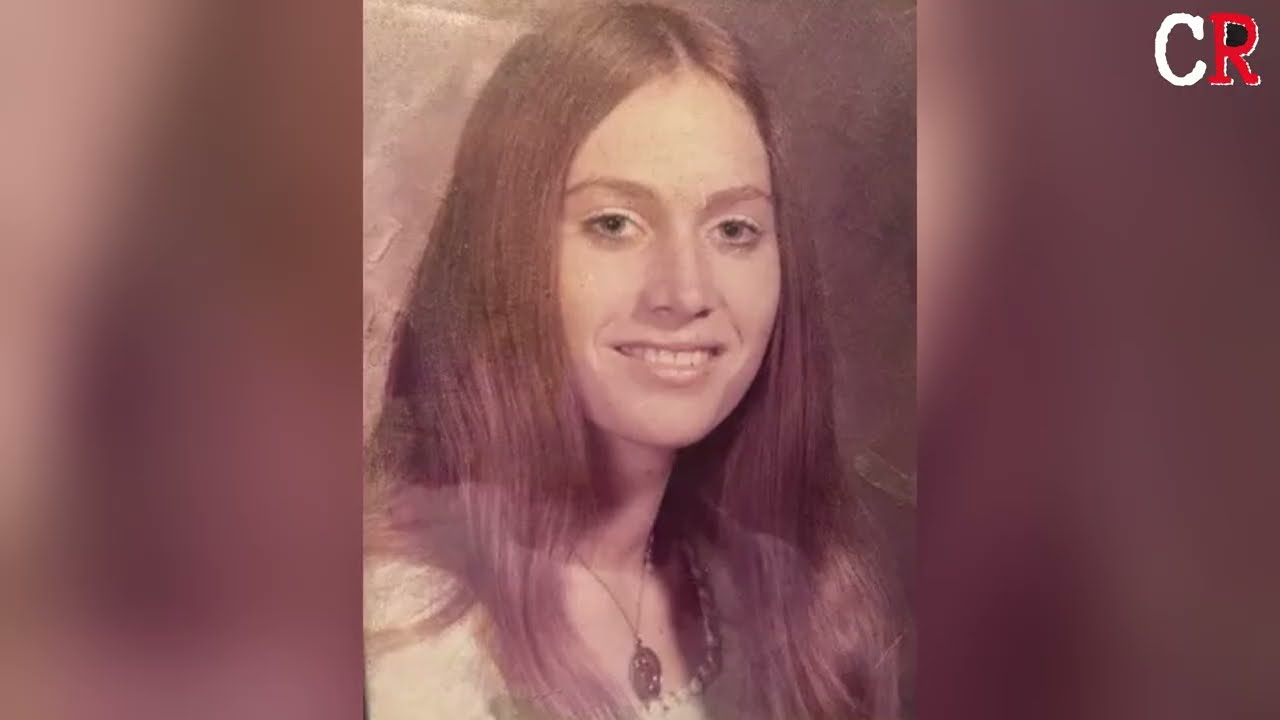
Rogers’ execution is the fifth in Florida in 2025 so far. The state has one of the largest death row populations in the country, with more than 300 inmates currently awaiting execution.
The Kasanova Killer moniker, given to Rogers by the media, reflected his ability to appear charming and romantic to his victims before turning deadly. The nickname itself became a source of morbid fascination for true crime audiences.
Rogers’ brother Klay has often given interviews, insisting his sibling was the killer of Nicole Brown Simpson. He has claimed to have seen photos or letters that prove Rogers was in Los Angeles at the time of the murders, but he has never produced any evidence.
The Simpson family has not responded to requests for comment on the execution. Nicole Brown Simpson’s sister, Denise Brown, has previously said she does not believe Rogers was involved, calling his claims “a desperate attempt for attention.”
The murder of Ron Goldman’s family also remains unresolved. Fred Goldman, Ron’s father, declined to comment on the execution, but has expressed anger over the years that he believes O.J. Simpson got away with murder.
Rogers’ death means that any potential truth about his claims will remain locked with him. While some hope closure will come, others are resigned to the fact that the Kasanova Killer took many mysteries to his grave.
As the execution room cleared and the body was removed for transport, the only sounds were the shuffling of feet and the quiet sobs of one victim’s relative. Outside the prison, the sun had set, and the final chapter of Glen Rogers’ life had closed.
The full timeline of Rogers’ crimes is a grim map across the southern United States. From California to Florida, each murder left a grieving family and a community in fear. Law enforcement across multiple states worked together to finally capture him.
Rogers’ arrest in Kentucky after a high-speed chase was dramatic. He had stolen a car and was spotted by state troopers. During his capture, he made bizarre statements that foreshadowed the theatricality of his final words.
While in custody, Rogers initially denied everything before eventually confessing to a vast number of killings. The problem for investigators was that many of his confessions could not be verified or were proven false.
The four confirmed convictions were built on strong forensic evidence, including DNA and witness testimony. The murders of Cribs and Gallagher were particularly well-documented, leading to the two death sentences.
Rogers spent his years on death row writing letters to media outlets and occasionally granting interviews. In those communications, he often hinted at a “big secret” he would reveal one day, adding to the aura of mystery around him.
That secret never materialized. His final words, instead of a confession or apology, were a disjointed mixture of vague promises and a political salute. It left many wondering if the secret was real or just another tale from a master manipulator.
The execution came despite a last-minute request from the American Civil Liberties Union for a stay, citing the perferia condition. The request was denied by the 11th Circuit Court of Appeals, which ruled that the claim had been reviewed and rejected multiple times.
The condition of perferia, also known as hereditary coproporphyria, can cause neurological and abdominal pain. Rogers’ doctors argued that the barbiturate used in the lethal injection could trigger a severe attack. The state’s medical panel disagreed.
Witnesses who observed the execution from the family room reported seeing Rogers’ face contort at times, though they could not be certain if that was due to pain or the natural effects of the drugs. The state medical examiner will produce a full report.
The execution also drew international media attention due to the O.J. Simpson connection. News outlets from Europe and Asia covered the story, focusing on the unresolved mystery of the 1994 murders that captivated the world.
Scientifically, there is no way to determine if Rogers was telling the truth about the Simpson case. His brother’s claims, while consistent, lack physical proof. The case remains one of the most famous unsolved aspects of American crime history.
The Simpson trial was a media circus in the mid-1990s, and the idea that an unknown serial killer might have committed the murders was a popular alternate theory. Rogers inserted himself into that theory, but he never provided evidence.
Now, with Rogers executed, the likelihood of ever knowing the truth diminishes further. The physical evidence from the Simpson case is still stored, but no new testing has been authorized. The statute of limitations does not apply, but resources are limited.
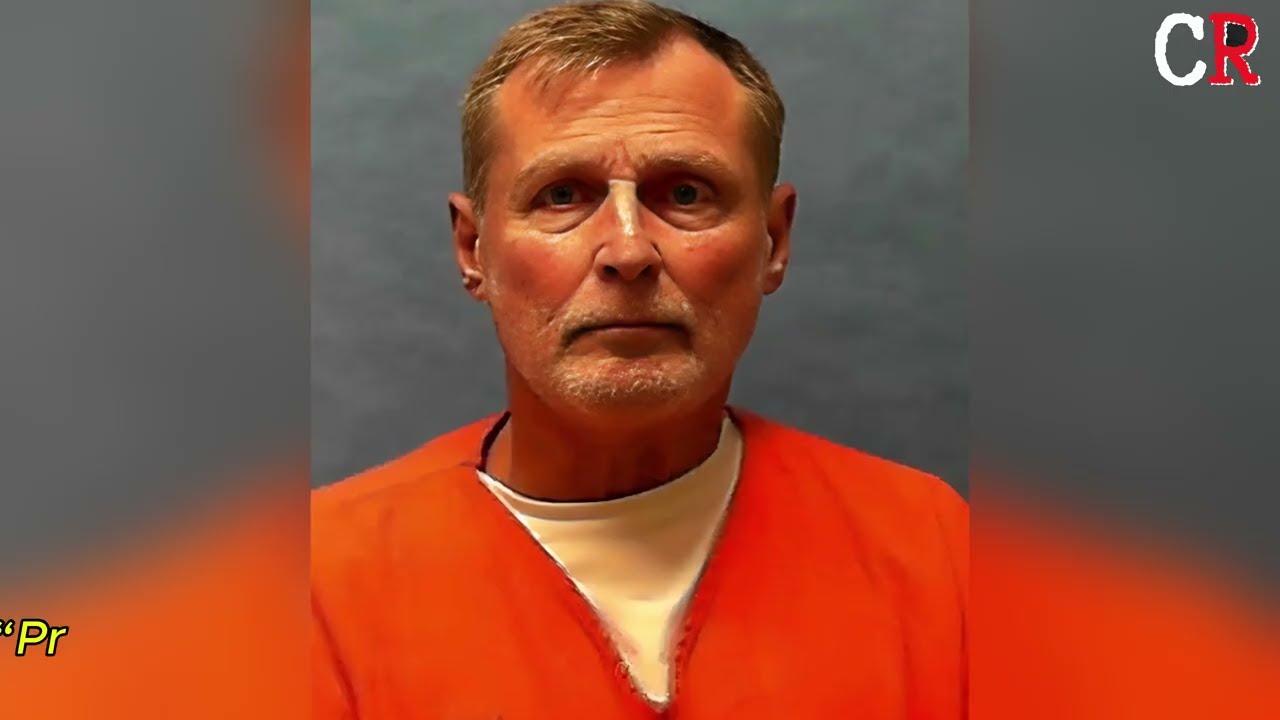 For the families of Rogers’ confirmed victims, the execution brings a measure of finality. Sandra Gallagher’s daughter said in a statement, “My mother was taken from us by a monster. Today, that monster is gone. We can finally try to heal.”
Tina Cribs’ mother, who is now elderly, was too frail to attend the execution but received updates by phone. She told a local news station, “I have waited 30 years for this day. I wish it could have come sooner, but I am grateful it came.”
The legal process for death row inmates in Florida can take decades. Rogers’ case moved through state and federal courts, with numerous appeals. The average time on death row in Florida is now more than 20 years.
Rogers was initially sentenced in 1997, and his appeals were mostly exhausted by 2015. However, a 2016 U.S. Supreme Court ruling on Florida’s death penalty sentencing procedure caused delays as the state revised its laws.
That ruling, Hurst v. Florida, required that the jury, not the judge, make the final decision on whether to impose death. Rogers’ case was reviewed under the new system, but the result was the same: a death sentence.
The cost of the appeals process and the decades of incarceration are often cited by death penalty opponents as an argument against capital punishment. Supporters, however, argue that the justice system must have the ultimate penalty for the worst offenders.
Rogers’ execution was also the first in Florida this year. The state typically conducts fewer than 10 executions annually. The last execution before Rogers was in December 2024.
The drugs used in the lethal injection are now sourced from compounding pharmacies that are not required to disclose their identities. This has led to lawsuits and criticism, but Florida maintains that its protocols are humane and constitutional.
Rogers’ final words have become a talking point on social media, with many users speculating about what he meant. Some believe he was trying to send a coded message, while others think he simply wanted to shock the room one last time.
“I promise you, you’ll have them very soon” could refer to his brother or another confidant who might release information posthumously. His brother has not indicated he has any new evidence, but he has said he will speak to the media again.
The “President Trump” reference has also sparked theories that Rogers had some kind of political affiliation or hoped for a pardon from Trump during his presidency. Trump did not grant any pardons or commutations to Rogers during his time in office.
Rogers’ behavior in his final hours was described by prison staff as “subdued but alert.” He did not display any signs of panic or remorse, according to a corrections spokesperson.
The execution chamber at Union Correctional Institution is a sterile room with white walls and a single gurney. Witnesses sit behind a pane of glass. The procedure is recorded, but the video is not released to the public.
Media witnesses included reporters from the Associated Press, the Miami Herald, and several television stations. They filed accounts of Rogers’ final minutes, highlighting the trembling and irregular breathing.
The controversy over the execution method is likely to continue. Perferia is rare, and debates over lethal injection have been ongoing across the country for years. Some states have moved to methods like nitrogen hypoxia or firing squad.
Florida has not adopted alternative methods, leaving lethal injection as the sole means. Executed inmates’ bodies are released to funeral homes chosen by the family. Rogers’ body will be taken to his wife for burial.
The story of Glen Rogers will now become a footnote in American crime history, remembered for its brutality, its mysterious claims, and one last line that no one saw coming.
His victims, however, will not be forgotten. Sandra Gallagher, Linda Price, Tina Marie Cribs, and Andy Giles Sudden each had lives that were cut short by a man who displayed no conscience.
As the sun sets on this case, the questions remain. Did Rogers kill Nicole Brown Simpson and Ron Goldman? Did he truly kill 70 people, or was that just bravado? We may never know.
What we do know is that on May 15, 2025, at 6:30 p.m., Glen Edward Rogers took his final breath, and with it, he took his secrets.
The Kasanova Killer is dead. The mystery endures.


