The train was already breathing smoke when Clara Whitcomb realized her sister was not coming.
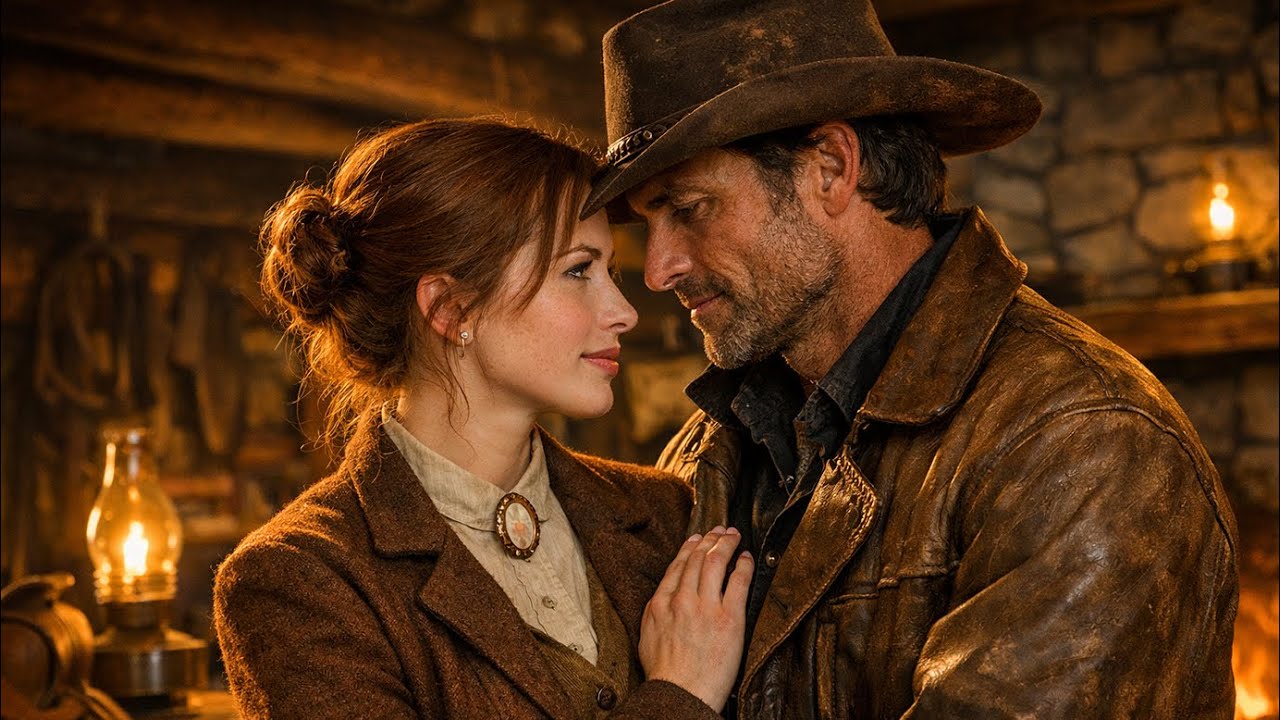
She stood on the platform in St. Louis with a carpetbag in one hand, a folded ticket in the other, and a marriage contract tucked inside the pocket of her coat. The paper did not have her name on it.
It had Evelyn’s.
Evelyn Whitcomb, twenty-two, fair-haired, gentle, pretty in the way people forgave before she even apologized. Evelyn, who had answered an advertisement from a Montana rancher seeking a wife of “sound character, practical disposition, and willingness to build a life in difficult country.” Evelyn, who had spent three months exchanging letters with a man named Thomas Hale, owner of the Double H Ranch outside Miles City.
And Evelyn, who had left a note on their kitchen table that morning.
I can’t do it. Please don’t hate me.
Clara had read it twice before she understood. Then she had looked at the rent notice nailed beside the door, the empty flour tin, and their mother asleep in the back room with a cough that had turned sharp and wet over the winter.
Evelyn had not run away because she was cruel.
She had run because she was afraid.

Clara was afraid too. She was just better at folding fear into small corners and carrying it without making noise.
By noon, she had packed the blue dress Evelyn was supposed to wear, sold the silver hair comb their father had left behind, and bought enough medicine to last their mother two weeks. By three, she was at the station, standing beneath a gray sky while porters shouted and passengers pushed around her as if she were a post in the ground.
She told herself she was not stealing a life.
She was buying time.
The conductor glanced at her ticket. “Miss Evelyn Whitcomb?”
Clara’s throat tightened.
“Yes,” she said.
It was the first lie. It would not be the last.
The journey west lasted four days, though to Clara it felt like being slowly peeled away from everything she had ever known. The city gave way to small towns, the towns to flat fields, and the fields to open land so wide it made her chest ache. At night, while other passengers slept with hats over their faces, she sat upright and reread the letters she had taken from Evelyn’s drawer.
Thomas Hale wrote with a careful hand. Not romantic. Not flowery. But steady.
I cannot promise ease.
I can promise honesty.
The winters are hard here, but a person who knows how to work will never be useless.
Clara paused over that line more than once.
A person who knows how to work.

She knew how to stretch soup for three people out of bones and onions. She knew how to keep accounts for the dressmaker who paid her half what she owed. She knew how to sit beside a sickbed all night and still rise before dawn to scrub floors.
But she did not know how to be chosen.
Especially not by a man expecting someone else.
When the train finally pulled into Miles City, the platform was crowded with cattlemen, freight hands, and women in dust-colored skirts waiting for husbands and brothers. Clara stepped down carefully, gripping the railing with gloved fingers.
The wind hit first.
Then the smell: horses, coal smoke, leather, rain somewhere far off.
She saw him before he saw her.
Thomas Hale stood near the freight office, hat in hand, taller than most men around him, his coat worn at the cuffs but clean. He had the look of someone used to watching the horizon for trouble. Not handsome in the polished city way Evelyn would have admired, but solid, sun-browned, and quiet.
Beside him stood another man in an expensive brown suit that did not belong on a muddy platform. He was smiling too broadly.
Clara recognized him from one of Evelyn’s letters.
Grant Pritchard. Neighboring ranch owner. Wealthy. Influential. A man Thomas had described only once, and only with three words:
Best avoided when possible.
Grant saw Clara first.

His eyes moved over her dress, her plain gloves, the carpetbag with the patched corner. Then his smile tilted.
“Well,” he said loudly enough for two nearby men to hear, “Hale, your bride finally arrived.”
Thomas turned.
For a moment, Clara forgot every sentence she had prepared.
His eyes met hers, and something passed across his face too quickly to name. Surprise, certainly. Confusion, maybe. But not disappointment. Not yet.
He stepped forward. “Miss Whitcomb?”
Clara opened her mouth.
Grant laughed under his breath. “Careful, Tom. Advertisements don’t always deliver what they promise.”
A few men nearby glanced over.
Clara felt the heat rise to her cheeks, but she kept her chin level. She had spent too many years being measured by strangers to give this one the satisfaction of watching her shrink.
Thomas did not look at Grant.
He looked at Clara.
“You had a long trip,” he said. “Are you well?”
It was such a simple question that it nearly undid her.
“Yes,” she replied. “Thank you.”
Grant took a step closer, his polished boots stopping just short of a puddle. “You sure this is the right one? She doesn’t look much like the picture you showed around.”
Clara’s fingers tightened around the handle of her bag.
There had been a picture.
Of course there had.
Evelyn’s photograph, taken two years earlier in the white dress she wore to church socials. Clara remembered wrapping it in tissue and placing it in the envelope herself, because Evelyn had been too nervous to do it.
Thomas’s gaze flicked to the carpetbag, then back to Clara’s face.
He knew.
Maybe not all of it. But enough.
Grant smiled wider, sensing blood. “I’d ask her a few questions before dragging her out to the ranch. A man can get fooled when he wants a wife too badly.”
The platform seemed to quiet around them. A woman holding a basket paused near the bench. One of the freight hands stopped rolling a barrel. Clara heard the train hiss behind her like something alive and impatient.
This was the moment to confess.
To say her sister had run. To say she had come in Evelyn’s place because hunger made people do things pride never would. To hand back the contract, lower her head, and accept whatever judgment came.
But before she could speak, Grant reached out and plucked the folded ticket from her hand.
“Evelyn Whitcomb,” he read, raising his eyebrows. “Well, miss? Is that your name?”
Clara went still.
Thomas’s jaw tightened.
Grant held the ticket up like evidence in court. “Because if it isn’t, then I’d say Mr. Hale here has been made a fool of in front of half the county.”
The words struck exactly where they were meant to.
Men turned.
The woman with the basket stared.
Clara looked at Thomas, expecting anger now. Expecting the hardening of his face, the step backward, the quiet humiliation of being sent away before she had even set foot beyond the station.
Instead, Thomas Hale reached out and took the ticket from Grant’s hand.
He folded it once.
Then he placed it inside his own coat pocket.
Grant blinked. “What are you doing?”
Thomas did not answer him.
He studied Clara for a long second, not as if she were a bargain gone wrong, not as if she were a trick, but as if he were reading the part of a letter no one had thought to write down.
Then he said, calm enough for everyone to hear:
“I’ll take you.”
Clara’s breath caught.
Grant’s smile faded, just a little.
Thomas picked up her carpetbag before she could stop him. “Wagon’s this way, Miss Whitcomb.”
He turned toward the street, and Clara followed because her legs moved before her courage could object.
Behind them, Grant’s voice cut through the wind.
“You’ll regret this by sundown, Hale.”
Thomas kept walking.
But Clara heard the last thing he said, low and meant only for her.
“Before we reach the ranch, you’d better tell me whose name I just defended.”