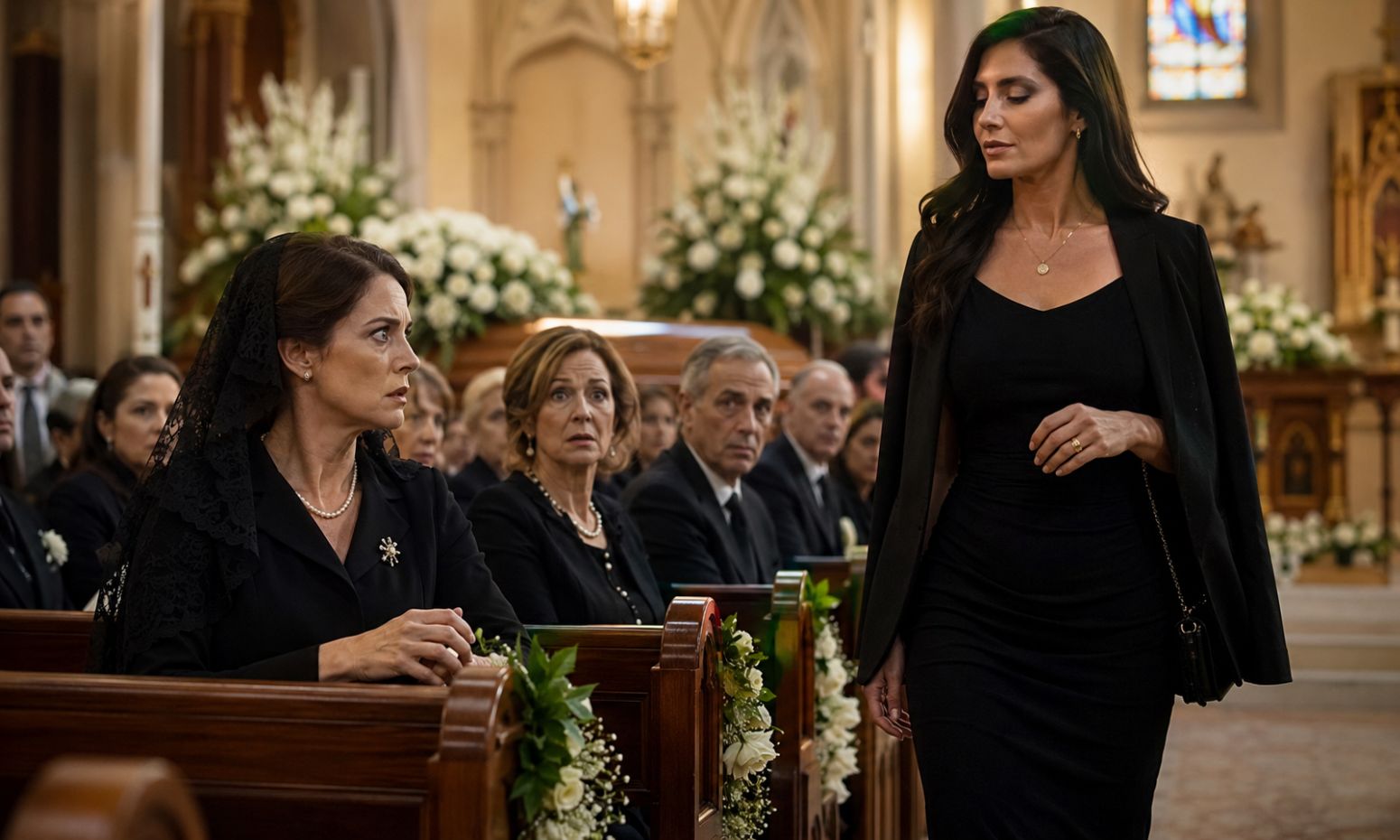
My mother called me nothing in a room with beige walls, bad coffee, and a retired judge watching her over the rim of his glasses.
She did not shout it.
That would have made her look unstable.
My mother, Diane Mercer, never wasted cruelty by making it look accidental. She leaned forward across the mediation table, folded her hands beside the untouched legal pad in front of her, and said the word like she was placing a final stamp on a file.

“Nothing.”
The mediator’s pen stopped moving.
My brother Caleb looked down, but not before I saw the corner of his mouth twitch.
His wife, Brittany, sat beside him in a cream blazer, one hand resting protectively over her stomach although she was not pregnant. She did that when she wanted people to remember she was delicate.
My mother’s attorney cleared his throat.
“Mrs. Mercer—”
“No,” my mother said, lifting one finger without looking at him. “Let me finish. Everyone keeps pretending this is complicated. It is not. My mother lost her judgment at the end. She left a house to a daughter who contributed nothing, visited when convenient, and abandoned this family the moment she found a government job and a city apartment.”
Her eyes finally moved to me.
They were dry.
That hurt more than tears would have.
“She was never the daughter I needed. Never the sister Caleb deserved. Never the granddaughter Ruthie thought she was. She is nothing but a name on a will.”
The conference room went still.
Outside the glass wall, rain tapped against the courthouse annex windows. Cars hissed along the wet street below. The air conditioner hummed too loudly overhead, pushing cold air over a table crowded with paper cups, folders, pens, and all the lies my family had brought to divide my grandmother’s life.
I sat perfectly still.
My attorney, Denise Okafor, did not move either.
That was how I knew she was angry.
Denise was sixty-one, silver locs coiled at the nape of her neck, red-framed glasses balanced low on her nose, and the calm of a woman who could skin a lie without raising her voice. Her left hand rested on the thick black leather bag beside her chair.
Inside that bag was my folder.
Six years of documents.
Bank transfers.
Property tax receipts.
Caregiver invoices.
Forged reimbursement requests.
Photos of my grandmother’s pantry when I found it empty.
Audio recordings Ruthie made on a little blue phone she kept in her sewing basket.
And one notarized letter my family did not know existed.
I looked at my mother.
She had dressed carefully for the hearing: navy dress, pearl earrings, smooth chestnut hair curved under her jaw. She looked like a school principal, a church board member, a mother who baked for fundraisers and sent thank-you notes on embossed stationery.
She did not look like a woman who had stolen from her own mother.
That was the first thing I learned as a fraud investigator for the State of Maryland.
People who steal from strangers often look nervous.
People who steal from family look offended when you notice.
The mediator, retired Judge Harold Pembroke, removed his glasses and placed them on the table.
“Mrs. Mercer,” he said, voice quiet, “I’m going to ask that we keep personal attacks out of this room.”
My mother smiled, thin and wounded.
“With respect, Judge, the personal character of the beneficiary is relevant when undue influence is involved.”
Denise’s mouth curved slightly.
Not a smile.
A warning.
“Undue influence,” she said, “requires evidence.”
My brother finally looked up.
“We have evidence.”
I turned to him.
Caleb Mercer was thirty-six, three years younger than me, with our mother’s eyes and our father’s talent for disappearing behind stronger people. He wore an expensive gray suit he could not afford and the Rolex Ruthie had once promised to have repaired but never got back from him.
“What evidence?” I asked.
His jaw tightened.
“You isolated Grandma.”
I laughed once.
It slipped out before I could stop it.
Not because anything was funny.
Because the word isolated had the nerve to sit in his mouth after what he had done.
My mother’s eyes sharpened.
“There. That attitude. That is what I mean.”
Judge Pembroke turned to me.
“Ms. Mercer, would you like to respond?”
I looked down at my hands.
No rings. Short nails. A small scar across my left knuckle from the winter Ruthie’s furnace broke and I cut myself replacing the filter because Caleb said he was too busy to drive across town.
I had promised myself I would not cry in this room.
Not because crying was weakness.
Because my mother knew what to do with my tears.
She would label them manipulation, instability, guilt, anything except proof that I had once wanted her to love me differently.
So I looked at the mediator and said, “I would like you to read the file.”
My mother blinked.
“What file?”
Denise opened the black leather bag.
The sound of the zipper moved through the room like a blade being drawn.
My mother’s attorney sat straighter.
Caleb’s eyes dropped to the bag.
Brittany’s hand left her stomach.
Denise lifted out a blue folder.
Not thick.
Not dramatic.
Just heavy enough.
She slid it across the table to Judge Pembroke.
“This contains supporting documentation regarding Mrs. Ruth Mercer’s intent, financial condition, caregiver history, and concerns about elder exploitation.”
My mother’s face did not change.
But her pearls shifted against her throat when she swallowed.
Judge Pembroke opened the folder.
The first page was Ruthie’s letter.
He read the top line.
Then went silent.
My mother’s attorney leaned forward.
“Judge?”
Pembroke lifted one hand.
Not now.
The room obeyed.
He read the first page.
Then the second.
Then he removed his glasses, cleaned them with a white cloth, put them back on, and read the third page twice.
When he looked up, the kindness had gone from his face.
Not replaced by anger.
Something colder.
Recognition.
He looked at my mother.
“Mrs. Mercer,” he said, “before we continue, I need to ask whether you were aware that your mother filed a notarized statement alleging financial coercion by members of this family eight months before her death.”
My mother’s lips parted.
For the first time that morning, she had no sentence ready.
Rain ticked against the glass.
Caleb whispered, “What statement?”
Judge Pembroke looked down at the file again.
Then at me.
And in the silence that followed, I heard Ruthie’s voice as clearly as if she were sitting beside me.
Don’t bring thunder, Lena. Bring receipts.
So I did.
My grandmother’s house sat on Orchard Lane, at the end of a narrow street where maple roots lifted the sidewalk and neighbors knew which dog belonged to which porch before they knew the owners’ names.
It was not a grand house.
Two stories. White siding. Green shutters. A front porch with a swing that groaned in humid weather. A narrow kitchen that smelled permanently of cinnamon, lemon soap, and the coffee Ruthie boiled too strong on the stove. In spring, purple irises crowded the fence. In fall, leaves gathered in the gutters no matter how often I cleaned them.
To my mother, the house was an asset.
To Caleb, it was equity.
To Brittany, it was “a charming fixer-upper with rental potential.”
To me, it was the only place in my childhood where I could breathe without being evaluated.
Ruth Mercer was five feet tall on a generous day, with white hair she pinned with bobby pins kept in a chipped saucer near the bathroom sink. She had arthritis in both hands and a voice that could shame a room full of grown men into silence without rising above conversation level.
She raised my mother alone after my grandfather died in a warehouse accident. She worked nights at a hospital laundry, days at a bakery, and Sundays in the church kitchen because she said the Lord understood labor better than speeches.
My mother called that life hard.
Ruthie called it paid for.
When I was little, I spent every Saturday with her. She taught me how to knead dough, balance a checkbook, polish silver without scratching it, and tell the difference between someone who apologized and someone who only wanted relief from consequences.
“An apology that asks you to hurry is a bill,” she told me once, placing warm rolls on a towel. “Don’t pay it.”
I did not understand then.
I would.
My mother was different in Ruthie’s house.
Smaller, somehow.
Sharper.
Diane Mercer spent her adulthood escaping every sign of where she came from. She married my father, Paul, because he had a steady job at a bank and spoke in complete sentences. She decorated our home in soft grays and creams, clipped coupons in private, and corrected anyone who said “working class” like it was contagious.
She loved Caleb easily.
He was born smiling. Or that was how she told it.
I was born serious.
That was how she told my story.
“Lena came out frowning,” she said at dinner parties. “Like she was already disappointed.”
People laughed.
I learned to smile later.
Not because I found things funny.
Because not smiling gave my mother too much material.
My father died when I was twenty-two, a sudden heart attack in a grocery store parking lot. He left behind a modest life insurance policy, a mortgage, and a family system that quickly reorganized around my mother’s grief. Caleb was nineteen then, in community college, changing majors like shirts. My mother turned him into proof that she still had someone to raise.
I became useful.
Useful daughters are praised until they stop being available.
I paid bills when Mom fell short. Co-signed Caleb’s first apartment. Drove Ruthie to appointments. Fixed gutters. Filled prescriptions. Sat through my mother’s speeches about how family meant sacrifice, which always seemed to mean my sacrifice arriving before anyone else’s inconvenience.
Then I got a job with the state fraud investigation unit.
Not glamorous.
Not television.
Mostly spreadsheets, interviews, scanned receipts, procurement reports, and people lying badly in fluorescent rooms.
I was good at it.
Too good for my family’s comfort.
“You think everyone is stealing because your job made you suspicious,” Caleb told me once, after I asked why his name appeared on one of Ruthie’s utility accounts.
“No,” I said. “I think people who aren’t stealing don’t get defensive when asked about bills.”
He did not speak to me for three weeks.
My mother called that “my inability to maintain peace.”
Peace, in our family, meant everyone stepping around the broken glass without asking who threw the vase.
Ruthie got sick slowly.
First her hip.
Then her balance.
Then her blood pressure.
Then the small failures that accumulate around age until everyday life becomes a negotiation: pill bottles, bath mats, stairs, soup containers labeled with dates, neighbors checking porch lights after dark.
My mother visited on Sundays with flowers and criticism.
Caleb visited when he needed money.
I visited after work, before work, on lunch breaks, in snowstorms, with groceries, with paperwork, with a socket wrench, with clean sheets, with the patience I could not find for anyone else.
Ruthie saw all of it.
She saw too much.
That was the problem.
The first time Ruthie told me she was afraid of my brother, she was standing in the pantry with a can of peaches in her hand.
It was February, six years before the hearing. Snow had crusted along the porch steps. The kitchen window fogged from soup simmering on the stove. I had stopped by after a Medicaid vendor fraud interview and still wore my state ID badge clipped to my coat.
Ruthie was not supposed to be reaching above shoulder height, but there she was, one slippered foot on the bottom shelf, hand trembling.
“Ruthie.”
She froze.
Then lowered the can slowly, guilty as a child.
“I was not climbing.”
“Your foot was on the shelf.”
“That shelf is barely six inches from the floor.”
“Your doctor said no climbing.”
“My doctor eats vending machine crackers for lunch and calls himself wise.”
I took the can from her.
Her hand lingered on the label.
“Peaches were on sale last week,” she said.
“They’re always on sale somewhere.”
“No.” Her voice changed. “I mean I had six cans.”
I looked at the shelf.
One can.
The house creaked around us.
The radiator hissed.
“You ate them?”
She gave me a look.
“Six cans of peaches in one week? What am I, a raccoon preparing for judgment day?”
I almost smiled.
Then I saw her face.
“Ruthie.”
She closed the pantry door.
“Your brother came by Tuesday.”
My stomach tightened.
“For what?”
“He said your mother needed help with the church luncheon deposit. Said she was embarrassed to ask.”
I set the peaches on the counter.
“How much?”
Ruthie turned toward the stove and stirred soup that did not need stirring.
“Three hundred.”
“Cash?”
“Check.”
“Made out to who?”
She stirred harder.
“Caleb.”
I closed my eyes.
“Ruthie.”
“He said he would deposit it for her.”
“And the groceries?”
She did not answer.
The soup bubbled.
I walked to the refrigerator.
Half-empty.
The milk was expired.
The drawer where she kept apples held one soft orange and a pharmacy receipt.
Something cold moved through me.
Not surprise.
Pattern recognition.
“Did he take your debit card?”
Ruthie’s spoon stopped.
That was enough.
I turned.
She was looking down into the soup, shoulders curved under her old blue cardigan.
“He said he needed to get gas before his interview,” she whispered.
“What interview?”
Her mouth tightened.
“That is what I asked.”
I sat down at the kitchen table.
The vinyl chair cracked beneath me.
“Tell me everything.”
She shook her head.
“Don’t start an investigation voice with me, Helena.”
Only Ruthie called me Helena when she wanted my full attention.
“Then don’t make me use it.”
She turned, eyes shining.
“He’s my grandson.”
“And you are my grandmother.”
The words hung there.
Outside, a snowplow scraped down the street.
Ruthie looked toward the window.
“I don’t want him in trouble.”
“No one ever does,” I said. “That’s why trouble gets comfortable.”
She laughed once, softly.
Then covered her mouth.
I reached across the table.
“Let me help.”
Her fingers were cold when she took my hand.
“I don’t want your mother to know.”
That sentence told me everything.
Not because she feared Caleb.
Because she feared Diane defending him.
I squeezed her hand.
“Then we start quietly.”
That night, I drove home with copies of Ruthie’s bank statements under my coat and a feeling I knew too well from work.
The first document is never the whole theft.
It is only the thread that proves there is a seam.
By the time Ruthie changed her will, I had six binders.
I did not tell her that.
It would have made her sad.
I kept the investigation separate from being her granddaughter as much as I could, though there were nights when the two roles sat across from each other at my kitchen table and refused to speak.
Professionally, I knew what I was seeing.
Family-based elder exploitation.
Small withdrawals below alert thresholds.
Checks written for vague purposes.
Shared utility logins.
Credit card charges at stores Ruthie did not visit.
Cash reimbursements for repairs never performed.
A “caregiving stipend” Caleb claimed for months he was not in the state.
My mother’s fingerprints were lighter.
She was careful.
She did not take the way Caleb took.
She redirected.
A church committee expense paid from Ruthie’s account.
A “shared family medical cost” that was actually Brittany’s cosmetic dental bill.
A property tax reimbursement Ruthie paid twice because Mom told her the first check had not cleared.
When I confronted my mother the first time, she was sitting in her sunroom trimming dead leaves from an orchid.
The room smelled of potting soil and the vanilla candles she lit even at noon. Light filtered through sheer curtains, softening everything until even accusation felt impolite.
I placed a copy of the property tax receipt on the glass table.
She looked at it, then at me.
“What is this?”
“You asked Ruthie for $2,400 for property taxes she had already paid.”
Her face did not change.
“Your grandmother gets confused.”
“The county cashed her check three weeks before yours.”
She clipped one brown leaf.
Snip.
“Mine?”
“The cashier’s check she made out to you.”
Snip.
“Lena, I handle things you don’t understand.”
“I understand duplicate payments.”
Her eyes lifted then.
Not angry.
Worse.
Disappointed.
“You have always needed to make me small.”
The sentence hit old bruises.
I almost reacted.
That was how she pulled me out of facts and into feelings where she made the rules.
I tapped the receipt.
“Return the money.”
Her mouth tightened.
“Your grandmother wanted to help.”
“She lives on a fixed income.”
“She owns a house worth nearly four hundred thousand dollars.”
“And that makes taking from her acceptable?”
My mother set the scissors down.
Her hands were steady.
“You have no idea what it is like to be the daughter of a woman everyone thinks is saintly. Ruthie helped strangers and judged me for wanting better. She made me feel selfish for wanting a life that did not smell like hospital laundry.”
“She paid your mortgage twice.”
My mother’s face flushed.
“I was a widow.”
“You were married then.”
Her eyes went cold.
“Get out.”
I stood.
“Return the money.”
She smiled.
Not warmly.
“You really think your job makes you powerful.”
“No,” I said. “It makes me patient.”
I left before she could answer.
Two days later, Ruthie’s account received $2,400 from my mother.
Memo line: misunderstanding.
I printed it.
Filed it.
Binder Two.
Ruthie signed the new will in May, at a lawyer’s office that smelled of paper, dust, and lemon drops.
She wore her purple church dress, the one with pearl buttons, and insisted on using her cane with the carved duck head even though it clicked too loudly on the floor.
Her attorney, Mr. Alvarez, was eighty and still intimidating in the way old lawyers become when they have outlived nonsense. His office overlooked a parking lot and a line of crepe myrtles blooming pink against the heat.
Ruthie sat in the chair across from his desk.
I sat behind her.
“Helena,” she said without turning around, “stop looking like an undertaker.”
“I don’t.”
“You do. All black and worry.”
Mr. Alvarez smiled.
Ruthie pointed at him.
“You too. Don’t look amused. This is my house we’re discussing, not a church bake sale.”
“Yes, Mrs. Mercer.”
He turned the document toward her.
“I’ll summarize again. You are leaving your primary residence on Orchard Lane to your granddaughter, Helena Mercer. You are leaving smaller cash gifts to Diane Mercer and Caleb Mercer. You are including a no-contest clause. You are also attaching a personal letter explaining your intent.”
Ruthie lifted her chin.
“Yes.”
“And you understand your daughter may be upset.”
“My daughter wakes up upset if rain chooses the wrong window.”
I coughed to hide a laugh.
Ruthie looked back at me.
“Don’t encourage me.”
Mr. Alvarez slid a pen toward her.
“Mrs. Mercer, I have to ask one more time. Has anyone pressured you to make these changes?”
Ruthie’s hand closed around the pen.
Arthritis had bent her fingers, but they still held firm.
“Yes.”
My heart stopped.
Mr. Alvarez leaned forward.
“Who?”
“My daughter and grandson pressured me to do the opposite.” Her eyes shone. “Helena pressured me only to document my reasons so fools would have less room to dance.”
Mr. Alvarez nodded.
“That distinction matters.”
Ruthie signed.
Slowly.
Each letter cost her something.
Afterward, in the parking lot, she refused to get into my car immediately. Heat shimmered above the asphalt. Cicadas screamed from the trees. She leaned on the duck cane and looked toward the crepe myrtles.
“You’re angry,” she said.
“No.”
“Liar.”
I opened the passenger door, letting the air-conditioning spill out.
“I don’t want the house to become a war.”
“It already is one.”
“Ruthie—”
“No.” She tapped the cane once. “A war can be quiet and still ruin everything.”
I looked at her.
Sweat gathered at her temple. I wanted to get her into the car, into cool air, into safety.
She wanted the truth to stand in the heat with us.
“I should have stopped your mother sooner,” she said.
“You raised her alone.”
“I also excused her alone.” Ruthie’s mouth trembled. “Diane thinks love is a ledger because I made survival look like debt.”
“That doesn’t excuse what she’s done.”
“No. But it explains which door she came through.”
A truck passed on the road beyond the parking lot.
Ruthie looked up at me.
“Your mother is not evil, Lena. She is hungry in a place food does not reach. Hungry people can still steal.”
My throat tightened.
“And Caleb?”
She sighed.
“Caleb was loved without being required. That damages a person too.”
I leaned against the car.
“What about me?”
Her face softened.
“You were required without being loved enough.”
The sentence nearly broke me.
Ruthie reached for my hand.
“I am sorry.”
I looked away.
The sky was too bright.
“I don’t want your house because they failed you.”
“I know.” Her grip tightened. “That is why you get it.”
Ruthie died on a Tuesday in November.
Not in a hospital.
Not in pain.
In her own bed, beneath the yellow quilt she made from scraps of dresses she wore when she was young. The window was open an inch because she liked cold air in the morning. Her radio played gospel low on the nightstand. A cup of tea sat untouched beside her glasses.
I found her.
For a while, I stood in the doorway and did not move.
The house was quiet.
Not empty.
Quiet.
Like it was holding its breath around her.
I walked to the bed and touched her hand.
Cool.
Still.
Her mouth had softened. The deep line between her brows was gone. She looked smaller than she had in life, but not defeated.
I sat beside her and placed my forehead on the quilt.
No sound came at first.
Then everything did.
The funeral was crowded.
Ruthie had belonged to more people than her family realized. Church women in navy hats. Former hospital workers. Neighbors. A boy she once tutored who was now a grown man with gray in his beard. The mail carrier cried. The pharmacist sent flowers.
My mother performed grief like a hymn she knew by heart.
Caleb cried loudly.
Brittany wore black lace and asked three people whether the reception food was catered.
I sat in the second row and let others speak because if I stood, I might say something true.
After the burial, my mother touched my elbow.
Her fingers were cold.
“We need to talk about the house.”
Ruthie had been in the ground less than an hour.
I looked at my mother’s hand.
Then at her face.
“No.”
Her eyes flashed.
“Don’t be difficult.”
The old command.
Different room.
Same leash.
I pulled my arm free.
“We talk when Mr. Alvarez calls us.”
Caleb appeared beside her.
“You already know something, don’t you?”
I said nothing.
He stepped closer.
“You always do that. Stand there with your little government face like everyone else is a suspect.”
I looked at him.
“Stop acting like one.”
His jaw tightened.
My mother inhaled sharply.
“Lena.”
“No.” My voice shook. I hated that it did. “Not today.”
I walked away before grief turned me into a weapon they could point back at me.
Two weeks later, Mr. Alvarez read the will.
The house went to me.
My mother stood up, knocked over her chair, and said, “Absolutely not.”
Caleb accused me of manipulation.
Brittany asked whether there was another copy.
Mr. Alvarez looked at them over his glasses and said, “There are several.”
The contest notice arrived nine days later.
Petition for mediation.
Allegations: undue influence, abandonment, lack of contribution, questionable mental capacity, isolation of the deceased.
They did not know I had been waiting six years for them to put their lies in writing.
The mediation room had no windows that opened.
That bothered me more than it should have.
Rain blurred the city beyond the sealed glass. The table was too large for the room, forcing everyone to sit close enough to smell each other’s coffee. My mother wore Chanel perfume. Caleb smelled like mint gum. Brittany’s lotion was coconut, too sweet under the fluorescent lights.
Judge Pembroke read Ruthie’s notarized statement silently.
Then he turned to the next page.
Bank summaries.
His eyes moved once to Caleb.
Then back down.
My brother shifted in his chair.
“What is all that?” Caleb asked.
Denise answered without looking at him.
“Documentation.”
My mother’s attorney, Mr. Voss, held out a hand.
“We should receive copies of anything being presented.”
“You will,” Denise said. “After the mediator reviews the packet for settlement relevance.”
Mr. Voss frowned.
“This is highly irregular.”
Denise glanced at him.
“Calling my client nothing in a legal mediation was irregular. We are all adapting.”
Judge Pembroke turned another page.
His mouth tightened.
He looked at my mother.
“Mrs. Mercer, did you receive $2,400 from Ruth Mercer on April 18, 2021?”
My mother’s face sharpened.
“I handled many transactions for my mother.”
“That is not an answer.”
Mr. Voss leaned toward her.
She ignored him.
“My mother often asked for help managing expenses.”
Judge Pembroke slid the page slightly toward her.
“This transfer was labeled property tax reimbursement. The tax record shows Mrs. Mercer had already paid the county directly.”
My mother looked at the document.
A small muscle moved in her cheek.
“That was a misunderstanding.”
“Your repayment used that exact word.”
Her eyes flicked to me.
I did not move.
Judge Pembroke turned another page.
“Mr. Caleb Mercer, did you receive monthly caregiving reimbursements from your grandmother between June and October 2022?”
Caleb crossed his arms.
“I helped her.”
The mediator looked down.
“During this period, employment records show you were working in Charlotte.”
Caleb’s jaw tightened.
“I still coordinated things.”
“Receipts submitted under your name include snow removal, lawn care, and grocery delivery. Mrs. Mercer’s address had no snow in August.”
Brittany whispered, “Caleb.”
He shot her a look.
My mother placed one hand on his arm.
Protective.
Automatic.
Even now.
Judge Pembroke closed the folder halfway and looked at me.
“Ms. Mercer, how did you obtain these records?”
I felt everyone turn.
This was the moment my mother had always hated.
When the quiet daughter opened her mouth and people listened.
“I obtained some as Mrs. Mercer’s designated financial monitor under the limited power of attorney she signed in 2020,” I said. “Some were provided voluntarily by Mrs. Mercer. Some were downloaded from shared accounts she gave me access to. Some were gathered during my personal review after she expressed concern about missing funds and unauthorized charges.”
Mr. Voss frowned.
“Personal review?”
Denise answered.
“My client is a senior fraud investigator for the state. She did not use state resources. Every record in that folder was obtained through family authorization, public records, or direct consent.”
My mother laughed once.
Sharp.
“There it is. She finally says it.”
Judge Pembroke turned to her.
“Says what?”
My mother’s eyes fixed on me.
“She has been waiting to prosecute her own family. This is who she is. Cold. Watchful. She doesn’t love. She audits.”
The sentence hit harder than nothing.
Because nothing was a verdict.
This was a theory of my soul.
My throat tightened.
Denise’s hand moved slightly under the table, stopping just short of touching my wrist.
My mother continued.
“Do you know what it is like to have a daughter who looks at every mistake like a crime scene?”
I looked at her.
Do you know what it is like to have a mother who turns every wound into a performance review?
I did not say it.
Not yet.
Judge Pembroke’s voice stayed even.
“Mrs. Mercer, the issue before us is not whether your daughter is warm enough for you. The issue is whether Ruth Mercer’s will reflects her intent and whether there was financial misconduct relevant to this dispute.”
My mother flushed.
Caleb leaned forward.
“Grandma gave us money because she wanted to.”
Judge Pembroke opened the folder again.
“Then we should discuss the audio recordings.”
Caleb froze.
My mother’s face went blank.
Brittany whispered, “Audio?”
Denise removed a small flash drive from her bag and placed it on the table.
The mediator looked at it.
Then at me.
I nodded.
The room seemed to shrink.
Denise plugged the drive into her laptop.
A media player opened.
She clicked the first file.
Static.
Then Ruthie’s voice filled the room.
Thin.
Tired.
Unmistakable.
“Diane, I already gave Caleb money this month.”
My mother’s recorded voice answered, bright and irritated.
“Mother, this is not about Caleb. This is about family stability.”
“Family stability keeps taking my grocery money.”
A chair scraped in the mediation room.
Caleb stood.
“I’m not listening to this.”
Judge Pembroke’s voice cut across the table.
“Sit down.”
Caleb sat.
On the recording, my mother sighed.
“You are becoming suspicious because Lena fills your head with numbers. She has always needed to feel superior.”
Ruthie coughed.
Then said, “No. Lena brings receipts. You bring feelings with invoices attached.”
Denise paused the recording.
For one brief, terrible second, I wanted to laugh and cry at the same time.
That was Ruthie.
Even frightened, still armed.
Judge Pembroke looked at my mother.
“Was that your voice?”
My mother stared at the table.
Mr. Voss whispered, “Diane.”
She swallowed.
“Yes.”
“Did you know your mother was recording conversations?”
“No.”
“Did she have reason to?”
My mother’s eyes lifted.
Wet now.
Finally.
“She was old.”
Judge Pembroke’s expression did not soften.
“Age does not answer the question.”
My mother’s tears spilled.
“She was my mother.”
“And Ms. Mercer was her granddaughter.”
My mother looked at me then, and for the first time in years, I did not see authority.
I saw panic.
Not fear of losing the house.
Fear of being seen without the story she had built around herself.
The mediator opened Ruthie’s letter again.
“I’m going to read a portion aloud.”
Mr. Voss objected.
Judge Pembroke ignored him.
He read:
I leave my house to Helena not because she asked, but because she stayed. Not because Diane is unloved, but because she confuses need with entitlement. Not because Caleb is hopeless, but because everyone has paid too much to keep him from learning consequence. The house should belong to the person who kept it alive when I could not.
The words entered the room quietly.
No thunder.
No dramatic music.
Just Ruthie.
Telling the truth better dead than my family had managed alive.
My mother covered her mouth.
Caleb stared at the wall.
Brittany wiped under one eye with her fingertip, careful not to ruin her mascara.
Judge Pembroke closed the folder.
“I suggest,” he said, “we take a recess.”
No one moved.
Then my mother whispered, “You planned this.”
I looked at her.
Six years of receipts in a blue folder.
Thirty-nine years of hunger behind her eyes.
Ruthie’s house waiting at the end of Orchard Lane.
“No,” I said. “I prepared.”
During the recess, I went to the hallway vending machine and bought a bottle of water I did not want.
The courthouse annex hallway smelled of floor wax, damp coats, and burnt coffee. People moved in and out of mediation rooms carrying folders and expressions: divorce, custody, probate, contracts, all the private collapses of ordinary life translated into paperwork.
I stood near the window and watched rain slide down the glass.
My reflection looked pale.
Older than that morning.
Denise joined me.
“You did well.”
“I didn’t do anything.”
“You stayed seated.”
I twisted the water bottle cap until the seal cracked.
“Is that the standard now?”
“In families like yours?” Denise looked toward the mediation room. “Sometimes.”
I swallowed.
“She really believes it.”
“That you’re nothing?”
“That she’s the injured one.”
Denise was quiet for a moment.
Then she said, “People who build identity around sacrifice often become furious when asked to show receipts.”
I almost smiled.
“You and Ruthie would have liked each other.”
“I know. She sounds like she owed no one patience.”
“She had patience.”
Denise looked at me.
“Not the same thing.”
Down the hallway, Brittany came out of the room alone.
She saw us and hesitated.
Then walked over, one hand pressed against her stomach again.
There was no baby.
Just habit.
“Lena,” she said.
I waited.
Her eyes flicked to Denise.
Denise did not move.
Brittany lowered her voice.
“I didn’t know about the recordings.”
“Okay.”
“I knew Caleb borrowed money. But I didn’t know he was…” She stopped.
“Submitting fake caregiver expenses?”
Her face flushed.
“Yes.”
I looked at her cream blazer. Her careful hair. Her wedding ring with the diamond Caleb told everyone he had saved for, though Ruthie’s bank statement suggested otherwise.
“What did you think was happening?”
She looked toward the mediation room.
“I thought families helped each other.”
I laughed softly.
Not kindly.
“Everyone keeps saying that after money goes one direction.”
Her eyes filled.
“Caleb told me you hated him.”
“No. Caleb hates being accountable. It feels the same to him.”
She absorbed that like a slap she could not protest.
Then she whispered, “He used my name on one of the reimbursement forms.”
I went still.
“When?”
“I don’t know. I saw it when the judge turned the page. Brittany Mercer, meal prep services.” She swallowed. “I never cooked for Ruthie. She didn’t even like my cooking.”
Despite everything, I heard Ruthie’s voice.
That girl thinks paprika is a personality.
My face almost cracked.
Brittany’s tears slipped free.
“What happens now?”
Denise answered.
“That depends on whether you want your own attorney.”
Brittany’s face drained.
“My own?”
“If your name appears on questioned documents you did not submit, your interests may not align with Caleb’s.”
Brittany looked suddenly young.
Not innocent.
But less protected by polish.
“I didn’t know,” she said again.
This time, I believed her.
Belief did not absolve her.
But it changed the shape of the room.
“Then stop letting him speak for you,” I said.
She nodded once.
Then walked away.
Denise watched her go.
“That may matter.”
“Legally?”
“Eventually. But I meant for her.”
The mediator’s assistant appeared at the doorway.
“We’re ready.”
I looked at the rain one more time.
Then followed Denise back inside.
When we returned, my mother was sitting alone at the table.
Caleb stood near the wall, phone in hand, whispering angrily to someone. Mr. Voss looked like a man regretting his retainer. Judge Pembroke had a fresh cup of coffee and no patience left.
Brittany sat two chairs away from Caleb.
He noticed.
So did my mother.
The room had rearranged without anyone moving furniture.
Judge Pembroke folded his hands.
“I’m going to speak plainly. Based on the documents I have reviewed, the will contest appears weak. Mrs. Mercer’s intent is well documented. Claims of undue influence are contradicted by her own statements, by the timeline, and by evidence of Helena Mercer’s caregiving contributions.”
Caleb shoved his phone into his pocket.
“So that’s it? She gets everything?”
Judge Pembroke looked at him.
“She gets the house. That is not everything.”
“It’s worth half a million dollars.”
“The mortgage is paid, yes. But ownership carries taxes, maintenance, insurance, and the emotional burden of preserving a property your grandmother clearly valued.”
Caleb scoffed.
“I’d take that burden.”
I turned.
“You took her grocery money.”
His face reddened.
“That’s not fair.”
“No,” I said. “It wasn’t.”
The room went silent.
My mother’s eyes closed.
Judge Pembroke continued.
“There are, however, unresolved issues regarding financial transfers. This mediation can address the will contest, but the documented transactions may create separate civil or criminal exposure.”
Mr. Voss sat forward.
“My clients are prepared to resolve this matter today.”
Caleb stared at him.
“We are?”
Mr. Voss ignored him.
Judge Pembroke looked to Denise.
“What is Ms. Mercer’s settlement position?”
Denise slid one page across the table.
My mother looked at it like it might bite.
Denise said, “Withdrawal of the will contest with prejudice. Written acknowledgment of Ruth Mercer’s testamentary capacity and Helena Mercer’s rightful inheritance. Repayment plan for documented improper transfers totaling eighty-seven thousand four hundred dollars, subject to audit. No further contact regarding the house except through counsel for twelve months. Mutual non-disparagement regarding Ruth Mercer and Helena’s inheritance.”
Caleb exploded.
“Eighty-seven thousand?”
Brittany’s hand flew to her mouth.
My mother whispered, “That can’t be right.”
Denise opened another folder.
“It is a conservative figure.”
Caleb pointed at me.
“She’s trying to destroy us.”
I looked at my brother.
His face was flushed, eyes bright, hair slightly disheveled. For a second, I saw the boy who once crawled into my bed during thunderstorms and asked me to tell him stories until the rain stopped.
Then I saw the man who took from an old woman and called himself abandoned.
“No,” I said. “I’m trying to stop paying for the version of you everyone keeps pretending exists.”
His mouth opened.
Nothing came out.
My mother stood slowly.
“This is what you wanted,” she said.
The room tightened.
“Mom,” I said.
She flinched at the word.
That almost broke me.
Almost.
“You wanted me humiliated,” she continued. “You wanted a judge to look at me like I was some criminal.”
“No. I wanted you to stop.”
Her eyes glittered.
“Stop what? Being a mother? Helping my son? Trying to keep this family together after your father died?”
I stood too.
Denise’s hand moved, but she let me.
The mediator watched carefully.
“No,” I said. “I wanted you to stop calling theft sacrifice. I wanted you to stop making me the villain every time I noticed the math. I wanted you to stop teaching Caleb that consequences are cruelty.”
My mother’s face crumpled.
“Caleb needed me.”
“So did I.”
The words came out before I could decide whether they were useful.
They landed harder than anything in the folder.
My mother stared at me.
I felt my throat close, but this time I did not swallow it down.
“I needed you when Dad died. I needed you when I was working two jobs and paying your electric bill. I needed you when Ruthie got sick and I was changing her sheets after twelve-hour workdays. I needed you when Caleb called me cold because I wouldn’t co-sign another loan. I needed you to be my mother, not the manager of everyone else’s excuses.”
Her lips trembled.
No one spoke.
Even Caleb looked away.
I lowered my voice.
“You called me nothing today. In front of strangers.”
A tear slipped down her cheek.
I had waited my whole life for that tear.
Now that it came, it did not repair anything.
“I was angry,” she whispered.
“You were accurate,” I said.
She recoiled.
“That’s how you see me. A tool. A wallet. A problem. A witness you couldn’t control. Nothing when I’m not useful.”
“No.”
The word came fast.
Too fast.
She stepped toward me.
“Lena—”
I stepped back.
Not far.
Enough.
Her face changed as she saw it.
The boundary.
The distance she had spent years earning and one word finalizing.
Judge Pembroke cleared his throat softly.
“We should return to the settlement terms.”
My mother sat down as if her bones had gone weak.
Caleb remained standing, breathing hard.
Brittany stared at her lap.
The clock on the wall ticked.
The rain slowed.
And my family, for once, had to respond to paper instead of volume.
They signed at 4:42 p.m.
Not happily.
Not gracefully.
But legally.
Caleb signed first after Mr. Voss spent twenty minutes explaining that refusing could result in a worse outcome if the financial evidence moved beyond mediation. His signature was jagged, angry, pressed so hard the pen tore the page.
Brittany signed a separate acknowledgment that she disputed any documents submitted in her name without personal authorization. Caleb stared at her when she did.
She did not look at him.
My mother signed last.
Her hand hovered over the page for a long time.
Then she wrote Diane Mercer in the careful cursive she used on birthday cards and complaint letters.
When she finished, she placed the pen down quietly.
No one spoke.
Judge Pembroke reviewed the signatures.
“This resolves the will contest pending formal filing.”
He looked at me.
“Ms. Mercer, the house is yours.”
The sentence did not feel like victory.
It felt like keys placed in my hand while the person I wanted to call first was gone.
I nodded.
“Thank you.”
My mother made a sound.
Not quite a laugh.
Not quite a sob.
“You always were Ruthie’s favorite.”
I looked at her.
The old accusation.
The last refuge.
“No,” I said. “She trusted me with what you kept trying to spend.”
My mother’s face tightened.
Then she picked up her purse and walked out.
Caleb followed, but Brittany stayed.
She stood near the door, fingers clutching the strap of her purse.
“I’m sorry,” she said.
I was too tired to sort the apology.
“For what?”
“For believing the story because it was easier than asking why you weren’t in it.”
That was better than I expected.
I nodded.
“Get your own lawyer.”
She nodded back.
Then left.
Denise packed the folders slowly.
Judge Pembroke waited until the room was almost empty.
Then he slid Ruthie’s letter back toward me.
“I have mediated estate disputes for twenty-seven years,” he said. “People say ugly things when grief and property meet.”
I took the letter.
He held my gaze.
“But your grandmother was clear. Don’t let the ugliness make you doubt that.”
My eyes burned.
“I won’t.”
It was a lie.
A hopeful one.
He seemed to know.
“Then let the doubt come,” he said. “Just don’t sign anything while it’s talking.”
Denise smiled faintly.
“Good advice.”
Outside, the rain had stopped.
The wet pavement shone under the courthouse lights, reflecting the city upside down.
I walked to my car with Ruthie’s letter in my bag, my mother’s word still lodged somewhere under my ribs, and the knowledge that sometimes justice arrives without warmth.
Sometimes it only arrives with copies.
I did not go to Orchard Lane that night.
I drove there.
Parked across the street.
Sat in the car with both hands on the steering wheel while the house watched me through dark windows.
But I did not go in.
The porch swing moved slightly in the wind. The maple branches scraped the roof. A neighbor’s kitchen light glowed yellow. Somewhere, a dog barked twice and gave up.
My phone buzzed.
A text from Caleb.
You got what you wanted. Hope the house keeps you warm since family won’t.
I stared at it.
Then blocked his number.
Another text came from my mother.
Nothing.
Not the word.
A blank message.
Maybe accidental.
Maybe not.
I blocked her too.
My hands shook afterward.
Not because I regretted it.
Because the body does not understand legal clarity as quickly as the mind does.
For thirty-nine years, my nervous system had been trained to respond when my mother reached.
Silence felt dangerous.
Peace felt like I had forgotten an assignment.
I drove home to my apartment and slept three hours.
The next morning, I returned to Orchard Lane with coffee, contractor bags, and Mrs. Alvarez from next door waiting on the porch with a casserole dish.
She was seventy-eight, shaped like a question mark, and had opinions sharp enough to cut plastic packaging.
“Your grandmother told me you’d take too long coming in,” she said.
I stood at the bottom of the steps.
“She said that?”
“She said, ‘Lena will sit outside feeling haunted. Bring food.’”
A laugh broke out of me.
It turned into a sob halfway through.
Mrs. Alvarez came down the steps slowly and took the coffee from my hand before I spilled it.
“Oh, mija.”
“I don’t know how to go in.”
She looked at the house.
Then at me.
“You don’t go in like an owner today. You go in like a child who misses someone. Ownership can wait.”
So that was what I did.
Inside, the house smelled faintly stale. Lemon soap. Dust. Old wood. Ruthie’s lavender drawer sachets. The air held the quiet of a place waiting to be touched.
The kitchen table still had a scratch from the year Caleb tried to carve his initials into it and blamed me. Ruthie had made him sand it himself.
The pantry was full.
I had made sure of that in her last months.
Cans lined in rows. Flour in sealed containers. Peaches. Twelve cans.
I touched one and cried again.
Mrs. Alvarez placed the casserole in the refrigerator and pretended not to see.
For two weeks, I cleaned.
Not aggressively.
Reverently.
I washed curtains. Sorted medicine. Labeled photographs. Donated walkers and medical supplies. Kept the duck cane. Found $47 in envelopes Ruthie had hidden in books, coat pockets, and a sugar tin labeled emergency, though she had apparently considered emergencies to include half-price yarn.
In her bedroom closet, beneath a box of church hats, I found a small wooden chest.
Inside were letters.
Mine.
Every birthday card I had written her. Notes from college. Grocery lists with jokes in the margins. A child’s drawing of Ruthie and me under a tree with the words REAL FAMILY HOUSE written across the top in purple crayon.
I sat on the bedroom floor and held that drawing for a long time.
I did not remember making it.
But Ruthie had kept it for thirty years.
Nothing.
The word had begun to rot.
Not disappear.
Rot.
Losing shape under evidence.
Three months after mediation, Brittany called me from a number I did not recognize.
I almost ignored it.
Then some investigator part of me answered.
“Lena?”
Her voice was thin.
“Yes.”
“It’s Brittany.”
I stood in Ruthie’s kitchen, one hand dusted with flour. I had been trying to make her rolls and failing in six distinct ways.
“What’s wrong?”
She laughed once.
Everything, that laugh said.
“I left Caleb.”
I turned off the stove.
Outside, summer rain flicked against the screen door. The kitchen smelled of yeast, butter, and something slightly burned.
“Are you safe?”
She went quiet.
Then said, “That’s a strange question.”
“No. It’s the first one.”
Another silence.
“I’m at my sister’s.”
“Good.”
“He used my name on more than one form.”
“I’m not surprised.”
“I am.” Her voice cracked. “Or I’m trying to be.”
I leaned against the counter.
“That’s common.”
“What?”
“Wanting to be surprised by what you already knew.”
She breathed shakily.
“He told me you were jealous of us. That you hated him because Mom loved him more. That Ruthie was confused. That the money was basically his because he was the grandson.”
“And you believed him.”
“Yes.”
The simple answer disarmed me.
No defense.
No performance.
“Yes,” she said again. “Because believing him meant I didn’t have to ask what kind of man needed his grandmother’s money that badly.”
A timer beeped.
The rolls were probably ruined.
I did not move.
“Why are you calling me, Brittany?”
“Because I found something in our storage unit.”
My body went still.
“What?”
“A box from Ruthie’s house. Caleb took it after she died. I thought it was old Christmas decorations. It’s not.”
Rain tapped harder.
“What’s inside?”
“Your grandmother’s jewelry box. Some papers. And a little blue phone.”
Ruthie’s recording phone.
My heart slammed once.
“I thought I had the phone.”
“There’s another.”
Of course there was.
Ruthie, you brilliant woman.
Brittany whispered, “There’s a video on it.”
I closed my eyes.
“Of what?”
“I think you should see it before anyone else does.”
The video was recorded two months before Ruthie died.
Brittany brought the phone to Orchard Lane in a shoebox wrapped in a towel, as if it were alive.
She looked different without Caleb beside her. Hair pulled back. No makeup. Jeans and a sweatshirt. Smaller, but also less blurred.
We sat at Ruthie’s kitchen table.
The same table where I had balanced her checkbook, rolled dough, sorted pills, filed evidence, and once learned how to make apology biscuits after I broke Mrs. Alvarez’s birdbath.
Brittany placed the phone between us.
“I didn’t watch all of it.”
I looked at her.
“Why not?”
“Because your mother came on screen.”
My stomach tightened.
I pressed play.
The video shook at first. Ruthie must have propped the phone against something on her dresser. The angle showed her bedroom door, part of the quilt, the lamp with the crooked shade.
My mother’s voice entered before her body did.
“Mother, this is cruel.”
Then Ruthie’s voice.
“Cruel is asking an old woman to sign away her house while she is in a nightgown.”
My mother stepped into frame.
She wore a beige sweater and carried a folder.
My breath stopped.
This was before the will reading.
Before mediation.
Before the word nothing.
My mother looked exhausted in the video. Not polished. Not cruelly elegant. Just tired and angry and frightened.
“Lena will sell it,” she said.
“No, she won’t.”
“You don’t know that.”
“I know her.”
“You know the version of her that performs for you.”
Ruthie laughed. It turned into a cough.
“Diane, if Lena performed, she’d have picked a better audience.”
My mother’s face twisted.
“I am your daughter.”
“Yes.”
“Then why do you always choose her?”
Ruthie was quiet for a moment.
When she spoke, her voice was softer.
“Oh, baby. Is that what this has been?”
My mother’s face crumpled.
There she was.
Not the woman from mediation.
Not the mother who called me nothing.
A daughter.
Sixty-two years old and still standing in her mother’s bedroom asking to be chosen.
“You loved her more,” my mother whispered.
“No,” Ruthie said. “I trusted her more.”
My mother flinched.
The difference cut deeper than love.
Ruthie continued.
“I loved you before she existed. I loved you when you screamed yourself blue as a baby. I loved you when you broke my good mirror at twelve and lied with glass still in your shoe. I loved you when your husband died and you forgot how to be kind. But love is not the same as trust, Diane.”
My mother wiped her face angrily.
“I needed help.”
“You needed help. Then you needed control. Then you needed me to pretend not to notice when help became taking.”
“I gave up my life taking care of everyone.”
“No,” Ruthie said. “You gave up accountability and called it service.”
My mother stumbled back as if struck.
I paused the video.
My hands were shaking.
Brittany sat across from me, crying silently.
“I’m sorry,” she whispered.
I pressed play again.
My mother’s voice dropped.
“If you leave Lena that house, Caleb will never forgive you.”
Ruthie sighed.
“Caleb does not forgive people. He waits for them to resume paying.”
A broken laugh escaped me.
The video continued.
My mother sat on the bed now, folder in her lap.
“Mom,” she whispered, “what about me?”
Ruthie reached toward her. Only her hand appeared in frame, thin and bent.
My mother did not take it.
That small refusal hurt more than I expected.
“What about you?” Ruthie asked.
“I’m tired.”
“I know.”
“I’m scared.”
“I know.”
“I don’t know who I am if I’m not the person everyone needs.”
Ruthie’s voice softened.
“Then find out before you ask Lena to disappear so you don’t have to.”
My mother bowed her head.
For a moment, I thought she might change.
Then she stood.
Picked up the folder.
Smoothed her sweater.
Rebuilt herself.
“You’ll regret this.”
Ruthie coughed.
“No. But you might.”
The video ended.
The kitchen was silent.
Outside, rain dripped from the porch roof.
I stared at the blank phone screen.
Brittany wiped her face.
“Does it help?”
I did not know.
The video did not excuse my mother.
It did something harder.
It made her real.
Not villain.
Not victim.
A woman who had been loved and still became dangerous where she felt least chosen.
“It helps Ruthie,” I said finally.
Brittany nodded.
“What will you do with it?”
I looked toward the pantry.
Twelve cans of peaches lined in perfect rows.
“Nothing yet.”
The word did not hurt as much in my own mouth.
Maybe because this time, it meant restraint.
I did not speak to my mother for eight months.
No calls.
No texts.
No holiday negotiation.
No birthday guilt.
No “just checking in.”
Silence became a room I learned to furnish.
At first, I hated it.
Then I started sleeping better.
I repaired the porch swing. Repainted the kitchen cabinets pale blue. Replaced the broken back step. Turned Ruthie’s sewing room into a small office for reviewing case files when I worked from home.
I did not move into the house immediately.
I visited.
Then stayed one night.
Then weekends.
Then, in early spring, I gave up my apartment.
The first morning I woke there as owner, sunlight fell across Ruthie’s bedroom floor in long gold stripes. The maple outside had begun to leaf. Birds argued in the gutter. The house creaked around me, not haunted, just old.
I made coffee too strong on purpose.
Mrs. Alvarez came over with eggs.
“You are too skinny,” she announced.
“I’m thirty-nine. You can’t keep saying that.”
“I can until one of us dies.”
She looked around the kitchen, nodding approval at the blue cabinets.
“Ruth would like this.”
“You think?”
“She would say the hinges are crooked.”
“They are.”
“Then yes.”
Life became ordinary in pieces.
Work.
Grocery lists.
Contractors.
Bad dates.
Better boundaries.
A therapist named Dr. Patel who did not let me intellectualize every feeling into a flowchart.
“You use evidence to make pain legitimate,” she told me in our fourth session.
“That sounds efficient.”
“It also suggests you don’t believe pain counts unless it can be proven.”
I hated that.
So it was probably true.
One evening in June, I found myself standing in the pantry, arranging cans of peaches, and realized I was waiting for someone to accuse me of being dramatic.
No one did.
I cried for ten minutes, then made dinner.
Healing was mostly that.
A trigger.
A cry.
Dinner anyway.
My mother came to the house in October.
I saw her from the upstairs window before she knocked.
She stood on the porch wearing a gray coat, holding nothing.
No flowers.
No casserole.
No folder.
Just herself.
That made me suspicious.
I opened the door but kept the screen closed.
Her eyes dropped to it.
Then lifted back to mine.
“Lena.”
“Mom.”
She looked thinner.
Older.
Not in a satisfying way.
In a human one.
“I won’t stay long.”
I said nothing.
“I started counseling.”
I waited.
She looked toward the porch swing.
“I wanted to tell you that and have you say you were proud of me.”
At least therapy had introduced honesty.
“What do you want now?”
Her mouth trembled.
“To say I watched the video.”
My hand tightened on the doorframe.
“Brittany?”
“She gave me a copy after her attorney advised her to turn everything over.” My mother swallowed. “I watched it three times.”
The October air smelled of leaves, woodsmoke, and rain coming later.
“And?”
“And I saw myself.” Her voice broke. “Not the version I explain. The version that walks into a sick woman’s room with papers.”
I did not rescue her from that sentence.
She looked grateful and devastated that I let it stand.
“I called you nothing because I needed that to be true,” she said.
My chest tightened.
“If you were something, then what I did to you was something too.”
A car passed slowly on the street.
Leaves scraped along the curb.
My mother pressed her fingers together.
“I have spent my whole life telling myself I was unchosen by my mother. Then I made you live as proof of it.”
A year ago, I would have wanted those words so badly they might have become enough.
Now they were words.
Important.
Late.
Insufficient.
“I’m sorry,” she whispered.
The screen door stood between us.
A flimsy thing.
Still a boundary.
“I don’t know what to do with that,” I said.
“I know.”
“No, Mom. I need you to hear me. I don’t know if I want a relationship with you.”
Her face folded.
But she nodded.
“I know.”
“I don’t trust you.”
“I know.”
“I’m not going to manage your guilt.”
She closed her eyes.
When she opened them, tears slipped down her face.
“I know.”
That was new.
Not defense.
Not reversal.
Just three small acceptances in a row.
She reached into her coat pocket.
My body tensed.
She noticed and stopped.
“I brought the repayment receipts,” she said quickly. “Not for you to review. Denise has them. I just wanted to say the first installment cleared.”
“Okay.”
“And Caleb missed his.”
“I assumed.”
Her mouth twisted.
“He won’t speak to me.”
I almost said, That must be hard.
I did not.
She looked past me into the hallway.
The house was warmer now. Blue cabinets visible through the doorway. Ruthie’s quilt folded over the stair rail because I had been airing it out. A pair of my boots near the mat. My life, no longer arranged around their entrance.
“She would like what you did with it,” my mother said.
“Mrs. Alvarez said she’d complain about the hinges.”
A laugh broke out of her.
Small.
Wet.
Gone quickly.
“She would.”
For one moment, we stood in shared memory.
Then it passed.
My mother stepped back.
“I’ll go.”
I nodded.
She walked down the porch steps.
At the sidewalk, she turned.
“Lena?”
“Yes?”
“You were never nothing.”
The words moved through me.
They did not heal the wound.
But they named it correctly.
I held the screen door.
“I know,” I said.
And the most important part was that I did.
Caleb did not change.
Not then.
Maybe not ever.
His repayment plan failed after two months. Denise moved to enforcement. Brittany’s attorney submitted evidence that her name had been used without consent. Caleb blamed me, our mother, Brittany, Ruthie, the economy, the mediator, “female lawyers,” and once, in a voicemail Denise saved, “the emotional weaponization of paperwork.”
Denise enjoyed that one.
Brittany divorced him the following spring.
She came by Orchard Lane once to return Ruthie’s jewelry box. It had been emptied of anything valuable long before, but tucked under the velvet lining was a small photograph of Ruthie at nineteen, standing beside a bakery truck with flour on her cheek.
“She was beautiful,” Brittany said.
“She was dangerous.”
Brittany smiled.
“That too.”
She lingered on the porch.
“I don’t know why I’m telling you this, but I got a job.”
“Doing what?”
“Office manager for a dentist.”
“That sounds stable.”
“That sounds like hell, but yes.”
I laughed.
She did too.
Then she said, “I’m sorry I only believed you after his lies touched me.”
That was an honest apology.
Ugly in the right way.
“Thank you,” I said.
She nodded.
“I hope this house is good to you.”
“It is.”
After she left, I placed Ruthie’s nineteen-year-old photograph on the kitchen shelf.
Right beside the peaches.
Two years after the hearing, I hosted Thanksgiving.
Not for the whole family.
For chosen people and complicated people on probation.
Mrs. Alvarez came with arroz con gandules and a pie she insisted was not burned if we called it caramelized. Denise came with wine and a warning that she did not wash dishes. Brittany came because I invited her. My coworker Jamal came with his husband and twins who immediately discovered the porch swing. Dr. Patel sent a plant because therapists apparently enjoy symbolic gestures.
My mother came for dessert.
That was the agreement.
One hour.
No Caleb.
No speeches.
No guilt.
She arrived at six holding sweet potato pie from a bakery because she said homemade felt like overpromising.
Fair.
The house smelled of turkey, cinnamon, coffee, and rain-damp coats. Laughter moved through the rooms. Not loud enough to cover tension. Just alive enough to hold it.
My mother stood in the kitchen doorway.
For once, she looked unsure where to sit.
I handed her a plate.
“Pie table is over there.”
She took it.
“Thank you.”
Mrs. Alvarez eyed her from the sink.
Diane straightened.
“Mrs. Alvarez.”
“Diane.”
That was all.
Enough.
Later, after dessert, I found my mother in the pantry.
For one wild second, my body remembered the peaches, the missing groceries, Ruthie’s fear.
Then I saw what she was doing.
Crying.
Quietly.
Facing the shelves.
I stood in the doorway.
She wiped her face quickly.
“Sorry. I just…” She looked at the rows of cans, flour, sugar, labels in my handwriting. “She was hungry sometimes, wasn’t she?”
I did not soften it.
“Yes.”
My mother covered her mouth.
“I told myself she was being dramatic. Or forgetful. Or that Caleb would not…” She stopped. “No. I told myself whatever let me sleep.”
I leaned against the frame.
The pantry light buzzed overhead.
“I used to think if you admitted it, I’d feel better.”
She looked at me.
“Do you?”
“No.”
She nodded.
“That seems fair.”
Fair.
There it was again.
The word we were all slowly learning to pronounce.
My mother touched one can of peaches with two fingers.
“I brought a check. Extra payment.”
“Give it to Denise.”
“I know.”
A pause.
Then she said, “I don’t expect you to invite me next year.”
“I don’t know what I’ll do next year.”
She looked at me.
“That sounds healthy.”
I laughed.
Couldn’t help it.
She smiled.
Not like victory.
Like relief she had made a sound in my house that did not break anything.
From the kitchen, Denise called, “Lena, your chosen family is staging a coup over leftovers.”
I looked back.
My mother stepped aside, letting me leave the pantry first.
A small thing.
A doorway.
I noticed.
So did she.
The third anniversary of Ruthie’s death came with the first snow.
Light snow.
The kind that dusts porch rails and melts on pavement.
I took the day off work and made rolls from her recipe. They came out almost right. Mrs. Alvarez said they were “acceptable,” which from her was basically applause.
At dusk, I sat on the porch swing with a blanket over my lap and Ruthie’s duck cane propped beside me.
The street glowed under the snow. Houses lit one by one. Somewhere down the block, children shouted. A delivery truck groaned past. The air smelled clean and cold.
My phone buzzed.
A message from my mother.
Thinking of Ruth today. Thank you for caring for her when I didn’t know how to do it without taking.
I read it twice.
No request.
No hook.
No wound dressed as a question.
I typed:
She loved you.
Then added:
She knew what you did. Both things were true.
I almost deleted the second sentence.
Then sent it.
A minute passed.
Then another.
My mother replied:
I’m learning to live with both.
I placed the phone beside me.
Snow gathered lightly on the steps.
In the house behind me, the pantry was full. The hinges were still crooked. Ruthie’s quilt lay over the back of the couch. The foundation repair bill had been paid from my account. The property taxes were filed. The house was not a prize. It was work.
Living inheritance always is.
I thought of the mediation room.
Beige walls.
Rainy glass.
My mother’s voice saying nothing.
Judge Pembroke going silent over the file.
The blue folder sliding across the table.
Back then, I thought the truth would arrive like thunder.
But truth was quieter.
It sounded like bank statements turning.
A dead woman’s recording.
A pen scratching across settlement paper.
A screen door kept closed.
A pantry filled again.
A mother saying I know three times without defense.
A daughter believing herself before anyone apologized.
I touched the duck cane.
“Receipts,” I whispered.
The porch swing creaked.
For a moment, I could almost hear Ruthie answer.
Good girl.
Bring copies.
I laughed into the cold.
Then I stood, went inside, and locked the door.
Not against the world.
Not against family.
Just because the house was mine to protect now.
And so was I.